The Dolan People: Xinjiang’s River-Bank Culture of Music and Grit
Not every culture in Xinjiang is on the postcard, and the Dolan are a case in point. Living along the Tarim river system, they carry a musical and social tradition that feels older and rougher than the courtly images tourists expect, and I sought them out on purpose.
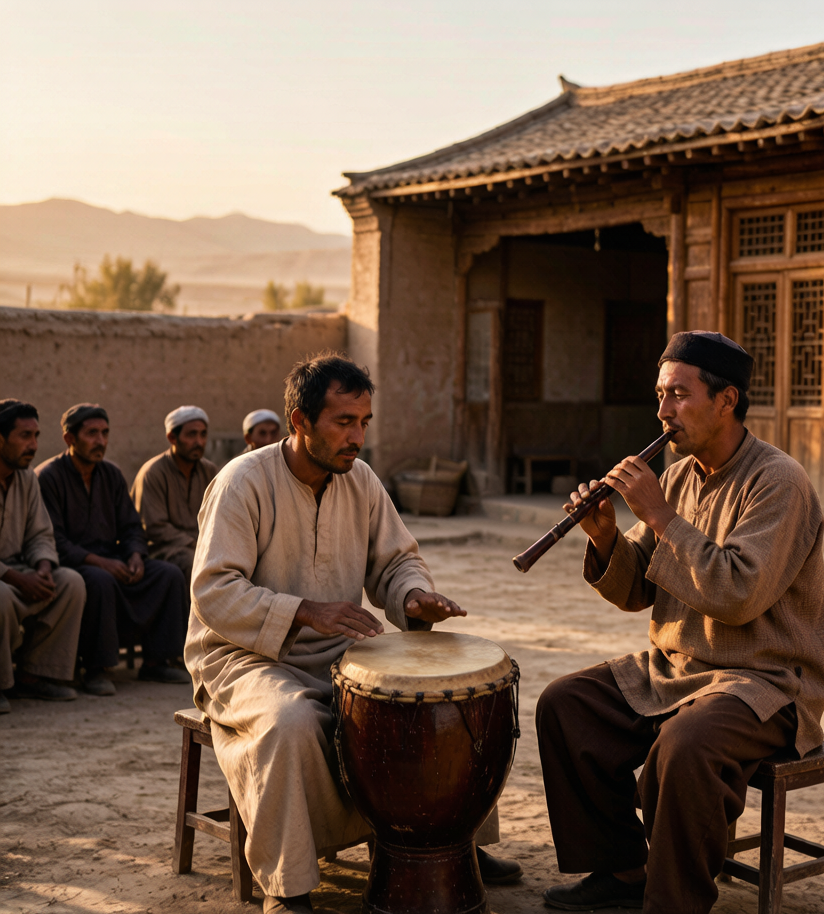
The signature is the music. Dolan song and dance are percussive and raw, built for a community circle rather than a stage, and they connect to the wider caravan culture of the region in spirit if not in form. Hearing it live, in a yard rather than a theatre, is the point.
Finding it takes intent. The communities sit away from the headline stops, and I planned a detour the way I plan any bazaar visit, with a local contact rather than a map pin. The reward is a room of music and the kind of hospitality that asks nothing of you but attention.
The craft world overlaps too. The handicraft markets of the south sell work whose patterns trace back to these riverbank cultures, and seeing the source made the stalls make sense. Culture and commerce are the same thread here.
My take is that the Dolan are a reminder Xinjiang is a stack of living traditions, not a museum. Go with curiosity and a willingness to sit, and a single evening of music will teach you more about the place than a week of viewpoints.
If you cannot reach the communities directly, the southern markets are the proxy. The instruments and patterns on sale there trace back to riverbank cultures, and a curious browse teaches you the shape of the tradition before you ever meet it. I treat the market as the textbook and the village as the lecture.
The deeper point is continuity. Cultures like the Dolan survive by being useful, not by being displayed, and the best way to honour them is to show up as a learner. Do that, and the music opens; arrive as a consumer, and the door stays shut.
Meeting the music takes a local hand. The communities are not on a tour circuit, and a cold arrival finds closed doors, so I went with a contact who knew the yard, and the difference was everything. Inside, the drum and the reed flute set a pace the room moves to, and I was pulled in within minutes despite understanding no word. The songs, I was told, carry the history of the riverbanks, and even without the language the weight was audible. I bought no ticket and took no staged photo; the deal was presence, not consumption, and that unwritten rule is the one to honour. If you cannot find a way in, the southern markets sell the instruments and the patterns, and a careful browse teaches you the shape of the tradition before you ever hear it sung, which is a fine second best.
If the music is closed to you, listen for it in the market instead, because the patterns on the instruments trace the same riverbank story, and a careful look teaches the shape of the tradition before a single note. The culture survives by being useful, not displayed, and the respectful visitor learns by watching, not by demanding a show.
A few minutes of background change the visit
Read that the morning before rather than at the entrance, where the boards stand too far from the object to help. Knowing what you are standing on turns a pleasant walk into something you actually remember. The history here is layered in a way the official signage compresses into names and dates. Locals in Xinjiang will give you the short version in about a minute if you ask, and it is usually better than the panel at the gate. The place only makes sense once you know its shape. The Dolan People Xinjiangs was cut rather than built, which is why the walls are solid and the streets are the empty space between them, and why centuries of dust ended up acting as a roof.
What the ticket and the extras actually add up to
Staff there are used to it, and the answer takes ten seconds. The headline entrance ticket is only the first line. On top of it comes a shuttle or sightseeing bus inside the site, and if you want a far viewpoint rather than the main one that is another leg. Parking, a printed map, and a guide are the other three places the number moves. Two of us covered the whole thing for well under what a single hotel night in Xinjiang costs, but only because we shared the car and shared the entry between us.
On your own the same afternoon comes out at maybe half again as much. Prices at the gate are reasonable by European standards, which is exactly why they are easy to underestimate. Ask once at the ticket office what the full circuit costs before you commit. The admission is cheap, the internal transport is what adds up, and a family of four in one car turns a small ticket into a real line in the budget. The short version, with the numbers, is in our [[the-dolan-dolan-people-of-xinjiang-music-dance-tarim-oasis-culture|The Dolan (Dolan) People of Xinjiang:…]].