Id Kah Mosque, Kashgar: Visiting the Great Mosque of the Old Town
In the centre of Kashgar, facing the old town’s main square, stands Id Kah (艾提尕尔清真寺) — the largest mosque in Xinjiang and one of the most important in China. Approaching it well-prepared makes the visit far richer, and a little respect goes a long way.
A bit of history
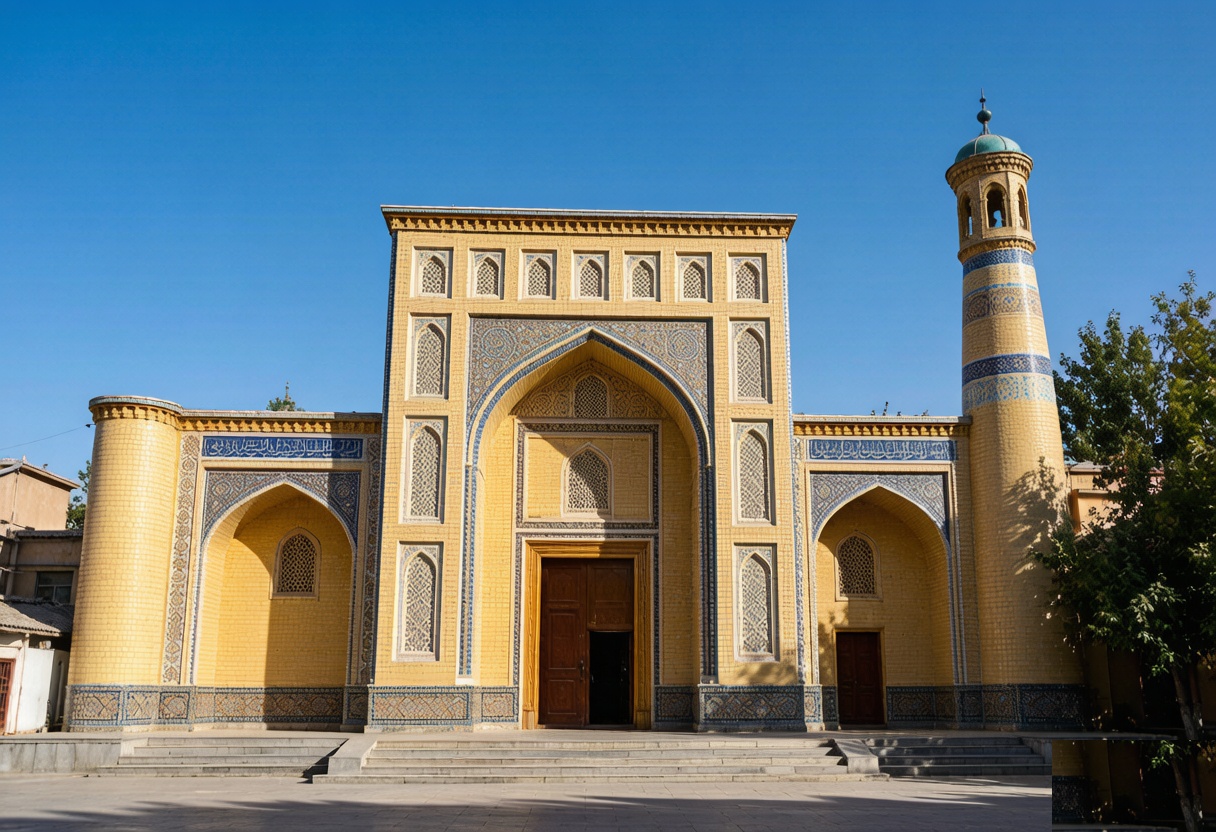
Founded in the fifteenth century on the site of an earlier shrine, Id Kah grew into a vast complex with a yellow-tiled façade, a forest of arches, and courtyards of poplar. It has anchored Kashgar’s religious and social life for six centuries. The old-town guide explains the wider quarter it commands and the lanes that radiate from its gates.
Visiting respectfully
- Dress modestly: cover shoulders and knees; women may choose a headscarf.
- Visit outside prayer times; Friday noon is for worshippers, not tourists — go mid-morning or afternoon.
- Ask before photographing people; the architecture is freely photographed.
- Speak softly in the courtyards; it is a working place of worship.
What you will see
The front plaza, the gatehouse with its intricate brickwork, and the cool interior courts where locals rest in the shade of the poplars. It is a living mosque, not a museum — and that is precisely its appeal. Watch how people use the space and you learn more than any plaque tells you.
Pair it with culture
Afterward, let the Uyghur Muqam tradition and a wander through the surrounding lanes round out a morning. Our 30 tips help you time the old town before the afternoon heat, so you can linger without wilting.
Practical visit details
The square in front fills with life from mid-morning; the courtyard is calmest then. Non-worshippers are welcomed outside prayer times, and Friday noon is the one slot to avoid. Entry is typically free for the exterior and courtyards; simply be respectful and unhurried. Pair the visit with a slow walk through the surrounding lanes afterward.
What to read first
A little history makes the arches mean more — the mosque grew over centuries from a small shrine into the vast complex you see. Our old-town guide sets it in the wider quarter, and the Muqam tradition connects the sound that once filled these courts to what you might hear in a teahouse today.
Visiting respectfully
Id Kah (艾提尕尔清真寺) is the largest mosque in Xinjiang and the heart of Kashgar, and it’s a working place of worship, not a set. Dress modestly — shoulders and knees covered, women carry a scarf. The square out front is the gathering point of the old town; at Friday noon prayers it fills, and the call carries across the lanes. Non-Muslims can usually visit outside prayer times; I check the current visiting hours at the gate rather than assuming, because they shift with the calendar.
What to see and when
Inside, the courtyard and the tiled prayer hall are the draws — simple, vast, and quiet compared with the square’s noise. Photography: fine in the square and courtyard, hold back inside and during prayers out of respect. I go early, walk the square as it wakes, then step in when it opens. The best light is the first hour after sunrise on the mud-brick around it. Pair it with a slow wander of the surrounding alleys and you’ve got the old town’s centre in a morning.