Huocheng Lavender Fields: Xinjiang’s Purple Sea and the Best Time to See It
It is built from official scenic-area and county tourism publications, briefings shared by licensed Ili tour operators, and aggregated traveler reports collected from public forums and travel platforms. Tourism logistics in this corner of Xinjiang shift from season to season, so every practical detail below should be reconfirmed with the venue or a licensed operator before you build a trip around it. The goal of this page is to give you a sane, well-sourced planning framework rather than a promise of what any single visit will feel like.
The essentials
Huocheng County sits in the Ili Kazakh Autonomous Prefecture of northern Xinjiang, along the fertile strip of land that borders Kazakhstan. Because the Ili Valley catches moisture from the west, its climate is milder and greener than most of Xinjiang, and that microclimate turned out to be excellent for lavender. Since the early 2000s, local agriculture bureaus and farming cooperatives promoted lavender as a cash crop alongside the traditional wheat and corn, and the county eventually earned the nickname China’s lavender capital. Official sources state the planted area now spans tens of thousands of mu, with the densest blocks clustered around the 65th Regiment area, the Sigong area, and the Lucaogou township, all within a short drive of Huocheng county town.
The crop is mostly the English lavender variety grown for essential oil, so the fields are working farms first and photo sites second. Travelers report that the visual peak, when the rows turn into a continuous purple sheet, falls in mid to late June. The bloom window is short. Once the flowers are cut for oil extraction, usually by early July, the purple is gone, which is the single most important timing fact for anyone planning a trip around the color.

The scenery around the fields matters as much as the lavender itself. The Ili Valley is a patchwork of green farmland, poplar windbreaks, and distant snow ranges, so even outside peak bloom the drive is pleasant. According to the Huocheng lavender festival organizers, the annual festival is timed to bracket the peak flowering, typically running through June with weekend events, though the exact program changes year to year.
How Huocheng compares to other lavender spots
| Spot | Peak bloom | Scale | Best for |
|---|---|---|---|
| Huocheng, Ili (Xinjiang) | Mid to late June | Tens of thousands of mu | Purple sea photos, oil farms, festival |
| Provence, France | Late June to early August | Very large, scattered | Long season, villages, cuisine |
| Hokkaido, Japan | Early to mid July | Medium, garden based | Furano farms, family visits |
| Wuhan / other China sites | May to June | Small, ornamental | Quick city day trips |
The practical takeaway from the table is simple. If your fixed constraint is seeing the deepest purple, Huocheng in late June is the window, and you should not book a July trip expecting the same view. For travelers who also want a broader best time to visit Xinjiang overview that balances grasslands and lakes, the lavender window lines up neatly with the start of the Ili summer season.
Getting in and driving out
The usual entry point is Yining Airport, also called Ili Airport, which receives flights from Urumqi and a handful of other hubs. From the airport you drive west toward Huocheng county town, a trip of roughly 40 to 60 minutes depending on the route and traffic. Most visitors do not stay at the airport but instead pick up a rental car or join a licensed driver at Yining, then base themselves either in Yining city or Huocheng town for the loop.
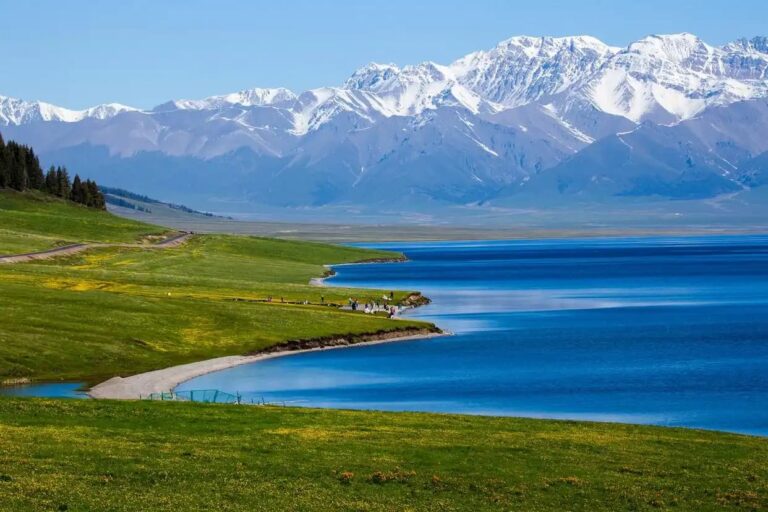
The lavender zones are spread out, so a car is effectively required. The 65th Regiment lavender manor area is the most frequently cited cluster, with the Sigong area and Lucaogou township close by. Travelers report that signage is improving but still patchy, so having a map pin for the specific manor you want is wise. The lavender country sits on the same corridor as two marquee Ili sights, so most itineraries pair it with the Guozigou Bridge, the cable stayed span over an alpine gorge, and with Sayram Lake, the cold alpine lake a short drive further west on the highway.

A common routing is Yining to Huocheng lavender in the morning, then west through Guozigou to Sayram Lake for the afternoon and evening. Because the lake sits at altitude and gets cold after sundown, many drivers return to Huocheng or Yining rather than sleeping at the lakeside. The Tekes bagua city and the Nalati Grassland are farther east and better saved for a separate day if your schedule allows.
Tickets and costs
Costs here are genuinely mixed, and official sources state that the individual lavender manor fields are typically free to enter, since many are still active farms that welcome visitors along the road. The paid element is usually the Huocheng Lavender Festival ground pass or a specific managed demonstration garden, which travelers report ran around 30 to 60 RMB as of 2024 and 2025. Some private manors charge a small entry or a parking fee and then fold that into a lavender product purchase, which is a soft way to monetize the visit.
You should budget separately for transport, which is the real cost driver. A private car with driver for a full Ili day loops in the range of a few hundred RMB depending on distance and season, while a self drive only carries fuel and rental. Essential oil, dried bouquets, and sachets sold at the roadside stands are priced per item, and travelers report wide variation, so a quick comparison between two stands is worthwhile. None of these numbers are fixed, and the festival pass price in particular has moved between years, so treat 30 to 60 RMB as a planning estimate rather than a quoted rate.
Picking the right weeks
The single safest answer is mid to late June. Official sources and operator briefings agree that the densest, most photographic purple appears in that window, with the last week of June often called the peak. The Huocheng Lavender Festival is scheduled to overlap this period, so weekend visitors get the added draw of markets and performances, though weekdays are calmer for photography.
Avoid booking for July expecting flowers. Once the harvest for oil begins, usually in early July, the rows are cut and the purple disappears within days. Travelers who arrived in early July report bare, trimmed fields and a stronger smell of cut foliage than of blooms. If your trip is locked to July for other reasons, treat lavender as a maybe rather than a centerpiece and lean on the grasslands and lakes instead.

Within the day, light matters as much as the date. Midday sun washes out the purple and harshens shadows, while the low golden light of early morning and late evening gives the fields depth and richness. Because Sayram Lake is nearby and best at sunrise, a smart plan photographs the lake at first light, then drifts back to the lavender as the day warms.
Day by day itinerary: a 2 day Ili lavender and Sayram loop
Below is a timed plan built from operator briefings and traveler logs. It assumes you start from Yining and have a car. Times are suggestions, not promises, and should flex with weather and road conditions.
| Day | Time | Plan | Note |
|---|---|---|---|
| Day 1 | 07:30 | Depart Yining, drive to Huocheng lavender area | Catch morning light on the rows |
| Day 1 | 09:00 to 11:30 | Walk 65th Regiment and Sigong fields, photos | Best purple before midday wash |
| Day 1 | 12:00 | Lunch in Huocheng town, lamb polo and naan | Local canteens, not tourist halls |
| Day 1 | 14:00 to 15:30 | Drive west via Guozigou Bridge | Stop at the gorge viewpoint |
| Day 1 | 16:00 to 19:30 | Sayram Lake shoreline, evening light | Cold and windy, bring a layer |
| Day 1 | 20:30 | Return to Huocheng or Yining for the night | Lakeside stays are limited |
| Day 2 | 08:00 | Second shorter lavender visit if needed | Buy oil and sachets |
| Day 2 | 10:30 | Drive to Tekes or Nalati Grassland | Different biome, green not purple |
| Day 2 | 13:00 to 18:00 | Grassland walk, Kazakh yurt stop | Longer drive, plan fuel |
| Day 2 | 19:30 | Overnight in the east or return to Yining | Close the loop |
This loop keeps the lavender as the anchor on day one and uses day two for the broader Ili scenery, which is the combination most travelers say justified the long flight in. If you only have one day, drop day two and do the lavender plus Sayram half loop, but expect a full and early start.
Beds near the sights
Two bases make sense. Huocheng county town is the closest to the fields, with basic but adequate hotels and a few lavender themed guesthouses that open during the season. Staying here cuts your morning drive to minutes, which matters for golden hour photography. Yining city is the larger base, with more hotel grades, better dining, and the airport, at the cost of a longer commute to the fields each morning.
Travelers report that during the festival weekends, rooms in both towns fill quickly and prices rise, so booking ahead for a June visit is the safer play. Lakeside stays near Sayram are limited and cold at night, so most people treat the lake as a day destination and sleep in the valley. Guesthouses attached to the lavender manors exist but are seasonal and basic, best suited to travelers who want to be inside the purple at dawn.
What and where to eat nearby
The Ili kitchen is its own regional style within Xinjiang food, heavier on dairy and lamb than the south. Near the lavender fields, the dependable order is lamb polo, the oily rice pilaf with carrot and meat, eaten with naan flatbread to scoop it. Roadside canteens in Huocheng town serve this cheaply and hot, and travelers report generous portions. Dairy shows up as thick yogurt, kurt dried cheese balls, and milk tea, which is the standard local drink and a good counter to the summer heat.
For a fuller picture of the regional table, our Xinjiang cuisine guide covers the dishes you will meet across the prefecture, from grilled skewers to hand pulled noodles. Around the fields you will also find lavender infused items, lavender honey, and lavender ice cream at festival stalls, which are novel but priced for visitors. A plain lunch in town plus one lavender souvenir is the better value than a themed restaurant meal.
Local practicalities
Sun protection is the first item. The Ili summer sun is strong and the fields offer almost no shade, so a hat, sunglasses, and sunscreen are non negotiable, and travelers repeatedly mention underestimating the burn risk while lying down for low angle shots. Photography timing is the second: shoot at golden hour, early morning or the last two hours before sunset, and avoid the flat midday light that bleaches the purple.
Mosquitoes and heat are real in late June, so a repellent and water are worth carrying. Combine the lavender with Sayram Lake in the same trip by photographing the lake at sunrise when it is calm and reflective, then moving to the lower, warmer fields as the day builds. Wear shoes you can walk between rows in, since the ground is uneven dirt, and ask before entering any privately fenced manor, because some blocks are active oil farms with restricted access during harvest.
What people want to know
When exactly is the Huocheng lavender at its purple peak?
Official sources and traveler reports point to mid to late June, with the final week of June most often called the densest bloom. The window is short, and by early July the flowers are typically cut for oil.
Is there an entrance fee for the lavender fields?
The open manor fields are generally free, but the Huocheng Lavender Festival ground pass or a managed garden ran around 30 to 60 RMB as of 2024 and 2025. Some private manors charge a small entry or parking fee.
Can I visit Huocheng lavender without a car?
It is difficult. The fields are spread across the 65th Regiment, Sigong, and Lucaogou areas with weak signage, so most visitors use a rental car or a licensed driver based in Yining.
What should I pair the lavender fields with?
The same corridor holds the Guozigou Bridge and Sayram Lake, which most travelers combine into one loop. Tekes and Nalati Grassland are farther east and better for a second day.
Are the lavender products worth buying?
Essential oil, dried bouquets, and sachets sold roadside are the genuine local product, though prices vary between stands. Compare two vendors before buying, and check that oil is sealed and labeled.
Is late June too crowded?
Festival weekends draw the biggest crowds, while weekdays are calmer for photos. Travelers report that arriving at the fields before 10:00 gives you quieter rows and better light.
What if my trip is locked to July?
Expect cut, trimmed fields rather than purple. Plan the trip around grasslands and lakes instead, and treat any remaining lavender as a bonus rather than the main event.
About the author: Karl Huang is the editor of xinjiangtraveltips.com.