International Grand Bazaar Urumqi: A Complete Guide to Xinjiang’s Most Vibrant Market
International Grand Bazaar Urumqi: A Complete Guide to Xinjiang’s Most Vibrant Market
Last updated: July 15, 2026 · Written by Karl Huang, a Xinjiang travel specialist who has spent time across the region. Practical details are cross-checked against official tourism, transport, and border-regulation sources.
Standing beneath the 80-meter-tall minaret at the heart of Urumqi, you suddenly understand why the International Grand Bazaar (国际大巴扎) has become the single most visited landmark in Xinjiang’s capital. This isn’t just a market — though with over 3,000 shops it certainly qualifies as one of the world’s largest bazaars. It’s a living, breathing intersection of cultures where Uyghur traders haggle over Persian carpets, Kazakh women buyers sort through piles of colorful atlas silk, Han Chinese tourists sample cumin-dusted lamb skewers, and the call to prayer from the adjacent mosque mingles with the sizzle of street food stalls. Since opening in 2003 on the site of a much older market that dates back to the Silk Road era, the International Grand Bazaar has become far more than a tourist attraction. For Urumqi residents, it remains an essential part of daily life — a place to buy spices, dried fruits, fabrics, and tools, to meet friends over tea, and to experience the city’s distinct Central Asian character. For visitors, it offers an unparalleled introduction to the sights, smells, tastes, and sounds of Xinjiang’s diverse cultures. Whether you have two hours or two days, this guide will help you navigate the bazaar’s labyrinthine alleys, discover lesser-known stops beyond the main thoroughfares, and experience this remarkable place like a local rather than a tourist.
Contents:
Welcome to the International Grand Bazaar
The International Grand Bazaar (Guoji Dabazha / 国际大巴扎) occupies a special place in Urumqi’s urban landscape and in the hearts of both locals and visitors. Located in the Tianshan District of central Urumqi, the bazaar spans an enormous area and houses more than 3,000 shops across multiple buildings, selling everything from handmade rugs and ethnic clothing to dried fruits, nuts, spices, musical instruments, jade, and countless varieties of tea. The complex was designed to evoke the great bazaars of historical Samarkand, Bukhara, and Kashgar, with soaring domes, intricate tile work, carved wooden columns, and narrow vaulted passageways that seem to lead everywhere and nowhere at once.
What makes the International Grand Bazaar unique among tourist markets in China is the extent to which it remains a functioning part of the local economy. Yes, there are stalls selling mass-produced souvenirs aimed at tour groups, and you’ll encounter aggressive touts near the main entrance. But venture deeper into the complex and you’ll find Uyghur families shopping for wedding trousseaus, restaurateurs stocking up on spices, and craftspeople repairing musical instruments passed down through generations. The bazaar is busiest on weekends and during major festivals like Corban (Eid al-Adha) and the Spring Festival, when the entire complex seems to vibrate with energy, music, and the aromas of roasting meats and fresh-baked naan.
The best time to visit is late afternoon, when the light turns golden and the bazaar takes on an almost magical quality. The Islamic-style architecture glows amber in the setting sun, the call to prayer echoes across the complex, and the evening food stalls begin to fire up. Plan to spend at least 3-4 hours to see the main sections properly; if you’re a serious shopper or photographer, you could easily spend an entire day exploring the bazaar’s many layers.
History & Cultural Significance
The site of the International Grand Bazaar has been a trading hub for centuries, though the modern complex dates to 2003. Urumqi has long occupied a strategic position on the northern branch of the Silk Road, serving as a gateway between the settled oasis cities of Central Asia and the nomadic grasslands of the Mongolian steppe. Historical records indicate that a bustling market existed at or near this location during the Qing Dynasty (1644-1912), when Urumqi (then known as Dihua) served as a major supply depot for Qing military campaigns in Central Asia.
The modern bazaar was conceived as part of a broader effort to revitalize Urumqi’s historic core and create a flagship destination that would showcase Xinjiang’s cultural diversity to domestic and international visitors. The project was completed in 2003, combining traditional Central Asian architectural elements with modern infrastructure, including proper ventilation, fire safety systems, and accessibility features that the original historical markets lacked. The design draws inspiration from the great Islamic architectural traditions of Samarkand, Istahan, and Kashgar, featuring blue-tiled domes, horseshoe arches, intricately carved wooden balconies, and a central minaret that has become an iconic symbol of modern Urumqi.
Culturally, the bazaar serves as a vital gathering place for Urumqi’s diverse communities. Uyghurs, Hans, Kazakhs, Kirghiz, Uzbeks, Tajiks, and representatives of Xinjiang’s many other ethnic groups all converge here, making it one of the few places in the region where you can observe the everyday interactions between these communities. During major religious and cultural festivals, the bazaar becomes the focal point of citywide celebrations, with traditional music performances, dance troupes, and communal feasting that spills out from the food courts into the surrounding streets.
The bazaar also plays an important economic role. For many Uyghur craftspeople and small-scale traders, the bazaar provides essential market access and a measure of economic independence. Carpet weavers from Hotan, knife makers from Yengisar, embroiderers from Kashgar, and musicians from the Ili Valley all maintain stalls or supply shops within the complex. While tourism has undoubtedly changed the character of the bazaar, it has also created new opportunities for artisans to reach customers far beyond their local villages.
Architecture & Design: A Visual Journey
The architectural design of the International Grand Bazaar is one of its most compelling features, representing a conscious effort to create a contemporary space that honors historical Islamic architectural traditions. The master plan was developed by a team of architects who studied the great bazaars of Central Asia, drawing particular inspiration from the Registan in Samarkand and the bazaars of Bukhara and Kashgar. The result is a complex that feels authentically rooted in the region’s architectural heritage while incorporating modern amenities and safety features.
The most recognizable structure is the Grand Minaret (also called the Bazaar Tower), an 80-meter-tall tower that dominates the Urumqi skyline in the vicinity of the bazaar. Modeled on traditional Central Asian minarets, the tower features intricate geometric patterns, calligraphic inscriptions in Arabic and Uyghur scripts, and a viewing platform near the top that offers panoramic views of the city and, on clear days, the distant Tianshan Mountains. The minaret is particularly spectacular when illuminated at night, casting a warm glow across the entire complex.
The main market halls are arranged around a series of interconnected courtyards, each with its own architectural character. The carpet hall features a soaring central dome decorated with blue and turquoise tiles in geometric patterns, while the food court is covered by a series of smaller domes that allow natural light to filter through in mesmerizing patterns. The passageways between buildings are deliberately narrow and vaulted, creating a sense of discovery and intimacy that contrasts with the monumental scale of the main halls.
Particularly noteworthy are the wooden elements throughout the complex. Master carvers from Hotan and Kashgar were commissioned to create the intricate latticework screens, balcony railings, and doorframes that adorn many of the buildings. These feature traditional Uyghur motifs including the pomegranate (symbolizing fertility), the grapevine (prosperity), and complex star and polygon patterns that reflect the Islamic prohibition on figurative representation in religious architecture. The result is a space that feels both historically grounded and vibrantly alive.
Photography enthusiasts will find endless subjects here. The play of light and shadow in the vaulted passageways, the vibrant colors of the spice displays against the earth-toned walls, the intricate details of the tile work, and the animated expressions of traders and shoppers all provide compelling compositional opportunities. The complex is especially photogenic during the “golden hours” of early morning and late afternoon, when the warm light brings out the rich colors of the tiles and textiles.
What to Buy: The Complete Shopping Guide
The International Grand Bazaar is arguably the best place in Xinjiang to shop for traditional crafts, food products, and cultural items. With over 3,000 shops, the selection is overwhelming, so it pays to have a strategy. Here’s a categorized guide to the best purchases, along with tips on quality assessment and price negotiation.
Textiles & Carpets
Uyghur carpets (gilim and atlas) are among Xinjiang’s most prestigious handicrafts. The bazaar’s carpet hall houses dozens of shops selling both new and antique (or antique-style) rugs. Authentic Uyghur carpets are hand-knotted using wool from local sheep, with natural dyes derived from pomegranate skins, walnut hulls, and madder root. Look for the distinctive Uyghur patterns: geometric designs, stylized flowers, and the “elephant foot” motif that is unique to the region. Prices range from a few hundred yuan for small prayer rugs to tens of thousands for large room-sized carpets. Be wary of machine-made imports passed off as handmade; authentic pieces will have slight irregularities in the weave and the knots will be tight and uniform.
Atlas silk — the traditional resist-dyed silk fabric made by Uyghur women — is another exceptional purchase. The most famous variety comes from Hotan, where the dyeing technique has been passed down through generations of women artisans. The fabrics feature bold, saturated colors (especially indigo, crimson, and saffron yellow) in swirling patterns that resemble tie-dye but are created through a much more labor-intensive process of tying and dyeing. A length of atlas silk makes an extraordinary gift or personal keepsake, and prices are surprisingly reasonable (typically 200-800 yuan depending on size and quality).
Musical Instruments
Xinjiang has a rich musical tradition, and the bazaar’s instrument shops are fascinating places to explore. The most iconic instrument is the dutar, a two-stringed lute played throughout Central Asia. Handmade dutars feature intricate inlay work and are surprisingly affordable (300-1,500 yuan). Other instruments worth considering include the rawap (a short-necked lute with a distinctive bowl-shaped back), the satar (a bowed string instrument with a haunting, ethereal tone), and various frame drums (dap). Many shop owners are themselves musicians and will happily demonstrate the instruments for you — and yes, this is often a prelude to a sales pitch, but it’s also a genuine cultural exchange.
Spices & Food Products
The spice section is a sensory highlight of any bazaar visit. Stalls display towering pyramids of cumin (the essential spice of Xinjiang cuisine), saffron threads, dried chili peppers, wild pepper (Sichuan pepper’s distant cousin), dried rose petals, and countless blends whose recipes are closely guarded family secrets. Prices are very reasonable, and most vendors will let you smell samples before buying. Dried fruits and nuts are another excellent purchase: Hotan walnuts, Aksu apples (dried), Turpan raisins, Hami melon seeds, and almonds from the Ili Valley are all available in bulk.
For the adventurous eater, several shops sell prepared foods that travel well: vacuum-packed dapanji seasoning kits, compressed bricks of dried yogurt, boxes of Baklava and other nut pastries, and tins of brick tea. These make great gifts and allow you to recreate (or at least approximate) Xinjiang flavors back home.
Jewelry & Accessories
Uyghur jewelry is characterized by bold designs, heavy silver work, and the extensive use of turquoise, coral, and carnelian set in silver. Traditional pieces include the “ota” (a large pectoral worn by married women), heavy silver bracelets, and elaborate headdresses adorned with coins and beads. Modern adaptations — silver rings set with Xinjiang jade, turquoise earrings, and beaded necklaces — are also widely available and make distinctive, wearable souvenirs. As always, be cautious about claims of “genuine old silver” or “ancient turquoise”; there is a thriving market in reproductions, and while they can be beautiful in their own right, they are not investment-grade antiques.
Jade (Yu)
Xinjiang is famous for its jade, particularly the creamy white “mutton-fat” jade (yangzhi yu) that has been prized in Chinese culture for thousands of years. The bazaar has numerous jade shops, ranging from high-end galleries to small stalls with modest selections. Jade appreciation is a lifelong pursuit, and distinguishing genuine Xinjiang jade from imitations or lower-quality varieties requires expertise. If you’re serious about purchasing jade, do your research beforehand and consider visiting with a knowledgeable local. For most visitors, small jade pendants or figurines (100-500 yuan) make nice, relatively low-risk souvenirs.
Food & Drink: What to Eat at the Bazaar
The International Grand Bazaar’s food scene is a destination in its own right. The main food court and the surrounding streets are packed with stalls and small restaurants serving Uyghur, Kazakh, Kyrgyz, and Han Chinese specialties. Even if you’re not in the market for souvenirs, a visit to the bazaar solely for the food would be time well spent.
Must-Try Dishes
Kawap (Lamb Skewers): The bazaar’s most iconic food item. Cubes of lamb (often including small pieces of fat for flavor) are threaded onto flat metal skewers, seasoned with cumin, chili powder, and salt, then grilled over charcoal. The best kawap are made from freshly slaughtered lamb and grilled to order. Expect to pay 5-15 yuan per skewer depending on size and location within the bazaar.
Naan: Fresh-baked naan is available throughout the bazaar, baked in tandoor-style clay ovens that reach temperatures of 400°C. The most common variety is the simple round naan topped with sesame seeds, but you’ll also find “guitar-shaped” naan (a Uyghur specialty), naan topped with onions and peppers, and sweet naan made with milk and sugar. A fresh naan costs 3-10 yuan and makes an excellent snack or breakfast.
Polo (Hand-Pulled Rice / Pilaf): Several restaurants within the bazaar serve excellent polo — steamed rice cooked with lamb, carrots, onions, and raisins. A generous portion costs 25-45 yuan and is substantial enough for a full meal. Look for the restaurants on the upper levels of the main buildings, which tend to be less touristy than the street-level stalls.
Samsa (Baked Buns): These triangular pastries are filled with minced lamb, onion, and sometimes pumpkin or chickpeas, then baked in a tandoor oven until the pastry is flaky and golden. Samsa are cheap (5-12 yuan each), portable, and delicious.
Fresh Fruit Juice: Urumqi’s dry climate produces some of the world’s sweetest melons, grapes, and stone fruits, and several stalls in the bazaar press fresh juice to order. In summer, try the watermelon or Hami melon juice; in autumn, grape juice is exceptional. A large cup costs 10-20 yuan.
Baklava and Samsade (Sweet Pastries): The bazaar’s Uyghur sweet shops offer an array of nut-based pastries soaked in honey syrup. These are distinctly different from Greek or Turkish baklava — Uyghur versions use local nuts (walnuts, almonds, pistachios) and often incorporate dried fruits. A box of assorted sweets costs 30-80 yuan and makes a great gift.
Drinks
Xinjiang Milk Tea (Nai Cha): Salty, creamy, and deeply comforting, this is the everyday drink of Xinjiang’s Turkic peoples. Several teahouses within the bazaar serve authentic milk tea brewed with bricks of fermented tea, whole milk, and salt. A bowl costs 5-15 yuan.
Boza: A traditional fermented drink made from millet, boza has a slightly sour, yeasty flavor and a low alcohol content (usually less than 1%). It’s an acquired taste but an authentic one, and it’s becoming increasingly hard to find even in Xinjiang. If you spot a stall selling boza, consider trying a small cup.
Green Tea: Simple, strong green tea (chay) is the default beverage in Uyghur households and is widely available in the bazaar’s teahouses. It’s the perfect palate cleanser after a meal rich in lamb and flatbreads.
Practical Information
Location & Getting There
The International Grand Bazaar is located at 8 Jiefang South Road (解放南路8号), Tianshan District, Urumqi. It’s in the city center, about 3 kilometers south of the main railway station and 18 kilometers from Diwopu International Airport.
By Metro: The most convenient way to reach the bazaar is by Urumqi Metro Line 1. Get off at “Guoji Dabazha” Station (国际大巴扎站), which is directly adjacent to the bazaar complex. The station exit leads you right to the main entrance.
By Bus: Numerous bus routes stop near the bazaar, including routes 1, 101, 104, and 310. Ask for “Dabazha” (大巴扎) and any local will direct you.
By Taxi/DiDi: Simply show the driver the Chinese name: 国际大巴扎. Most drivers in Urumqi know the location. The ride from the city center takes 10-20 minutes depending on traffic.
Opening Hours & Admission
The bazaar is open daily from 10:00 AM to 10:00 PM (some stalls and restaurants stay open later, especially in summer). There is no admission fee to enter the complex. Some of the mini-museums and cultural exhibition halls within the bazaar charge a small entrance fee (10-30 yuan).
The best times to visit are weekday afternoons (fewer tour groups) and Sunday mornings (when local shoppers are out in force and the atmosphere is most authentic). Avoid visiting during the midday heat in summer (July-August), when the complex can become uncomfortably hot and crowded.
Tickets & Tours
While there’s no ticket required to enter the bazaar, some visitors may appreciate joining a guided tour. Several Urumqi tour companies offer half-day bazaar tours that include historical context, introductions to specific craftspeople, and food tastings. Prices typically range from 150-400 yuan per person depending on group size and inclusions. If you speak some Chinese or Uyghur, you can navigate the bazaar independently without difficulty; if not, a guide can greatly enhance the experience by facilitating conversations with traders and explaining cultural nuances.
Payment
Most shops in the bazaar accept Alipay and WeChat Pay, and an increasing number accept international credit cards (Visa, MasterCard). However, it’s still a good idea to carry some cash (Chinese yuan), especially for small purchases at food stalls and for price negotiation, where cash payments sometimes result in better deals. ATMs are available both within the bazaar complex and on the surrounding streets.
Safety & Security
The bazaar has a visible security presence, which contributes to a safe environment for visitors. Bag checks are conducted at the main entrances. The complex is well-lit and patrolled regularly. Standard precautions apply: keep an eye on your belongings in crowded areas, be cautious about flashy displays of wealth, and avoid confrontations with aggressive vendors. The bazaar is generally very safe for solo travelers, including solo women travelers, though as anywhere, it’s wise to stay aware of your surroundings, especially after dark.
Travel Tips & Etiquette
Bargaining: Haggling is expected and accepted at the bazaar, but it should be done with good humor and respect. A good rule of thumb is to start at 50-60% of the initial asking price and work up from there. If you’re not prepared to buy, don’t engage in lengthy negotiations — it’s considered disrespectful. Remember that the vendors are often making a modest living from their small stalls, so while bargaining is part of the fun, extreme lowballing is poor form.
Dress Code: There is no formal dress code for visiting the bazaar, but modest dress is appreciated, especially if you plan to visit the adjacent mosque or interact with observant Muslim vendors. Covering shoulders and knees is a good baseline. Comfortable walking shoes are essential — the bazaar complex covers a large area and the floors can be uneven in places.
Photography: Photography is generally permitted throughout the bazaar, but always ask before photographing people, especially women and children. Some shop owners may ask for payment if you photograph their goods for extended periods or use professional equipment. Drone photography is prohibited within the bazaar complex.
Language: Uyghur and Mandarin Chinese are the primary languages spoken in the bazaar. Some vendors speak basic English, Russian, or Turkish, reflecting the international character of Xinjiang’s trading networks. Translation apps (WeChat’s built-in translate feature works well) can be very helpful. Learning a few basic Uyghur phrases — “Assalamu alaykum” (peace be upon you), “Rahmat” (thank you), “Qancha?” (how much?) — will be greatly appreciated and often results in warmer interactions and better prices.
What to Bring: Carry a reusable water bottle (there are drinking water stations in the complex), sunscreen (the Urumqi sun is surprisingly strong even in spring and autumn), and a cloth bag or small backpack for purchases. If you plan to buy carpets or large items, inquire about shipping services — many shops can arrange domestic or international shipping.
Crowds: The bazaar can get extremely crowded, especially on weekends, during summer tourist season (June-September), and around major festivals. If you’re crowd-averse, visit on weekday mornings. If you thrive on energy and chaos, visit on a Sunday afternoon when the bazaar is at its most vibrant.
Nearby Attractions: Extending Your Visit
The International Grand Bazaar is well-situated for exploring other attractions in central Urumqi. Here are several worthwhile nearby destinations:
Xinjiang Regional Museum (新疆博物馆): Located about 3 kilometers northwest of the bazaar, this is one of China’s most important regional museums and an essential visit for understanding Xinjiang’s complex history and diverse cultures. The museum’s collections include remarkably well-preserved Tarim Basin mummies, Silk Road artifacts, and exhibits on each of Xinjiang’s 13 ethnic groups. Allow 2-4 hours. Admission is free but advance reservation is required.
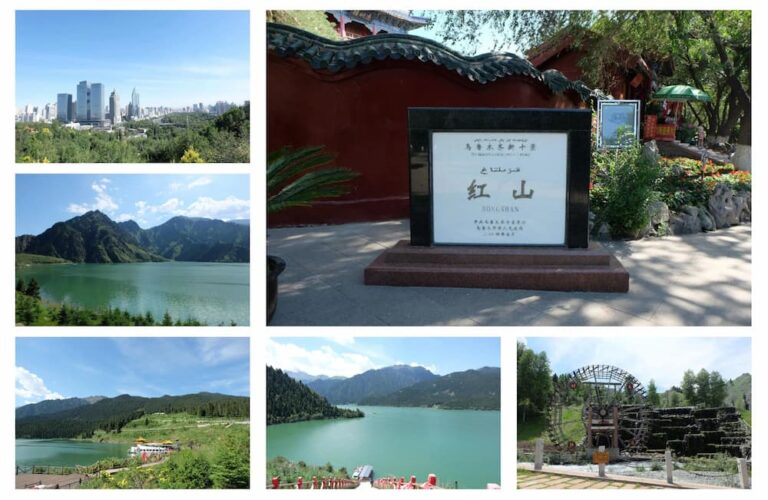
Hongshan Park (红山公园): A large urban park centered around “Red Hill,” which offers good walking trails and panoramic views of Urumqi. It’s about 2 kilometers from the bazaar and makes for a pleasant break from the intensity of the market environment.
People’s Square (人民广场): The symbolic center of Urumqi, featuring monuments, gardens, and frequent public performances. It’s a good place to observe daily life in the city and is within walking distance of the bazaar.
Erdaoqiao Night Market: In the same general area as the bazaar, this night market comes alive after sunset with additional food stalls, clothing vendors, and a lively atmosphere. It’s a great place to sample street food in the evening after a day at the bazaar.
Shuimogou Scenic Area (水磨沟风景区): A bit farther afield (about 10 kilometers northeast of the city center), this area features hot springs, hiking trails, and historical sites related to the Qing Dynasty. It makes for a good half-day trip if you have extra time in Urumqi.
Conclusion: Why the Grand Bazaar Matters
The International Grand Bazaar is many things: a shopping destination, a feast for the senses, an architectural showcase, and a tourist attraction. But at its best, it’s something more profound — a living good sign of the enduring power of the Silk Road’s cultural exchange, a place where the traditions of Central Asia remain vibrantly alive in the 21st century. Yes, it can be crowded, and yes, some corners feel overly commercialized. But if you slow down, venture beyond the main thoroughfares, and approach the experience with curiosity and respect, you’ll discover a place of genuine cultural richness and human warmth.
For the prepared traveler, the bazaar offers an unparalleled opportunity to engage with Xinjiang’s diverse cultures in a single location. You can sip tea with a Kazakh trader, watch a Uyghur carpet weaver at work, taste foods that have been perfected over centuries, and perhaps most importantly, gain a nuanced understanding of a region that is often misunderstood. Whether you visit for an hour or a day, the International Grand Bazaar will leave you with lasting memories — and probably a suitcase full of spices, textiles, and dried fruits.
Practical note: The bazaar is undergoing periodic renovations and upgrades, so some sections may be temporarily closed during your visit. Check locally for the most up-to-date information, and consider visiting on a weekday morning for the most authentic experience.
For the wider city plan, my Urumqi City Guide: What to Do in Xinjiang’s Capital Beyond the Layover maps out what’s worth your time beyond the layover.