Milk Tea and Yogurt in Xinjiang: A Guide to the Nomadic Dairy Tradition
If there is one universal experience that connects every traveler to Xinjiang’s heartland, it is sitting down to a bowl of Xinjiang milk tea or a spoonful of thick, tangy homemade yogurt. These two dairy staples are not merely beverages — they are cultural institutions, survival tools, and social rituals rolled into one.
Last updated: July 15, 2026 · Written by Karl Huang, a Xinjiang travel specialist who has spent time across the region. Practical details are cross-checked against official tourism, transport, and border-regulation sources.
For the Kazakh, Mongolian, Uyghur, Tajik, and Kyrgyz peoples who have inhabited the grasslands, mountains, and deserts of Xinjiang for centuries, dairy is the foundation of daily life. A Kazakh proverb captures it bluntly: “Rather go without food for a day than go without tea for a day” (宁可一日无食,不可一日无茶). This guide dives deep into Xinjiang’s two most iconic dairy drinks — salty milk tea and traditional fermented yogurt — covering their history, how they are made, the different styles across ethnic groups, where to try them, and even how to make them at home.
Xinjiang Milk Tea: The Soul of Nomadic Hospitality
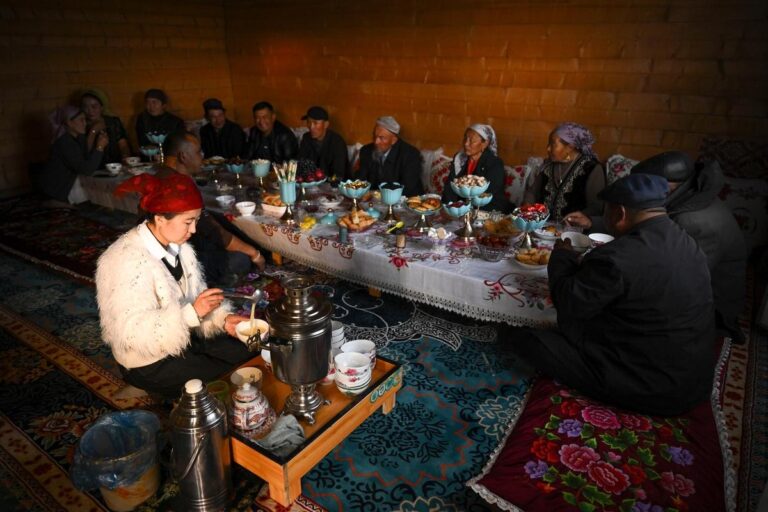
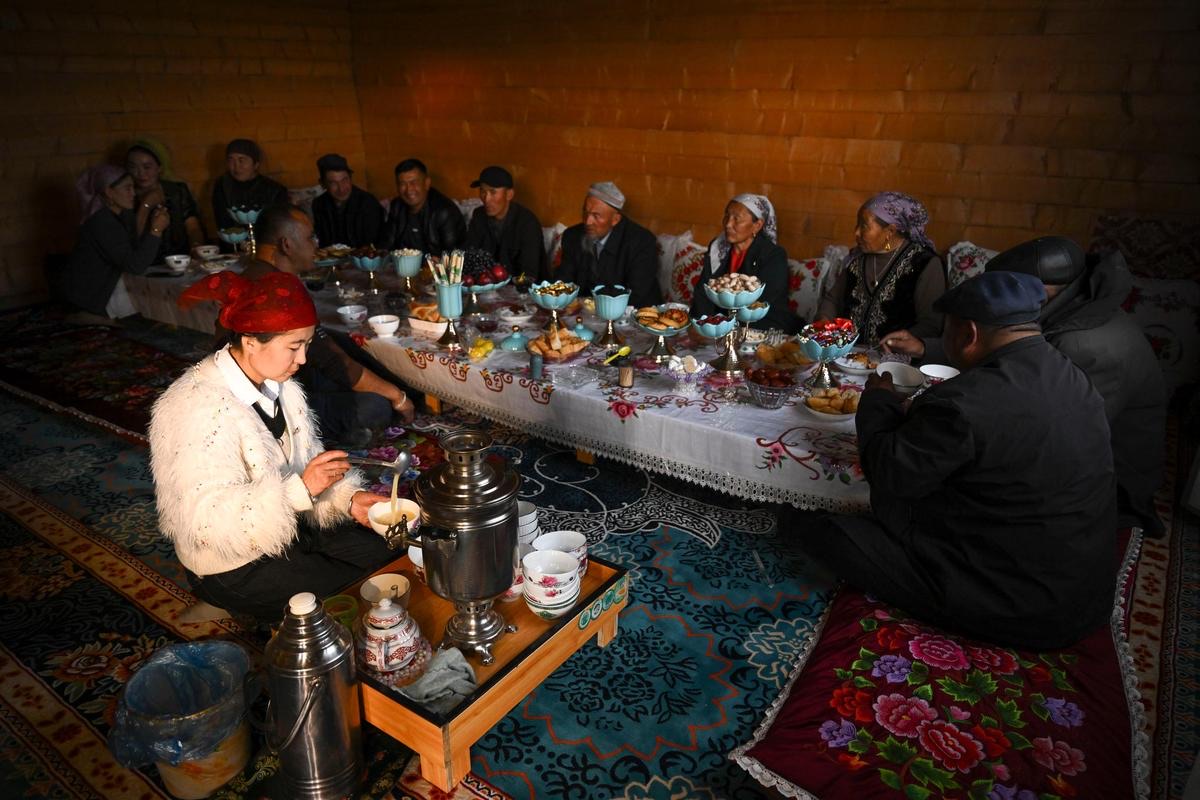
When a visitor arrives at a Kazakh yurt or a Uyghur family home anywhere in Xinjiang, the first thing offered is almost always a bowl of hot milk tea. Refusing it is considered impolite. Accepting it opens the door to conversation, trust, and the famous warmth of Xinjiang hospitality.
What Makes Xinjiang Milk Tea Different?
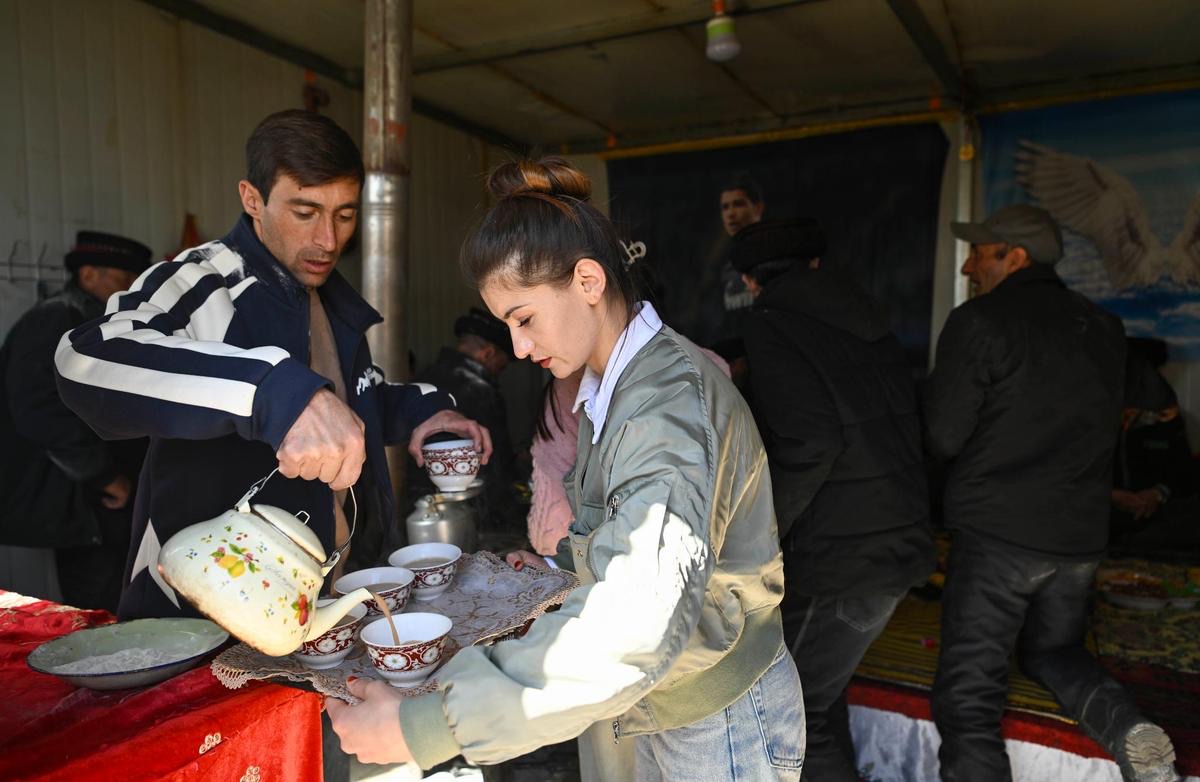
Xinjiang milk tea is fundamentally salty, not sweet — a fact that surprises many first-time visitors. Unlike the sugary bubble teas and sweetened chai lattes popular in much of the world, Xinjiang milk tea is savory, robust, and deeply nourishing. The salt serves a practical purpose in the region’s arid and semi-arid climate: it replenishes electrolytes lost through sweating during long days of herding or traveling.
The basic recipe is elegantly simple, yet the variations across ethnic groups reveal a rich mix of local adaptation:
- Base tea: Almost always compressed brick tea (砖茶 or 茯砖茶), a type of post-fermented dark tea that ages well and travels easily. The brick is chipped into pieces and boiled vigorously to extract its full flavor and color.
- Milk: Fresh cow’s milk is most common, but sheep’s milk, goat’s milk, and even mare’s milk are used depending on the region and season.
- Salt: Added during or after brewing — some families keep a salt dish on the table so each person can season their own bowl.
- Optional additions: Butter (酥油), cream, milk skin (奶皮子), Sichuan pepper powder, or even a pinch of white pepper in winter for extra warmth.
Ethnic Variations of Milk Tea in Xinjiang
Kazakh Milk Tea (哈萨克奶茶): Among Kazakh herders, milk tea is less a beverage and more a life-support system. Families will brew a large pot in the morning and keep it warm all day, refilling it as needed. The Kazakh method often involves boiling the brick tea, then adding fresh milk and salt, and sometimes stirring in a spoonful of milk skin (奶皮子) — the rich, creamy layer that forms on boiled milk — for extra richness. During cold winters, some Kazakhs add a pinch of white pepper or cloves to the tea for warmth.
Mongolian Milk Tea (蒙古奶茶): Mongolian-style milk tea in Xinjiang tends to be richer and more substantial than Kazakh versions. The tea is often brewed longer for a darker, more intense base, and generous amounts of milk are added. In Bortala and Bayingolin, Mongolian autonomous prefectures in Xinjiang, you may find the tea prepared with millet (炒米) added for texture, or with a dollop of butter melted on top.
Tajik Butter Tea (酥油茶): In the high-altitude Pamir region around Tashkurghan (塔什库尔干), Tajik herders make a version closer to what Tibetans would recognize: milk tea fortified with yak butter or ghee (酥油). This high-energy drink is essential for surviving the brutally cold winters at elevations above 3,000 meters, where a single bowl can provide enough calories to sustain hours of outdoor work.
Uyghur Milk Tea (维吾尔奶茶): In urban centers like Urumqi and Kashgar, Uyghur milk tea is omnipresent — served at breakfast with naan bread, in tea houses throughout the day, and as a digestive after heavy meals like lamb skewers or big plate chicken. The Uyghur version tends to be lighter on the milk, allowing the tea’s earthy notes to shine through.
Xinjiang Yogurt: Nature’s Perfect Fermented Food
If milk tea is the soul of Xinjiang hospitality, then Xinjiang yogurt (酸奶) is the daily sustenance that has fueled nomadic life for millennia. Unlike the sweetened, flavored, and heavily processed yogurts that dominate supermarket shelves, traditional Xinjiang yogurt is a very different creature: thick enough to hold its shape on a spoon, sharply tangy, and made with nothing more than fresh milk and a spoonful of yesterday’s batch as a starter culture.
How Traditional Xinjiang Yogurt Is Made
The process has barely changed in centuries:
- Boil the milk: Fresh cow’s milk (or sheep’s milk, in some pastoral areas) is brought to a boil, which sterilizes it and denatures the proteins for a thicker final texture.
- Cool to blood temperature: The boiled milk is left to cool until it feels just warm to the touch — roughly 40-45°C (104-113°F), the temperature at which lactic acid bacteria thrive.
- Add the starter: A small portion of preserved yogurt from the previous batch is stirred in. Some families have maintained the same starter culture for generations, treating it as a family heirloom.
- Incubate: The milk is covered and kept warm — traditionally wrapped in blankets or placed near the stove — for 4 to 8 hours. In summer, the warm ambient temperature of Xinjiang’s climate does the work naturally.
- Chill and serve: Once set to a custard-like consistency, the yogurt is cooled and served. A layer of thick cream (奶皮子) often forms on top — considered the best part by many locals.
The result is a yogurt that is dense, spoonable, intensely tart, and alive with probiotics. Foreign visitors often compare its texture to Greek yogurt, but the flavor is distinctly more complex — a lactic tang that reflects the rich diet of grass-fed, free-ranging Xinjiang cattle.
How to Eat Xinjiang Yogurt
There is no single “right” way to enjoy Xinjiang yogurt. Here are the most common serving styles:
- Plain with sugar or honey: The simplest approach — and the one most restaurants offer. A bowl of tart yogurt arrives with a small dish of white sugar on the side. You add as much as you like, balancing the sharpness to your taste.
- With naan bread: Tear off a piece of freshly baked naan, scoop up a bite of yogurt, and enjoy the contrast of chewy bread and creamy tang. This is classic Uyghur breakfast.
- Yogurt with ice and syrup (沙朗刀克): A beloved summer street food in southern Xinjiang — shaved ice is mixed with yogurt and drizzled with honey or fruit syrup. Known as “沙朗刀克” (shalang daoke) in Uyghur, it is the ultimate antidote to a Tarim Basin summer.
- As a side dish: Yogurt is served alongside rich, oily dishes like pilaf (抓饭) and grilled lamb as a palate cleanser. Its acidity cuts through the fat and aids digestion.
- Yogurt zongzi (酸奶粽子): A Kashgar specialty — sticky rice dumplings topped with a generous scoop of fresh yogurt and a drizzle of fruit jam or honey. Sweet, tangy, and unexpectedly addictive.
Yogurt Curds (酸奶疙瘩 / Kurt): The Original Trail Food
Perhaps the most fascinating product of Xinjiang’s dairy tradition is yogurt疙瘩 (suannai geda), also known as kurt in Turkic languages or simply “yogurt balls.” These dried, hardened nuggets of concentrated yogurt were developed by nomadic herders as a portable, non-perishable food source for long journeys across the steppe.
The process begins by draining fresh yogurt in a cloth bag for several days until most of the whey has dripped out and only a thick, cream cheese-like paste remains. This paste is shaped into small balls or discs and dried in the sun on woven reed mats. The finished product is hard, intensely sour, and slightly salty — an acquired taste, to be sure, but one that many travelers come to appreciate.
Yogurt curds come in two main varieties: dry (干奶疙瘩), which are hard, salty-sour, and shelf-stable for months; and wet (湿奶疙瘩), which are softer, creamier, and sometimes sweetened. In recent years, commercial producers have introduced sweetened, milder versions aimed at a broader market, but purists insist the traditional salty-sour kind is the real thing.
The Cultural Significance of Dairy in Xinjiang
To understand why milk tea and yogurt are so central to life in Xinjiang, you have to understand the region’s geography and history. Xinjiang is vast — about one-sixth of China’s total land area — and much of it is grassland, mountain, and desert. For the nomadic and semi-nomadic peoples who have lived here for millennia, dairy was not a luxury; it was the most reliable source of nutrition in an environment where crops were difficult to grow and meat was not always available.
A single cow or sheep could provide milk daily, which could be consumed fresh, fermented into yogurt for preservation, boiled into milk tea, or processed into dried curds that would last for months. Nothing was wasted: whey was fed to animals, and even the milk skin (奶皮子) was collected as a delicacy.
This dairy-centric food culture is also deeply woven into social life. The phrase “奶茶会” (milk tea gathering) in Xinjiang refers to community meetings where neighbors, officials, and residents gather over bowls of milk tea to discuss village affairs, resolve disputes, or simply catch up. It is the Central Asian equivalent of the town hall meeting, and its informality — the shared pot of tea, the absence of hierarchy — is a key part of its effectiveness.
Health Benefits of Xinjiang Milk Tea and Yogurt
Beyond their cultural value, Xinjiang’s traditional dairy drinks offer genuine health benefits that modern science is increasingly recognizing:
- Probiotic power: Traditional fermented yogurt is rich in live lactic acid bacteria, which support gut health, improve digestion, and strengthen the immune system. Unlike many commercial yogurts that are heat-treated after fermentation (killing the beneficial bacteria), traditional Xinjiang yogurt is consumed raw and alive.
- Electrolyte balance: The salt in milk tea was not added for flavor alone — it was a practical solution to electrolyte loss in Xinjiang’s dry, hot climate. Even today, a bowl of salty tea after physical labor feels more restorative than plain water.
- Digestive aid: Both milk tea and yogurt are traditional accompaniments to heavy, fatty meals. The tea’s tannins help break down fats, while yogurt’s acidity and probiotics ease digestion. This is why a bowl of yogurt is almost always served alongside big plate chicken and lamb dishes across Xinjiang.
- Nutrient density: Made from the milk of grass-fed animals on Xinjiang’s pristine pastures, traditional yogurt is rich in calcium, protein, vitamin B12, and conjugated linoleic acid (CLA), a fatty acid linked to various health benefits.
Where to Try Authentic Xinjiang Milk Tea and Yogurt
In Kashgar (喀什)
- The Century-Old Tea House (百年老茶馆): Located in Kashgar’s Old City, this is the most famous tea house in Xinjiang. While known primarily for spiced tea, they also serve excellent milk tea. Sit on the carpeted platform, listen to Uyghur musicians play traditional instruments, and soak in an atmosphere that has barely changed in a hundred years.
- Kashgar Night Market: Look for stalls selling 沙朗刀克 (shaved ice yogurt) in summer and hot milk tea in winter. The yogurt served in small ceramic bowls with sugar on the side is a quintessential Kashgar experience.
In Urumqi (乌鲁木齐)
- Grand Bazaar (大巴扎): The Erdaoqiao area is filled with tea shops, food stalls, and restaurants where you can sample both milk tea and yogurt. Some shops specialize in packaged yogurt curds (酸奶疙瘩) — a good place to buy edible souvenirs.
- Ethnic restaurants: Almost any Uyghur or Kazakh restaurant in Urumqi will serve milk tea as a matter of course. It often arrives without being ordered — a complimentary gesture of hospitality.
In Pastoral Areas
- Hemu Village (禾木村): In the Kanas area, Tuvan and Kazakh herder families often welcome visitors into their wooden cabins for homemade milk tea and fresh yogurt. This is arguably the most authentic way to experience Xinjiang’s dairy culture — sitting on felt carpets in a log cabin, watching the mist rise over the mountains while sipping tea that was made from a cow milked that morning.
- Nalati Grassland (那拉提草原): Kazakh yurt stays on the Nalati grasslands almost always include fresh yogurt and milk tea as part of the experience. Waking up to a bowl of yogurt made from the milk of horses grazing outside your yurt is an unforgettable Xinjiang food experience.
How to Make Xinjiang Milk Tea at Home
If you cannot travel to Xinjiang, you can recreate a reasonable approximation at home. Here is a simplified recipe:
Ingredients (serves 2):
- 2 cups water
- 1-2 tablespoons loose compressed brick tea (茯砖茶) — available at Chinese grocery stores or online. Pu-erh tea can substitute in a pinch.
- 1 cup fresh whole milk (whole milk is essential — low-fat will not taste right)
- 1/4 teaspoon salt, or to taste
- Optional: a small pat of butter, a pinch of white pepper
Instructions:
- Bring the water to a boil in a saucepan. Add the brick tea and reduce heat. Simmer for 5 minutes, then turn off the heat and let steep for another 4-5 minutes until the tea is dark and aromatic.
- Add the milk and bring back to a gentle boil, stirring occasionally. If using butter, add it now.
- Add salt and stir. Taste and adjust — the tea should be noticeably salty but not unpleasant.
- Strain through a fine mesh strainer into a teapot or directly into bowls.
- Serve hot, ideally with naan bread for dipping.
Note: If you cannot find brick tea, loose-leaf black tea (such as Assam or Ceylon) will produce a drinkable approximation, but the flavor will be less earthy and complex than the authentic version.
Practical Tips for Travelers
- Embrace the salt: If you are used to sweetened tea, the saltiness of Xinjiang milk tea will be jarring at first. Give it a few sips — most travelers find it grows on them quickly, and the savory flavor pairs surprisingly well with food.
- Yogurt is a digestive ally: Xinjiang cuisine is famously rich and meat-heavy. Ordering yogurt alongside grilled lamb or big plate chicken is not just delicious — it is practically medicinal for your stomach. After a heavy meal of oily meat dishes, a bowl of tart yogurt settles the stomach remarkably well.
- Start with sweetened yogurt as a beginner: If the pure tartness of traditional yogurt is too intense, ask for extra sugar or honey. Many restaurants will happily oblige. Once your palate adjusts, try reducing the sweetener — you may find you prefer the natural tang.
- Buy yogurt curds as souvenirs: Packaged 酸奶疙瘩 keeps for months without refrigeration and makes a uniquely Xinjiang gift. Look for the sweetened versions if buying for friends who have never tried Central Asian dairy products.
- Respect the ritual: When offered milk tea in a home or yurt, accept it with both hands as a sign of respect. Your host will likely refill your bowl repeatedly — if you have had enough, place your hand over the bowl to indicate you are done.
Why Xinjiang’s Dairy Culture Matters
In an era of industrial food production and globalized beverage chains, Xinjiang’s milk tea and yogurt traditions stand as living links to an older way of life — one in which food and drink were inseparable from the land, the seasons, and the community. Every bowl of salty tea and every spoonful of sharp yogurt tells a story: of herders who braved winter storms on the steppe, of grandmothers who passed down starter cultures through generations, of travelers who found warmth and welcome in a stranger’s yurt.
When you visit Xinjiang, do not just see the mountains and the deserts. Sit down. Accept the tea. Taste the yogurt. In those simple acts, you will find something closer to the heart of this extraordinary region than any guidebook can convey.
Who lives in Xinjiang?
Home to Uyghur, Han, Kazakh, Hui, Mongol, Tajik, and other ethnic groups with rich diverse traditions.
What language is spoken?
Mandarin Chinese is universal. Uyghur in the south, Kazakh in Altay/Ili. English is limited—use translation apps.
Any cultural tips?
Ask before photographing people. Dress modestly at religious sites. Accept tea when offered—it’s hospitable to refuse.