Xinjiang Tomatoes: The Red Fields Behind China’s Ketchup
I did not come to Xinjiang for ketchup. Then I learned that the red in a large share of the world’s tomato paste starts in the irrigated fields south of the Tianshan, and that in late summer the highways past Yanqi and Shihezi turn into tunnels of red. Xinjiang is, quietly, one of the most important tomato-growing regions on Earth, and the story is better than the condiment suggests. The fruit that ends up in pasta sauce in kitchens far from here is the same fruit that brightens a street-side bowl of laghman in Korla, and the same fruit that a farmer near Toksun will hand you, still warm from the vine, for the price of a goodbye.
Why Xinjiang owns China’s tomato industry
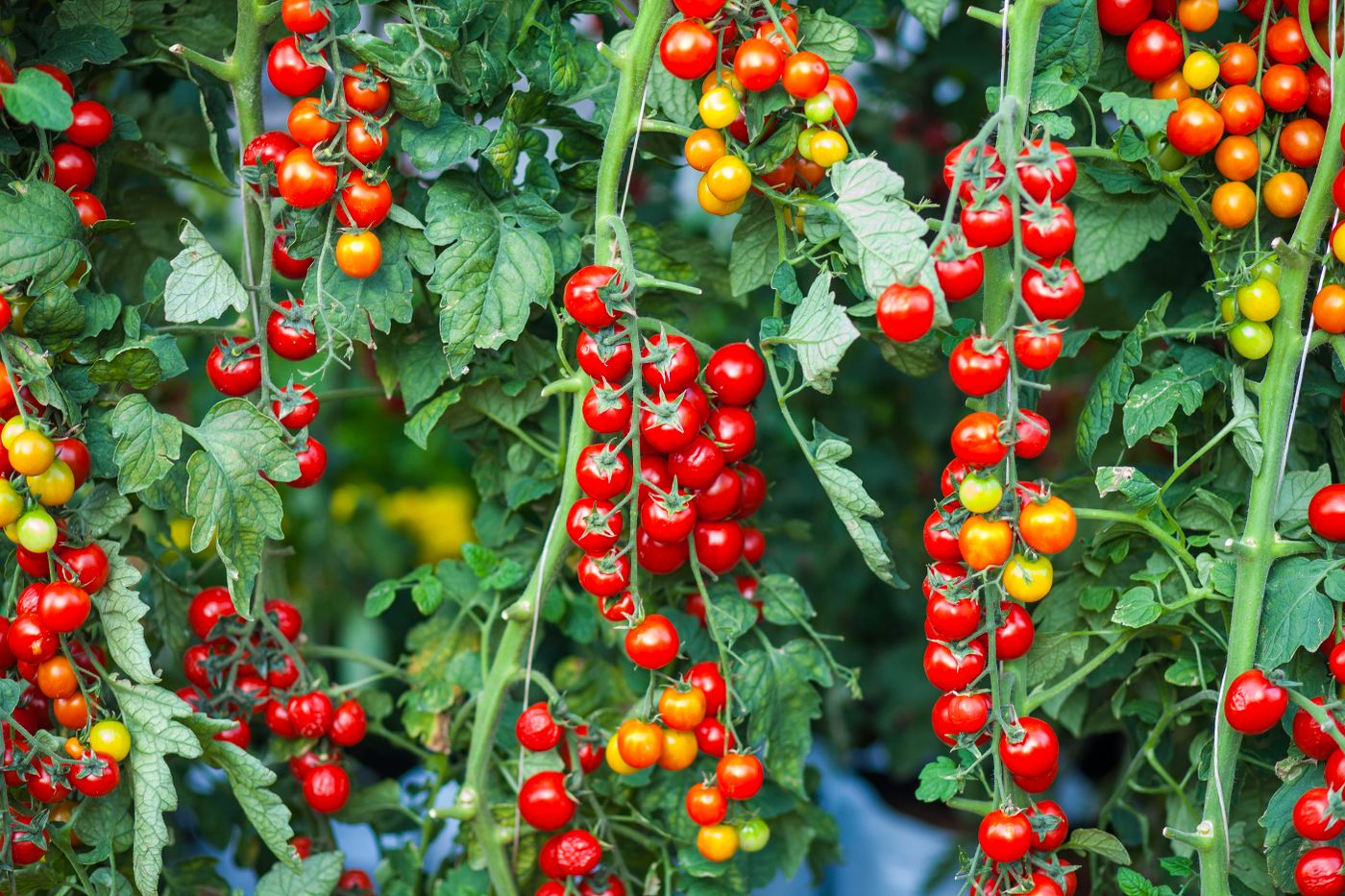
Tomatoes want heat, sun, and a sharp day-night temperature swing to build sugar and color — and Xinjiang delivers all three in excess. The arid north has 2,500+ sunny hours a year, and the snowmelt irrigation from the Tianshan keeps the soil fed without the humidity that breeds blight. The result is a fruit with intense red pigment and low water, ideal for concentration into paste. China processes the majority of its tomato products from this region, and a meaningful slice of global tomato-paste trade traces back to these fields. That is not marketing — it is the simple arithmetic of climate and canal.
Where the red fields are
The industry clusters in the north-central belt where canal irrigation meets warm plains. If you are driving the route between Urumqi and Korla in August or September, you will pass them whether you plan to or not. The plants are built close to the fields so the fruit reaches the crushers within hours of harvest — that speed is the whole quality secret.
| Region | What is grown | Harvest window |
|---|---|---|
| Yanqi / Bayingol | Processing tomato | Aug–Sep |
| Shihezi | Processing + seed stock | Aug–Sep |
| Changji | Processing tomato | Aug–Sep |
| Tacheng / Bole | Processing + fresh | Late Jul–Sep |
From field to bottle
The harvest is a sprint. Machines lift the plants, trucks rush the fruit to nearby plants within hours, and the tomatoes are crushed, heated, and concentrated into paste that is canned or drummed for export. Because the fruit is so red and dry, Xinjiang paste needs less additive and carries more color than many competitors. Most of it leaves as industrial paste; the stuff in local shops is a thicker, plainer version than Western sweet ketchup. Visiting the area in September you will see the red convoys on the highway — tomato trucks have their own season, like melon trucks in summer.
Seeing the harvest yourself
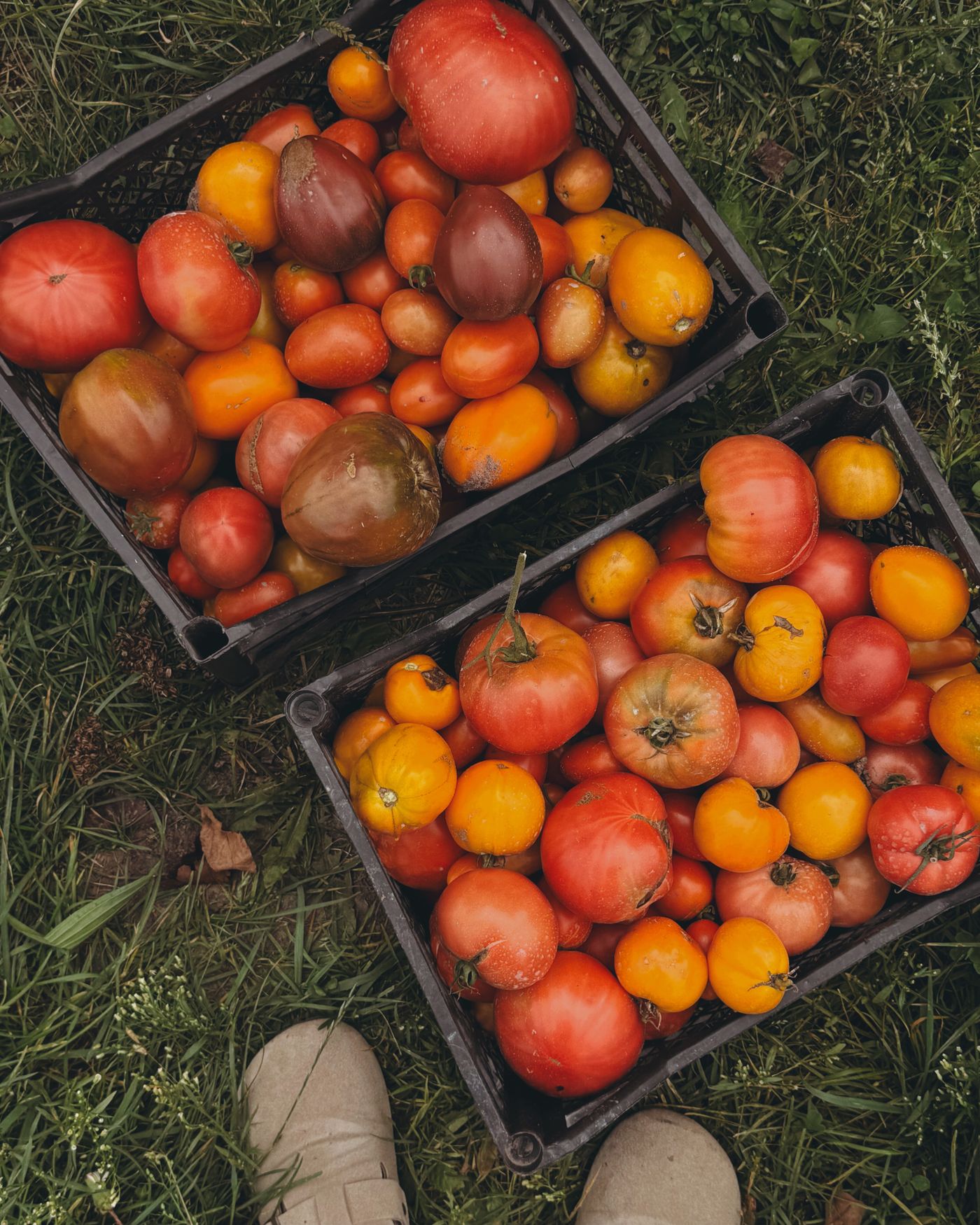
The fields are working agriculture, not tourist sites, but the roads between Korla and Shihezi in early September are lined with red, and roadside stalls sell fresh eating tomatoes by the kilo. Stop at a bazaar rather than the fields themselves. Ask before photographing any processing plant — they are working factories, not museums, and some restrict cameras for commercial reasons.
Tomatoes on the Xinjiang table
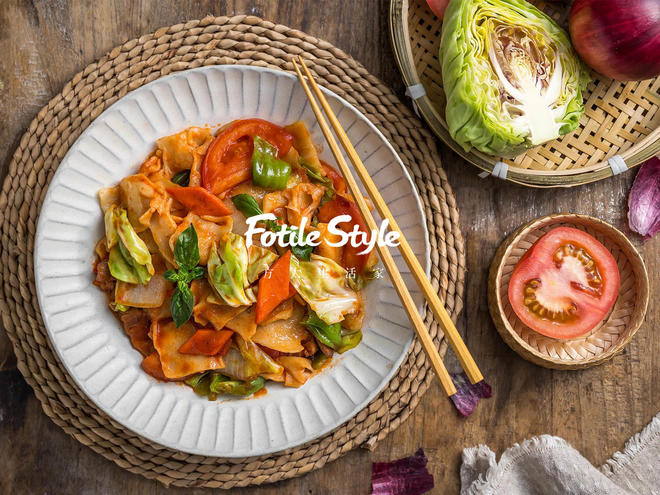
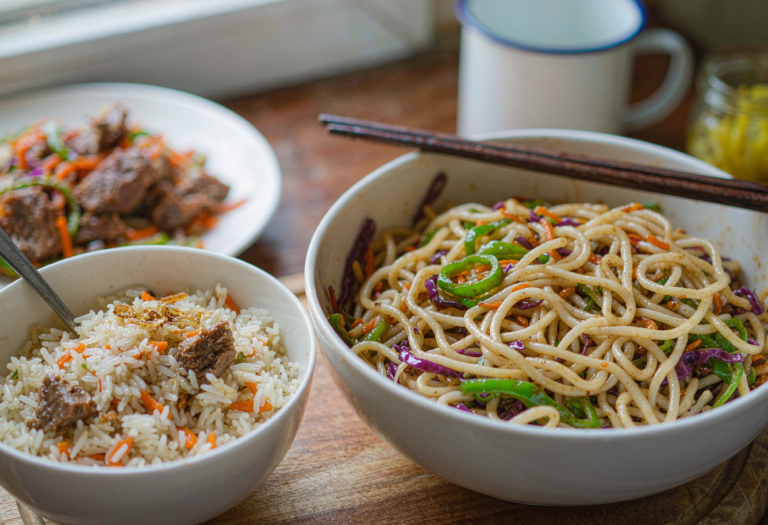
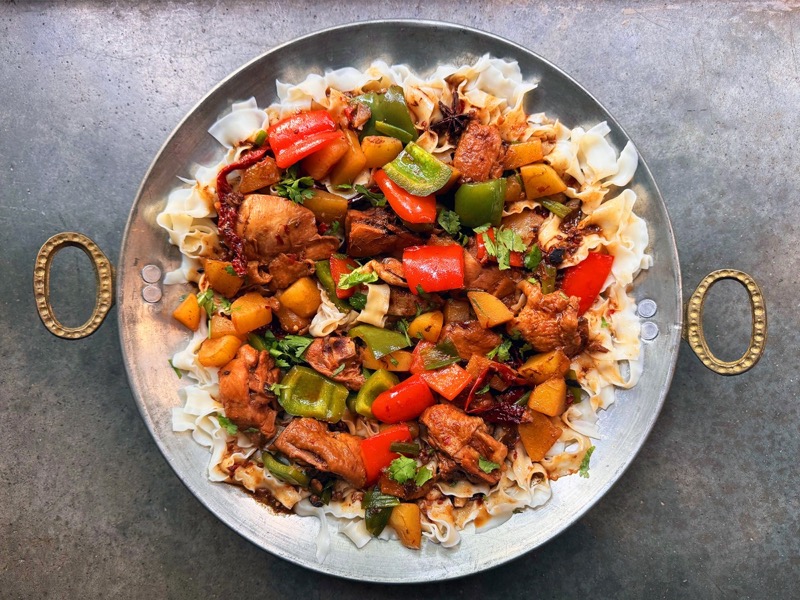
Beyond the factory, tomatoes are everywhere in local cooking. The cleanest example is shakarap, the cold salad of tomato, onion, and cilantro with salt and a little vinegar — on every table in summer. Tomatoes also thicken laghman sauce, brighten noodle soups, and cut the richness of lamb. For the broader menu, the Xinjiang cuisine guide walks through the ten dishes worth ordering, several of which lean on the local tomato.
| Dish | How the tomato is used |
|---|---|
| Shakarap | Raw, with onion and cilantro |
| Laghman | Cooked into the belt-noodle sauce |
| Noodle soup (suyuq) | Adds acid and color to broth |
| Stir-fries | Balances lamb and pepper |
Cooking with Xinjiang tomato paste
If you buy a can at the bazaar, treat it like Italian passata, not sweet ketchup. Thin a spoonful into hot oil before adding meat for laghman, or stir it into a lamb stir-fry to lift the fat. It is far less sweet than Western ketchup, so taste before you add sugar — most local recipes do not. A small can survives a checked bag better than fresh fruit and gives you a souvenir you can actually cook with at home. I keep one in the cupboard specifically for the night I want to recreate a Korla noodle bowl, and the deep red color alone is enough to convince you it is the real thing.
The lycopene angle
Processed tomato is one of the densest dietary sources of lycopene, the red pigment linked to a range of mild health benefits, and concentrated paste packs more per gram than fresh fruit. None of this should drive your travel plans, but it is a tidy counter to the idea that the local food is all meat and bread. The red in the field is also the red on a healthier plate.
Fresh tomatoes at the bazaar
If the paste is the export story, the fresh fruit is the travel story. From July through September the bazaars fill with eating tomatoes — round, ribbed, deeply red, and cheap by the kilo. The Yanqi and Toksun varieties are the ones locals praise; they are firmer and less watery than greenhouse imports, which is exactly why they also survive the long drive home in a checked bag better than you would expect. I buy a net bag at a roadside stall, eat half with salt on the hood of the car, and pack the rest. Prices at the 2026 peak ran roughly ¥3–6 per kilo at rural stalls and ¥6–10 in city markets, a fraction of what the same fruit costs once it is flown out of the region.
| Tomato | Season | Stall price (per kg) |
|---|---|---|
| Yanqi eating tomato | Jul–Sep | ¥3–6 |
| Toksun round tomato | Aug–Sep | ¥4–7 |
| City-market mixed | Year-round | ¥6–10 |
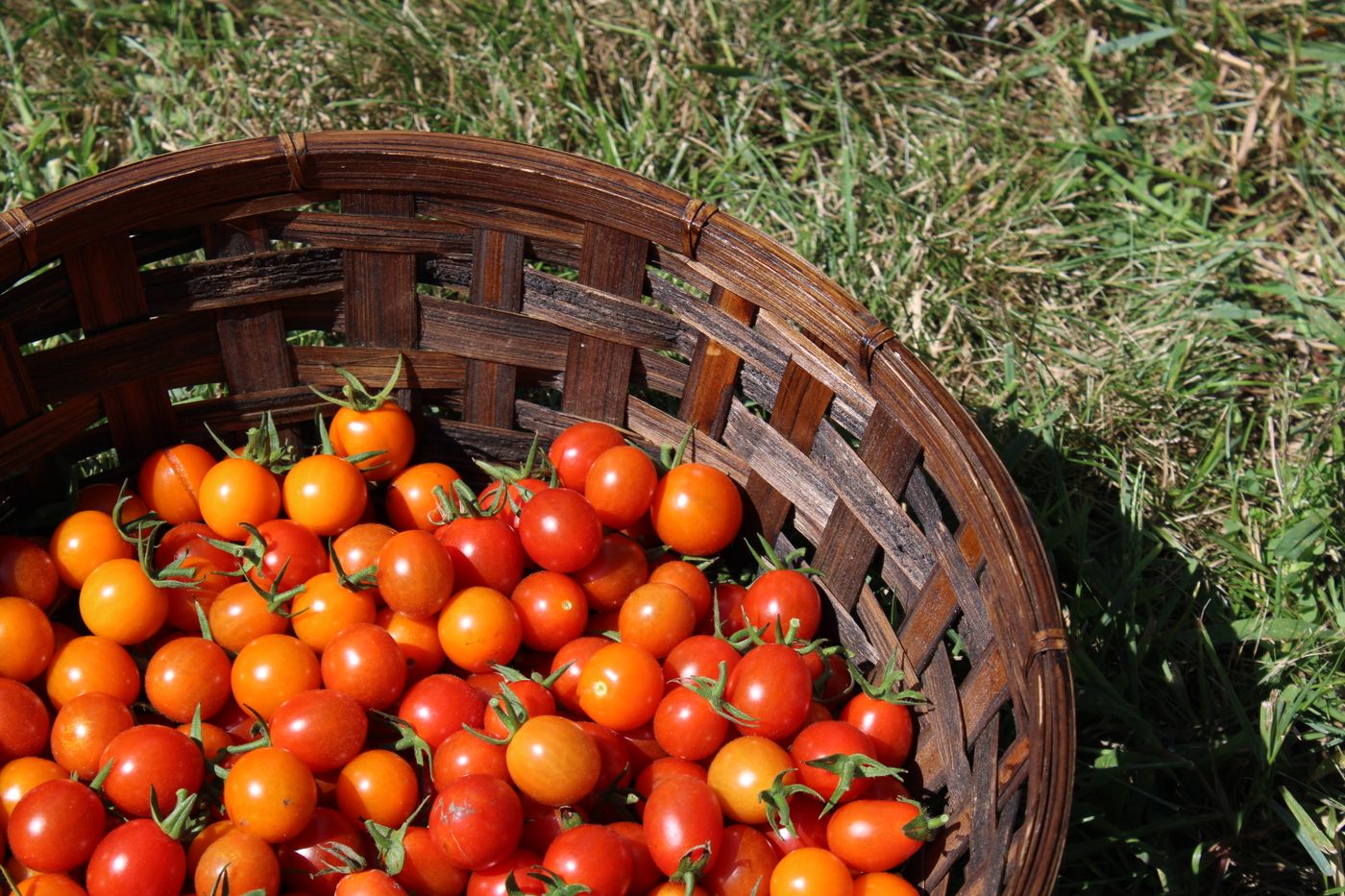
Turpan tomatoes are worth the trouble they cause. Grown in sand with sun on them all day and cooled hard at night, they arrive at the bowl sweet enough to need no sugar at all. Eat one in August standing up in a garden, and the bottles on the shelf stop being the interesting part.
Frequently Asked Questions
Is Xinjiang tomato paste different from Western ketchup?
Yes. Xinjiang paste is concentrated tomato with little sugar or vinegar — closer to Italian passata than sweet supermarket ketchup. Locals use it as a cooking base, not a dip, which is why it tastes plain straight from the can.
When is tomato harvest season?
Main harvest runs August into September, peaking in early September. That is the only time you will see the red field tunnels from the highway and the tomato trucks crowding the plains routes.
Can I visit a tomato field?
You can drive past them and buy fresh tomatoes at roadside bazaars, but the processing plants are not open to casual visitors. Treat it as roadside scenery, not a tour, and photograph from the road rather than the factory gate.
Why is Xinjiang so good for tomatoes?
Extreme sun, low humidity, big day-night temperature swings, and snowmelt irrigation produce a dry, deeply red fruit ideal for paste. The climate does the work that additives do elsewhere, which is why the paste needs less correction.
What tomato dishes should I try?
Start with shakarap (cold salad), then laghman with tomato sauce, then any lamb stir-fry that lists tomato. All three show the local fruit’s sweetness better than the factory product does, and they are on menus across the region.
Can I bring tomato paste home?
Sealed cans and drums travel fine in a checked bag and clear most borders without fuss — unlike fresh fruit, which can be quarantined. Keep the receipt; our shipping guide has the export checklist.