Xinjiang Grilled Fish (Balik Kawap): Charred River Trout and Tarim Carp
I expected Xinjiang to be all lamb, all the time. Then a fisherman on the banks of the Burqin river handed me a foot-long trout, split and nailed to a wooden frame over coals, its skin blistering and smoking with cumin. That was my introduction to balik kawap — grilled fish — and it turned out to be one of the best things I ate on the whole trip. Xinjiang sits between snow-fed lakes and slow desert rivers, and where there is water there is fish cooked over fire.
What is balik kawap?
Balik is the Turkic word for fish; kawap means roast or grill. Balik kawap is simply whole fish butterflied, skewered or framed, and cooked over charcoal until the skin crisps and the flesh flakes. It is distinct from the famous lamb skewers (kawap) only in the protein — same cumin-and-chilli language, different animal. In the north you get cold-water trout and grayling; in the south, slow river carp and catfish from the Tarim system.
The fish you will actually meet
Xinjiang is not one fishery. Altitude and water source change the catch completely, and so does the flavour.
| Fish | Where | Best season | Flavour note |
|---|---|---|---|
| Rainbow & river trout | Kanas, Burqin, Ulungur | Jun – Sep | Clean, mild, flaky |
| Arctic grayling | Altay mountain streams | Jul – Aug | Delicate, slightly sweet |
| Tarim carp | Toksun, Aksu, southern rivers | Apr – Oct | Firmer, earthier |
| Reservoir catfish | Ulungur Lake area | May – Sep | Rich, needs bold spice |
The northern trout is the safe, crowd-pleasing choice; the southern carp tastes more of the land and takes spice better. Either way, freshness is everything — ask which fish was alive this morning.
How it’s cooked
The method is gloriously low-tech. The fish is scored, salted, and often marinated briefly in a paste of cumin, chilli, garlic and a little vegetable oil. Then it goes on a flat wire frame straight over glowing coals, turned every few minutes, basted with more spice oil, until the edges blacken. No sauce is served — the crust is the sauce.
The spice rub
Cumin (the signature of the whole region), ground red chilli, salt, and sometimes a pinch of zira (black cumin) and dried coriander. Northern spots lean lighter; southern ones pile on more heat. If you want the wider context of how cumin-and-coal cooking fits the regional table, our Xinjiang food guide maps the whole pantry.
There is no sauce because the crust is the point. The spice oil chars onto the skin, forming a savoury bark that you scrape off with bread. Some stalls will split the fish and stuff the cavity with onion and tomato before grilling, which keeps the flesh moist and adds a sweet counterpoint to the smoke.
Where to eat grilled fish
| Spot | Known for | Vibe |
|---|---|---|
| Burqin riverside grills, north | Kanas trout & grayling | Open-air, tourist-friendly |
| Ulungur Lake fishing villages | Trout & catfish | Working fishery, local |
| Toksun & Turpan river towns | Tarim carp | Desert oasis, hearty |
| Kashgar night-market stalls | Speckled river fish | Bustling, late-night |
Kashgar’s old town is the easiest place to sample it without leaving a major city — the Kashgar food guide points you to the stalls that do it best. Up north, the towns around Kanas serve it riverside with a view you will remember longer than the meal.
Ordering like a local
Point at the fish you want weighed, agree the price per jin (500g) before cooking, and specify “medium spice” unless you enjoy pain. A typical trout runs ¥40–80 depending on size and town. It comes with flatbread (naan or sangza) to scrape up the charred bits, and usually a plate of raw onion and a cucumber-tomato salad to cut the richness. Beer is the standard companion in the north; in the south, a glass of chilled local juice.
Grilled fish vs grilled meat
If you have eaten your fill of lamb skewers, fish is the reset. It is lighter, quicker to cook, and lets the cumin speak instead of the fat. Many travellers use a fish night to break up a run of heavy meat meals on a long road trip — your stomach will thank you. Up north it also pairs naturally with the cooler evenings by the lakes, when a plate of charred trout beats a heavy leg of lamb.
Food-safety notes
Stick to busy stalls where the turnover is high and the fish is visibly fresh. Avoid anything that smells off or has been sitting pre-cooked under a heat lamp. Xinjiang’s lakes are cold and clean, so parasite risk is low in well-cooked fish, but always make sure the centre is opaque, not glassy. Bottled water only for rinsing, and you will be fine. One more tip from experience: in the far north the fish is often cooked right at the water’s edge, which is wonderful but means there is no kitchen sink in sight — carry your own wet wipes and hand sanitizer, because you will be eating with your fingers and bread.
Building a grilled-fish feast
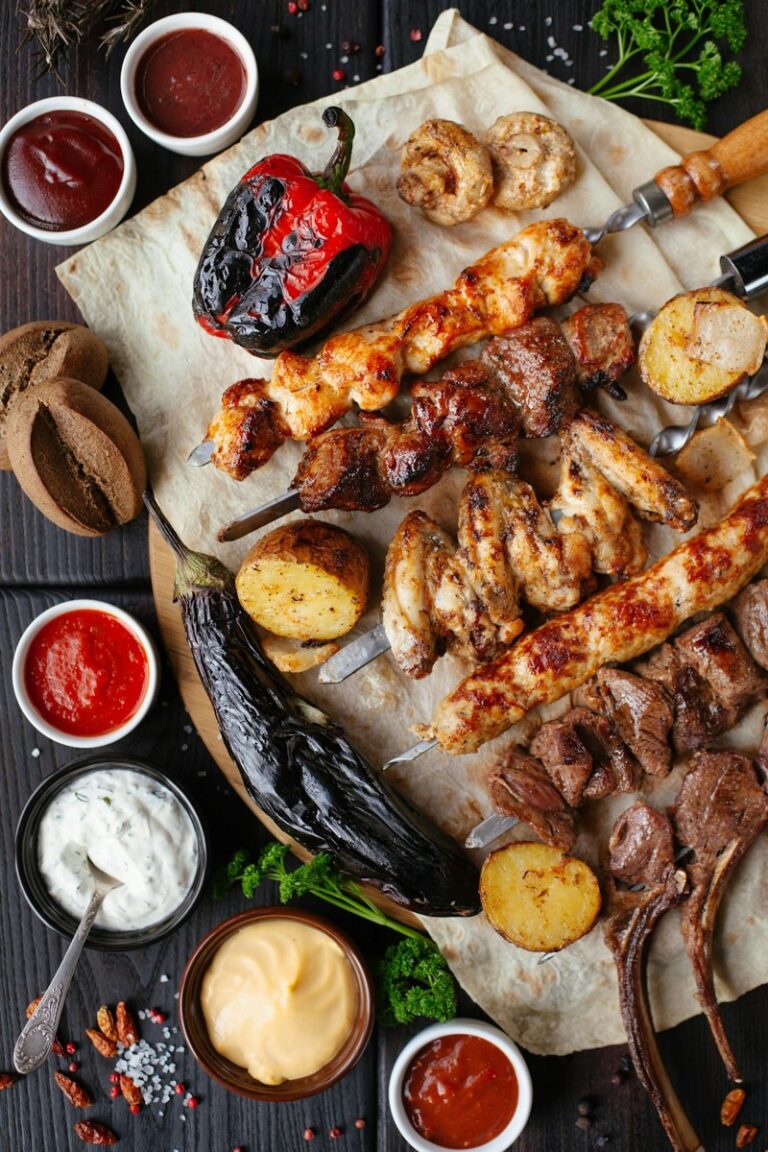
A single fish is a meal for one hungry person or a shared plate for two. To make a proper spread, order a fish per two people and add the standard supporting cast: a round of naan to scrape the char, a plate of raw onion and tomato, a cucumber salad, and — up north — a couple of cold local beers. The fish comes whole and bone-in, so eat slowly and watch for the spine and pin bones. Northern trout is mild enough for cautious eaters; if you want more punch, ask them to double the chilli and add a side of the region’s pickled chillies. Vegetarians in the group are not stranded: the same stalls grill peppers, tomatoes, and flatbread, and every table gets bread and salad, so nobody is reduced to watching.
Regional twists to try
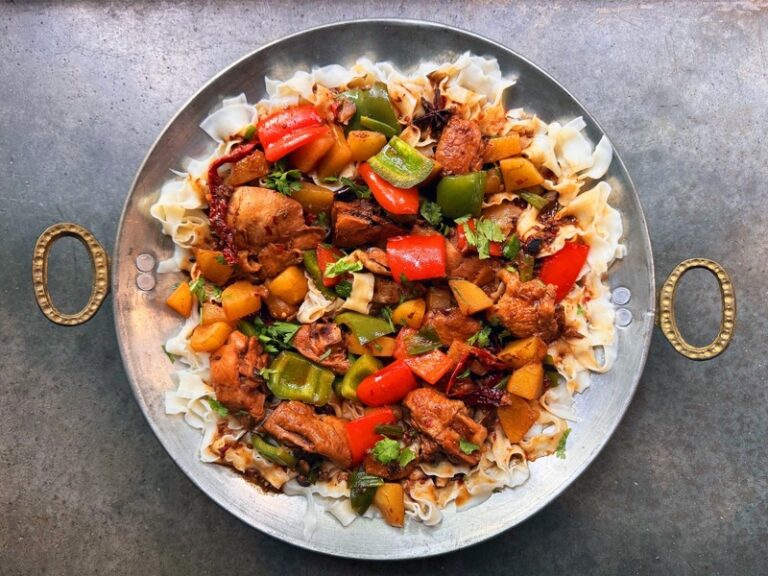
Around Kanas and Burqin the trout is often finished with a brush of warm oil and a squeeze of lemon-like suanshi (a local citrusy fruit), which brightens the smoke. Down in the Tarim towns the carp gets a heavier hand of cumin and is sometimes served torn over noodles — a fish-twist on the region’s beloved handheld meals. Neither is on an English menu, so point at what the next table is eating and smile; the cooks are used to curious travellers.
Budgets in figures
| Item | What it costs | Note |
|---|---|---|
| cost | ¥40 | Budget roughly ¥40–80 for a trout at a tourist spot, less at a working village. Confirm the per-jin price before they cook it. |
The numbers above are what I paid on my own trips; add roughly a fifth for a private car and driver if you are travelling with someone else. Anything marked roughly is a bazaar price in high season, and it moves with demand.