Laundry on the Road: How to Stay Clean on a Long Xinjiang Drive
Pack light and you will wash often, and on a long Xinjiang drive that means solving laundry early. I travel with a tiny wardrobe on purpose, which forces the question: where do the clothes get clean?
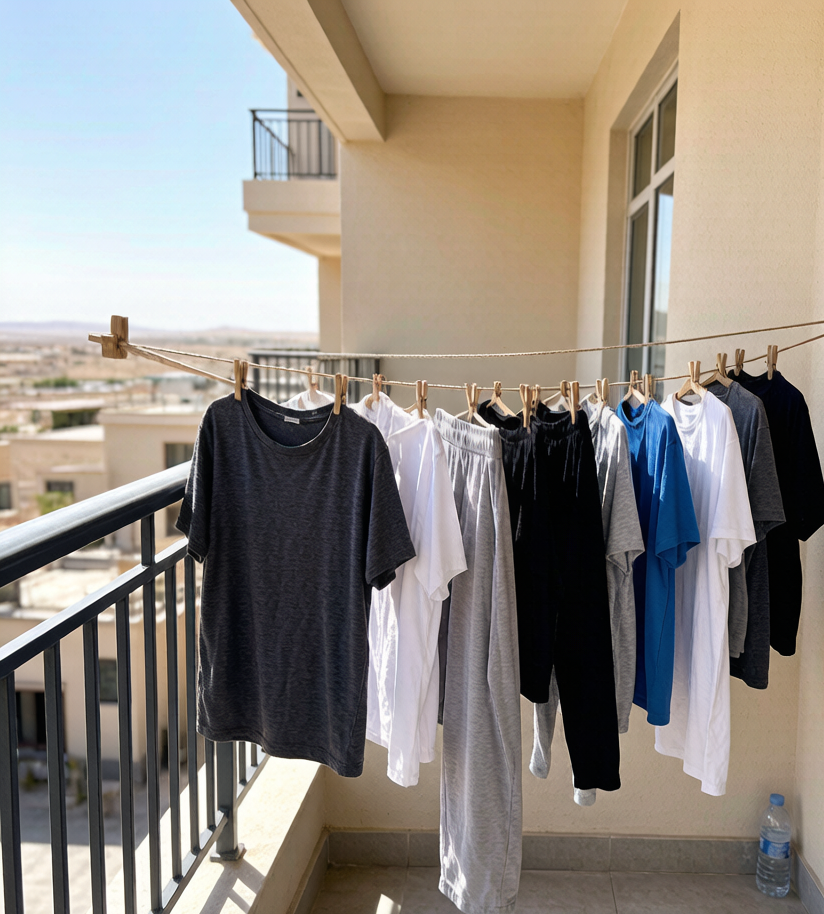
The easy answer is hotels. Most places I stay, including the hotels a foreigner can book, have either a laundry service or at least a sink and a line, and I use both. A old-town guesthouse may be basic, but a balcony and a breeze dry a shirt fast.
The better answer in big towns is a laundromat, and mid-size cities often have them near the markets. I treat a laundry run like a fuel stop: when I am in a town for the night, clothes go in, and I explore on foot while they turn. It pairs with the season plan, because warm shoulder months dry things outdoors in an hour.
Pack for the system. Quick-dry fabrics, a small travel line, and a few pegs turn any room into a laundry. I learned this after one cold-week trip where nothing dried, and now the line is as fixed in my bag as the charger.
The payoff is freedom. With laundry solved, I carry a week of clothes for a month of driving, the car stays lighter, and I stop hunting shops. It is a small skill, but on a long loop the small skills are the ones that keep the trip smooth.
The one mistake I made early was assuming every hotel had a machine. Many do not, and the sink method is the fallback. A bar of soap and a travel line have bailed me out in more towns than I can count, and they weigh nothing. Now I assume the sink and am pleased when a machine appears.
For a long loop, two colours and quick-dry fabric mean you never wait on a wash to move. The freedom of a small, always-clean bag is the quiet luxury of road travel, and laundry is the skill that unlocks it.
The sink method deserves respect, because done well it beats a laundromat. I wash at night, wring hard, roll in a travel towel to press out more water, and hang on the line by the window; by morning in dry Xinjiang air most things are crisp. The trick is fabric: cotton jeans take two days and are a mistake, while quick-dry shirts and shorts are dry by dawn. I pack almost entirely in that fabric now, which lets a small bag serve a month. A few pegs and a short line weigh nothing and turn any room into a drying room, and I have laundered on yurt stays and city hotels alike. The freedom of clean clothes without a suitcase is the quiet luxury of the long drive, and once you have it, the heavy bag feels like a burden you chose for no reason.
One last tip: a zip bag for worn clothes keeps the clean separate in a small case, and the simple division stops the whole bag smelling of a week on the road. It is the unglamorous habit that makes the sink method work, and once it is routine the long drive stops demanding a suitcase. Less to carry, more to see.
What a local driver would refuse to do
A driver who knows this road gives you the honest distance. What they will happily do is leave at five in the morning to catch the light, and that is the version worth asking for. What they will refuse is a night drive over the high sections in winter, and they are right. My host in Xinjiang said the pass was two hours, meaning two hours driving without the stops, and that is the number to plan around, not the one the map shows. If the timing is the question, our [[xinjiang-road-trip-hygiene-toilets-laundry-guide|Staying Clean on the Road in Xinjiang:…]] goes through it properly.
Fuel, and the gaps where there is nothing
The bad news is the distance between them through the middle sections, enough that a full tank is arithmetic rather than paranoia. Every town on this route has a station and every station takes cards, which is the good news. Fill before you leave anything with a city name on the map, even if the next is only ninety minutes out. I have been on a road in this region where the next fuel was two hours back, the reason being a closure, and the only thing that got me moving was a trucker with a spare can.