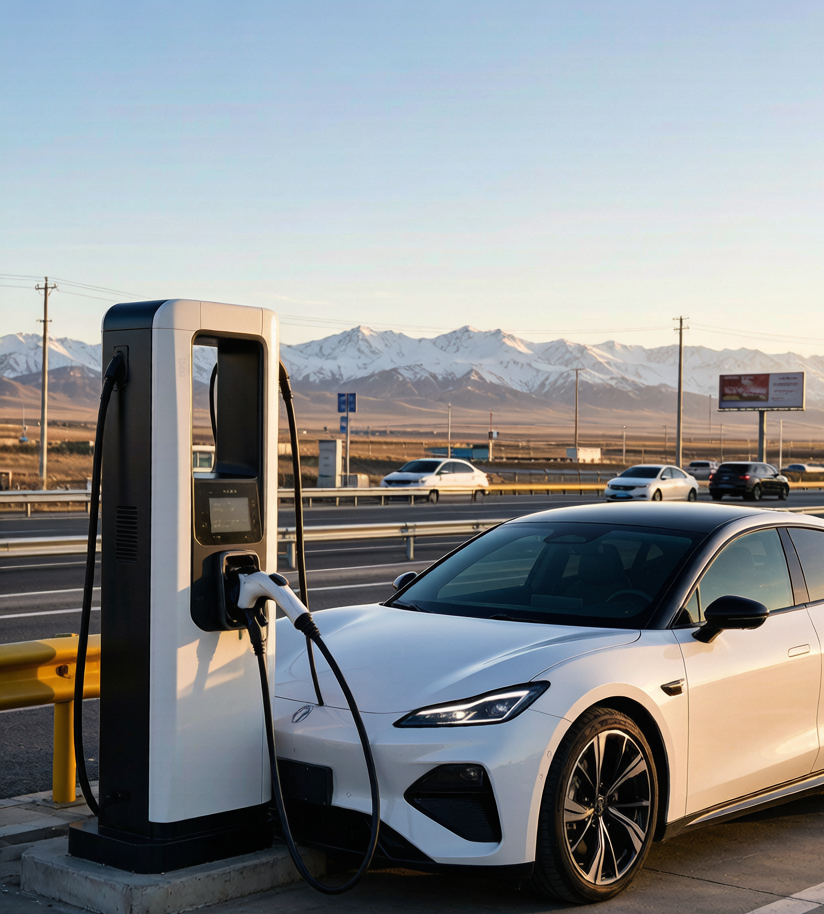
Charging an Electric Car on a Xinjiang Road Trip: What I Learned Driving 3,000 km
When I first mentioned to friends that I wanted to cross Xinjiang in a rented electric car, the reaction was uniform: you will get stranded. The region is vast, distances between towns run into the hundreds of kilometres, and the image of empty desert does not suggest a charger on every corner. Three weeks and roughly 3,000 km later, I was proved wrong often enough to write this down for anyone considering the same.
The short answer is yes, you can tour Xinjiang in an EV, but only if you plan around two realities: chargers cluster in cities and county towns, and they thin out dramatically on the cross-desert highways. I treated the trip less like a normal drive and more like a navigation exercise. Before each leg I checked the charger map the way I used to check fuel stops, and I built the day around reaching a town with a fast charger rather than around a sunset viewpoint.
What surprised me was how many county seats already had public fast chargers, often at the same service areas where petrol cars refuel. On the big arteries linking Urumqi, Korla, Aksu and Kashgar the coverage was better than I expected. The gaps appeared on the detours: a grassland loop or a side valley might leave you 150 km from the nearest plug, and that is where range discipline matters.
My rule of thumb became simple. Keep the battery above 30 percent whenever I was more than an hour from a town, and never roll into a remote checkpoint or a mountain pass below half. It sounds cautious until you remember that a closed pass or a long wait at police checkpoints can burn an hour of climate control you did not budget for. In deep winter the buffer needs to be larger still, because heating eats range fast.
Overnight charging was the pleasant part. Most hotels I used, including the places covered in booking hotels in China as a foreigner, either had a charger in the lot or pointed me to a public one within a short walk. I learned to ask the question at booking time, not at arrival, and to treat “yes we have charging” as something to confirm rather than assume.
Cost was a genuine win. Per kilometre, electricity was a fraction of what I would have spent on diesel, and that maths is part of why I keep mentioning budget in my real-cost breakdowns. The catch is time: a fast charger might add most of a range in under an hour, but a slow overnight top-up means planning your evening around the car, not the other way around.
If you are timing the trip, shoulder seasons are kinder to an EV than peak summer, when everyone is queuing for the same plugs at popular lake towns. Shoulder months meant emptier chargers and cooler cabins, so less range lost to air conditioning.
My honest verdict: an EV is a brilliant way to see Xinjiang if you enjoy planning and you stay on the main web of towns. It is not yet a tool for free-form wandering into the empty quarter. Go in with a charger-aware itinerary and the region opens up quietly, cleanly, and cheaply.
A note on charger etiquette, because it is its own small culture. At a busy fast-charger in a lake town I watched locals queue by unspoken rules: you do not unplug someone mid-charge, you move your car the moment the percentage suits you, and you leave the bay for the next person rather than parking there to shop. I adopted the rhythm fast, because the alternative is a long wait and a dirty look. The apps that show charger status are worth having open, and they saved me more than once from a dead stop.
If I were packing an EV for Xinjiang tomorrow, I would carry a long Type-2 cable, a backup adapter, and the patience to treat charging as a meal break rather than a delay. Do that, and the range anxiety that friends warned me about never really arrived.
Fuel, and the gaps where there is nothing
Every town on this route has a station and every station takes cards, which is the good news. I have been on a road in this region where the next fuel was two hours back, the reason being a closure, and the only thing that got me moving was a trucker with a spare can. The bad news is the distance between them through the middle sections, enough that a full tank is arithmetic rather than paranoia. Fill before you leave anything with a city name on the map, even if the next is only ninety minutes out. I wrote the driving side up in our [[road-trip-car-packing-what-to-keep-in-the-vehicle-in-xinjiang|Road-Trip Car Packing: What to Keep in the…]] as well.
The checkpoints, honestly
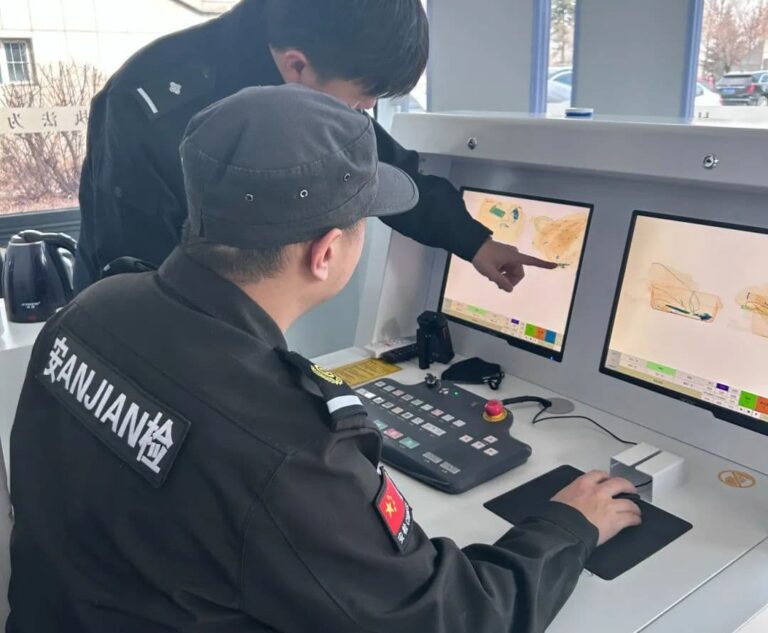
You will stop at checkpoints. They are tedious rather than dangerous, and the driver’s document pack is the only thing that makes them quick. They are short, they are not hostile, and the whole process for a foreign plate takes longer than for a local one because the officer has to make an entry. Write down the address of tonight’s accommodation, because that is the question they ask. Keep passport and car documents in the glovebox rather than the boot so you are not unpacking in front of a queue. Nobody has ever been rude to me at one of these. I wrote the driving side up in our [[xinjiang-public-toilets-road-trip|Xinjiang Public Toilets on a Road Trip: The…]] as well.