Xinjiang Noodles: Laghman, Chao Mianpian & the Hand-Pulled Dishes You Must Try
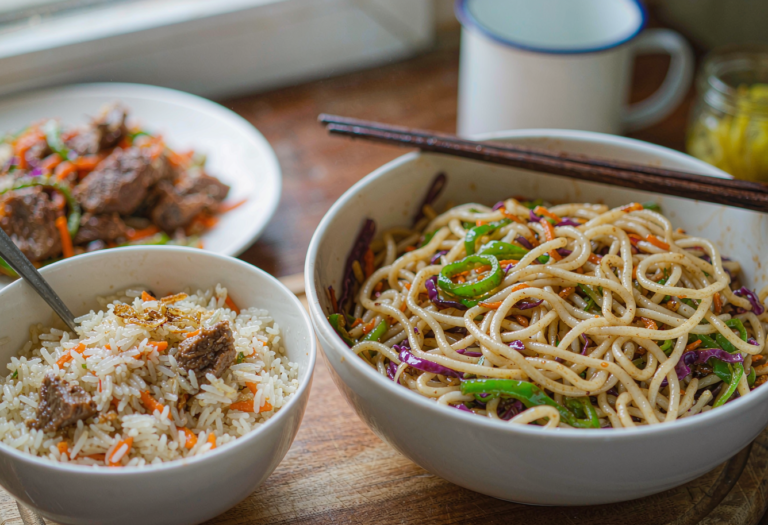
The first time I slid onto a sticky plastic stool in a Urumqi ert (noodle house), a bowl of hand-pulled laghman arrived within three minutes: ribbon-wide wheat noodles coiled under a glistening stir-fry of lamb, green pepper, tomato, and onion. Xinjiang is a noodle culture as much as it is a pilaf or kebab culture. Sitting at the crossroads of China, Central Asia, and the Turkic world, the region turns wheat into dozens of distinct dishes — chewy, hand-made, and almost always served hot and fast.
Why Xinjiang Noodles Taste Different
Xinjiang sits on the dry northern edge of the old Silk Road, where wheat — not rice — is the staple grain. The dough here is typically hand-stretched or hand-rolled rather than cut from a machine sheet, which gives the noodles a springy, slightly uneven bite that mass-produced noodles lack. Most are made from nothing but flour, water, and salt, then rested so the gluten relaxes. That simplicity means the companion sauce does the heavy lifting.
The role of the “ban” (sauce)
Unlike Japanese ramen where broth is the star, Xinjiang noodles are defined by a dry or semi-dry ban — a quick wok toss of meat, vegetables, and spices. The noodle is the canvas; the ban is the painting.
The Core Noodle Dishes You Must Try
These are the dishes you will actually see on menus from Kashgar to Yili. Each has a different shape, sauce, and eating ritual.
| Dish | Local name | Noodle shape | Typical topping | Where best |
|---|---|---|---|---|
| Hand-pulled noodles | Laghman (拉条子) | Ribbon, thumb-wide | Stir-fried lamb + peppers + tomato | Urumqi, Kashgar |
| Fried noodle slices | Chao mianpian (炒面片) | Irregular oval flaps | Spicy lamb, onion, cumin | Yili, Turpan |
| Knife-cut noodles | Dao xiao mian (刀削面) | Curled ribbons, shaved | Tomato-egg or beef broth | Urumqi (Han influence) |
| Stuffed noodle pockets | Quyu (曲曲) | Tiny dumpling-noodles | Meat broth, dill, pepper | Kashgar, Hotan |
| Cold stretched noodles | Liang pi-adjacent | Thin, cooled | Garlic-vinegar dressing | Summer, everywhere |

Laghman: The Everyday Standard
Laghman is the dish most travelers meet first. The cook rolls a rope of dough, then pulls and folds it into long ribbons right before the order, boils them for ninety seconds, and tops them with a ban of lamb and vegetables. Order it gochu laghman (with extra chili) if you like heat. A full plate costs roughly ¥18–30 at a local ert, and portions are generous enough that you will skip the side dishes.
How to eat it like a local
Locals mix everything in the bowl, then eat with a spoon and fork (chopsticks also work). Add a splash of the house vinegar and a pinch of the dried chili flakes on the table. Pair it with a bowl of milky Xinjiang food guide recommendations for a complete meal, or just finish with hot salted milk tea.
Chao Mianpian: The Wok-Charred Favorite
Chao mianpian (fried noodle slices) uses small, hand-torn pieces of dough briefly boiled, then seared in a screaming-hot wok with lamb, onion, and cumin. The edges char slightly, giving a smoky depth that plain boiled noodles never achieve. It is the late-night fuel of choice in Yili and Turpan, usually ordered spicy.
Where to Eat Noodles Across the Region
You do not need a famous restaurant. In every city, look for the ert (noodle house) with the most delivery riders out front — that is where the locals eat. In Kashgar, the side streets around the Xinjiang cuisine guide highlights cluster of Uyghur canteens serve quyu in clear mutton broth. In Urumqi, the Han-run knife-cut noodle shops near the bazaar are unbeatable for a winter broth bowl.
Price and portion reality check
| Setting | Price (¥) | Portion | Wait |
|---|---|---|---|
| Street ert | 18–30 | Large, filling | 3–8 min |
| Mid mall restaurant | 32–48 | Large | 10–15 min |
| Tourist plaza | 45–68 | Medium | 15+ min |
Ordering Tips and Key Phrases
Most noodle shops have picture menus, but a few words help. Laghman = hand-pulled noodles; chao mianpian = fried noodle slices; gochu = spicy; qatmakh = no spice. Point at the picture, say the name, and hold up fingers for portions. Vegetarians should ask sabziliq (with vegetables only) — but confirm no meat stock, since many broths use mutton.
North vs South: Urumqi vs Kashgar Styles
The noodle you eat in the north is not the noodle you eat in the south, and the difference is worth understanding before you order.
Urumqi — Han and Hui influence
In the capital you will find dao xiao mian (knife-cut noodles) shaved straight into boiling water and served in a clear beef or tomato-egg broth — a style carried east from Shanxi and Gansu. Portions come in a wide bowl, broth-forward, with the noodles buoyant rather than sauced. Expect chopsticks on the table and a self-serve garlic clove jar.
Kashgar — the Uyghur heartland
Down south, noodles are drier and saucier. The ban is heavier on cumin and lamb fat, and the ribbons are thicker. Quyu (tiny stuffed noodle pockets) in mutton broth is a Kashgar specialty you rarely see up north. If a shop smells of cumin and smokes faintly of the wok, you are in the right place.
A Homestyle Laghman You Can Attempt
You cannot fully replicate a pulled noodle at home, but the sauce logic travels. Start with a tablespoon of oil, bloom cumin and a pinch of chili, then stir-fry lamb strips with onion, green pepper, and a ripe tomato until it collapses into a glossy sauce. Boil any wide wheat noodle two minutes short of done, drain, and toss through the pan off the heat. The lesson: the noodle is plain; the ban is everything.
Common Tourist Mistakes
Three things I see visitors get wrong. First, they order at the tourist plaza and pay double for a smaller bowl — walk two streets back toward the residential blocks. Second, they over-spice and lose the lamb-cumin balance; add chili after the first bite. Third, they treat noodles as a side when in Xinjiang they are the meal — skip the rice, just get a bigger bowl and a tea.
What it actually costs, line by line
| Item | What it costs | Note |
|---|---|---|
| cost | ¥20 | Budget ¥20–35 for a satisfying street or canteen bowl. Tourist-area restaurants charge more for smaller portions, so eat where the delivery riders gather. |
The numbers above are what I paid on my own trips; add roughly a fifth for a private car and driver if you are travelling with someone else. Anything marked roughly is a bazaar price in high season, and it moves with demand.
Before you go
Xinjiang noodles reward the curious eater. Skip the hotel buffet, find the busiest ert, and order laghman or chao mianpian with extra chili. Within a week you will have a favorite shape and a favorite ban — and that is the real taste of the Silk Road.