Stargazing in Xinjiang: The Darkest Skies on the Silk Road
I had seen photos of the Milky Way over Xinjiang and assumed they were long exposures with the contrast cranked up. Then I stood on the shore of Sayram Lake at 2 a.m. with no moon, and the sky was so crowded with stars it looked fake. The air was thin, the lake was black glass, and the galactic core arched straight overhead. That night reframed the whole region for me: in Xinjiang the darkness is a destination in its own right. Sayram Lake is only the start.
Why Xinjiang Is a Stargazer’s Dream
Three things line up. First, the region is enormous and sparsely populated, so light pollution is minimal outside the few big cities. Second, the climate is dry, which means fewer clouds and stable, transparent air. Third, much of the land sits at elevation, where the atmosphere is thinner. The result is crisp, dark skies across millions of square kilometers. On a clear Pamir night I have counted four planets by eye and watched a meteor every minute or two during a weak shower, simply because nothing between me and the sky was washing it out.
Best Places to See the Stars
| Spot | Why it works | Best season |
|---|---|---|
| Sayram Lake | High alpine lake, near-zero light, reflective foreground | Jun-Sep |
| Pamir Plateau (Karakul) | 4,000 m, brutally clear, snow peaks | May-Oct |
| Kanas & Hemu | Forest and lake, low humidity, dark valleys | Sep-Oct |
| Taklamakan edge | Flat desert horizon, endless sky | Oct-Apr (cold, dry) |
Of these, Sayram and the Pamir are the two I would build a trip around. Sayram is easy to reach and the lake mirror doubles the sky, which is a gift for composition. The Pamir is harder, colder, and more committing, but at 4,000 meters the sky is almost painfully bright and the snow peaks catch the last light as a deep blue glow. Kanas is gorgeous in autumn when the larch turn, but it sits in a wooded valley that blocks part of the horizon; go for the atmosphere, not the full celestial dome. The Taklamakan edge gives the flattest, most endless horizon, ideal for time-lapses, if you can handle the cold and the logistics.
Timing: Moon, Season, and Weather
The moon is the enemy of stargazing. Plan around the new moon, when the sky is darkest for about a week. Summer gives the warmest conditions and the richest Milky Way core, but also occasional thunderstorms. Autumn (September-October) is my favorite: cool, dry, and stable. Winter has the clearest air of all but is brutally cold for standing still at night.
The Milky Way Season
In the northern hemisphere the bright galactic core is only visible from roughly March through November, and it stands highest and most detailed from late May to early September. If photographing the core is your goal, aim for those months and a new-moon window. In deep winter the sky is spectacularly clear and the constellations are crisp, but the core is below the horizon, so you are shooting star fields and planets rather than the dense river of the Milky Way.
Reading the Forecast
Clear skies at sunset do not guarantee a clear night. Check the hourly cloud forecast and the seeing conditions. In desert basins, dust can rise in the evening and settle by midnight, so the best window is often 1-4 a.m.
What to Bring
| Item | Purpose |
|---|---|
| Red headlamp | Preserves night vision |
| Warm layers + gloves | Nights at altitude drop below freezing even in summer |
| Tripod | Long-exposure astrophotography |
| Wide fast lens (f/2.8 or faster) | Captures faint stars |
| Spare batteries (warmed) | Cold kills battery life fast |
| Hot flask | Comfort during long waits |
A Beginner Astrophotography Setup
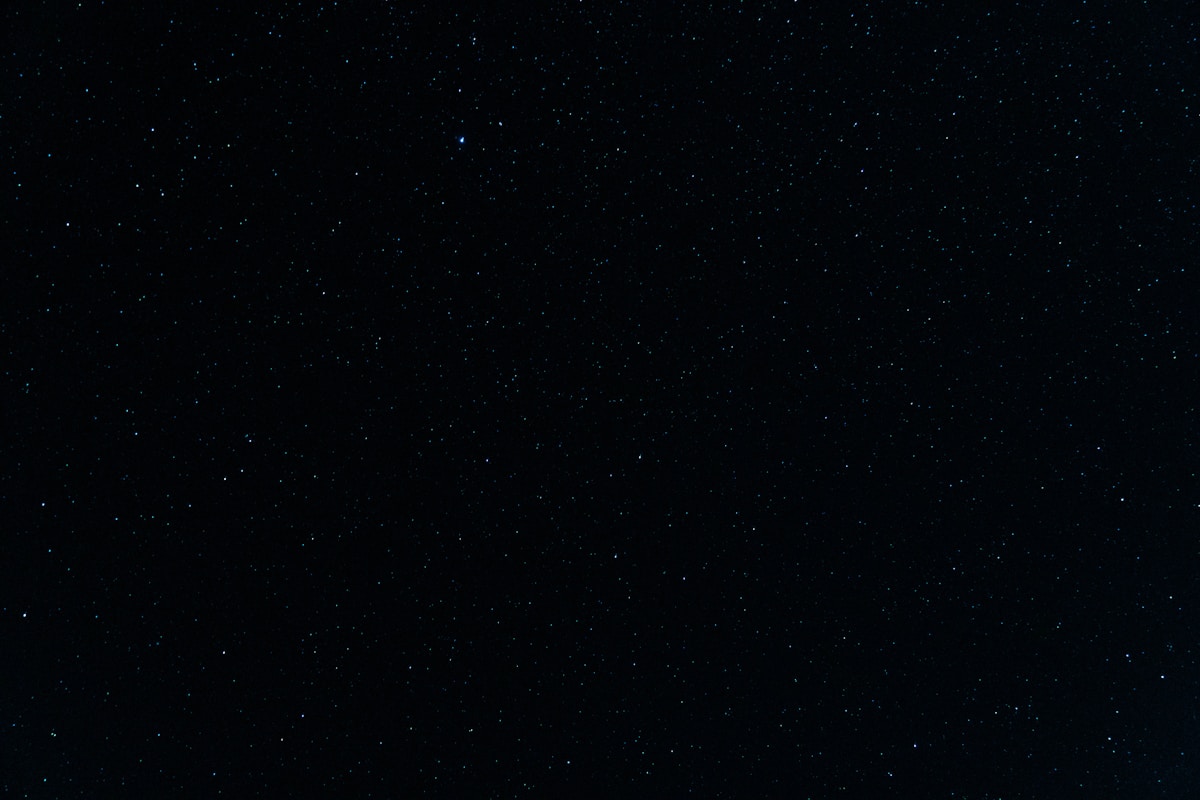
You do not need a telescope. A DSLR or mirrorless camera on a sturdy tripod, a wide fast lens, and a 15-25 second exposure at high ISO will capture the Milky Way from a dark Xinjiang site. Focus manually on a bright star using magnification. Shoot in raw so you can pull detail out later. The Tianshan’s high meadows make an excellent, accessible foreground if you do not want to drive deep into the Pamir.
Stacking and Editing
A single 20-second exposure is fine for a memory, but the real magic comes from stacking. Shoot 20-30 frames of the same composition, then blend them in free software to reduce noise and pull faint nebulae out of the black. I edit in raw, lift the shadows gently, and pull the color temperature toward cool blue without crushing the warm rim of any foreground. The goal is not a fake-looking poster; it is the sky you actually saw, only cleaner. Save the original files; the best shots are the ones you revisit on a rainy day back home.
Scout in Daylight
The biggest beginner mistake is arriving in the dark and discovering your perfect lake reflection is blocked by a hill, or that your foreground is a parking lot. I walk the spot at sunset, mark it with a small stone, and note where the Milky Way will rise using a phone app. By the time full dark falls, I am just pressing the shutter on a frame I already understand.
Staying Safe at Night
Dark-sky sites are usually remote. Tell someone where you are going, carry a full-charge phone and power bank, and do not wander far from the car on uneven ground. Wildlife is rarely a threat, but cold is the real hazard: dress for 10 degrees colder than the daytime low and keep moving.
Wildlife and Road Sense
Wild animals are rarely a danger, but livestock and the occasional stray dog near villages can surprise you in the dark, so sweep a flashlight ahead before walking. On mountain roads, park fully off the tarmac and use hazard lights if you step out; late-night trucks on the Pamir and Duku corridors move fast and expect an empty road. I keep the car within sight and the keys in my pocket, so a sudden weather change never strands me.
Reading Dark-Sky Maps Before You Go
You do not need a telescope, but you do need to know where the dark is. Before the trip I downloaded a light-pollution map and was surprised to see how much of Xinjiang grades as Bortle 1 or 2, the darkest classifications on the scale. The glowing exceptions are Urumqi, Korla, Aksu, and the immediate fringes of Kashgar. Everything else, especially the high plateau and the desert interior, is essentially pristine. I planned my darkest nights around those empty zones and treated city stops as recovery days rather than viewing nights. A simple plan, a new-moon date, and one of those dark squares on the map is most of the battle.
What changes with the calendar
Spring and early summer
No. Sayram Lake and many Tianshan meadows are reachable by car and safe to visit independently. The Pamir requires the border permit and a vehicle, but you can stargaze from roadside pull-offs rather than hiring a specialist.
At altitude it gets cold after midnight even in July, but it is very manageable with a warm jacket and a flask. Winter is for the committed; spring and autumn are the sweet spot.
Summer
Yes, from genuinely dark sites like Sayram or the Pamir, the galactic core is visible as a bright, textured band. City dwellers are often shocked by how much structure is visible without any equipment.
Formal astrotourism is still small here, but some lakeside guesthouses near Sayram and Kanas organize night-sky outings in summer. Otherwise, self-driving to a new-moon window is the reliable approach.
Autumn
Start at 20 seconds, f/2.8, ISO 3200, manual focus on a star, raw format. Adjust ISO up if the stars are dim. Keep the lens free of condensation by keeping the camera inside your jacket between shots.