Xinjiang Festivals and Public Holidays: Timing Your Trip Around the Calendar
Xinjiang runs on two calendars at once
The overlap creates one quirk worth planning around: when a national holiday and an Islamic festival collide, the region can feel both closed and crowded at once — government offices and banks shut for the state holiday while families gather for Eid, emptying the streets by day and filling homes by night. I once arrived in Kashgar during exactly this overlap and found the bazaar quiet but every restaurant hosting multi-generation feasts behind closed doors. The lesson: check both calendars, not just one. A date that looks safe on a Chinese holiday list might still be a day when your favorite noodle shop is shut for a family meal.
: the national Chinese holiday schedule and the Islamic lunar calendar observed by Uyghur, Kazakh and Hui communities. For a traveller this matters enormously — the same region is empty and serene in March and a sold-out, traffic-jammed celebration in late June. I planned one trip around Navruz and another to avoid Golden Week, and they felt like different countries. Knowing the calendar turns you from a passive visitor into someone who arrives on purpose.
The Two Big Islamic Festivals
Navruz (around March 21) marks the Persian New Year and spring equinox — a secular, joyous festival of music, horse games, and communal meals, especially strong among Uyghur and Tajik communities. Eid al-Fitr (end of Ramadan) and Eid al-Adha (the sacrifice festival) follow the lunar calendar and shift ~10 days earlier each year. On Eid, families feast, visit graves, and give to the poor; many shops close for a day or two. These are not tourist events staged for visitors — they are the real rhythm of community life, and joining respectfully is a privilege.
| Festival | Approx date | What you’ll see | Travel impact |
|---|---|---|---|
| Navruz | Mar 21 | Music, sports, feasts | Busy but open |
| Eid al-Fitr | Lunar, varies | Family visits, meals | Many shops closed 1–2 days |
| Eid al-Adha | Lunar, varies | Sacrifice, big meals | Transport tight, festive |
| National Day Golden Week | Oct 1–7 | Domestic tourism peak | Crowds, high prices |
| Spring Festival | Jan/Feb | Quiet in Xinjiang | Some Han businesses shut |
| Labour Day | May 1–5 | Mini domestic peak | Moderate crowds |

National Holidays: Go or Avoid?
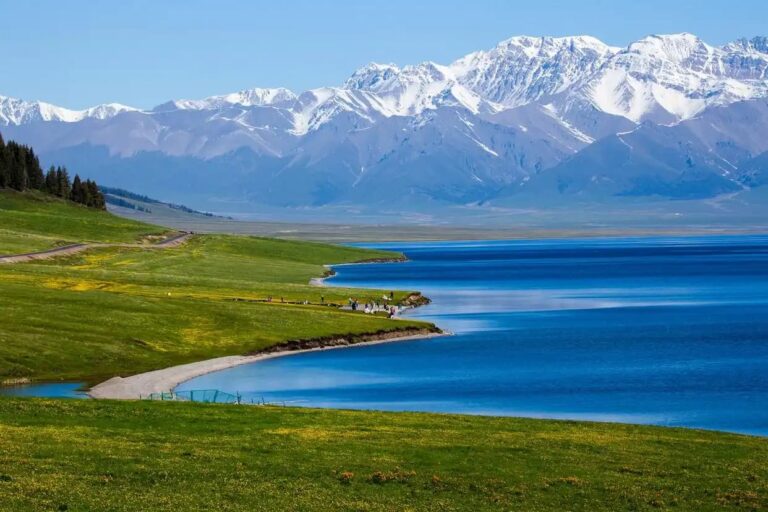
Golden Week (early October) is the worst time to visit if you hate crowds — every scenic area from Kanas to Sayram Lake is packed and hotels triple. Labour Day (May 1–5) is a smaller version. Conversely, late winter and early March are gloriously empty. Our best-time-to-visit guide breaks the weather down month by month, which matters as much as the calendar — a festival in a snowstorm is less fun.
Ramadan Note
During Ramadan, daytime eating in public is muted in devout areas, though tourists are not expected to fast. Restaurants may open only after sunset. Don’t eat conspicuously in front of fasters out of respect, and you’ll be fine. Join an iftar (break-fast) meal if invited — it is one of the warmest experiences available to visitors.
Best Festivals to Actually Attend
If you want spectacle, time a visit to Navruz in the Ili Valley or Eid al-Adha in Kashgar, where the livestock markets and communal feasts are unforgettable. Just book transport and lodging weeks ahead — the region moves during these weeks. The Kashgar livestock market on an Eid-adjacent Sunday is the most intense version of an already intense event.

Questions people keep asking me
Are festivals safe for tourists?
Yes. They are family and community events. The main risk is crowding and sold-out transport, not safety. Keep your wallet secure in dense crowds as you would anywhere.
Do shops close on Islamic holidays?
On Eid, many close for a day or two, especially in devout southern towns. Tourist restaurants in big cities often stay open, but don’t count on a specific shop.
When is the quietest time?
March and early April, and mid-November to before Spring Festival — cold but empty, and the light is often superb for photography.
Can I photograph festivals?
Generally yes for public celebrations, but ask before photographing people, especially women and religious moments. A raised camera without a smile reads as intrusive.
Will Golden Week ruin my trip?
It makes scenic spots crowded and pricey, but if you stick to cities and book ahead, it is manageable. Avoid it if you can — the region is better experienced in calm.
How do I find exact Eid dates?
The lunar calendar shifts yearly; check the official holiday announcement a month ahead, or ask your hotel. Sighting-based dates can vary by a day region to region.
Food Across the Calendar
Festivals here are inseparable from food. Navruz centers on sumalak, a slow-cooked sweet sprout pudding made communally by women over a night of singing, and on samosa and noodle dishes shared widely. Eid al-Adha turns on the sacrificed sheep, with meat distributed to the poor and the best cuts grilled for the family feast — the smell of roasting lamb defines the day in every southern town. Even the secular Spring Festival in the cities brings dumpling dinners among the Han population. If you want to understand a Xinjiang festival, skip the staged performances and find the food: the communal pot is where the meaning lives.
Booking and Logistics Around Holidays
Plan transport and lodging two to three weeks ahead for Eid and Golden Week — the region’s internal flights and the Kashgar–Urumqi trains sell out, and hotel prices in scenic areas double or triple. For Navruz, the Ili Valley books up too, though less brutally. The upside of travelling during a festival is access to events you can’t see otherwise; the downside is crowds at the marquee sights. My compromise: arrive a day before the holiday to settle in, experience the peak, then stay an extra day after the crowds depart to see the place calm again.
Quiet Alternatives
If you specifically want to avoid crowds, target the shoulder weeks of late March, mid-April, and November. You’ll miss the big events but gain empty roads, cheap rooms, and unhurried locals who have time to talk. For many travellers, that calmer version of Xinjiang is the better one — the festivals are wonderful, but the everyday hospitality is the deeper draw, and it shows best when the calendar isn’t demanding anyone’s attention.
The Lunar Swing and How to Track It
Because Eid dates move ~10 days earlier each year on the lunar calendar, you can’t pin them to a Gregorian date in advance the way you can Navruz (fixed March 21) or Golden Week (fixed Oct 1–7). The reliable move is to check the official holiday announcement about a month out, or simply ask your hotel — they’ll know the local observances. Sighting-based decisions can shift the start by a day region to region, so build a day of slack around any Eid-adjacent plan. This unpredictability is part of the rhythm; locals plan around it fluidly, and so should you. A rigid itinerary that collides with an unanticipated Eid closure is the classic self-inflicted snag.
Choosing Your Window
My honest recommendation: if you want crowds and color, target Navruz (Ili Valley, late March) or Eid al-Adha (Kashgar, date varies). If you want the region to yourself, target late March, early April, or mid-November. Avoid Golden Week unless you must travel then. The calendar isn’t an obstacle — it’s a dial you can turn to get the trip you actually want, whether that’s a packed festival square or an empty mountain road. Most visitors ignore it and wonder why their photos are either mobbed or closed; the calendar-aware traveller gets the version they came for.