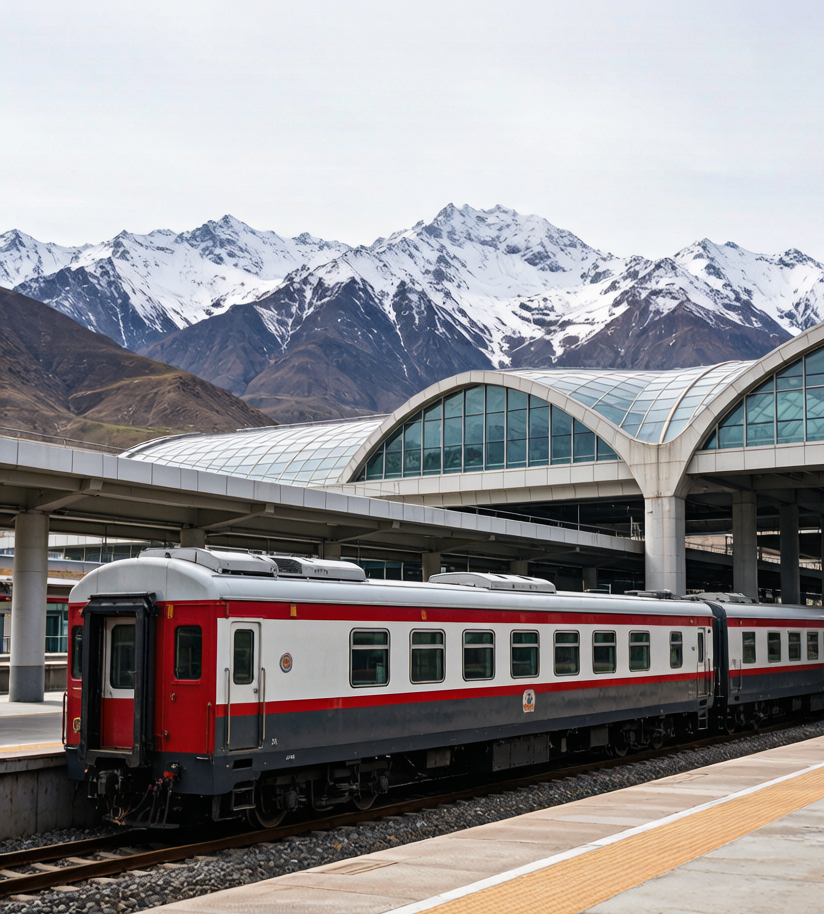
Getting to Xinjiang by Train via Lanzhou and Xining
The first time I went to Xinjiang by rail I changed at Lanzhou and wondered why everyone seemed to be in a hurry. The second time I went through Xining instead, and the whole approach felt calmer. Both are real gateways, but they are not the same trip.
The two corridors
Almost every train from inland China to Xinjiang passes through Gansu, and the two natural hinges are Lanzhou, where the line from the east meets the northwest, and Xining, the capital of Qinghai just beyond. From either, you connect to the long hauls west into the region. The train versus drive decision usually starts with which of these you reach first.
Why Xining often wins
Xining sits higher and closer to the real ascent into the plateau, so the train from there spends less time in flatlands and more in scenery that earns the ride. It is also a smaller, more walkable city to kill a few hours in. I have come to plan a half-day there on purpose, not as a delay. The drive from Xining is an alternative if you would rather hold the wheel.
Timings and sleepers
These are long trains, and the sleeper berth is the move. Bring food, because the dining car is bland and the stops are brief. I pack a layer for the car, because the plateau air through Qinghai gets cold even in summer, and the train ventilation does not care about your comfort.
Connecting onward
Once in the region, the Urumqi to Kashgar railway opens the south, and flights fill the gaps the rails leave. I treat the Lanzhou or Xining leg as the warm-up and the in-region rail as the trip itself.
If you are hauling a car instead of your body, the car-by-train option starts from the same hubs. Either way, the gateway is half the adventure.
The checkpoints, honestly
They are tedious rather than dangerous, and the driver’s document pack is the only thing that makes them quick. You will stop at checkpoints. Keep passport and car documents in the glovebox rather than the boot so you are not unpacking in front of a queue. They are short, they are not hostile, and the whole process for a foreign plate takes longer than for a local one because the officer has to make an entry. Nobody has ever been rude to me at one of these. Write down the address of tonight’s accommodation, because that is the question they ask. More on the other end of that day is in our [[xinjiang-train-travel-guide|Xinjiang by Train: The High-Speed Line,…]].
What a local driver would refuse to do
My host in Xinjiang said the pass was two hours, meaning two hours driving without the stops, and that is the number to plan around, not the one the map shows. What they will refuse is a night drive over the high sections in winter, and they are right. A driver who knows this road gives you the honest distance. What they will happily do is leave at five in the morning to catch the light, and that is the version worth asking for. The evening version of that plan is in our [[xinjiang-international-train-almaty|Taking the Train From Urumqi to Almaty: The…]].
Life on the sleeper
The sleeper berth is its own small society. Shoes come off, the ladder squeaks all night, and the attendant will wake you before your stop whether you like it or not. I bring earplugs, a refill bottle, and snacks, because the dining car is fine once and weary by the third meal. At Xining the platform air already feels different, thinner, and the short walk outside resets you before the long western haul. If you are connecting to the in-region rail, build in a buffer, because Chinese trains run close to time but stations are big and confusing when you are hauling a bag at 6 a.m. The train is slower than flying and better than flying, and I say that as someone who usually flies.
Booking the berth
Reserve through the official 12306 system or a local app, and know that foreign card payment on those can be fiddly, so I often book via a local helper or pay at a station window with cash when the app balks. Pick a lower bunk if you can, because climbing in the night gets old fast, and the upper berth is cheaper but tighter. The train fills on holidays, so buy a few days out, not the morning of. At Xining the connection to the western rail is smooth if you buffer an hour, because the station is large and signage is mostly Chinese. I treat the booking as the first task of the trip, not the last, because a missed berth turns a smooth approach into a scramble. The planning pays off in a calm platform.