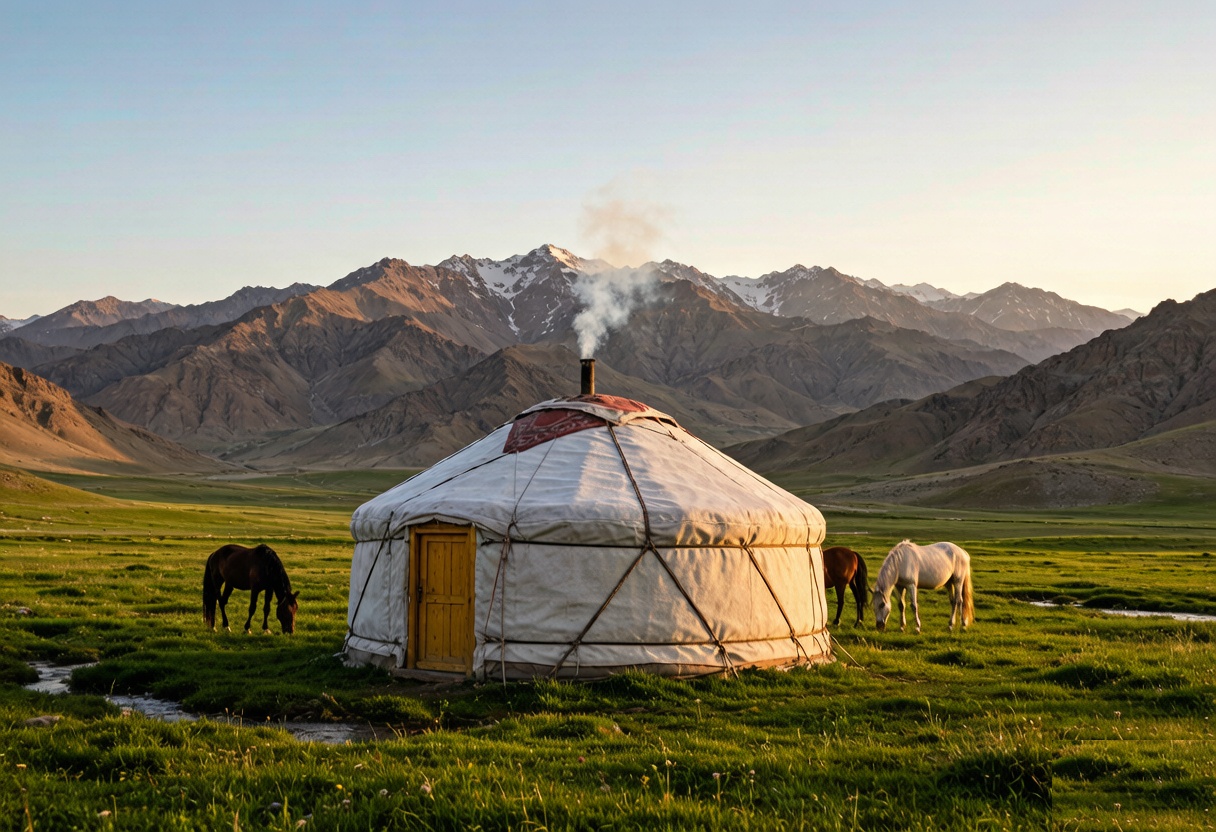
A Kazakh Yurt Stay: A Realistic First-Person Account
I have now slept in half a dozen yurts across the Ili highlands, and I would do it again tomorrow — but the brochures leave things out. Here is the unvarnished version, because the gap between expectation and reality is where trips go wrong.
The structure
A Kazakh yurt (kiyz üi) is a lattice of willow wrapped in felt and tied with horsehair rope, topped by a crown wheel that opens to the stars. Inside, a stove pipes warmth up the centre. It is ingenious, drafty, and cosy once the fire catches — a portable home herders have used for centuries.
The cold is real
Even in July the grassland altitude drops to single digits at night. The felt holds heat surprisingly well, but a thread of cold air finds your ankles at the base. I sleep in every layer I brought plus a borrowed wool sock hat. Our senior travel guide has more on staying warm and safe at altitude.
The welcome is the point
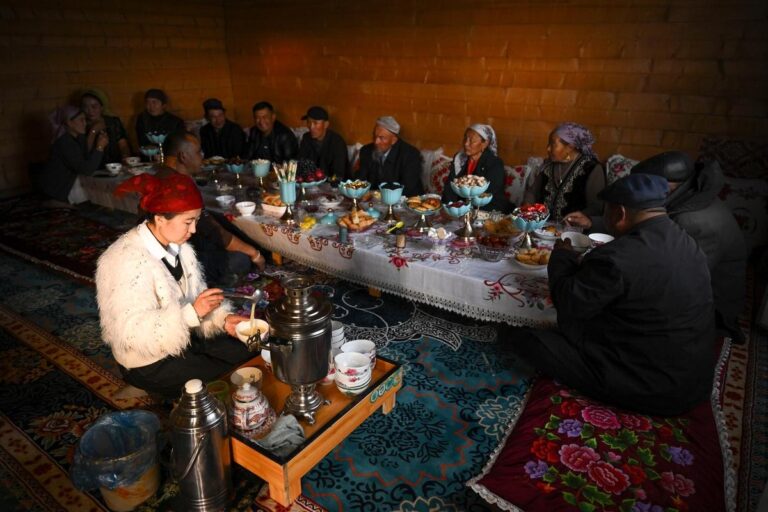
You are offered salted milk tea within minutes, then a bowl of kurt (dried curd) and maybe fresh bread. The family may not speak your language, but the hospitality needs none. Children stare; dogs announce you; a horse neighs somewhere in the dark. It is intimate in the best way.
Practical realities
- Toilets are an outhouse field, not a bathroom — carry your own paper.
- There is no shower; wet wipes are your friend, and a river dip if you are brave.
- Power is a car battery or nothing; charge devices in the village beforehand.
- Costs run roughly 100–200 RMB per person including dinner and breakfast, paid in cash or WeChat.
Yurt vs guesthouse
If you want comfort, a guesthouse in an old town or a city hotel is easier. The yurt is for the experience, not the amenity. For me the trade is worth it: waking to mist on the meadow and the smell of horse and woodsmoke is a memory no hotel makes. Our broader where-to-stay overview weighs yurts against the other options so you can choose by mood, not by default.
How to actually book one
You rarely book a yurt the way you book a hotel. Most travellers arrange it through a guesthouse in the nearest town, a homestay platform, or a driver who knows a family. Confirm three things up front: dinner and breakfast included, whether there is a shared or private toilet, and whether you can charge a phone. Our where-to-stay overview lists the range of options beyond the yurt.
Who it suits
Families and photographers love it; travellers who need a hot shower and a firm mattress may struggle. I tell first-timers to try one night, not three, on a first trip — enough to love it without testing your limits. The experience is the point, and a single starlit night delivers most of the magic.
Worth pairing with
Kazakh Yurt Stay Xinjiang sits naturally into a longer Xinjiang day. With a car the combination that worked for us was the site in the morning, a long lunch somewhere with shade, and the other place in the late afternoon, so two half-days covered a full one. Ask at the hotel desk the evening before what opened this week, because several of these places shift their hours with the season and the leaflet in the lobby is a year out of date. The stops most people miss are the small ones between the big names.
The mistake I made the first time
The whole point of coming this far is to have the place to yourself for a while, and that only happens if you are willing to be there when it opens or when it is nearly shut. I did come back the following trip, at seven in the morning, and it was a different site. The other mistake is about distance on the map. There is a shuttle, a walk, sometimes another shuttle, and the stretch everybody underestimates is between the second gate and the thing you crossed the country to see. The gate is not the site.
So: work out how far it is from where the vehicle drops you to the feature, then double it. That is the number of hours the visit needs. I assumed two hours would be plenty. It was, in the sense that I saw everything, and it was ruined in the sense that I saw everything at the same hour with the same crowd, and I spent the drive home meaning to come back and never did. What I would tell the version of me who planned it: put the slow hours in, not the fast ones.
I wrote the driving side up in our [[xinjiang-yurt-stay-vs-hotel-guide|Yurt or Hotel? Where to Sleep Across…]] as well.
What’s actually inside the yurt
A Kazakh yurt (哈萨克毡房) is a wood lattice frame over felt, with a smoke hole at the top you can open. Inside it’s one open space: low beds around the rim, a stove in the middle, rugs on the floor. You sleep on the beds, eat on the floor, and the whole family rotates through. Don’t expect a private bathroom — washing is a trip to the shared block, and the toilet is usually a pit latrine a short walk away. I go in clear-eyed about that and enjoy the rest: the night sky through the open smoke hole is the real selling point.
Where and how I book
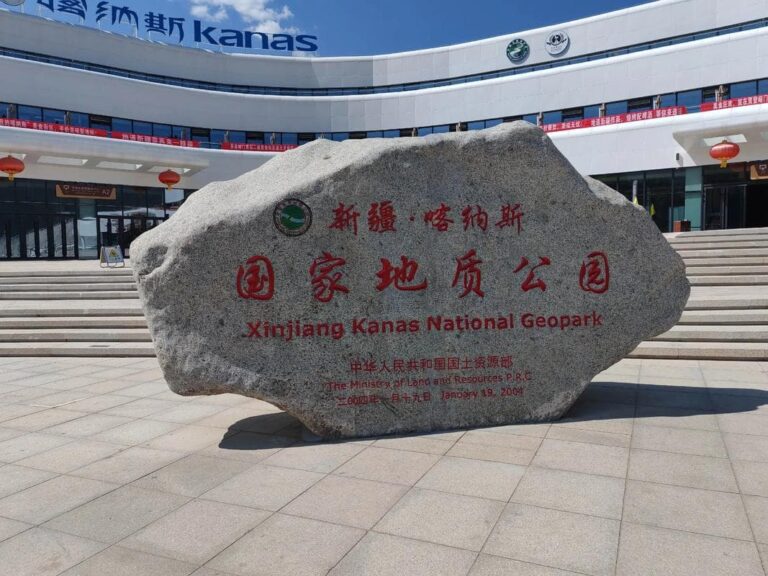
The reliable yurt stays cluster around Kanas (喀纳斯), Narati (那拉提) and the Sayram Lake (赛里木湖) grasslands. I book through the same Chinese travel apps the domestic tourists use, or directly with a homestay my hotel recommends, rather than hoping to find one roadside. Prices swing hard with season — a fraction off-peak, several times that in July and August. Ask what’s included: some stays are bed-only, others come with all meals and a shouted-around-the-stove evening that’s worth the upgrade.