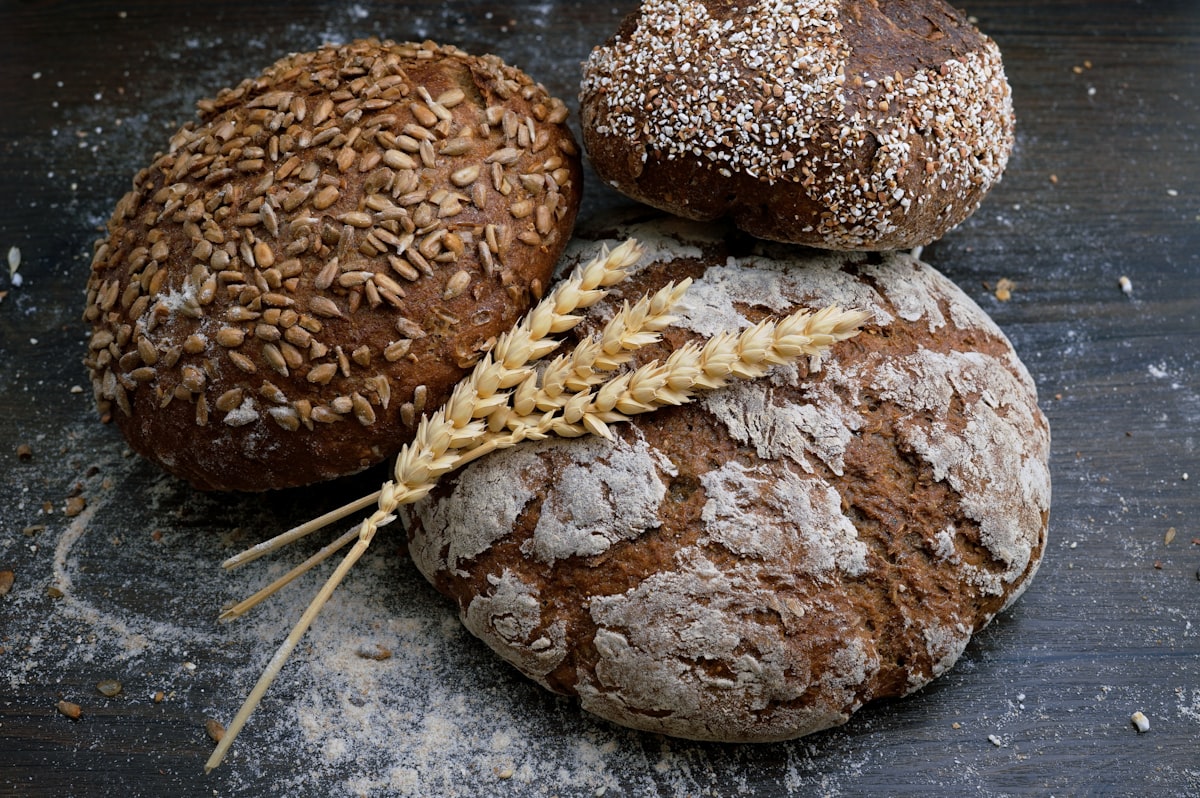
Naan (馕): Xinjiang’s Essential Flatbread and the Oven That Defines a Region
In Xinjiang, bread is not a side — it is the meal’s anchor. Naan (馕) is the round, flat, sesame-speckled bread baked in a domed oven (tandoor) that you see outside nearly every halal restaurant and neighborhood bakery. It is eaten at breakfast, used to scoop stew, split and shared at every table, and carried on long drives because it keeps for days. If polo is the celebration dish, naan is the daily one.
The bread arrived with the Silk Road — the tandoor and the wheat came from West Asia — and settled into a form that fits the climate: low moisture, long-keeping, and cooked fast by radiant heat.
How It’s Made
Dough of wheat flour, water, salt, and a little yeast is rested, then slapped thin onto a cushion and pressed against the inner wall of the preheated tandoor, where it bakes in minutes at 300°C+. The bottom picks up a blistered, slightly smoky crust; the top is brushed with water or milk and scattered with sesame or black cumin (ziran). Some versions get a patterned stamp; the famous ‘guitar-shaped’ naan (pichuan naan) is stamped and scored for easy breaking.
Bakers are athletes — they reach into the scorching oven with a long hook, slapping and retrieving loaves in a rhythm that looks dangerous and is, in fact, a skill passed down through families.

How to order, and what a portion really costs
Order one less than you think, because the rice arrives in a bowl the size of a small basin and the second helping does not need ordering. Card and phone payment both work everywhere in Naan %e9%a6%95 Xinjiangs Essential. The number on the board is for one, and one here is enough for a European adult if you share two. Tips are not expected in the small places and are quietly welcome where there is table service, but do not build the visit around it. For the part people underestimate, see our [[pitimanta-xinjiangs-baked-stuffed-naan-and-the-tandir-that-makes-it|Pitimanta: Xinjiang’s Baked Stuffed Naan…]].
How it is actually eaten
Eating alone here is a quiet business and the kitchen knows it. Bread goes down first, tea arrives without being asked for, and the main dish comes when the people eating together are already sitting properly. If you are travelling solo and the thought of a room full of families bothers you, the counter seats at the small places are exactly the right answer. In Naan %e9%a6%95 Xinjiangs Essential the meal is a long one, not a fast one. That stretch of the trip is described in our [[chaomianpian-%e7%82%92%e9%9d%a2%e7%89%87-xinjiangs-stir-fried-noodle-slices-and-the-wok-that-defines-them|Chaomianpian (炒面片): Xinjiang’s Stir-Fried…]] too.
Three words that change the order
In Naan %e9%a6%95 Xinjiangs Essential that single gesture has never once got me the wrong dish, and it saves you ordering a second plate you did not want. Point at what the next table has. What you need is the phrase for not spicy, the hand signal for a smaller portion, and the knowledge that one word covers what locals drink in winter, which is salt and butter, and what visitors get, which is sweet. You do not need Uyghur. I wrote the driving side up in our [[xinjiang-naan-flatbread-guide|Naan (Flatbread): The Essential Xinjiang…]] as well.
The Varieties
Ordinary round naan (kona naan). The daily loaf — chewy, mild, a few centimeters thick.
Sesame naan (shokh naan). Studded with white sesame, slightly richer.
Onion naan (piyaz naan). Folded with scallion or onion, more savory.
Grape naan (uzum naan). Sweetened with raisins, a treat more than a staple.
Thin crisp naan (yupka). A cracker-like version that keeps for weeks — the road-trip bread.
Each bakery has its own recipe and loyal regulars who pre-order by the stack. The difference between a good naan and a great one is the oven temperature and the baker’s timing, both invisible to the customer.

How to Eat It
Break it by hand (right hand, please) and use pieces to scoop polo, stew, or grilled meat. Tear the top crust first; the soft interior is the part you save for sauces. Fresh naan is best within hours; day-old naan revives over a flame or in a toaster. NEVER stick a naan upright or step over it — bread is treated with respect across the region’s cultures, and wasting it is frowned upon.
Buy it warm from a neighborhood bakery in the morning; the early batch is the freshest. A single loaf costs cents. For the bread chapter of any Xinjiang Travel Guide, naan is the through-line — the food that connects a Kashgar breakfast, a Pamir roadside stop, and a Urumqi supper into one continuous table.