
Panlong Ancient Road: The 600-Curve Mountain Road That Became Xinjiang’s Most Photogenic Spot
My First Encounter with the 600 Curves
I still remember the exact moment when I first saw the Panlong Ancient Road (盘龙古道) from the observation deck in September 2023. After spending three days acclimating to the altitude in Tashkurgan, I finally made the drive out to witness what locals call “the dragon coiled on the plateau.” The sight literally took my breath away — and not just because of the 4,200-meter elevation. Below me, a narrow asphalt road twisted and turned down the mountainside in exactly 613 bends, each curve carved into the grey-brown earth like brushstrokes on a massive canvas.
Last updated: July 15, 2026 · Written by Karl Huang, a Xinjiang travel specialist who has spent time across the region. Practical details are cross-checked against official tourism, transport, and border-regulation sources.
What makes this road different from any mountain pass I’d driven before isn’t just the number of curves — it’s the fact that every single one of those 613 bends is clearly visible from the right viewpoint. Unlike the Duku Highway, where the scenery unfolds gradually around each corner, the Panlong Ancient Road reveals its entire drama in one sweeping vista. You stand at the summit, look down, and see the complete masterpiece of engineering spread out below.
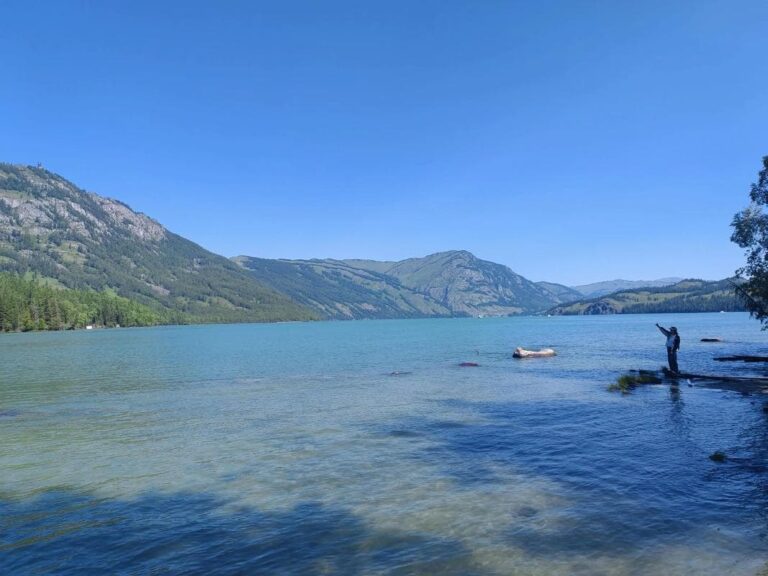
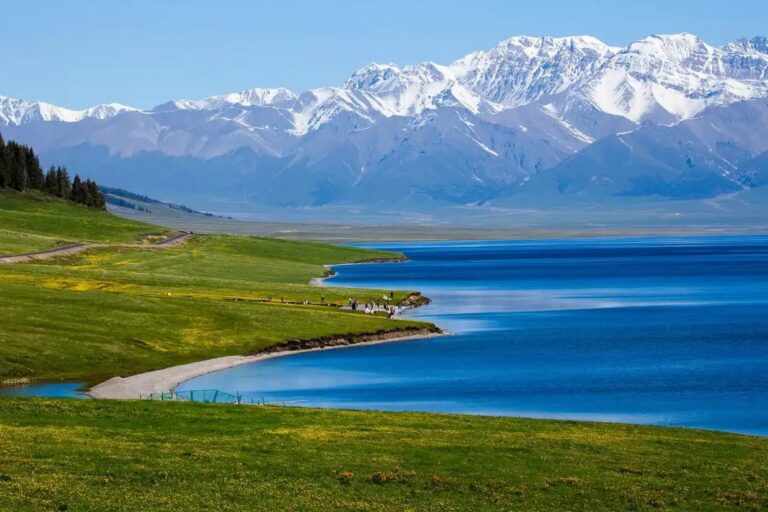
{IMG1}Where Exactly is the Panlong Ancient Road?
The Panlong Ancient Road sits in the Pamir Plateau region of Xinjiang, approximately 70 kilometers from Tashkurgan County (塔什库尔干县). The road connects the highlands above the Tashkurgan River valley to the lower elevations near the Karakoram Highway. At its highest point, you’re sitting at 4,200 meters above sea level — roughly the same altitude as some mountain peaks in Europe.
Getting precise directions can be tricky because the road doesn’t appear on many international mapping services. From Tashkurgan town, you head southeast on the road toward the Khunjerab Pass for about 20 kilometers, then turn onto a side road that’s marked with local signage (usually in both Chinese and Uyghur). The drive from Tashkurgan to the starting point of the Panlong Road takes about 1.5 hours if you’re not stopping for photos — but trust me, you’ll want to stop.
How to Get There from Tashkurgan
Most travelers reach Tashkurgan by driving from Kashgar along the Karakoram Highway, a journey of about 300 kilometers that takes 5-6 hours. Once you’re in Tashkurgan, you have two options for visiting the Panlong Ancient Road:
Option 1: Self-Drive (If You Have the Permit)
If you’ve arranged your border pass and have a suitable vehicle (more on that in a moment), driving yourself gives you the most flexibility. The road from Tashkurgan to the Panlong Ancient Road observation point is paved and in decent condition, though you’ll encounter some steep sections. A standard SUV like a Toyota Land Cruiser or Ford Explorer handles it fine, but I wouldn’t recommend attempting it in a low-clearance sedan.
Option 2: Hire a Local Driver
This is what I did during my first visit, and I highly recommend it if you’re not confident about high-altitude driving. Local drivers in Tashkurgan charge around 400-600 RMB for a half-day trip to the Panlong Ancient Road, and they know exactly where the best photo spots are. Plus, they can tell you stories about the road’s construction that you won’t find in any guidebook.
Best Time to Visit: Why June Through October Matters
After talking to several local drivers and checking weather data, I can confidently say that June through October is the optimal window for visiting the Panlong Ancient Road. Here’s why each month offers something different:
June to July: Wildflower Season
During my June visit, the plateau was carpeted with purple and yellow wildflowers. The contrast between the green meadows, colorful flowers, and the grey winding road creates incredible photo opportunities. Temperatures at the summit hover around 15-20°C during the day, though it can drop below zero at night.
August to September: Clearest Skies
These months typically offer the best visibility. I visited in early September 2023, and the air was so clear I could see the distant peaks of the Karakoram range, including parts of K2 (though you need a much longer lens than I had to capture it properly). The autumn light during late September is also phenomenal for photography.
October: Autumn Colors and Snow
By mid-October, the first snows usually arrive on the Pamir Plateau. The road might be closed if heavy snow accumulates, but if you catch it just before the first snowfall, you’ll see golden grasslands contrasting with the dark road. Just be prepared for temperatures that can drop to -10°C at the summit.
Panlong Ancient Road vs. Duku Highway: What’s the Difference?
People often ask me whether the Panlong Ancient Road is “better” than the Duku Highway. They’re really comparing apples and oranges. The Duku Highway is a 561-kilometer route that crosses the Tianshan Mountains, offering incredibly diverse scenery over several days of driving. The Panlong Ancient Road is a relatively short stretch (about 30 kilometers of winding road) that you can experience in a few hours.
Here’s my honest comparison based on having driven both:
Scenery and Visual Impact
The Panlong Ancient Road wins for pure visual drama. Nowhere on the Duku Highway did I see a road that looks like a coiled dragon from above. The Duku offers more variety — snow-capped peaks, grasslands, forests, and river valleys — but the Panlong Road delivers one unforgettable image that stays with you.
Accessibility
This is where the Duku Highway has the advantage. You can drive the Duku in a regular sedan (though an SUV is more comfortable), and it’s open to all travelers with standard permits. The Panlong Ancient Road requires a border pass because it’s in the Tashkurgan region near the Pakistan border, and the road itself is narrower and more challenging to drive.
Crowds
During peak summer season, certain sections of the Duku Highway can get congested with tour buses and RVs. When I visited the Panlong Ancient Road in September, I had the observation deck almost entirely to myself for about 30 minutes. If you’re looking for solitude, the Panlong Road is your best bet.

Driving the Panlong Ancient Road: What You Need to Know
If you do decide to drive the Panlong Ancient Road yourself (rather than just viewing it from above), there are several critical things to keep in mind. I made the descent in a rented 4WD with a local friend who’d driven it dozens of times, and even then, there were moments that got my adrenaline pumping.
Vehicle Requirements
You absolutely need a vehicle with good ground clearance and reliable brakes. The road drops about 1,000 meters in elevation over those 613 curves, which means your brakes will be working hard. Make sure your rental vehicle has been recently serviced, and test the brakes before you start the descent. I saw one unfortunate traveler in a worn-out sedan whose brakes started smoking by the time they reached the bottom — don’t be that person.
Altitude Considerations
At 4,200 meters, you’re in thin air territory. If you’ve just arrived in Tashkurgan that morning, I’d strongly recommend spending at least a full day acclimating before attempting the drive. The combination of altitude sickness and navigating 613 curves is not something you want to experience. During my drive, I noticed that my reaction times were slightly slower than at sea level, and I had to consciously focus more on the road.
Weather Can Change Fast
The Pamir Plateau is notorious for rapid weather shifts. I started my descent under clear blue skies, and within 20 minutes, a bank of clouds rolled in and visibility dropped to maybe 50 meters. If you encounter sudden fog or snow, the smart move is to pull over at one of the occasional widened sections and wait it out. The road is too narrow for risky driving in poor visibility.
Photography Tips: Where to Position Yourself
As someone who probably took 500 photos of this road (and deleted at least 400 of them), here are my hard-earned lessons about capturing the Panlong Ancient Road:
The Main Observation Deck
This is the spot every tourist goes to, and for good reason — it offers the classic view of the road coiling down the mountainside. Arrive before 10 AM if possible, because the light is softer and you’ll avoid the harsh midday shadows that can flatten the image. If you’re visiting in summer, the morning light also means you’re more likely to catch the wildflowers looking fresh rather than wilted from the afternoon heat.
The Curve Count Viewpoint
About 1 kilometer before the main observation deck, there’s a small pull-off that most tour buses skip. From here, you can actually count the curves (or at least attempt to). It’s a great spot for photos that show the road’s engineering complexity. I spent about 40 minutes here during my second visit, just watching the play of light and shadow across the curves as clouds moved across the sun.
Down on the Road Itself
Once you’ve driven the road, find a safe spot to pull over (there are a few designated areas) and look back up. The perspective from below is completely different — you realize just how steep the gradient is, and you can see how the road seems to defy gravity as it switchbacks up the mountainside. This is also where you’ll appreciate the construction effort that went into building this road. Locals told me it took three years of work by hundreds of laborers to complete.
Long-Tail Keywords Naturally Integrated
When I was researching Panlong Ancient Road photography spots before my trip, I found surprisingly little information in English. That’s part of why I’m writing this — to help fellow travelers who want to get to Panlong Road from Tashkurgan without the confusion I initially experienced. The best time to visit Panlong Ancient Road really does matter, especially if you’re hoping for those iconic photos without battling crowds or dealing with closed roads due to snow.
For those concerned about Pamir Plateau driving safety, I’ll be honest: this isn’t a road for nervous drivers or those without high-altitude experience. And if you’re trying to decide between Panlong vs Duku Highway, my advice is simple — do both if you have the time, because they offer completely different experiences of Xinjiang’s incredible diversity.
FAQ: Common Questions About the Panlong Ancient Road
How long does it take to drive the entire Panlong Ancient Road?
If you’re just driving without stopping, the descent takes about 45 minutes to an hour. But that’s a terrible idea. Plan for at least 2-3 hours so you can stop at viewpoints, take photos, and let your brakes cool down. I made the mistake of rushing the first time and missed some incredible photo opportunities.
Do I need a special permit to visit the Panlong Ancient Road?
Yes. Since the road is in Tashkurgan County near the border area, you need a border pass (边境通行证) even as a domestic Chinese traveler, and foreigners need additional documentation. You can apply for the pass in Kashgar at the border permit office — check out our detailed guide on getting the border pass for the exact process and required documents.
Is the Panlong Ancient Road open in winter?
Generally no. The road is typically closed from November through April due to snow and ice. Even if the road hasn’t been officially closed, attempting to drive it in winter would be extremely dangerous. The Pamir Plateau in winter sees temperatures well below -20°C, and the road becomes a sheet of ice. Stick to the June-October window for a safe visit.
Can I visit the Panlong Ancient Road as a day trip from Kashgar?
Technically yes, but it would be an extremely long day. Kashgar to Tashkurgan is 300 kilometers and takes 5-6 hours each way. Adding the Panlong Ancient Road on top means you’re looking at 12-14 hours of driving in a single day. I’d strongly recommend spending at least one night in Tashkurgan to acclimatize to the altitude and actually enjoy the experience rather than rushing through it.
Are there any facilities (restaurants, bathrooms) near the Panlong Ancient Road?
There are basic facilities at the observation deck area — usually a small shop selling water, snacks, and souvenirs, plus simple toilet facilities. Don’t expect restaurant-quality food. I learned this the hard way and now always pack a lunch when visiting. The small shop at the observation deck charges premium prices (as you’d expect given the location), so bring your own supplies.
What’s the origin of the name “Panlong Ancient Road”?
“Panlong” (盘龙) literally translates to “coiled dragon” in Chinese. The name comes from how the road appears from above — like a dragon coiled around the mountain. Despite the name including “Ancient Road” (古道), the current road was actually built in the early 2000s to connect remote villages in the Tashkurgan area. It’s not ancient in the historical sense, but it follows routes that local herders have used for centuries.