Xinjiang Pilaf (Polo): The One-Pot Rice Every Traveler Should Try
The first time I sat down to a proper bowl of Xinjiang pilaf, it arrived in a shallow metal bowl heaped with golden rice, ribbons of carrot, and a single glistening chunk of lamb on top. I had expected something plain. What I got was sweet, savory, and faintly smoky all at once. In Xinjiang, polo (as locals call it) is not a side dish — it is a full meal, a welcome gesture, and the centerpiece of every big gathering from family dinners to thousand-guest wedding banquets.
What Exactly Is Xinjiang Pilaf (Polo)?
Xinjiang pilaf is a rice dish cooked in oil rather than boiled, then simmered with lamb, yellow carrots, onion, and raisins until every grain is separate and stained the color of saffron. The Uyghur name is polo; in Mandarin it is zhua fan (抓饭, “grab rice”), a nickname that comes from the old habit of eating it with the right hand. You will hear both words, but they point to the same comforting one-pot meal.
Unlike a wet biryani, Xinjiang pilaf is dry and fluffy. The rice absorbs the rendered lamb fat and the sweetness of the carrot and raisin, which is what gives the dish its signature balance. A good polo is never greasy — the fat should have been cooked off and absorbed, leaving the grains glossy but distinct.
A Short History of Polo on the Silk Road
Pilaf travelled east along the Silk Road, and Xinjiang sat right on the route. The technique of frying rice in fat before adding liquid is ancient, and the version that settled in the Tarim and Ili basins borrowed from Persian, Central Asian, and Chinese cooking at once. What makes the local style unique is the lamb and the carrots: the region’s long sunny days grow carrots with an intense sugar content, and that sweetness is the soul of the dish.
Why Carrots and Raisins?
The carrots (usually the local yellow or red variety, not the orange Western type) soften into a jammy sweetness as they braise. Raisins — often the tiny green Xinjiang variety — add bursts of tart-sweet contrast. Together they cut the richness of the lamb. It is a combination that sounds odd until you taste it, and then it makes perfect sense.
The Core Ingredients
A typical home or restaurant polo uses a short list of building blocks. The quality of each one matters more than any fancy technique.
| Ingredient | Role | Local note |
|---|---|---|
| Long-grain rice | The body of the dish | Soaked for 1–2 hours so it steams evenly |
| Lamb (on bone or cubed) | Fat and savory depth | Neck or rib meat is preferred for flavor |
| Yellow/red carrots | Sweetness | Xinjiang carrots are unusually sugary |
| Onion | Aromatic base | Fried until golden before the rice goes in |
| Raisins or sultanas | Sweet contrast | Green Xinjiang raisins are traditional |
| Sheep tail fat (optional) | Richness | Used in older recipes for a deeper flavor |
How Xinjiang Pilaf Is Cooked
The method looks simple but rewards patience. First the lamb is rendered in oil until it browns. Then onion and carrot go in and soften. Only after the oil has turned fragrant and orange do the soaked rice and hot water join the pot. The whole thing is covered and left to steam on low heat until the liquid disappears.
The Three-Stage Method
Stage one is fry: render the meat and toast the onion. Stage two is build: layer the carrots, raisins, and rice, then add just enough water to reach the top of the rice. Stage three is steam: cover tightly, drop the heat, and wait twenty to thirty minutes without lifting the lid. Open it and you should see rice standing in separate, fragrant grains.
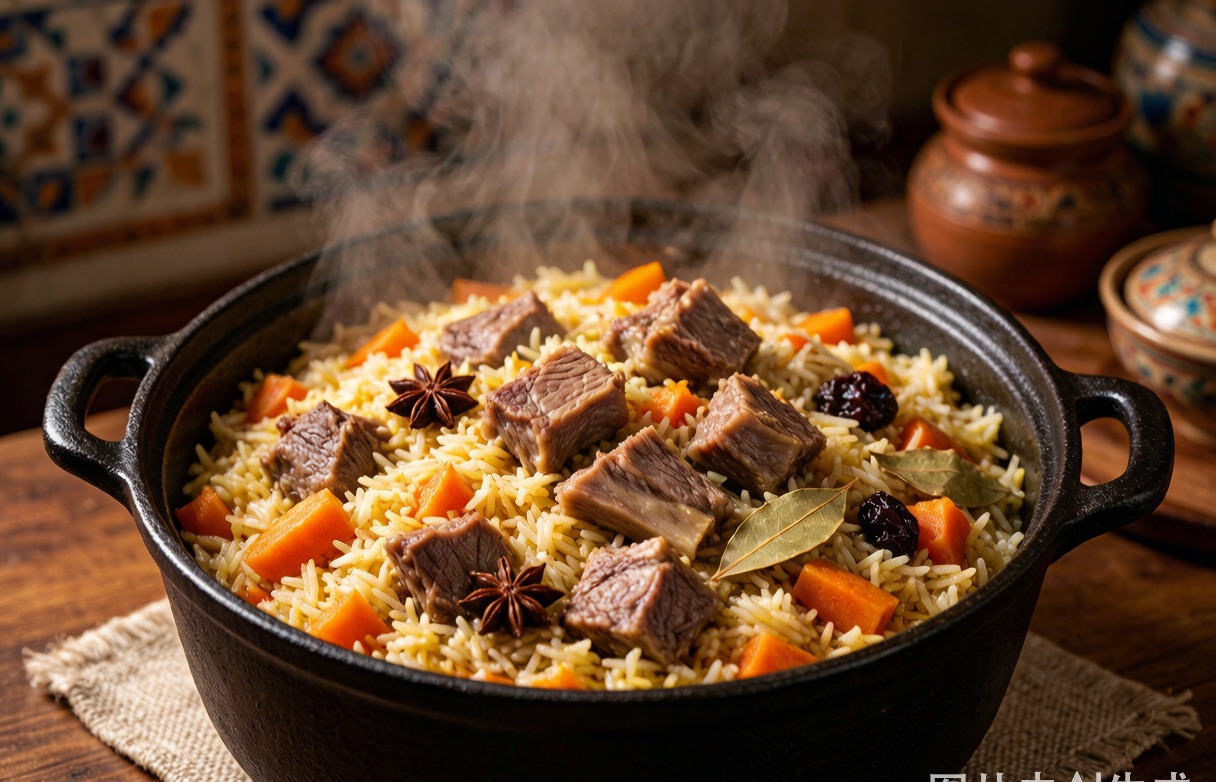
In many Uyghur homes the pot is sealed with a wet cloth under the lid to trap every bit of steam. Restaurants that specialize in polo often use giant cauldrons and sell it by the kilogram, scooped straight from the center of the pan where it is most tender.
Pilaf Across the Regions
While the base formula is stable, different parts of Xinjiang put their own stamp on it. The variations are a good window into the region’s geography.
| Region | Style | Signature add-in |
|---|---|---|
| Urumqi & the north | Classic lamb polo | Extra carrot, mild spice |
| Kashgar & the south | Hearty, darker rice | More sheep tail fat, deeper color |
| Ili (Yili) Valley | Slightly sweeter | Generous raisins, sometimes apricot |
| Festival banquet | Massive shared tray | Whole joint of lamb on top |
Where to Eat Pilaf in Xinjiang
Almost every city has a polokhane — a “pilaf house” — that does nothing else. These no-frills spots open early, because polo is as common at breakfast as at dinner. In Urumqi, the blocks around the southern bus station are famous for them; in Kashgar, the side streets off the old city fill with the smell of frying onion by mid-morning.
Urumqi and the South
In Urumqi, look for the lunch rush: locals queue with their own bowls, pay by weight, and eat standing or at shared tables. In the south, especially around Kashgar and Hotan, the rice tends to be darker and richer. Either way, order a bowl with chay (tea) on the side — the locals do, and it cuts the richness beautifully.
Pilaf at Weddings and Holiday Feasts
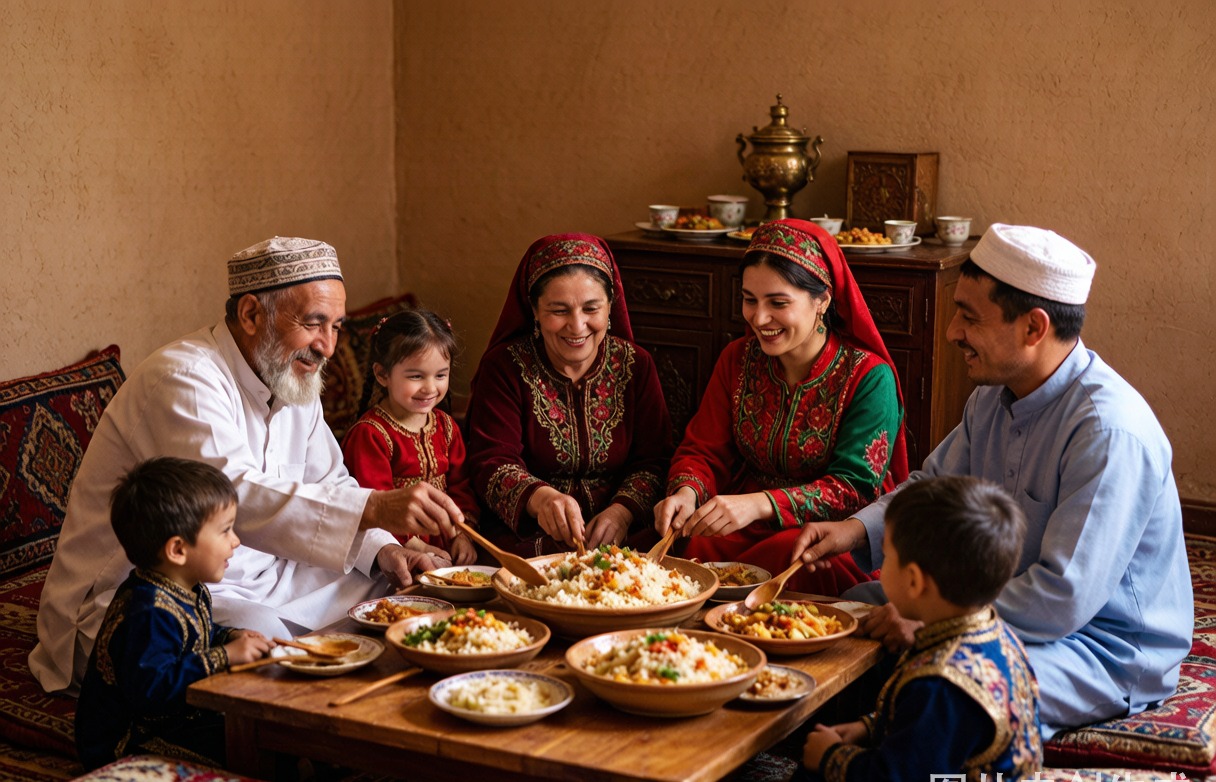
If you are lucky enough to be invited to a Xinjiang wedding or a major holiday meal, polo will be there in quantity. Cooks prepare it in enormous pots, sometimes enough for hundreds of guests, and serve it from a single communal platter eaten with the right hand. It is the dish of hospitality — the plainer the setting, the more sincere the welcome.
For a broader sweep of the local table beyond pilaf, our Xinjiang food guide and our Xinjiang cuisine guide cover the dishes that usually share it.
Ordering Tips for Travelers
When you order, you can usually choose the portion size and whether you want an extra piece of lamb or a boiled egg on top (a common, cheap upgrade). Say “bir piyala polo” for a bowl, or point at someone else’s if the menu is only in Chinese. Most pilaf houses are halal and cash-friendly, though larger cities now take mobile payments.
The things you will probably want to know
Is Xinjiang pilaf the same as Indian biryani?
No. Biryani is layered with yogurt and whole spices and served wet, while Xinjiang pilaf is dry, gently sweet from carrot and raisin, and built on lamb fat rather than ghee and garam masala. They share an ancient rice-cooking lineage but taste distinctly different.
Is pilaf halal?
Almost always, yes. Polo houses are overwhelmingly Muslim-run and serve halal lamb. Still, if you have strict requirements, confirm the oil and any added sausage-free status with the cook — the dish itself contains no pork.
Can vegetarians eat pilaf in Xinjiang?
It is difficult. Traditional polo is cooked in lamb fat and with meat. Some tourist-oriented spots will make a “green” version with oil and extra vegetables if you ask, but it is not the norm. Treat it as a meat dish unless confirmed otherwise.
How much does a plate of pilaf cost?
A street-level bowl in 2026 runs roughly 15–30 RMB depending on the city and the size of the lamb portion. Banquet or hotel versions cost more, but the everyday polo house is one of the best cheap eats in the region.
What is the difference between polo and zhua fan?
Nothing in the bowl — “zhua fan” (grab rice) is simply the Mandarin nickname for the same dish, a nod to the traditional hand-eating style. You will see both words on menus and signs.