Id Kah Mosque, Kashgar: A Visitor’s Guide to China’s Largest Mosque
The first time I stood in Id Kah Square before sunrise, the city of Kashgar was still dark, but the great yellow walls of the mosque were already catching a faint glow. By the time the call to prayer rolled out across the old town, the courtyard was filling with men in crisp white caps and long coats, and I was standing to one side, quietly realizing I was looking at the spiritual center of Uyghur life in southern Xinjiang.
The Largest Mosque in China, in the Heart of Kashgar
Id Kah (also written Id Kah, Ai Ti Ga’er, or 艾提尕尔) is generally described as the largest mosque in China by capacity, and it sits right on the northern edge of Kashgar’s old town, facing a broad pedestrian square that has been the city’s gathering point for centuries. The name roughly means “a place of celebration and worship,” and on major festivals the square can hold tens of thousands of worshippers spilling far beyond the building itself.
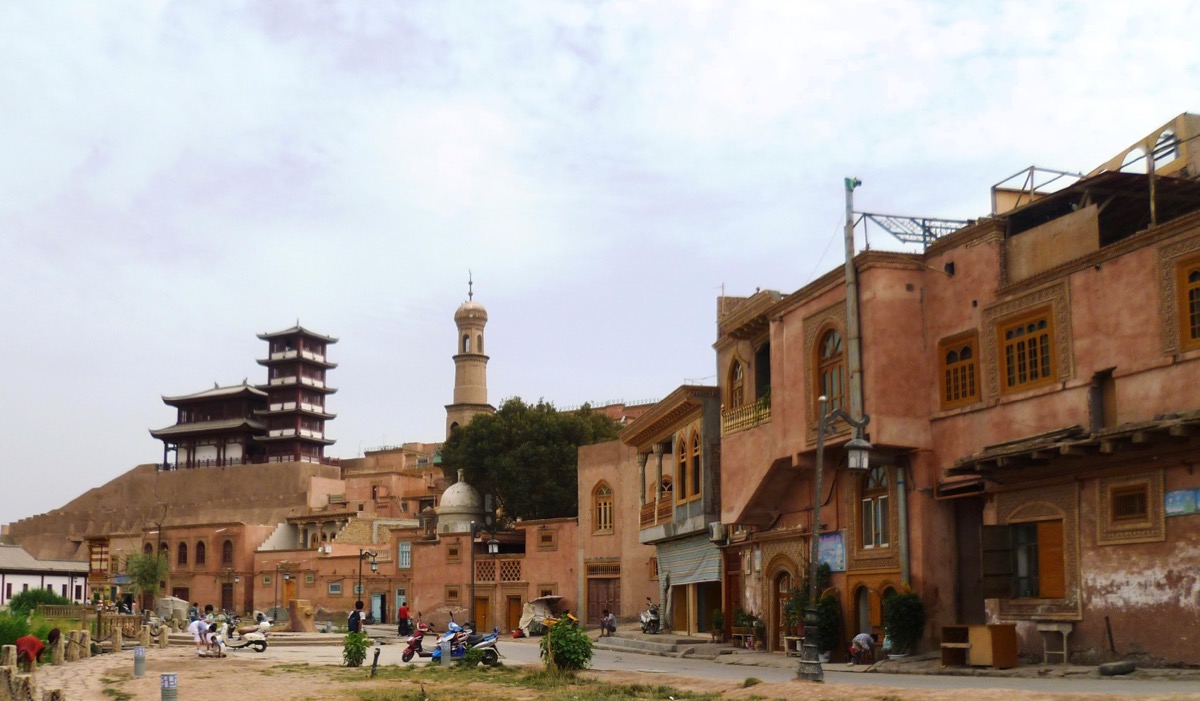
For a traveler, it is one of the few places where you can feel the rhythm of daily religious life rather than just tick a landmark off a list. It pairs naturally with a walk through the surrounding Kashgar Old City, which begins a few steps from the square’s eastern side, and with the old-town architecture described in this living museum of Uyghur culture.
A Short History of Id Kah
The site started small. A well and a graveyard stood here in the mid-15th century, and a modest prayer space was built beside them by a local ruler who wanted a place of worship near the growing settlement. Over the following centuries the complex was expanded repeatedly by merchants, governors, and pious families, growing into the walled courtyard and hall you see today. Much of the structure visitors photograph now dates from the 18th and 19th centuries, with later repairs keeping the earthen-yellow look consistent.
From a graveyard and a well to a city landmark
It is worth remembering that the mosque was never just a building. It anchored a neighborhood of tea houses, bazaar stalls, and narrow lanes, and it still does. When you leave through the main gate, you step straight into the ordinary commerce of Kashgar, which is exactly the point: faith and daily life here have always shared the same square.
What the Architecture Tells You
Id Kah is built in a restrained regional style: thick yellow mud-brick and fired-brick walls, a large open courtyard framed by arcades, and a tall gateway tower flanked by a pair of slender minarets. There is no great dome in the Ottoman or Middle Eastern sense; the silhouette is low and horizontal, shaped by the climate and local brickwork more than by imported fashion. The gate itself, with its recessed arch and green-tiled accents, is the most photographed angle and the easiest to reach.
The yellow courtyard and the prayer hall
The courtyard is the social heart. Shaded colonnades line the sides, and the main prayer hall behind is a long, column-supported space carpeted for congregational worship. Non-Muslim visitors are usually welcomed into the courtyard and the outer areas, while the inner hall is reserved for worshippers during prayers. The sheer scale of the hall, with its forest of painted wooden columns, is what surprises most first-time visitors.
Visiting Id Kah: What to Expect
Entry is cheap and the square is free to wander at any hour. The practical details below are the ones travelers actually ask about.
| Item | What to know |
|---|---|
| Opening hours | Daylight hours for the courtyard; inner hall open to worshippers at prayer times. Tourist entry to the compound is typically morning to early evening. |
| Entry fee | A small ticket (usually around 30 RMB) is charged for non-worshipping visitors to enter the compound; the square itself is free. |
| Dress code | Cover shoulders and knees. Women should carry a scarf to cover the head when stepping into prayer areas. |
| Photography | Fine in the square and courtyard; avoid photographing people mid-prayer and never shoot inside the hall during worship. |
| Women visitors | Welcome in the courtyard and outer arcades; the main hall is for male worshippers, with a designated area for women when open to them. |
Prayer times and Friday congregation
Friday (Juma) is the big one. The midday Friday sermon draws the largest crowd, and the square outside fills early. If you want atmosphere, arrive before the call; if you want space to photograph the empty architecture, go mid-afternoon on a weekday. Daily prayers also punctuate the day, and simply observing the ebb and flow of people is part of the experience.
Dress and behavior inside
Speak quietly, walk along the edges, and follow any rope lines or signs. Shoes stay on in the courtyard but come off where indicated before carpeted prayer space. A little patience and observation go further than any guidebook rule, and locals are generally tolerant of respectful, curious visitors.
Id Kah During the Festivals
If your timing is lucky, visit during Eid al-Fitr or Eid al-Adha. On those mornings the square becomes a sea of white-capped worshippers, with the sermon broadcast across the open space and families meeting afterward for feasts. It is the single most intense cultural experience Kashgar offers, and the normal tourist ticket rules are relaxed in favor of open access for the community. Arrive very early, dress conservatively, and keep your camera lowered out of respect.
Around the Square
The square is the best free show in Kashgar. Early mornings bring elderly men on benches, pigeon feeders, and street vendors; evenings bring families and a slow promenade. From here you can walk into the Kashgar Old Town, hire a bicycle, or simply sit with a cup of tea and watch the city breathe. The surrounding streets are also the easiest place to find a quick Uyghur breakfast before a day of sightseeing.
When to Go
Spring and autumn are most comfortable, with the square lively but not scorching. Summer is hot and bright; winter is cold but wonderfully empty. Try to time at least one visit to sunrise or the blue hour after sunset, when the yellow walls glow and the square empties out. Weekday afternoons give you the architecture with the fewest people in frame.
The money side of it
| Item | What it costs | Note |
|---|---|---|
| non-muslim tourists enter id kah mosque | varies | Yes. The square and outer courtyard are open to visitors, and a small ticket lets you enter the compound. The inner prayer hall is reserved for worshippers, especially during prayers. |
| cost | 30 RMB | The square is free. A modest ticket, usually around 30 RMB, is charged for non-worshipping visitors to enter the mosque compound. |
The numbers above are what I paid on my own trips; add roughly a fifth for a private car and driver if you are travelling with someone else. Anything marked roughly is a bazaar price in high season, and it moves with demand.