Hotel vs Guesthouse in Xinjiang: Which Should You Book?
Few decisions shape a Xinjiang trip as much as the hotel-versus-guesthouse call. On my first loop I booked international hotels everywhere and missed the region’s hospitality; on my third I went full guesthouse and learned the comfort limits. Here is the honest trade-off, written so you can decide before you book rather than halfway through a cold yurt night.
What “Guesthouse” Means in Xinjiang
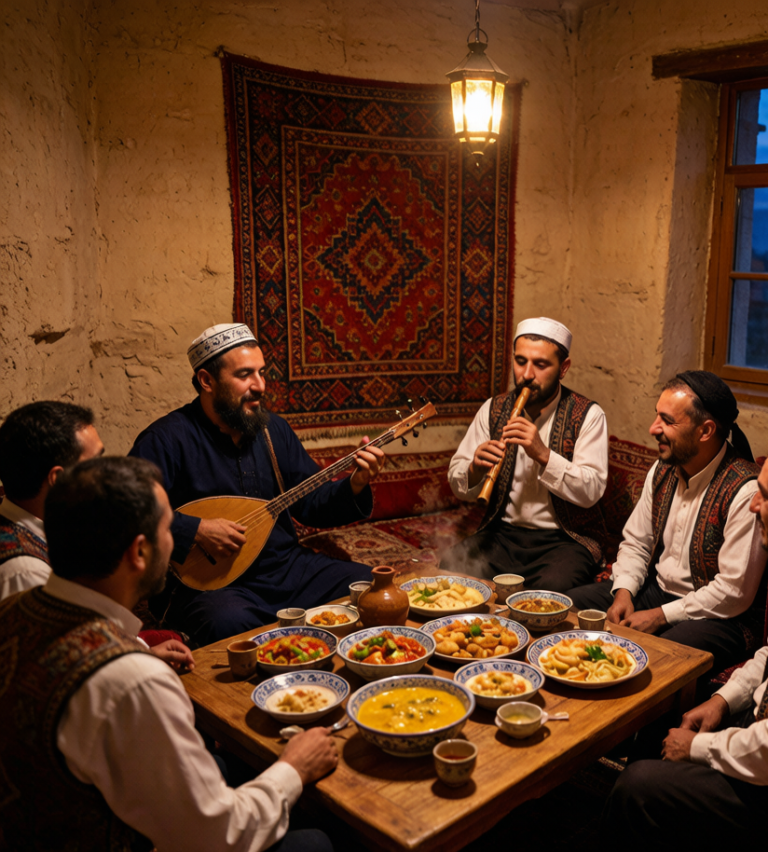
The term 家庭旅馆 (jiātíng lǚguǎn, “family hotel”) covers a wide range: a spare room in a Uyghur courtyard, a Kazakh yurt on the grassland, a timber cabin in Hemu, or a restored Old Town home in Kashgar. They share one thing: you are a guest in someone’s life, not a room number in a chain. The best ones I have stayed in felt like visiting relatives I did not know I had.
Hotels: Comfort and Predictability
Chinese chain hotels (Atour, Hanting, Jinjiang, and internationals in big cities) give you elevators, sealed windows, consistent hot water, and English-friendly apps. For work trips, elderly travelers, or back-to-back travel days, they remove friction. Read the full regional stay guide for city-by-city picks, because the “right” answer flips depending on which region you are in.
Where Hotels Clearly Win
If you need to charge drones and laptops reliably, do video calls, or sleep with the window sealed against cold, a hotel is the obvious choice. After a week of guesthouses, I genuinely crave a hotel’s shower pressure and quiet hallway.
Guesthouses: Culture and Character
A guesthouse buys you tea with the family, home cooking, and local tips no app provides. The cost is real: thin walls, variable plumbing, and sometimes no heating in shoulder season. For the family travel experience, yurts and courtyard stays are unforgettable, and kids often remember the yurt more than any museum.
Hotel vs Guesthouse Comparison Table
| Factor | Hotel | Guesthouse |
|---|---|---|
| Price/night | ¥280-900 | ¥180-450 |
| Comfort | High, consistent | Variable |
| Local culture | Low | High |
| Booking ease | Apps, English | Mostly Chinese apps/calls |
| Best for | Transit, seniors | Scenery, immersion |

My Hybrid Recommendation
Do not choose one for the whole trip. I book hotels on travel days and in big cities, and switch to guesthouses for scenic stays (grasslands, Old Town, Hemu). This balances rest and experience, and keeps costs sane. A good rhythm is: hotel in the city, guesthouse at the beauty spot, hotel again before the long transfer out.
A Note on Cleanliness Concerns
Some travelers worry about guesthouse hygiene. Reputable, review-backed guesthouses are clean; the risk is the unlisted one with no reviews. Always check recent photos and, if possible, see the room before paying. I have only once had a below-standard room, and walking away cost me nothing but a short cab ride.
A Quick Decision Flow
Ask three questions: (1) Do I have a long drive tomorrow? If yes, hotel. (2) Is this a scenic highlight night? If yes, guesthouse. (3) Am I with seniors, toddlers, or working remotely? If yes, hotel. Most of my trips resolve to “hotel on move days, guesthouse on wow days,” and that rhythm has never let me down. The mistake is letting one pretty photo push you into three consecutive rough nights.
When Guesthouses Surprise You
The best guesthouse moments are unplanned: a spontaneous music session, a lesson in making naan, a shared plate of melon at midnight. Hotels rarely deliver that. So even if you are a comfort-first traveler, I urge one guesthouse night somewhere—Hemu, the Old Town, or a grassland ranch—to actually meet the place rather than just photograph it.
Cost Reality Check
Guesthouses are not always cheaper—a restored Old Town boutique can cost more than a city chain hotel. The savings appear in rural yurts and village inns, not in prime tourist lanes. I price by value: a ¥400 yurt with a sunrise over the meadow beats a ¥400 city room with a view of a parking lot. Match the spend to the moment, not to a blanket rule.
Booking Confidence
The single biggest comfort multiplier is reviews with recent photos. I filter to the last six months and look for images of the actual bathroom, because that is where guesthouses vary most. A place with glowing text but no recent bath photo gets a pass from me now—too many surprises lurk behind that gap.
Reading Reviews the Right Way
The most useful reviews are the disappointed ones that still mention specifics: “thin walls,” “cold water at 7 a.m.,” “great host helped with the pass.” Patterns across three such reviews tell you more than ten glowing one-liners. I filter to the last three months and read the worst first; a place that survives honest criticism is a place I will book.
The Hidden Cost of “Authentic”
An unheated yurt at 4°C is authentic; it is also miserable if you expected a hotel. Match your expectation to the structure. I now tell travelers: if you want a story, take the guesthouse; if you want a shower that works at 6 a.m., take the hotel. Wanting both from one room is the source of most bad reviews I have read.
A Balanced Sample Itinerary
For a classic two-week loop: hotels in Urumqi, Turpan, Kashgar new city, and Yining; guesthouses in the Old Town (two nights), a grassland ranch (one to two nights), and Hemu (one night). That is roughly 70% hotel, 30% guesthouse—enough character, enough comfort. Adjust the ratio only if your group’s tolerance is unusual.
Final Hotel vs Guesthouse Takeaways
The answer is not one or the other—it is the rhythm. Hotels on move days and in cities; guesthouses at the scenic highlights. That balance gave me my best nights’ sleep and my best memories on the same trip, and it keeps the budget sane. The travelers who struggle are the ones who commit to a single style for the whole loop and suffer the mismatch.
Trust the Reviews
Whatever you choose, filter to recent reviews with photos of the actual bathroom and bed. That single habit has saved me from more bad stays than any brand loyalty. Xinjiang‘s hospitality is genuinely warm, but individual properties vary, and a few minutes of reading turns a gamble into a confident booking you will not regret at 2 a.m.
Before You Book
Whatever you choose, book the character stays early and keep the comfortable hotels flexible. The guesthouses are scarce and the good ones sell out; the chain hotels have inventory and cancel policies. That asymmetry is the whole strategy in one sentence, and it has steered every good lodging decision I have made in Xinjiang.
The short version
The rhythm wins: hotels on move days, guesthouses at the scenic highlights. That balance gave me my best sleep and my best memories on the same trip, and it keeps the budget sane. Commit to one style for the whole loop and you will feel the mismatch; blend them and you get the best of both.
When the plan falls apart
If this happens: Guesthouses safe for solo women
Yes; Xinjiang is safe, and family guesthouses are communal and well supervised.
When it goes sideways: Guesthouses take foreign cards
Rarely. Carry cash or set up mobile pay before you arrive.
If you run into this: Booking guesthouses on booking.com
Some Kashgar and Urumqi ones appear; most rural ones need a Chinese app or a call via your driver.
On the ground: Breakfast included
Hotels usually yes; guesthouses often offer it for a small extra fee or as part of the stay.
If this happens: Better with kids
A mix: hotels for sleep, one or two guesthouse nights for the adventure.