Visiting a Uyghur Home in Xinjiang: Hospitality and House Rules
The first Uyghur home I entered, deep in a Kashgar lane, taught me that a doorway is a threshold in more than the physical sense. The host’s mother met me at the step, swept a hand over my shoulder in a blessing I didn’t understand, and only then waved me in. I fumbled my shoes, sat where I shouldn’t, and learned more about respect in twenty minutes than in twenty guidebooks. This guide is the house-rules version of that lesson, so your first step in is a good one.
Much of the warmth is described in our Kashgar Old Town culture guide; here I focus on the home itself.
At the Doorway
Remove your shoes if the home has carpeted rooms or the family does (most traditional homes). Look for a shoe rack or follow the host. Don’t step on the threshold — step over it; the threshold is sometimes touched in blessing and stepping on it is discourteous. Greet the eldest present first, with a right-hand shake or hand to heart.
Inside: Seating and Space
You’ll often sit on a supa (raised platform) or carpet around a low table. The seat against the wall, away from the door, is honored — take it if offered without protest. Don’t put your feet up on the table or point soles at people. Keep your body open and your voice gentle.
Shoes, Head, and Hands
Once inside, keep your hat off (men) unless the host says otherwise. Women may keep a scarf on in more conservative homes — it’s respectful. Wash hands when invited before a meal (see the onom ritual). Use the right hand for everything touching food or gifts.
| Rule | Do | Don’t |
|---|---|---|
| Shoes | Remove if customary | Step on threshold |
| Greeting | Elder first, right hand | Rush past family |
| Seating | Take offered seat | Point feet at guests |
| Conversation | Light, warm | Politics/religion debate |
Conversation Taboos
Keep talk welcoming. Avoid heated debate about religion or politics, and don’t probe into family finances or personal matters. Praise the home, the children (with a light mashallah), and the food. Silence is fine too — shared tea needs no constant talk.
Leaving Well
Don’t bolt. Thank the host and, if present, the cook by name. A small return gift next time seals the bond — our gift etiquette notes cover what to bring. Declining a future invitation gently is okay, but accepting one is how you graduate from tourist to friend.
The Threshold Blessing
Many Uyghur homes perform a small gesture at the door — a sweep of the hand over a visitor’s shoulder or a muttered blessing. Don’t flinch or joke; accept it as welcome. The threshold itself is sometimes touched or kissed by family members returning; as a guest, simply step over it cleanly. I once tripped on a threshold and put a foot down on it by accident — the host laughed it off, but I learned to watch my step thereafter.
Where You Sit and Why
The seating order encodes respect. The wall seat away from the door is for the guest or eldest; the spot near the door is for the host’s comings and goings. If guided to the honored seat, take it without false protest — refusing can awkwardly reject the hospitality. Sit cross-legged or with legs tucked; don’t stretch out or point soles at others. The Old Town culture guide frames how this fits the wider home life.
The Ritual of Welcome Tea
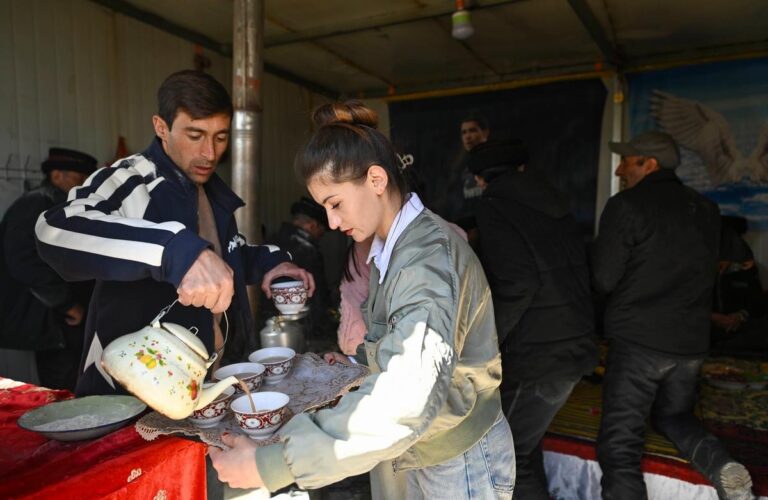
Almost immediately, tea appears. Receive it with the right hand, sip slowly, and don’t drain it if you want it to stop — an empty cup invites refills. The tea is the opening sentence of the visit. Even a short drop-in gets tea; refusing it reads as refusal of the person. If you truly can’t drink, accept a sip and set it down with a smile.
| Step | Do |
|---|---|
| At door | Step over threshold, greet elder |
| Seating | Take offered seat, tuck legs |
| Tea | Right hand, sip slowly |
| Leave | Thank host and cook by name |
Conversation Comfort Zones
Safe topics: food, crafts, your travels, the family’s hometown, the weather. Unsafe: politics, ethnic tension, personal income, religious debate. Praise the home, the children (lightly, with mashallah), and the cooking. Silence is also fine — shared tea needs no constant talk, and comfortable quiet is a sign you belong in the room.
The Art of Leaving
Don’t bolt up the moment you finish. Linger a little, thank the host, and if a woman cooked, thank her by name through the host. A small return gift next time seals the bond — our gift and money etiquette notes cover what to bring. Declining a future invitation gently is okay; accepting one is how you graduate from tourist to friend.
The Host’s Invisible Labor
What a guest doesn’t see in a Uyghur home is the preparation: the sweeping, the tea boiled twice, the sweets bought that morning, the best cushion aired. Understanding this invisible labor changes how you receive hospitality. You’re not interrupting; you’re the reason for it. Acknowledging the effort — a specific compliment to the host or cook — is the thanks that matters more than any gift, because it sees the work behind the welcome.
When You Must Decline an Invitation
Sometimes you genuinely can’t accept — a tight schedule, another commitment. Decline warmly and specifically, not with a vague brush-off. A “next time, inshallah” with a real intention lands better than a mumbled no. Uyghur hospitality offers repeatedly; a gentle, repeated yes on a later day repairs any initial no. The relationship outlasts the single missed meal, and locals read sincerity over punctuality.
The Quiet Etiquette of Leaving
Departure is its own courtesy. Stand when the host signals the visit’s end — often a shift in seating or a final tea pour — and don’t linger past it. Thank the host and, if she cooked, name her specifically; in Uyghur homes the cook may not sit with guests, so your thanks must travel through the host. A small return gift next time, or a photo sent later, keeps the bond alive. I’ve found that how you leave is remembered as long as how you entered.
One Mistake to Avoid
The common error is treating the home like a museum — photographing the interior, peering into rooms, handling objects. The home is private even when the host is generous. Keep your camera down, your curiosity verbal, and your feet within the offered space. That restraint is itself a compliment to the family’s trust in letting you cross the threshold at all.
The usual missteps
The trap here: Invited as a random tourist
Sometimes, especially in Old Town guesthouses or through local guides. Don’t force it; warmth can’t be manufactured on demand.
Where people slip: Ok to use my phone inside
Quietly, yes, but don’t photograph the interior or family without clear permission. The home is private.
The usual error: If i’m offered the honored seat
Take it graciously — refusing can awkwardly reject the host’s hospitality. It’s a role, not a rank.
Easy to get this wrong: Bringing my kids
Yes; children are welcomed. Keep them from running on carpets or touching shrines/altars in the home.
The trap here: Timing
A tea visit is 30–60 minutes; a meal extends to a few hours. Follow the host’s pace and don’t overstay into late family time.