
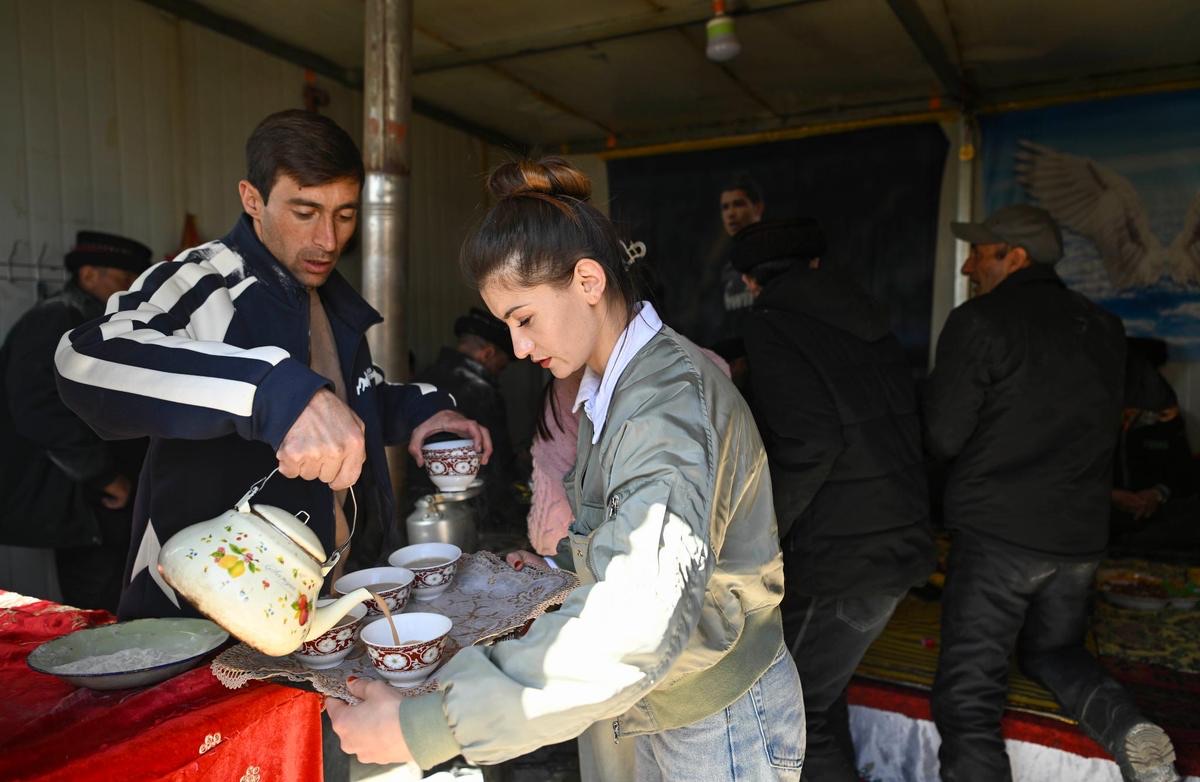
Uyghur Family Dinner Etiquette in Xinjiang: Table Manners
The invitation I treasure most from Xinjiang is also the one that scared me most: “Come, eat at our house.” A Uyghur family dinner is not a meal, it’s a ceremony of belonging, and I was terrified of breaking it. What I learned that night — through a lot of watching and a little copying — is that the rules are forgiving if your intent is respectful. This guide is the table manners I wish I’d known before that first doorway.
Whether in Kashgar Old Town or a Turpan courtyard, the rhythm is similar.
Arrival and Seating
Remove your shoes at the door if the home is carpeted or the meal is on the floor (common in traditional homes). Greet the eldest first. You may be shown to a seat — often the spot of honor, against the wall — and you should take it without false protest. Don’t sit until invited; hovering is more awkward than accepting.
The Hand-Washing Ritual
Before eating, a family member often brings a onom — a ewer of warm water over a basin — to pour over your hands, or simply a jug and towel. Wash your right hand (the eating hand) and dry it. This is a real ritual, not optional. Don’t dry your hands on the tablecloth; use the offered towel.
Eating With the Right Hand
Food is eaten with the right hand only. Tear bread with the right hand, scoop polo (pilaf) with your fingers, and never let your left hand touch the shared plate. If you’re not confident eating by hand, a spoon is usually fine for soups and rice, but the hand is the traditional and respectful default for bread and meat.
| Moment | Right move | Avoid |
|---|---|---|
| Before eating | Wash right hand, say Bismillah | Using left hand |
| Sharing bread | Tear small pieces | Cutting with knife at table |
| Polo | Eat from your side of the plate | Reaching across elders |
| Finish | Hands together, Amin | Leaving before host |
The Polo and Bread Ritual
A shared platter of polo sits center. Eat from the near edge, never the middle or someone else’s section. Bread (nan) is sacred — never place it upside down, never step on a dropped piece (pick it up, kiss it, and raise it). I’ve seen a grandfather gently correct a child who dropped nan; treat it with the same care.

Conversation and Pace
Don’t rush. The meal is long and the talk matters more than the food. Compliment the cooking specifically. Don’t discuss taboo topics at the table (politics, religion as debate). When the host says “Yeting” (that’s enough) or lifts the tea, the meal is closing; only then do you rise, with thanks to the cook by name if you can.
The Architecture of the Meal
A Uyghur family dinner is built in courses even when served on one low table. First comes tea and bread to settle everyone. Then soup or shorpa. Then the centerpiece — polo, laghman, or a meat platter. Then fruit and more tea to close. As a guest, you don’t rush any stage; the meal’s length is the point. I’ve sat for three hours over what looked like a simple dinner and left fuller in conversation than in stomach, which is the goal.
Bread as a Sacred Object
Nan deserves special mention. It’s never tossed, never placed upside down, never stepped on. If a piece falls, pick it up, touch it to your forehead briefly, and set it aside or on a clean ledge — a small reverence locals practice without thinking. As a visitor, mimicking this earns quiet respect. Tear it with the right hand, never cut it with a knife at the table; the knife is for cooking, not the shared loaf.
The Right-Hand Rule in Practice
Everything that touches food or another person uses the right hand. This includes passing dishes, offering a date, and the greeting before the meal. The left hand stays in the lap or holds your bowl. I’ve seen children gently corrected mid-reach — it’s not shame, it’s training in a deeply held cleanliness custom. Follow it and you move through the meal invisibly, as a natural part of the table.
| Action | Correct hand | Note |
|---|---|---|
| Tearing bread | Right | Never a table knife |
| Scooping polo | Right (or spoon) | From your edge only |
| Passing dish | Right | Left stays down |
| Washing | Right washed first | onom ritual |
Conversation and Taboo at the Table
Talk should be light — family, travel, food, the weather. Avoid politics, religious debate, and personal finances. Compliment the cook by name; in Uyghur homes the woman who cooked may not sit with guests, so thanking her through the host matters. Our Old Town guide covers the domestic culture these dinners express.
The Close of the Meal
The host may say “Yeting” (that’s enough) and lift the tea to signal closing. Only then rise, with thanks. Don’t leap up the moment you’re full; lingering is politeness. A return invitation offer — “Keling, bizde” (come to ours) — is a graceful final note, even if symbolic.
The Unspoken Pace of the Meal
The single thing that surprises first-time guests is the meal’s length. A Uyghur family dinner isn’t a refuel; it’s an evening. Courses arrive slowly, conversation fills the gaps, and leaving early — even if you’re full — reads as disengagement. I’ve learned to clear my evening, not just my plate. The hosts have invested hours; matching that with your time is the real courtesy, more than any single manner at the table.
When You Have Dietary Needs
If you can’t eat something — allergy, dislike, fasting — say so gently before the meal, not mid-bite with a rejected spoonful. Uyghur hosts take food refusal personally if it seems sudden. A quiet word on arrival, paired with praise for what you can eat, keeps everyone comfortable. Avoidance through silence, then refusal, is the misstep; honest, soft communication is the fix. The Old Town guide adds more on the domestic culture behind the table.
The Silence Between Courses
Not every pause at a Uyghur dinner is awkward; some are deliberate. The gaps between courses are for conversation, for the elder’s story, for simply being. Western guests often rush to fill silence; the better move is to let it breathe. I’ve had the most meaningful exchanges in those quiet stretches, when no one was performing hospitality and the room simply settled. Understanding that silence is part of the meal, not a gap in it, changed how I dine in Xinjiang.
After the Meal: Tea and Talk
The food may end, but the tea continues. Lingering over the final cups is where plans are made, jokes told, and bonds set. Don’t leap up the instant you’re full; the post-meal tea is the dessert of the relationship. A relaxed half-hour here often yields the invitation to the next gathering — proof that in Uyghur homes, the meal was never really about the food.
The calendar decides everything
Spring and early summer
Use the provided spoon for rice and broth; most hosts understand. But do try the bread by hand — it’s the gesture that counts.
Summer
Taste everything offered, even a bite. Flat refusal can read as rejecting the host’s care. Allergies are an exception — explain gently.
Autumn
A small sweet or fruit is welcome; see our gift and money etiquette notes for ideas. Don’t arrive empty-handed to a home invite if you can help it.
Winter
Easily two to three hours. Pace yourself, leave room, and enjoy the talking — leaving early is the main faux pas.
4
Thank the host and cook: “Rahmet, mehman bolduk” (thank you, we were guests). A return invitation offer is a nice close.