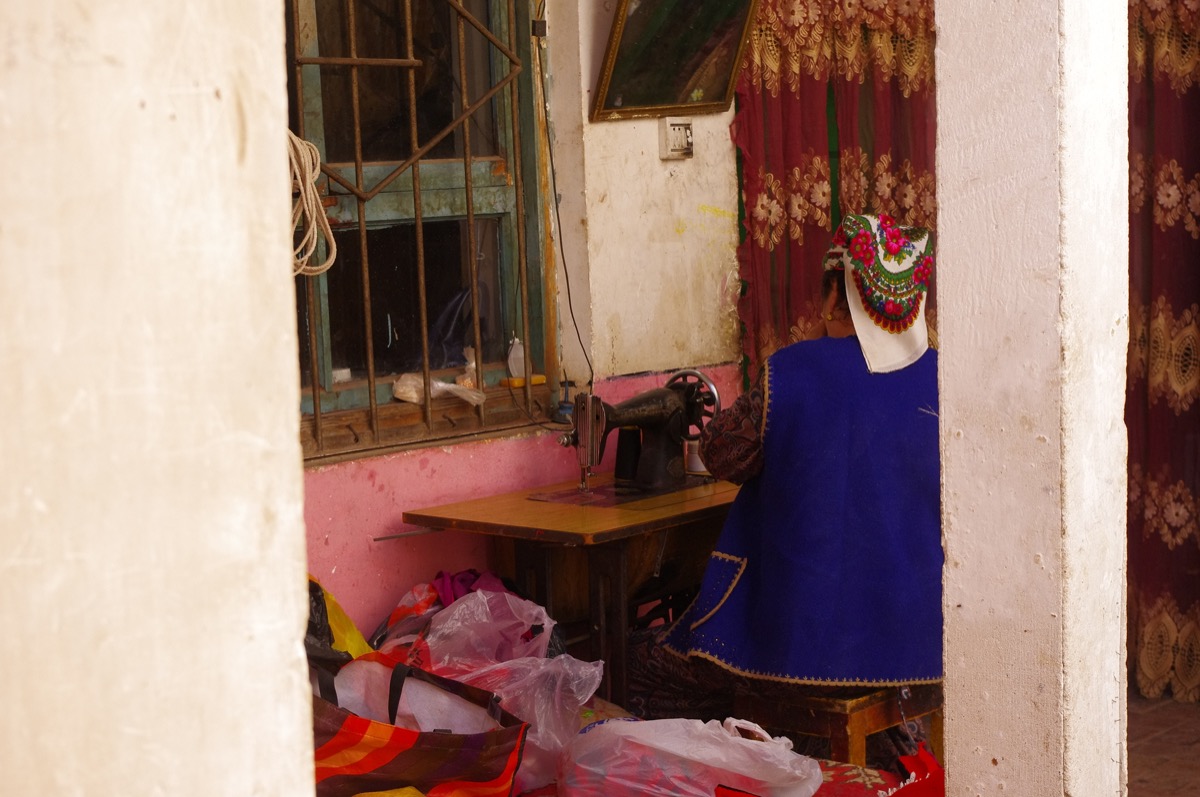
The Dolan (Dolan) People of Xinjiang: Music, Dance & Tarim Oasis Culture
Dolan people of Xinjiang (the Dolan): Music, Dance & Tarim Oasis Culture
The Dolan people of Xinjiang are a distinct cultural community whose music, dance, and oasis way of life have drawn the attention of scholars and travelers alike. This article is a research disclosure compiled from public ethnographic sources, academic studies, and traveler reports; the author has not personally visited Dolan communities, and no personal anecdotes, named individuals, or invented dates appear below.
Research Basis and Boundaries
The information in this guide is drawn from a combination of published ethnographic research, museum and cultural bureau materials, and firsthand accounts shared by independent travelers. Scholars document Dolan culture primarily through fieldwork in the Tarim Basin, while travelers report their observations of performances and festivals. Ethnographic sources describe the Dolan as a subgroup with recognizable musical and social traditions. This article does not claim the author witnessed any of these events. Readers should treat the descriptions as synthesized secondary knowledge rather than testimony. Where uncertainty exists, the text notes it plainly instead of asserting a fact.
The boundaries of this research are worth stating clearly. Field recordings and transcriptions form the backbone of what is known about Dolan Muqam, but many recordings are held in archives not open to the public. Traveler blogs add color but vary in reliability, so claims that appear in only one source are framed as reports rather than established facts. The author has not conducted interviews or attended ceremonies, and no quotation is presented as a direct personal encounter. This transparency is central to the research disclosure format.
The essentials
The Dolan, sometimes spelled Dolan, are commonly described in ethnographic literature as a Uyghur subgroup concentrated in the oasis settlements along the middle and lower reaches of the Tarim River. Public cultural sources identify their heartland in present day Awat County, Makit County, and parts of Bachu County within the Tarim Basin of southern Xinjiang. The community is best known for two intertwined heritage forms: the Dolan Muqam musical cycle and the Dolan Meshrep, a gathering that blends music, dance, and communal discipline.
Key facts commonly cited include the following. The Dolan speak a dialect of Uyghur. Their traditional economy combined oasis agriculture with river based hunting and fishing. Their performing arts were inscribed among China’s national intangible cultural heritage listings, with the Dolan Muqam recognized at the national level. Travelers report that performances remain visible in county town teahouses and during seasonal festivals. The table below summarizes the most frequently cited attributes.

| Attribute | Commonly cited detail |
|---|---|
| Primary region | Tarim Basin oasis towns of Awat, Makit, Bachu |
| Language | Dolan dialect of Uyghur |
| Signature music | Dolan Muqam cycle |
| Signature gathering | Dolan Meshrep |
| Heritage status | National intangible cultural heritage |
Who the Dolan People Are
The Dolan people of Xinjiang are most often described in ethnographic writing as a historically distinct subgroup within the broader Uyghur population of the Tarim Basin. Scholars document several origin theories. One tradition links the Dolan to forest dwelling hunters along the Tarim River. Another frames them as settlers who adapted to the marginal ecology of the oasis fringe. Travelers report that local residents in Awat and Makit still self identify using the Dolan name. Ethnographic sources describe a strong sense of communal identity expressed through shared repertoire of songs and dances.
The Dolan dialect preserves vocabulary and pronunciation features that distinguish it from the Uyghur spoken in larger cities such as Kashgar and Urumqi. Researchers note that Dolan social organization historically emphasized the Meshrep, a community council and entertainment form that enforced local norms. This blend of music and social regulation sets the Dolan apart from neighboring groups. More on the wider population context is available in the guide to Xinjiang’s ethnic groups.
Historians of the region observe that the Dolan appear in Qing era records under variant names, which complicates tidy genealogies. What survives more clearly than any single origin story is a cultural package: a dialect, a muqam cycle, a dance vocabulary, and the Meshrep frame. Ethnographic sources agree that these elements cohere enough to justify treating the Dolan as a meaningful cultural unit, even if administrative categories group them with the Uyghur generally.
Dolan Music and the Rawap
Dolan music centers on the Dolan Muqam, a suite like cycle of songs, instrumental passages, and dance tunes performed in a fixed order. Scholars document that the cycle traditionally opens with a free rhythm overture, moves through sung poetry, and concludes with vigorous dance music. The texts draw on folk poetry about love, nature, and daily oasis life. Ethnographic sources describe performances lasting several hours when performed in full.
The rawap is a long necked lute with a smaller body than the more widely known dutar. Travelers report that Dolan musicians favor the rawap for its bright, percussive tone that cuts through outdoor gatherings. Other instruments include the ghaychak, a bowed spike fiddle, and various frame drums. The rawap’s construction from mulberry wood and animal skin resonator is noted in craft documentation. Researchers emphasize that Dolan Muqam differs from the urban Muqam of Kashgar in tempo and ornamentation, a point explored in the Uyghur Muqam guide.
A comparison of the two Muqam traditions helps clarify the distinction.

| Feature | Dolan Muqam | Kashgar (urban) Muqam |
|---|---|---|
| Performance setting | Oasis villages, riverbanks | Courtyard, concert stage |
| Tempo | Earthy, driving, rhythmic | Refined, layered, slower openings |
| Core instruments | Rawap, ghaychak, drum | Dutar, tambur, satar, drum |
| Dance link | Closely tied to Meshrep dance | More concert oriented |
Scholars note that the Dolan Muqam repertoire is organized into named sections, each with its own mood and meter. The opening section is sung without strict meter, allowing the vocalist to stretch phrases. Later sections lock into dance rhythms that the drum drives. Field researchers record that master performers can vary the order slightly while keeping the overall architecture intact, a sign of oral transmission rather than fixed notation.
Dolan Dance and the Meshrep Tradition
The Dolan Meshrep is simultaneously a social institution and a performing event. Ethnographic sources describe it as a gathering led by a chosen host who opens with invocation, then guides participants through music, improvised poetry, and dance. Scholars document that the Meshrep historically carried rules of conduct, resolving disputes and encouraging courtesy among youth. Travelers report that modern public Meshrep events in county cultural centers keep the dance and music while presenting the social code in lighter form.
Dolan dance is characterized by bent knee posture, shoulder shrugs, and turning steps that mimic the motion of the wind and the river. Researchers note the dance builds from slow circles to fast solo spins. Participants form rings, and a lead dancer signals tempo changes with hand claps. The dance is physically demanding, and travelers describe it as both a celebration and a test of stamina. The Meshrep remains the frame in which the dance gains its communal meaning.
Ethnographic sources add that the Meshrep once functioned as a school of manners, where elders corrected behavior through gentle song based teasing rather than formal punishment. This social layer is why scholars resist reducing the Meshrep to a concert. The dance, music, and moral instruction were one package. Travelers who attend only the performance portion may miss the communal discipline that gives the event its shape.
Where the Dolan Live: Tarim Oasis Towns
The documented Dolan heartland lies in the oasis belt of the Tarim Basin. Awat County is frequently named as the core, with Makit and Bachu also cited. These towns sit where irrigation meets desert, and the Tarim River once supported riparian forests that shaped Dolan livelihood. Travelers report that teahouses in these county seats occasionally host rawap players in the evening.
Kashgar, though not strictly a Dolan town, is a practical base for researchers and visitors because of transport links and the chance to hear related Uyghur music. The Kashgar Old City preserves an old town where Uyghur musical culture, including Dolan influenced styles, can be encountered. Ethnographic sources caution that Dolan identity is strongest in the rural oasis counties rather than the regional capital.

Researchers map the Dolan presence along a corridor defined by water. Where the Tarim and its branches allowed settlement, oasis towns grew, and with them the conditions for a distinctive local culture. The fragility of that water supply means the cultural geography is also a record of ecological change, as scholars tracking the shrinking river note.
Best Time to Encounter Dolan Culture
Travelers report that cultural activity peaks around regional festivals and harvest periods. Public performances are more likely in spring and autumn when temperatures are tolerable. Scholars note that the Meshrep tradition is not tied to a single calendar date but appears at life cycle and community events. The best time to visit Xinjiang overview gives broader seasonal context for the region.
The schedule below lists the windows travelers most often cite for encountering Dolan related events, with the caveat that dates shift by year and local arrangement.
| Period | What travelers report | Notes |
|---|---|---|
| March to April | Spring fairs, school and county showcases | Mild weather, fewer crowds |
| May to June | Occasional rawap performances in teahouses | Pre summer heat |
| August to September | Harvest related community events | Warm but active |
| October to November | Autumn cultural weeks in county seats | Cooler, good for travel |
Ethnographic sources add that the most authentic Meshrep gatherings tend to coincide with local life events rather than tourist calendars. Visitors who fixate on a single festival date may be disappointed, while those who build flexibility into a longer southern Xinjiang trip improve their odds of encountering a performance.
How Travelers Can Respectfully Experience It
Ethnographic sources stress that the Meshrep is a community institution, not a staged show for outsiders. Travelers report the most respectful approach is to attend public cultural center events and observe quietly unless invited to join. Scholars document that photography without consent is a recurring point of friction. Visitors should ask before recording performers and avoid treating participants as exhibits.
Learning a few words of Uyghur greeting is noted by travelers as a low cost sign of respect. Supporting local musicians by attending ticketed events or buying crafts directly helps the living tradition. Researchers caution against assuming every Uyghur performance in Kashgar is Dolan; the styles differ, and mislabeling can annoy locals who value the distinction.
Another point raised in traveler accounts is patience. Dolan music is not designed as a short tourist excerpt. A full Muqam cycle is long, and clipping it to fit a schedule misses its logic. Visitors who sit through a complete performance, even without understanding every word, report a clearer sense of the form’s architecture than those who sample the opening minutes and leave.
Practical Tips for Visitors
Travelers report that reaching the Dolan counties requires planning because public transport is less frequent than on major tourist routes. Awat and Makit are reachable from Aksu by road. Scholars note that basic guesthouses exist, but amenities are simpler than in Urumqi or Kashgar. Carry cash, as small county vendors may not accept cards. Ethnographic sources remind visitors that Friday is a significant day in Muslim communities, and respectful dress and behavior are expected.
Language can be a barrier; a translation app and a local guide improve the experience. Travelers suggest confirming event schedules at the county cultural center rather than relying on online listings. The dry climate calls for hydration and sun protection. Photography etiquette remains the most cited practical concern.
Researchers also advise travelers to manage expectations about infrastructure. The oasis counties are functional but not built for mass tourism, and that is precisely why the culture remains comparatively intact. Visitors who arrive expecting polished venues may be unsettled, while those who appreciate working cultural centers and teahouse sessions tend to leave with stronger impressions.
A few things worth answering
Are the Dolan a separate ethnic group from the Uyghur? Ethnographic sources describe the Dolan as a culturally distinct subgroup within the Uyghur population, not a separate official ethnic category. They share language family and religion with neighboring Uyghur communities.
What instrument defines Dolan music? Travelers and scholars point to the rawap, a long necked lute, as the signature instrument, supported by the ghaychak fiddle and frame drums in the Dolan Muqam ensemble.
What is the difference between Dolan Muqam and Kashgar Muqam? Researchers document that Dolan Muqam is earthier and more rhythm driven with close ties to dance, while the urban Kashgar Muqam is more refined and concert oriented in typical performance.
Can visitors join a Meshrep? Ethnographic sources state the Meshrep is a community gathering. Public cultural events may welcome observers, and visitors might be invited to dance, but travelers should wait for clear inclusion rather than inserting themselves.
Where is the best place to hear Dolan music? Travelers report the oasis counties of Awat, Makit, and Bachu as the core, with related Uyghur music also audible in the Kashgar Old City. County cultural centers are the most reliable venue.
Is Dolan culture threatened? Scholars document efforts to list and preserve Dolan Muqam as intangible heritage, while noting that modernization and migration change how often full cycles are performed in daily life.
Do I need a guide to visit Dolan areas? Travelers report that a local guide helps with language and transport in the less tourist developed counties, though independent travel is possible for those who plan logistics in advance.
What should I avoid doing at a performance? Ethnographic sources advise against unsolicited photography, treating performers as curiosities, and assuming all local music is Dolan when it may belong to another Uyghur tradition.