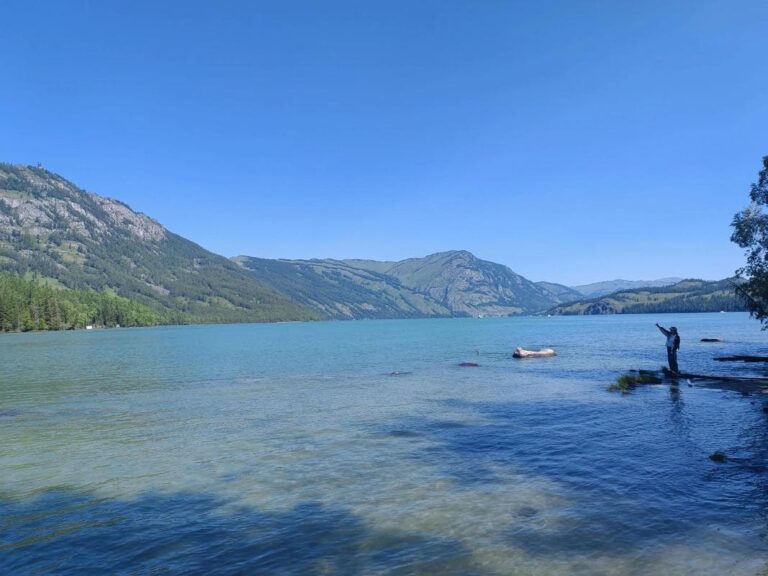

RV Travel in Xinjiang: Routes, Campsites, and Open-Road Logistics
RV travel in Xinjiang is a self-contained way to cross one of the largest provincial regions on earth, letting travelers carry their own bed, kitchen, and water across distances where hotels are hundreds of kilometers apart. This guide is compiled from RV owner reports, campground operators, and official road and tourism sources rather than the author’s personal trips. Where figures vary by season and operator, we note the range and the year so readers can plan against current conditions.

Hook: What RV Travel in Xinjiang Actually Looks Like
RV owners report that the daily rhythm of a Xinjiang motorhome trip is governed less by attractions and more by distance, fuel, and daylight. Outside Urumqi, Karamay, and the larger southern hubs, formal campgrounds are sparse. Many travelers overnight in paid parking lots attached to hotels, at designated rest areas, or at the growing number of RV parks near popular lakes. Official sources state that road conditions on the main arteries are good, but fuel stations can be 200 to 300 km apart on desert legs, so range planning is the core skill that separates a smooth trip from a stranded one.
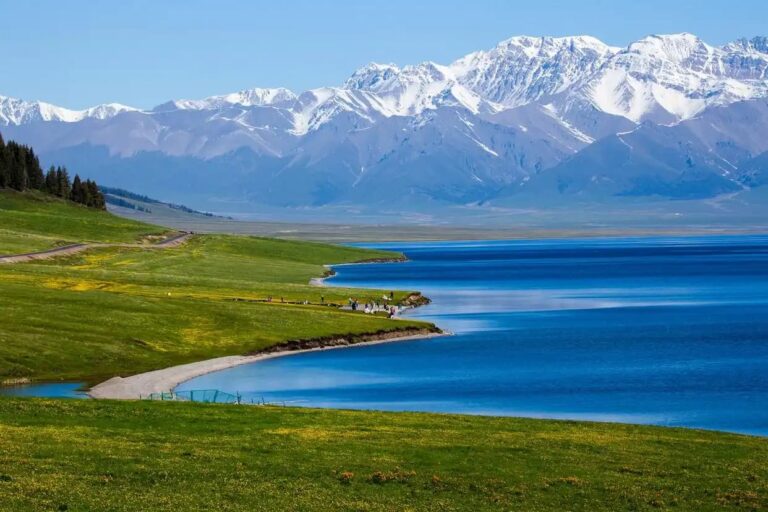
What surprises first-time renters, according to owner forums, is how much of the trip is about water. Dump stations and refill points are limited, so most crews carry reserve water in jerry cans and use campground hookups only when available. The payoff is solitude: waking beside Sayram Lake or on the edge of the Taklamakan is a routine possibility when you bring your bedroom with you. Owners also note that a motorhome turns a long transfer day into a movable base, since you can stop anywhere a pull-off exists and cook a meal without hunting for a restaurant that may be another 80 km down the road.
RV Travel in Xinjiang Overview & Key Facts
RV travel in Xinjiang spans two very different halves. The north is greener, with alpine lakes, grasslands, and the Duku Highway linking the Tian Shan. The south circles the Tarim Basin and the Taklamakan Desert, with long straight roads and fewer services. Official tourism material promotes both, but RV owners consistently report that the north is easier for beginners because towns are closer together and elevation changes are gentler on both vehicle and traveler.
Key facts gathered from operator and government sources:
- Xinjiang covers about 1.66 million square kilometers, so legs between regions routinely exceed 500 km and some exceed 800 km.
- The Duku Highway (G217) is seasonal, typically open from early June to early October, weather permitting, and closes entirely in deep winter.
- Several border-adjacent roads including parts of the G219 and G314 are controlled; permits and checkpoints apply (see Driving the Border Checkpoints).
- Most rental motorhomes are 6-meter Class C units sleeping 4 to 6 people, with a built-in toilet and a small kitchen.
- Signal coverage drops sharply off the G30 corridor, so offline navigation is standard practice for RV crews.
Getting There: Bringing or Renting an RV
Most international visitors rent rather than import. Bringing a foreign-registered RV into China involves temporary import permits, customs clearance, and insurance that owner reports describe as lengthy and costly, often taking weeks and requiring a registered Chinese agent. Renting domestically is the practical route and keeps the paperwork in the operator’s hands.
For a Chinese license, renters are generally expected to hold a category C1 or above for vehicles under 6 meters, but requirements differ by company and by vehicle weight. Confirm with rental companies before booking, since some larger units need a B1 or equivalent. Foreign visitors should verify that their International Driving Permit or home license is accepted in the specific rental contract; in practice many operators require a Chinese temporary driving permit obtained in the renter’s name. Age minimums of 25 and a clean record are common.
Major rental pickup points cluster in Urumqi, with secondary options in Karamay and Yining. Owners report that one-way rentals are rare and usually carry a high repositioning fee, so most loops return to the start city. Booking lead time matters in July and August, when the northern fleet is reported to sell out weeks ahead. A deposit, often 5000 to 10000 RMB, is standard and refunded after the vehicle passes inspection.
Tickets & Costs: Rental Rates and Campground Fees
As of 2025, a self-contained motorhome rents from roughly 800 to 1500 RMB per day depending on size and season, with peak summer rates at the top of that band. Owners note that weekly rentals often drop the effective daily rate by 10 to 20 percent, and that some operators include a fixed mileage allowance with overage charges beyond it.
Campground fees vary widely. Designated RV parks near Sayram Lake and major scenic areas charged owner-reported rates of 80 to 200 RMB per night in 2024 to 2025, sometimes including electricity and water. Paid parking lots in town are cheaper, often 20 to 50 RMB, but usually without hookups. Fuel is the largest variable: diesel and petrol prices follow national rates, and a 7-day loop can consume 1500 to 3000 RMB of fuel depending on the route. Park entrance tickets for lakes and grasslands add another 100 to 300 RMB per person at the popular sites.
| Option | Daily cost (RMB) | Flexibility | Best for |
|---|---|---|---|
| RV rental (self-drive) | 800 to 1500 | High | Independent travelers, families |
| Car rental + hotels | 400 to 900 | Medium | Shorter stays, town-focused trips |
| Guided tour bus | 700 to 1200 | Low | First-time visitors, no driving |
For a fuller breakdown of fuel, tolls, and vehicle costs, see our Xinjiang Road Trip Budget guide.
Best Time for RV Travel in Xinjiang
RV owners report that late May through September is the reliable window. The Duku Highway opens around June and closes around October, gated by snow. Summer brings the best access but also the highest rental rates and crowded lakeside parks. Grasslands in the Ili region peak in June and July, while autumn colors around the Tian Shan draw crews in September.
Shoulder months, late May and September, offer fewer crowds and lower fees, though some high passes may still be closed early or late. Winter RV travel is possible in the south around Kashgar and the Taklamakan rim, but water systems freeze and many campgrounds close, so owner forums advise only experienced crews attempt it. Spring dust storms in the south and sudden mountain snow in the north are the two weather risks renters mention most often when planning dates.
Day-by-Day Itinerary: A 7-Day Northern Loop by RV
This 7-day northern loop returns to Urumqi and stays on well-serviced roads. It is based on routes owner groups commonly share, not a single fixed tour, and can be slowed down by adding a rest day near Sayram or Nalati.
| Day | Route | Drive time | Overnight |
|---|---|---|---|
| 1 | Urumqi to Sayram Lake via G30 | 7 to 8 hours | RV park near Sayram |
| 2 | Explore Sayram Lake and Guozigou Bridge | Local | Sayram area |
| 3 | Sayram to Yining and Ili grasslands | 3 to 4 hours | Yining or grassland site |
| 4 | Yining to Nalati via G218 | 4 to 5 hours | Nalati rest area |
| 5 | Nalati to Dushanzi via Duku Highway | 6 to 7 hours | Dushanzi |
| 6 | Dushanzi to Urumqi via G30 | 5 to 6 hours | Urumqi suburbs |
| 7 | Restock, dump, and return RV | Local | Urumqi |
The Sayram leg is detailed in our Sayram Lake Loop article, which covers the alpine ring road and the Guozigou Bridge crossing. RV owners suggest arriving at Sayram before the afternoon wind picks up, since lakeside sites get breezy and awning use becomes difficult later in the day.
Where to Stay: Campsites, Services, and Overnight Stops
Outside major towns, formal campgrounds are sparse, and RV owners report that many nights are spent in paid parking lots, hotel lots with permission, or designated rest areas. Water and dump stations are limited, so crews carry reserve water and empty tanks at the few serviced RV parks. Owner forums recommend planning the dump stop before the tank reaches two-thirds full, because the next station may be two days away on a southern loop.
Near the big scenic lakes, dedicated RV parks appeared from 2023 onward and expanded through 2025. These typically offer electricity, water, and a dump point for 80 to 200 RMB per night. Some also sell propane refills and basic supplies. For overland and wild-camping etiquette, our Camping and Overland Stops on Xinjiang’s Open Roads guide lists where pitching a tent or parking overnight is realistic and where county rules restrict it.

Food & What to Eat on the Road
A motorhome kitchen changes the food plan. Owners report stocking up at Urumqi and Yining supermarkets before long legs, since small desert towns have limited fresh produce. Staples carried include flatbread, tomatoes, cured meat, eggs, and instant staples for quick meals that need little water to prepare.
On the road, Uygur and Kazakh eateries near towns serve laghman noodles, skewers, and hand-pulled bread that pair well with a self-cooked breakfast. RV crews note that a gas stove and a 20-liter water tank make roadside lunch stops practical at scenic pull-offs that have no restaurant. Food safety on the road means keeping the fridge below the recommended temperature and using the reserve water for anything raw, since tap water at remote stops is not always potable. Coffee, tea, and a thermos round out the mobile kitchen for early start days.
Practical Tips for RV Drivers
Five points owner reports repeat, plus two more worth flagging for first-timers:
- Plan fuel to the next 300 km; do not let the tank drop below half on desert legs.
- Carry at least 20 liters of reserve drinking water per person for multi-day stretches.
- Checkpoint IDs: all passengers need passports; the G219 and G314 controlled sections require patience and documents (see Driving the Border Checkpoints).
- Download offline maps; signal drops on mountain and desert roads.
- Dump and refill at the start of each loop, since stations are scarce mid-route.
- Watch vehicle height at Duku tunnels and low bridges; most rental RVs clear them but awnings and roof boxes need folding.
- Park facing the wind or use wheel chocks on grassland sites where overnight gusts are common.
For chaining regions without backtracking, our Xinjiang itinerary planning resource helps build a logical sequence that avoids repeating the same 500 km corridor twice.

RV Travel in Xinjiang FAQ
Q: Do I need a special license to drive a rental RV in Xinjiang? A: Most under-6-meter rentals expect a C1 or higher Chinese license or permit, but some larger units need B1. Confirm with rental companies before booking because rules differ by vehicle weight.
Q: Can foreign travelers bring their own RV across the border? A: Owner reports describe temporary import as lengthy and costly, so most visitors rent domestically instead and avoid the customs process.
Q: Are there dump stations along the northern loop? A: They are limited; RV parks near Sayram and major towns have them, but crews carry reserve water and dump at start and end of loops to be safe.
Q: Is the Duku Highway open to RVs? A: Official sources state it opens around June and closes around October, weather permitting; width and height limits apply in tunnels and on curves, so check before each season.
Q: How much should I budget for a 7-day RV trip? A: Based on 2025 rates, rental plus fuel and camping often totals 7000 to 12000 RMB for a small crew, excluding food and park tickets.
Q: Is wild camping allowed? A: Rules vary by county; many scenic areas restrict overnight parking. Use designated RV parks or permitted lots to avoid fines and to protect fragile grassland.
Q: What about heating and water in cooler months? A: Most rental RVs have a heater, but water lines can freeze below zero, so September trips should insulate the tank or use the reserve supply for drinking only.
About the Author
Karl Huang runs XinjiangTravelTips.com. This guide draws on RV owner reports and official road information; it is research-based and does not describe the author’s own motorhome trips.