Autumn in Xinjiang: Why October is the Most Beautiful Month
Why October is the Golden Month for Xinjiang Travel
October in Xinjiang is not just a month — it’s a transformation. As the summer heat retreats and the crowds thin out, the entire region undergoes a chromatic explosion that makes it arguably the most photogenic time to visit the Silk Road’s greatest landscape.
Last updated: July 15, 2026 · Written by Karl Huang, a Xinjiang travel specialist who has spent time across the region. Practical details are cross-checked against official tourism, transport, and border-regulation sources.
The high-altitude steppes turn from emerald to burnished gold. The birch and larch forests of the Altai Mountains ignite in shades of amber and saffron. The grapevines of Turpan sag with final harvest weight. And across the Tianshan spine, the first snow dusts the peaks while the valleys below still bask in 20°C afternoons.
If you’ve read our Sayram Lake guide, you’ll know that September is widely considered the best month for that alpine mirror — but October is when the magic spreads across the entire region, from the Ili Valley to the Pamir Plateau.
Top Destinations for Autumn Colors
1. Kanas Lake & the Three Bays — The Crown Jewel
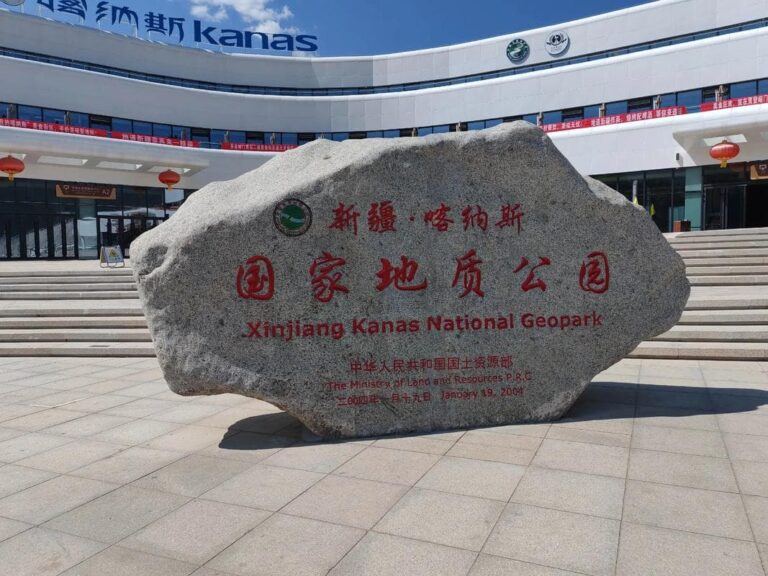
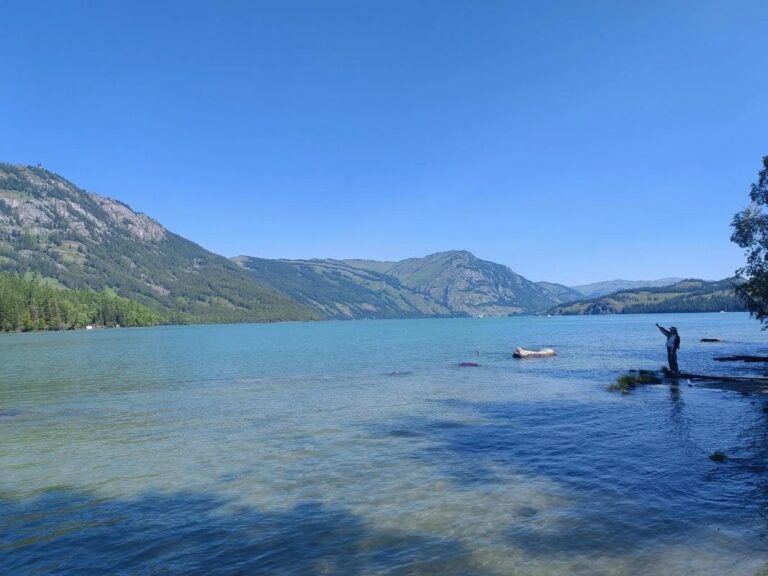
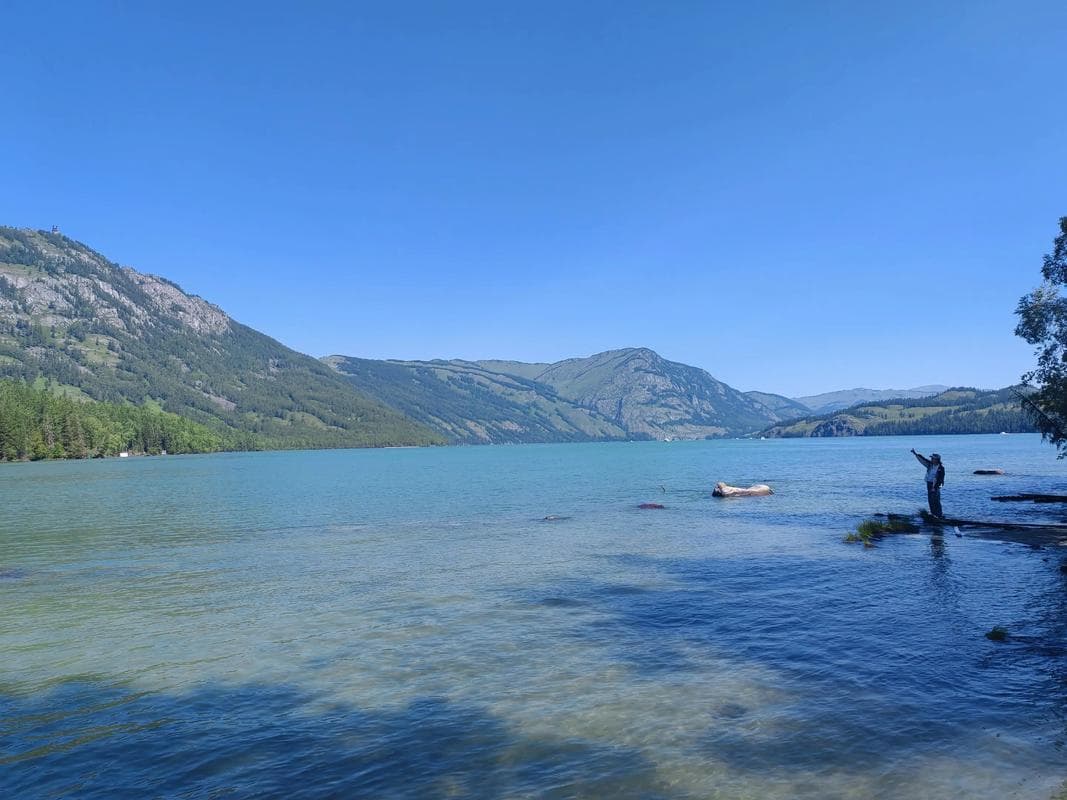
No discussion of Xinjiang in autumn is complete without Kanas. The Kanas Lake and Three Bays form what many photographers call “China’s most beautiful autumn palette.” The larch (Larix sibirica) turns a luminous gold that reflects directly into the lake’s jade-teal waters, creating a doubled image of fire and ice.
The prime window is September 15 – October 5. Arrive outside this window and you risk either green (too early) or bare branches (too late). Inside the scenic zone, the three iconic viewpoints each offer a different autumn personality:
- Shenxian Bay (神仙湾) — Best at sunrise when morning mist weaves between golden birch clusters reflected in the braided river channels.
- Moon Bay (月亮湾) — The crescent river bend framed by amber slopes; the classic postcard shot.
- Guanyu Tai (观鱼台) — The high overlook. Climb the 1,066 steps (or take the escalator) for the S-curve of the lake against a backdrop of snow-dusted peaks.
2. Hemu Village — Birch, Smoke & Timber Silence
If Kanas is the scenic lake, Hemu Village is the timber soul. This Tuvan settlement, accessible from the same biosphere reserve, is defined by spruce-log cabins, birch groves, and the Hemu River cutting through a glacial trough. In October, the birch groves turn a paper-white trunk against lemon-gold canopy — a contrast that photography guides travel thousands of miles for.
The famous sunrise viewing deck above the village fills up by 6:30 AM, but the real magic is the 7:00–8:00 AM window when smoke from breakfast fires rises through the golden canopy. Stay overnight inside the village — the day-tripper crush kills the mood by 10:00 AM.
3. Nalati Grassland — Where the Sky Touches Earth
Nalati Grassland in October is a study in warm-tone layering. The “Sky Prairie” (空中草原) zone, accessible via the park’s shuttle system, shifts from summer green to a palette of copper, bronze, and faded jade. The snow peaks of the Tianshan behind it all feel closer when the foreground has lost its summer glare.
First-time visitors should pick the Sky Prairie zone — it’s the most “Nalati” image online, and the upper overlook deck delivers the signature panorama. Horse-riding is still available in October (¥80–150/hour), and the lower visitor volume means you can negotiate directly with Kazakh family concessions without the peak-season rush.
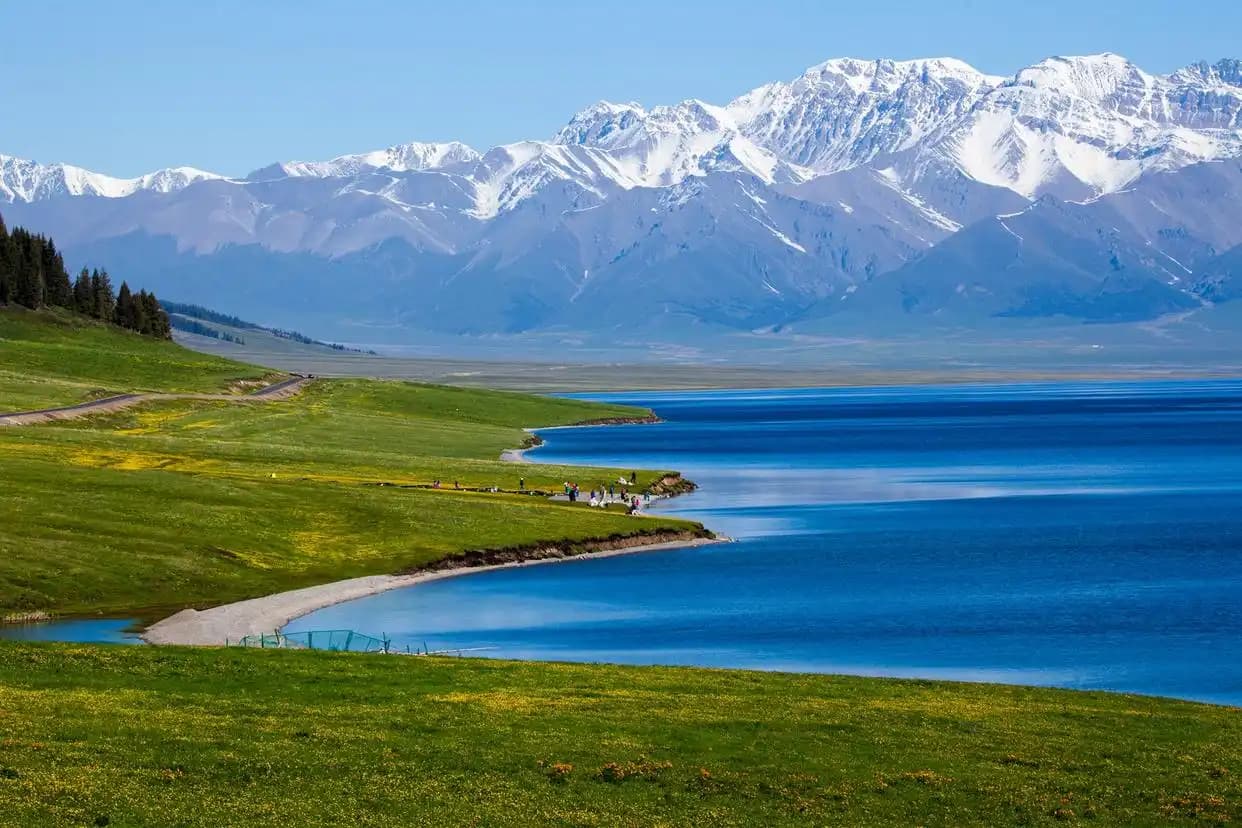
4. Sayram Lake — The Last Tear of the Atlantic in October Light
Sayram Lake behaves differently in October. The oligotrophic (nutrient-poor) glacial water turns an even more saturated electric cyan under the lower sun angle. The south shore wildflower meadows have gone to seed, replaced by golden steppe grasses that catch the late-afternoon light in ribbons of fire-gold.
October is also when the ring-road traffic thins to a fraction of July’s volume. You can pull over at the west platform, set up a picnic, and have the cobalt waterfront to yourself for an hour. Combine your visit with the nearby Guozi Gorge (果子沟大桥) scenic stretch — the suspension bridge against October foliage is a bonus shot.
5. Bayanbulak Grassland & the Nine-Bend River Sunset
Bayanbulak in early October delivers what many consider the single most-posted sunset image in all of Xinjiang travel photography. The Kaidu River loops and knots itself into the legendary Nine-Bend (九曲十八弯) formation, and on a clear evening, the river’s multiple curves can reflect the sky in seven or eight separate ribbons of fire-gold, visible from the designated overlook platform.
Note: mosquitoes are far less aggressive in October than in July–August. Bring a light jacket for the platform at dusk — it’s at ~2,500 m and the temperature drops fast after sunset.
Practical Tips for Autumn Travel in Xinjiang
Weather & Packing
October in Xinjiang is a shoulder season with attitude. Daytime temperatures in the major scenic zones (Kanas, Nalati, Sayram) range from 5–18°C. Nights, especially at altitudes above 2,000 m, can hit -5°C to 0°C. The key is layering:
- Base layer: Merino wool or synthetic (no cotton against skin).
- Mid layer: Fleece or light down (packable).
- Outer shell: Windproof, ideally with a hood. The steppe wind cuts through still air fast.
- Footwear: Waterproof hiking shoes with ankle support. Morning dew on boardwalks is real.
Crowd Management
October 1–7 is China’s National Day “Golden Week” — domestic tourism peaks nationwide. If your schedule allows, avoid October 1–7 in Xinjiang. The Kanas scenic zone, in particular, can see 30,000+ daily visitors during Golden Week. October 8–31 is the sweet spot: domestic crowds vanish, weather holds, and the larch is still gold (early October) or copper (late October).
Transport & Road Conditions
The Duku Highway (G217), which connects north and south Xinjiang through the Tianshan spine, typically closes for the season around October 10–15 depending on snowfall. If crossing the Tianshan via Duku is on your itinerary, aim for an early October date and have a backup route via the G30 expressway loop.
For the Kanas region, the shuttle system from Jiadenyu (贾登峪) operates normally through October, but the last shuttle down to the parking lot leaves earlier (around 18:00) as daylight shortens. Check the current year’s operating hours at the visitor center upon arrival.
Accommodation Strategy
October is shoulder season for accommodation — prices drop 30–50% compared to July–August, but some guesthouses inside the Kanas and Hemu scenic zones begin winterizing and may close after October 10. Book ahead if you’re targeting specific lodge-style stays. For more accommodation tips across Xinjiang, check our practical travel info section.
Photography Insights — Capturing October Light
The reason October is the most beautiful month isn’t just the foliage — it’s the light. The sun’s lower angle means longer golden hours, softer contrast, and fewer blown-out highlights in your landscapes. Here are three October-specific techniques:
- The reflection shoot: At Sayram Lake and Kanas, the water goes dead-still in the 7:00–8:30 AM window before the afternoon wind picks up. Use a polarizer to cut surface glare and reveal the underwater teal.
- The fog factor: Shenxian Bay’s morning mist is most reliable in early October. Arrive before 6:30 AM — the boardwalk from the road down to water level takes 15 minutes.
- The golden steppe: Bayanbulak’s Nine-Bend is a 90-minute-before-sunset play. The platform faces west; you want the sun hitting the water curves directly, not sidelit.
Autumn Flavors — What to Eat in October
October in Xinjiang isn’t just a visual feast — it’s a culinary one. The harvest season means fresh nuts, late-season grapes, and the year’s best lamb (grass-fed all summer on alpine meadows). Here’s what to try:
- New-crop walnuts (核桃): October is when this year’s walnuts hit the markets. The ones from Hotan and Aksu are meaty and slightly sweet. Buy a bag from a roadside stall and eat them as you drive.
- Late-season grapes (葡萄): Turpan’s Grape Valley is still active in early October. The seedless white variety (无核白) is at peak sugar. Eat them in the shade of the pergola — it’s the taste of Turpan.
- Fresh pomegranate (石榴): The pomegranate from Yecheng (Kargilik) is in season in October. The arils are jewel-red and explode with sweet-tart juice. Buy one from a market and eat it with a pin — no bowl needed.
- Autumn lamb (羊肉): Sheep that grazed all summer on wild herbs and alpine meadows produce the most flavorful meat. Try it as chuanr (kebabs) in Kashgar’s night market or as a lamb hotpot in the Ili Valley.
For more on Xinjiang’s food culture, see our food lover’s guide — but know that October adds a seasonal layer that summer can’t match.
Conclusion — Why You Should Book That October Ticket
Xinjiang in October is the region at its most generous: the heat is gone, the color is at its peak, the crowds have dispersed, and the light is cooperative. Whether you’re photographing the larch gold of Kanas, the birch smoke of Hemu, the copper steppe of Bayanbulak, or the electric cyan of Sayram — you’re witnessing a landscape that only exists for about three weeks a year.
Plan carefully, pack layers, avoid Golden Week if you can, and give yourself at least 7–10 days to move between the regions. The 7-day Silk Road itinerary on our site can be easily adapted for an October focus — just swap the summer emphasis for the autumn color zones outlined above.
October in Xinjiang isn’t just a trip. It’s a narrow window into a landscape that spends the other 11 months preparing for it. Don’t miss it.
Straight answers to what visitors ask
What is the best time to visit Sayram Lake?
June through September offers the best weather with temperatures between 15-25°C and wildflowers in full bloom around the lake.
How do I get to Sayram Lake from Urumqi?
Sayram Lake is about 450km from Urumqi. You can drive via the G30 highway (5-6 hours), take a bus from Urumqi West Bus Station (6-7 hours), or hire a private driver for the most flexibility.
Is there an entrance fee for Sayram Lake?
Yes, the entrance fee is approximately 70 RMB per person. Additional fees may apply for the lake island boat tour (about 100 RMB) and the scenic area shuttle bus.
Can I camp near Sayram Lake?
Camping is allowed in designated areas around the lake. The best spots are on the eastern shore where you can wake up to stunning sunrise views over the water.
What should I pack for a trip to Sayram Lake?
Even in summer, temperatures can drop significantly at night. Bring layers, a windproof jacket, sunscreen (UV is strong at high altitude), and comfortable walking shoes.