
Kazakh Hospitality Customs in Xinjiang: Yurts, Guests, and Feasts
On the Nalati grassland I was once Adopted, informally, by a Kazakh family for an afternoon. The moment I stepped toward the yurt, the youngest ran to take my bag, the mother blocked the threshold to sweep a blessing, and the grandfather poured tea before I had sat. I had done nothing to earn it. In Kazakh culture I didn’t have to — being a guest was the qualification. That afternoon taught me more about Xinjiang than any guidebook: here, hospitality is not manners, it is a worldview.
This guide covers the customs of Xinjiang‘s Kazakh communities, mostly in the north and west, so you can receive their generosity without stumbling.
The Guest Is Sacred
A Kazakh proverb holds that a guest is sent by God. Refusing a guest or slighting one is among the worst social failures. As a traveler, this works in your favor — but it also means you should accept offers graciously rather than refuse out of modesty, which can unintentionally insult the host’s duty.
Yurt Etiquette: Where You Sit
In a yurt, space is coded. The seat of honor faces the door and sits opposite the shanyrak (the circular roof wheel); elders and special guests are placed there. As a visitor you may be guided to it — accept without fuss. Never step on the threshold; step over it. Don’t walk in front of someone seated, and don’t point your feet at the hearth or the honored seat.
The Order of a Feast
A Kazakh feast has a choreography. Tea comes first. Then baursak (fried dough), irimshik (dried curds), and maybe kymyz (fermented mare’s milk). The centerpiece is often a boiled sheep, and the prized parts — the bas (head) and the zhaya (rump) — are offered to the most honored guest. If that’s you, accept; refusing the honor offends.
| Stage | Served | Your move |
|---|---|---|
| Arrival | Tea, baursak | Accept with both hands |
| Mid-feast | Meat, noodles | Wait to be served |
| Honor cuts | Head/rump | Accept if offered to you |
| Close | More tea | Compliment the host |
Toasts and Kymyz
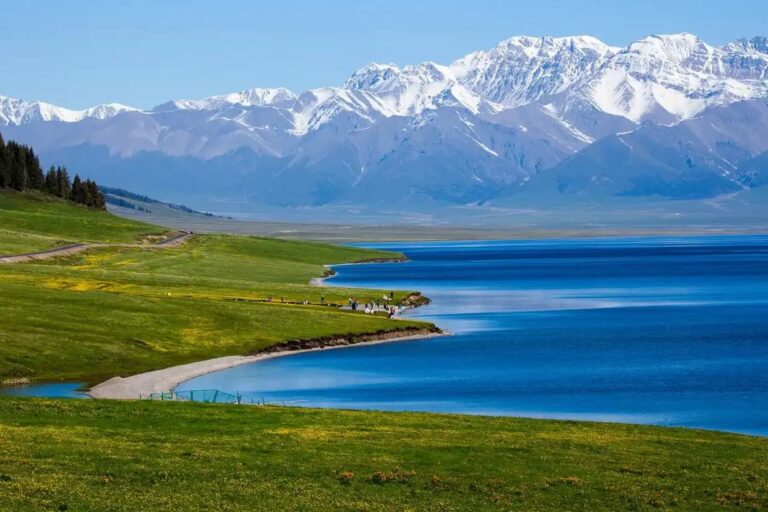
Toasts are frequent. The eldest or host leads, often wishing health and friendship. You don’t need to drink alcohol — a toast with tea or kymyz works. If offered kymyz and it’s your first time, sip slowly; it’s tangy and potent. For more on this traditional drink, our related guides cover grassland life around Sayram Lake where Kazakh herding thrives.

Small Courtesies
Remove your hat indoors. Greet the eldest first. Don’t praise a child too lavishly without touching them lightly or saying “mashallah” — an old belief that open praise attracts the evil eye. When you leave, don’t slam the door-flap; duck out quietly and thank the host specifically.
The Yurt as a Moral Space
To a Kazakh family, the yurt is more than shelter; it’s a statement of values. The door faces east to greet the sun. The hearth is the heart. The honored seat is reserved not for the richest but the eldest or the guest. When you’re placed there, you’re not being flattered — you’re being assigned the role of temporary family elder, with the duty to accept graciously and not abuse it. I’ve watched gruff herders turn gentle the moment a visitor took the seat without fuss.
The Ritual of Tea and Hospitality
Refusing tea in a Kazakh yurt is nearly unthinkable; it’s the first offering and the core of welcome. You’ll be served repeatedly. The protocol: don’t drain the bowl if you want it to stop — leave a sip and cover it with your palm, or say “Boldu.” An empty bowl is an invitation for more. This small signal saved me from a third liter of milk tea I didn’t need on a cold Nalati morning.
The Feast Hierarchy
The serving order at a Kazakh feast is a quiet map of respect. The eldest and the guest eat first; children and the host’s family follow. If you’re handed the prized sheep parts, don’t pass them off — that can read as rejecting the honor. Instead, accept, let the host cut a token for you, and eat a bite. The gesture matters more than the meat.
| Item | Significance |
|---|---|
| Bas (head) | Highest honor, offered to guest |
| Zhaya (rump) | Respect cut for elder |
| Baursak | Welcome, eaten first with tea |
| Kymyz | Spring-summer fermented drink |
Music and Story After the Meal
Once full, the yurt often turns to song — dombra strums, improvised verses, and the guest may be nudged to sing or at least toast. You need no talent; a raised bowl and a “Salam!” toast honors the moment. These post-feast hours are where the real visiting happens, and where I’ve learned more about Kazakh life than from any museum.
Leaving the Yurt
Depart with a thank-you to the host and, if she cooked, to her by name. Don’t slam the felt flap. And if you can, send a photo back later — the herder who adopted me for an afternoon still has the print I mailed, his granddaughter told me years on. That’s the hospitality completing its circle.
The Guest Who Overstays
There’s a limit even to Kazakh generosity, and the gracious guest knows it. The signal to leave is subtle — the host standing, the tea slowing, the conversation turning practical. I learned to watch for it during a long yurt visit when the grandfather began sharpening a knife near the door; it was time to go, not a threat. Leaving at the right moment is as much a courtesy as arriving with respect. Overstaying converts welcome into endurance.
What the Feast Teaches
A Kazakh feast isn’t just food; it’s a compressed lesson in social order — who eats first, who serves, who is honored with the sheep’s head. Watching it taught me more about the community’s values than any explanation. If you’re the honored guest, your job is simply to receive it without false humility. Refusing the head cut can read as rejecting the bond; accept, let them carve a token, and the circle completes. The 30 travel tips collection frames other such moments.
The Guest’s Real Job
In Kazakh etiquette the guest has duties too: arrive clean, greet the eldest, accept what’s offered, and leave at the right time. The guest isn’t a king but a trusted visitor in a sacred relationship. I’ve been corrected gently for over-staying once, and understood it as care, not rejection — the family needed to rest. Performing your side of the guest role is how you earn repeat invitations, and on the grasslands those invitations are the whole trip.
Learning the Songs
If a dombra appears after the meal, that’s an invitation to the oral tradition, not a performance for you. Listen closely, learn a phrase if offered, and don’t mock the attempt. Even a clumsy repeat of a verse delights a host who sees you trying to carry their culture forward. These musical moments are where Kazakh hospitality becomes friendship, and where I’ve felt most welcomed in Xinjiang.
The things you will probably want to know
Do I have to eat everything offered?
No, but taste each dish and compliment it. Leaving a little is fine; refusing entirely can signal dislike of the host’s care.
Can I take photos inside the yurt?
Ask first, as with any home. Many families are happy, especially if you’ve shared the meal. Keep it unhurried.
What if I’m offered the sheep head?
It’s the highest honor. Accept, let the host cut a token piece for you, and don’t recoil — even a small bite honors the gesture.
Is tipping expected after Kazakh hospitality?
No — payment can offend. A return gift or a warm thank-you is the right currency; see our money etiquette guide for the wider picture.
How do I thank the family later?
A small gift on a return visit, or a photo sent back, closes the circle beautifully.