Kashgar Visa & Border Permit: What Travelers Actually Need
The question I get most from first-time visitors is whether Kashgar needs its own special visa. Here is the straight answer: Kashgar is part of China, and a standard Chinese visa is all you need to enter the city itself. There is no separate “Kashgar visa” or Xinjiang entry stamp. The one extra document that does matter is a Border Defense Permit (边境管理区通行证) if you plan to travel south of Kashgar into Tashkurgan county and the Pamir Plateau — that is a restricted border zone, and the permit is checked at roadblocks. I have done this paperwork three times, and it is simpler than it sounds if you know where to go.
Do you need a visa for Kashgar at all?
Yes — but only the normal one for China. Kashgar is in the Xinjiang Uyghur Autonomous Region, and entry rules are identical to Beijing or Shanghai: most foreign travelers need a Chinese tourist visa (L visa) obtained from a Chinese embassy or consulate before arrival. There is no Xinjiang-specific visa, no regional pre-approval, and no extra fee at the Kashgar end for simply being in the city.
The only document that actually changes your trip: the Border Permit
Kashgar city, the Old Town, the bazaars, and the airport are all open without restriction. The restriction begins once you head south on the G314 toward Tashkurgan and the Khunjerab Pass. That corridor is a border defense zone shared with Tajikistan and Pakistan, so every traveler — Chinese and foreign — must carry a Border Defense Permit beyond the checkpoint at Opal (roughly 70 km south of Kashgar).
Without it you will be turned back at the checkpoint, which is exactly the kind of ruined morning I want you to avoid. A Pamir Highway day trip is only possible with this permit in hand.
How to get the Border Defense Permit in Kashgar
Two practical routes:
1. Through a local travel agency in Kashgar. This is what most foreign visitors do. An agency handles the application, you supply your passport and a photo, and they return the permit (usually within a day). It costs a modest service fee on top of any tour you book. The upside is zero running around in a language you may not speak. 2. At the Kashgar Public Security Border Defense office yourself. The office that issues permits to individuals is on the south side of the city. Bring your original passport, a passport photo, and your planned route (Tashkurgan, Karakul Lake, etc.). Processing is often same-day but can stall on weekends and holidays, so build in buffer.
A key tip from experience: get the permit before a weekend or Chinese public holiday. Offices shorten hours and the Pamir checkpoints stay strict, so a Friday-afternoon application can eat your whole Saturday.
Documents and details to bring
- Your passport with a valid Chinese visa and at least six months’ validity.
- One or two passport-style photos (agencies sometimes want them; the office may take one on site).
- Your planned itinerary south — the permit lists the towns you may enter (typically Tashkurgan county and named stops like Karakul Lake).
- Copies of your passport photo page. I keep two paper copies and a phone scan; checkpoints have asked for both.
The permit is free or nearly free when issued directly by the office; agency convenience is what costs. Either way, budget a day of lead time.
Where the permit is checked
Expect checks at the Opal checkpoint south of Kashgar, and sometimes again near Tashkurgan town. Keep the original on you, not in a hotel safe — “it’s back in the city” is not an acceptable answer at a roadblock. On the Karakoram drive the police are professional and the stops are quick if your paperwork is in order.
Registration and hotel check-ins
Foreign travelers in Xinjiang are registered at each hotel as a matter of routine — your passport is scanned at check-in, which is normal and not a problem. Book Old Town stays or new-city hotels that explicitly accept foreigners; a handful of budget guesthouses in the old lanes are not licensed for foreign registration, and you will be turned away at the front desk. I always confirm “foreigner OK” when booking.
No permit needed for these Kashgar highlights
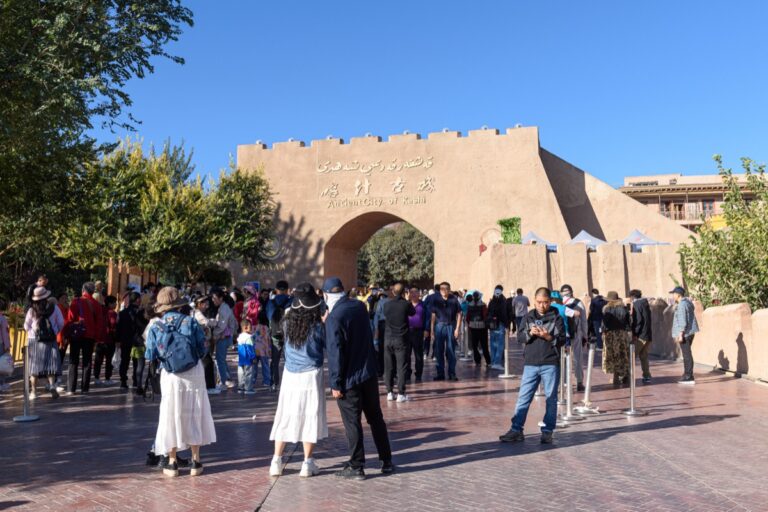
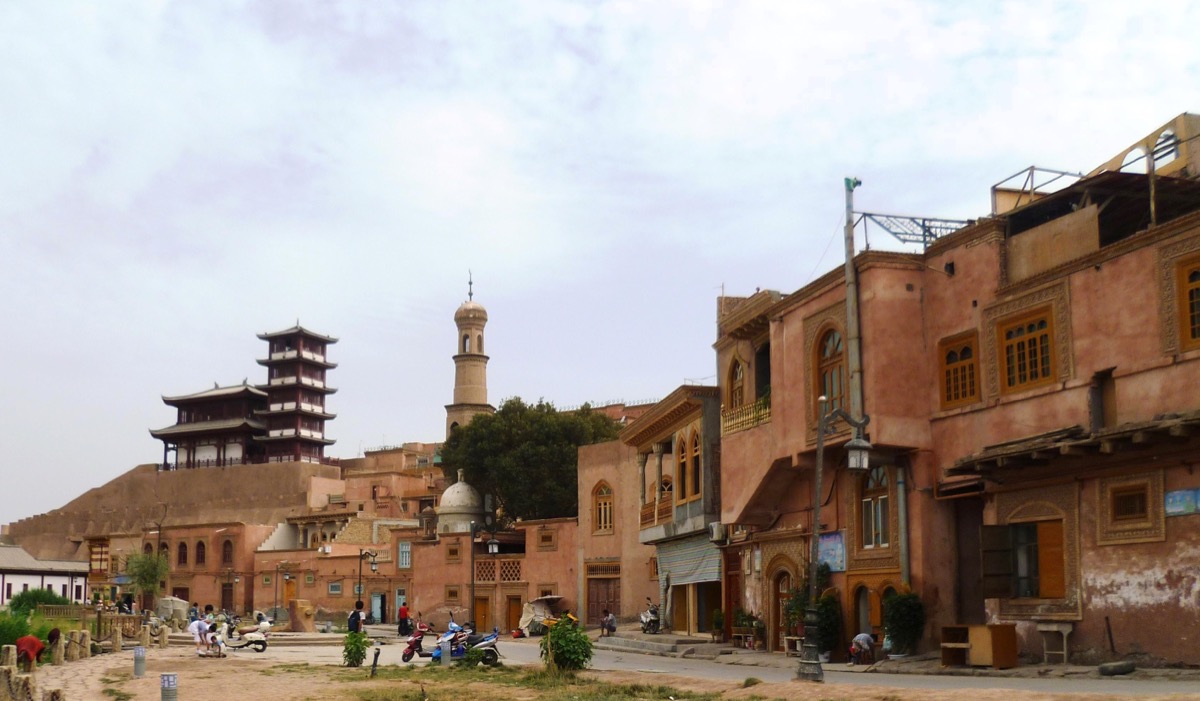
To be clear about what stays open: the Old Town, the Sunday Bazaar, the Id Kah Mosque, the Abakh Khoja Mausoleum, and the livestock market are all inside the unrestricted zone. You can fill three full days in Kashgar city with zero permit paperwork.
Tying it into your itinerary
If the Pamirs are why you came, arrange the permit on your first morning in Kashgar and leave for Tashkurgan on day two. My Kashgar itinerary plans assume this lead time so you are never stuck waiting on a document. And if you are still deciding how to reach the city in the first place, the flights to Kashgar guide covers the airport and transfers.
Chinese visa types that work for Kashgar
The tourist (L) visa is the standard, but Kashgar is reachable on other visa classes too: business (M) visitors, those on a transit (G) stopover, and some on student or work visas resident elsewhere in China can all travel to Xinjiang freely. The one thing that does not exist is a Kashgar-only or Xinjiang-only stamp — immigration is national. If you are already in China on a valid visa, you do not apply for anything new to visit Kashgar city. Only the southern border-zone permit described above is local, and only if you head south.
Common permit mistakes I see
- Applying on a Friday and expecting same-day turnaround before the weekend.
- Forgetting that the permit lists specific towns — if Tashkurgan is not written on it, the checkpoint will not let you through.
- Leaving the original in the hotel; checkpoints want the paper, not a photo on your phone.
- Assuming the Pamir is open in deep winter; snow closures are routine from December to February.
- Booking a guesthouse that is not licensed for foreign registration and getting turned away at the front desk.
If you are heading to Pakistan via Khunjerab
The G314 continues from Tashkurgan to the Khunjerab Pass and the Pakistan border. That crossing needs a Pakistan visa plus the Chinese Border Defense Permit for the Tashkurgan side, and most travelers do it as an organized overland tour because of the remote checkpoints. Day-trippers to Kashgar do not need this, but if the Khunjerab is your goal, start the paperwork weeks early — it is a different order of planning from a city visit, and the Pamir day-trip guide stops well short of the border.
Practical takeaways
Pack your visa expectations correctly: a normal Chinese visa gets you into Kashgar, and only the Pamir-bound traveler needs the Border Defense Permit. Sort that permit early, carry the original, and book foreigner-friendly lodging. Do that and the paperwork becomes a formality rather than a trip-breaker.