Kashgar Map: Old Town Layout, Districts & How to Navigate
Most visitors arrive with a fuzzy mental image of “a Silk Road city” and quickly get turned around inside the lanes. This guide fixes that. Kashgar sits in China’s far west, in the Tarim Basin’s western edge at about 1,289 meters, near the borders of Kyrgyzstan and Tajikistan — I cover the country-level position in the where is Kashgar explainer. On a city scale, Kashgar splits cleanly into two parts: the Old Town (the maze of earthen lanes where you will spend most of your time) and the New City (wide roads, hotels, the station, and the airport road). Knowing which side of Renmin West Road you are on is the single most useful orientation fact.
The big-picture location
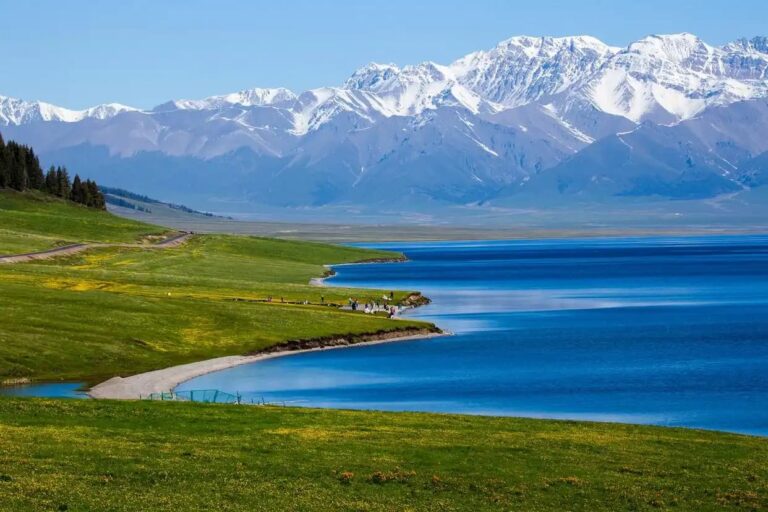
Kashgar is the southern anchor of Xinjiang, roughly 1,470 km from Urumqi by road and rail. It is the gateway where the northern and southern Silk Road loops met, which is why it feels more Central Asian than Chinese. On any map, look for the confluence of the Tianshan to the north and the Pamir to the west — Kashgar sits in the wedge between them, with the Kashgar River threading past the Old Town.
Old Town: the part you came for
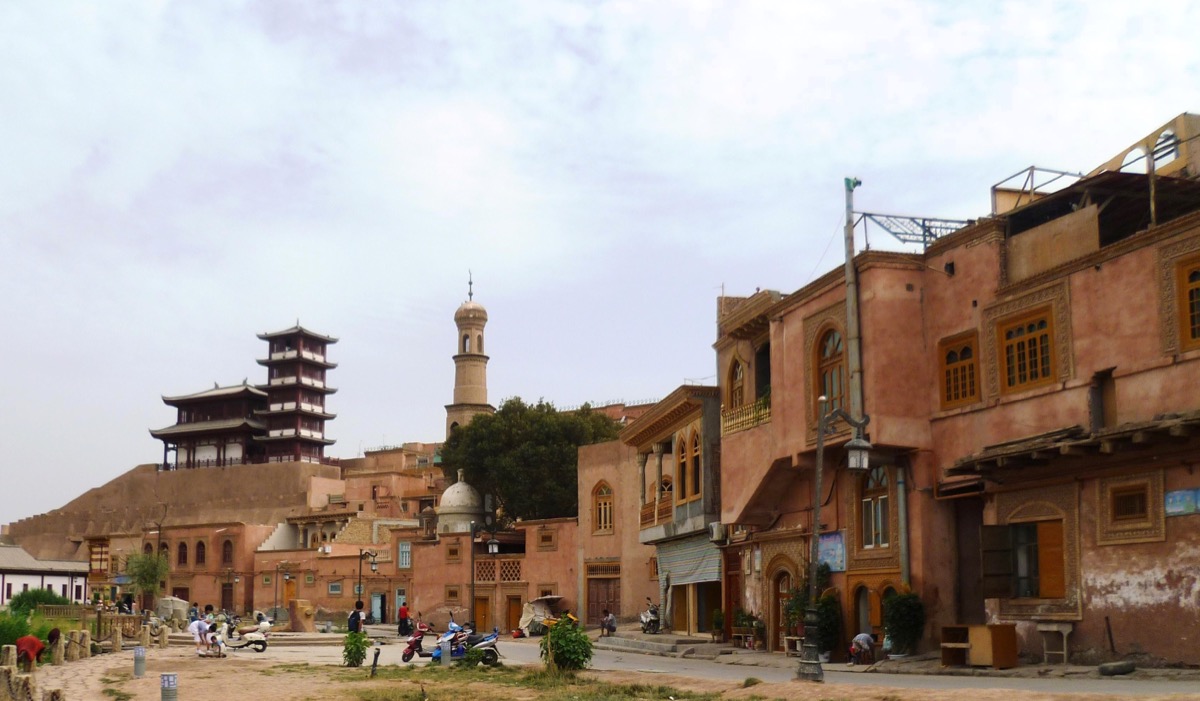
The Old Town (老城, sometimes written 喀什老城) lies east of Renmin West Road and wraps around the Id Kah Mosque, the city’s geographic and spiritual center. I describe its living culture in the Old Town museum guide, but for navigation the key facts are these:
- The lanes are a rough grid of dead-ends and connectors — there is no straight through-route, which is the charm and the confusion.
- The East Gate (东门) is the main restored entrance and the natural start for the self-guided walking route.
- The Sunday Bazaar sits at the Old Town’s western fringe, near Renmin West Road.
- The livestock market is outside the core lanes, to the northwest, and only runs on Sundays.
A useful mental trick: pick one landmark (Id Kah, the East Gate, or the bazaar) as your “home pin” and navigate relative to it. The lanes all loop back toward these.
New City: where logistics live
West of Renmin West Road the city opens into broad avenues, high-rise hotels, banks, and the long straight road to the airport. The train station is southwest of the center. If you land at Kashgar Airport (KHG), you will drive through the New City to reach the Old Town — about 20–30 minutes depending on traffic. Most hotel choices come down to Old Town (atmosphere, walkable) versus New City (newer rooms, easier taxi access).
How to get around
- On foot in the Old Town. The lanes are pedestrian-friendly and that is the only way to experience them. Wear decent shoes; the earthen surfaces are uneven.
- Taxi or ride-hail in the New City. Didi and local taxis are cheap and the grid is easy. Agree on the Old Town drop-off point (East Gate or Id Kah) before you set off.
- To the bazaars and outskirts. Taxis cover the Sunday Bazaar and the livestock market; for the Pamir day trip you will need a driver or tour.
- Walking distance reality. The Old Town core is about 2 km across at most — everything inside is a 15–25 minute walk.
Key landmarks to pin on your map
| Landmark | Where | Why go |
|---|---|---|
| Id Kah Mosque | Old Town center | Largest mosque in Xinjiang, navigation anchor |
| East Gate | Old Town east | Main restored entrance, walking-route start |
| Sunday Bazaar | Old Town west edge | The great Silk Road market |
| Abakh Khoja Mausoleum | East of center | Architectural masterpiece, guide here |
| Livestock Market | Northwest outskirts | Sunday-only, raw local life |
| Kashgar River | South of Old Town | Green belt, evening walks |
Reading the Old Town “map” on the ground
Because the lanes resist a clean map, locals use landmarks, not street names. You will hear directions like “past the teahouse, second left at the carved door.” That is why my walking route is written as a sequence of visible cues rather than a grid. The photography guide uses the same landmark logic for finding light.
Getting oriented on arrival
Spend your first hour at the East Gate, walk one loop, and watch where the main roads meet Renmin West Road. Once that clicks, the rest of the city is easy. The Kashgar travel blog links every neighborhood guide in one place if you want the full set.
The neighborhoods inside the Old Town
The Old Town is not one block but a set of named quarters. The core around Id Kah is the commercial heart; northeast toward the East Gate is the most restored and walkable; the western lanes near the bazaar are grittier and more local. The living-museum guide explains how these quarters differ in feel. Knowing the rough quarter helps when a local directs you — “toward the East Gate” beats a street name that may not be signed on the lane wall.
Getting from the airport to the Old Town, step by step
Land at KHG, clear the terminal, and take a taxi or pre-booked car southwest into the city — about 20–30 minutes, 30–50 yuan depending on meter and negotiation. Tell the driver “Old Town, near Id Kah” or your hotel name. The New City’s wide roads make this leg easy; the last mile into the pedestrian lanes is where you walk. Build in roughly an hour from landing to lobby if you have luggage and a hotel check-in to clear.
Which map apps actually work
Google Maps is unreliable in Xinjiang; use Amap (Gaode, 高德地图) or Baidu Maps, which have the Old Town lanes and live taxi tracking. Download the offline Kashgar map before you arrive — signal in the deep lanes is patchy. The walking route is written to work without a perfect signal, but a working map app is the backup I recommend.
Walking times between key spots
| From to To | On foot | Note |
|---|---|---|
| Id Kah to East Gate | 10 min | Straight shot |
| Id Kah to Sunday Bazaar | 15 min | West, near Renmin Rd |
| Old Town to Livestock Market | 25 min / taxi | Northwest outskirts |
| Id Kah to Abakh Khoja | 20 min | East of center |
Practical takeaways
Kashgar is two cities sharing a name: the walkable earthen Old Town east of Renmin West Road, and the modern New City to the west. Anchor yourself to Id Kah or the East Gate, navigate the lanes by landmark, and use taxis only for crossing between the two halves or reaching the airport. Master that split and the “maze” stops being confusing.