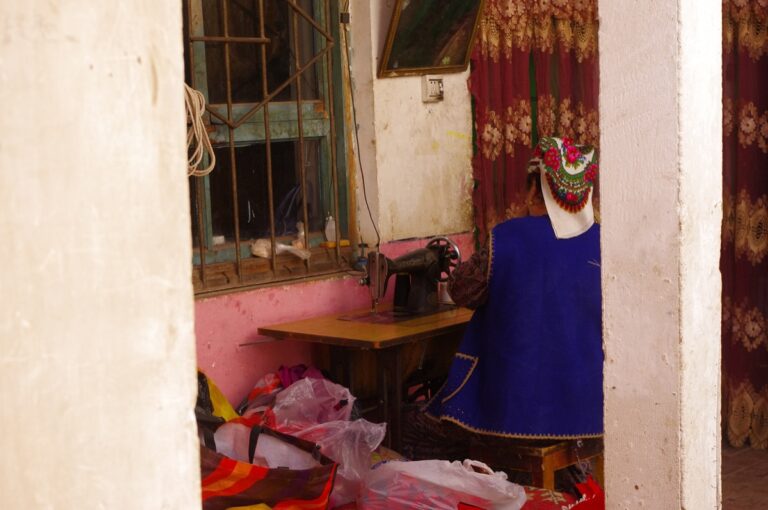

Baihaba Village (白哈巴): The Most Beautiful Border Village Between China and Kazakhstan
The reason to stop
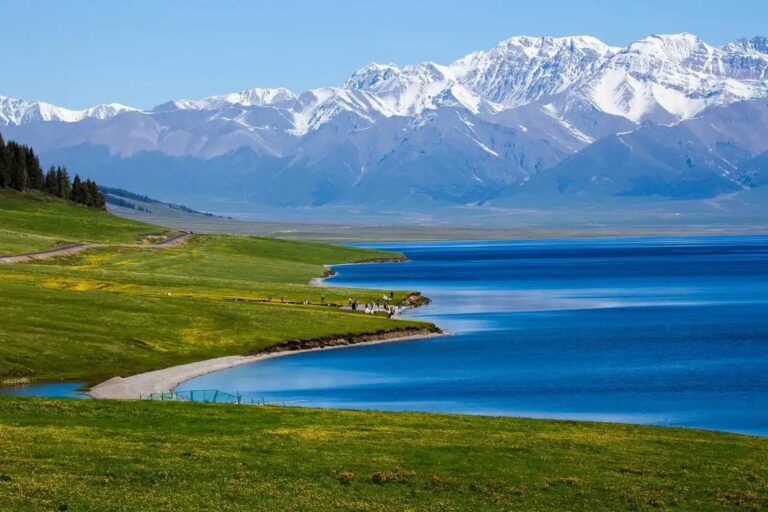
Baihaba Village, known in Chinese as 白哈巴村 and nicknamed the “First Village of the Northwest” (西北第一村), is one of the most remote and photogenic settlements in all of China. Tucked into the Khaba Valley of the Altai Mountains in Habahe County, it sits just a few kilometers from the border with Kazakhstan, with a fence and watchtower marking the literal edge of the nation. Part of the greater Kanas scenic area in northern Xinjiang, Baihaba is home mainly to Tuvans and Kazakhs whose wooden cabins, grazing horses, and birch groves have changed little over the centuries. Unlike the more famous Kanas Lake and Hemu Village, Baihaba receives far fewer visitors, which is precisely its appeal. This guide explains how to reach this frontier hamlet, the border permits you need, what to do once you arrive, the best season to visit, and practical tips to make your trip smooth and memorable.
Last updated: July 15, 2026 · Written by Karl Huang, a Xinjiang travel specialist who has spent time across the region. Practical details are cross-checked against official tourism, transport, and border-regulation sources.
History and Background
The valley that Baihaba occupies has been inhabited for hundreds of years by Turkic-speaking people of the Altai. The Tuvans, a small ethnic group whose ancestors are believed to have migrated from the Tuva Republic region of Siberia, are the village’s distinctive inhabitants; Kazakhstan, Russia, and Mongolia all lie within a short distance, and the cultural blend is tangible in the language, food, and music. Historically the area belonged to the Dzungar Khanate before Qing dynasty expansion in the 18th century brought the Altai under Chinese administration, after which the valley became a quiet backwater on the imperial frontier. For most of the 20th century the area was a restricted military zone because of its sensitivity on the border, and only in recent decades has it been opened to tourism.
The name “Baihaba” is often translated loosely as “rich with water,” reflecting the many streams that descend from the surrounding peaks and feed the Khaba River. The village’s layout is a classic example of a northern Xinjiang mountain settlement: single-storey log cabins with pitched roofs to shed heavy snow, fenced yards for livestock, and a small wooden mosque serving the local Kazakh Muslim community. Traditional Tuvan beliefs also survived here longer than almost anywhere else, with elements of shamanism and nature worship woven into daily life alongside Islam. Because the border runs so close, the Chinese side maintains a boundary marker and a border-guard post; tourists are allowed into the village only as part of the Kanas scenic-area ticket system and must carry identification at all times.
The relative isolation preserved Baihaba’s traditional way of life longer than almost anywhere else in Xinjiang, making it a living museum of Altai mountain culture. Older villagers still recall a time when the only way in or out was on horseback, and the seasonal rhythm of hay-making, herding, and winter wood-cutting continues much as it did generations ago. For visitors, this continuity is the real attraction: Baihaba is not a reconstructed theme village but a working community that happens to sit in one of the most beautiful settings in the country, where the past feels close enough to touch and the modern world briefly falls away.
Arriving by road
Reaching Baihaba requires planning because it is deep inside a protected scenic area. Most travelers first fly or take a train to Urumqi, then a flight (about one hour) or a long-distance sleeper bus to Altay City (阿勒泰市), or the closer and more convenient Burqin County (布尔津县) at the gateway to Kanas. From Burqin it is about 150 km to the Kanas scenic area entrance at Jiadengyu (贾登峪), a drive of roughly two to three hours on a good paved road. Inside the scenic area private cars are not permitted on the internal roads; visitors must park at Jiadengyu and take the official shuttle buses, which run on a scheduled timetable from early morning until evening.
To reach Baihaba specifically you have two main options. The first is the scenic-area shuttle from Jiadengyu to Kanas Village, then a connecting shuttle or chartered local van onward to Baihaba, a drive of roughly 30 to 40 km through pine forest and open valley. The second, more adventurous route is to hike or ride horseback from Hemu or Kanas to Baihaba along marked trails, a journey of several hours through beautiful mountain terrain that rewards fit travelers with empty viewpoints along the way. The shuttle from Kanas to Baihaba typically runs a few times a day, so coordinate your timing carefully and confirm the last return departure to avoid being stranded overnight without a booking.
A crucial point: because Baihaba lies in a border control zone, every visitor must obtain a border permit (边防证) in addition to the Kanas entrance ticket. The permit is issued at the Kanas scenic area administration office or at the public security checkpoint near the entrance; you need to present your passport or Chinese ID, and processing usually takes only a few minutes during the season. Foreign tourists should check current regulations in advance, as border-zone access can be temporarily restricted for security reasons without notice. Once inside, the village is small and entirely walkable; the main sights are all within a 15-minute stroll. Local homestays can arrange transport and guides, which is the easiest way for first-time visitors to handle the permit logistics without stress or confusion at the checkpoint.
Sights worth the time
Baihaba’s charm is its simplicity, but there is more to do than simply admire the view. The wooden cabin district is the heart of the village: rows of weathered log houses with carved eaves, smoke curling from chimneys, and fenced paddocks where horses and cattle graze. Early morning, when light slants across the valley and mist lingers over the river, is the best time to photograph the cabins, and many photographers time their entire visit around the brief window just after sunrise. The Khaba River runs along the edge of the settlement and forms the natural border with Kazakhstan on the far bank; a short walk brings you to the official boundary marker and watchtower, where you can look across to Kazakh territory — a rare chance to stand at the literal edge of China and feel the frontier.
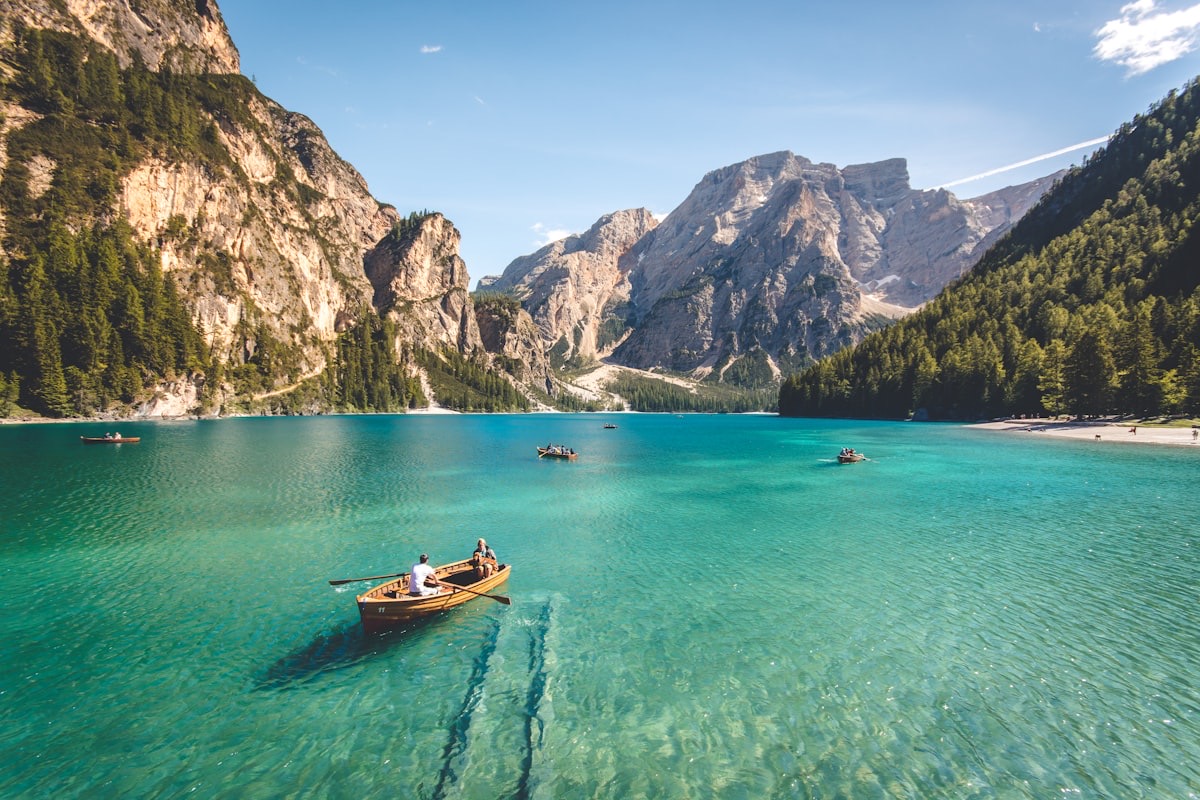
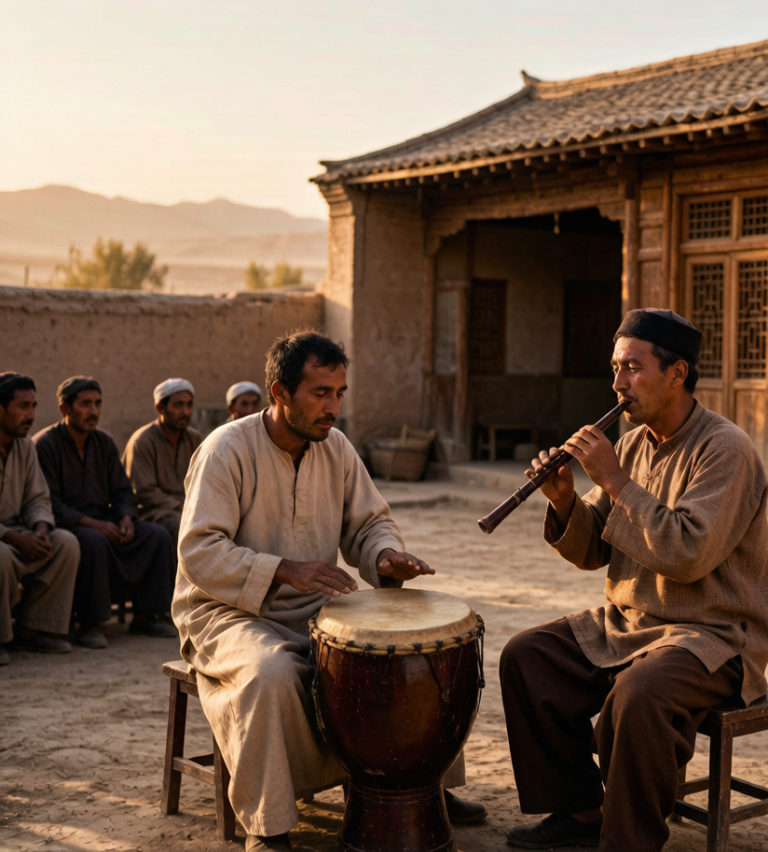
The surrounding birch and spruce forest is excellent for gentle hikes; in autumn the birch turn brilliant gold and the contrast with the dark conifers and snow-dusted peaks is spectacular, drawing the majority of visitors in late September and early October. For a broader panorama, climb the small hill behind the village (locals call it the viewing platform) to see the whole valley, the patchwork of fenced fields, and the winding river far below. Horse riding is offered by local families and is the traditional way to explore the high meadows above the village, where wildflowers blanket the slopes in June and July. Cultural experiences matter here: you can visit a Tuvan family’s home to hear the limbe (a vertical flute) and taste fermented mare’s milk (kumis), or share a meal of hand-pulled noodles, fresh dairy, and homemade bread that tastes nothing like restaurant food.
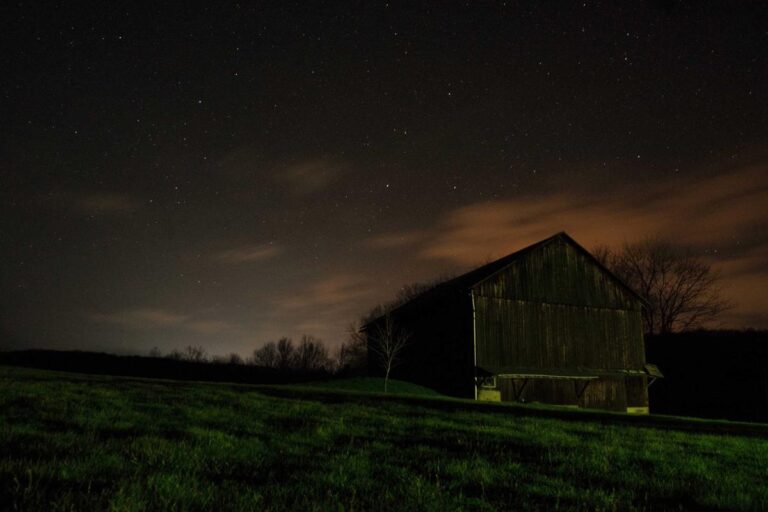
Nearby, the larger Kanas Lake and Hemu Village are easy add-ons if you have a second day; many travelers base themselves in Kanas and make a half-day trip to Baihaba, combining all three in a single scenic-area pass. Birdwatchers will enjoy the raptors and waterbirds along the river, while stargazers find the dark, high-altitude skies among the best in Xinjiang for night photography, with the Milky Way clearly visible on moonless autumn nights. A small village museum and a handful of craft stalls offer context and souvenirs, though the greatest exhibit is the landscape itself, best appreciated by slowing down and walking the quiet lanes at the edge of the trees rather than rushing between viewpoints with a checklist.
Best Time to Visit and Tickets
The single most important factor in enjoying Baihaba is timing. The village is accessible roughly from late May to early October; outside this window snow closes the mountain passes and the scenic area suspends shuttle service, leaving the valley cut off except to border personnel. The two standout seasons are early autumn (late September to early October) and late spring (late May to June). Autumn is the postcard season: the birch forests glow gold, the air is crisp, and the light is soft — but it is also the busiest, and accommodation books out weeks ahead, with prices peaking accordingly. Late spring brings wildflowers across the meadows and fewer crowds, with pleasantly cool days ideal for hiking.
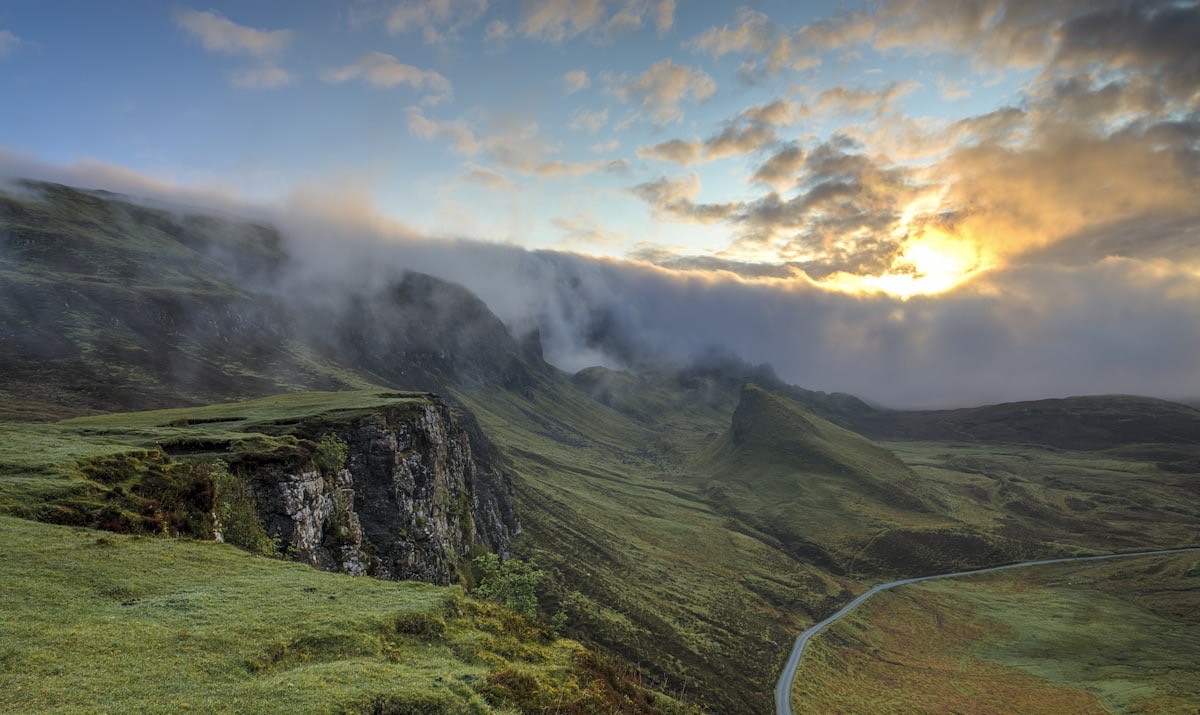
Summer (July to August) is green and lush but can be busy and occasionally rainy, while winter travel is not practical for independent tourists. Tickets are sold as part of the Kanas scenic area combined pass, which covers Kanas Lake, Hemu, and Baihaba; as of recent seasons a multi-day pass costs around 195 RMB plus separate shuttle bus fees (roughly 100 RMB), and the Baihaba border permit is free but mandatory. Buy tickets at the Jiadengyu visitor center or online in advance through the official platform, especially in peak autumn. Because internal transport is by shuttle only, budget extra time: a full visit including transfers from Burqin typically takes a full day, and an overnight in the village lets you catch both sunrise and the evening calm. Book homestays early in peak season, as the village has limited rooms and demand far exceeds supply during the golden weeks.
Accommodation in Baihaba ranges from simple family homestays with shared bathrooms to slightly smarter wooden lodges, all basic by city standards but warm and atmospheric, with home-cooked meals included in many rates. Expect to pay more than in Burqin for the privilege of staying inside the scenic area, and confirm heating is available if you visit in the shoulder months when nights turn cold. Reserving through your ticket agent or a trusted platform before you arrive is strongly advised, since walk-up rooms in October are rarely available and the nearest alternative lodging is an hour’s drive away in Kanas Village, where competition for beds is just as fierce.
What makes it easier
A few practical notes will make your Baihaba trip far smoother. First, carry your passport or ID at all times — both the Kanas ticket and the border permit require it, and checks are common on the shuttles and at the village entrance. Second, pack for mountain weather even in summer: temperatures swing sharply between warm days and near-freezing nights, and a rain jacket and warm layer are essential. Third, bring cash, as card and mobile payments can fail in the remote valley, and there are few if any ATMs. Fourth, respect the border: do not cross fences, fly drones near the frontier (strictly prohibited), or photograph military installations, all of which can end your visit abruptly and may involve the authorities.
Fifth, choose accommodation wisely — village homestays are basic but atmospheric; book through your scenic-area ticket agent or a trusted platform. Sixth, keep expectations realistic about connectivity: mobile signal is weak to nonexistent, so download maps and any translations beforehand, and tell someone your plan before you lose reception. Seventh, dress modestly near the mosque and ask before photographing local people, who are generally friendly but appreciate courtesy and a smiled greeting. Finally, if you want the iconic golden-hour cabin shots, stay overnight and be out with your camera before 7 a.m., when the first light hits the valley and the smoke from the chimneys makes the scene feel timeless and untouched by the modern age.
What actually matters
Baihaba Village is the kind of place that rewards travelers willing to go the extra distance. Quieter than Kanas and more remote than Hemu, it offers a rare glimpse of traditional Altai life at the very edge of China. With the right permits, a bit of planning, and an early start, you can experience one of Xinjiang’s most serene and photogenic corners — a frontier village where wooden cabins, birch forests, and a winding border river come together in perfect stillness, and where the modern world briefly falls away into the trees.