Dress Code in Xinjiang: What to Wear to Mosques and Villages
Xinjiang surprised me with how relaxed big-city dress can be — Urumqi and Yining have malls and skateboards and short sleeves in summer — and how quickly that relaxes into expectation the moment you step into a village, a mosque, or a Kyrgyz yurt. Dressing right is not about hiding; it is about reading the room so the room reads you as a guest. I’ve learned to pack one versatile long layer and a scarf, and they’ve earned their weight many times over.
This guide walks through the regional and situational shifts so you’re never the person turning away at a mosque gate in shorts.
The Golden Rule: Cover Shoulders and Knees
In religious and rural contexts, both men and women should keep shoulders and knees covered. For women, carrying a scarf lets you step into any mosque or conservative courtyard without scrambling. For men, long trousers and sleeved shirts are the baseline; leave the shorts for the hotel gym. This single habit prevents more awkward moments than any other.
City vs. Countryside
In Urumqi, Karamay, and Shihezi, dress is modern and varied — tourists in t-shirts and dresses draw no comment. Head two hours into the south, though, and the same outfit can feel out of place in a village or at a shrine. The safe play is to dress modestly as you move away from city centers.
Dressing for Mosques and Shrines
Mosques and mausoleums such as the Abakh Khoja Mausoleum ask for covered heads (women), long sleeves, and long pants or skirts. Many lend scarves at the door, but bringing your own is more comfortable. Remove shoes in the prayer hall and keep voices low.
| Setting | Women | Men |
|---|---|---|
| City street | Anything modest | Anything modest |
| Village / bazaar | Long skirt/trousers, sleeves | Long trousers, sleeves |
| Mosque courtyard | Scarf advised | Long trousers |
| Prayer hall | Scarf required, full cover | Long trousers, no shoes |
| Yurt visit | Modest, remove hat indoors | Modest, remove hat indoors |
High Altitude and the Pamir
On the Pamir Plateau, Kyrgyz and Tajik communities are conservative and the weather is harsh. Layers, a head covering for women, and sturdy closed shoes serve both respect and survival. A hat is fine outdoors but comes off when you enter a yurt — the crown of the tent is sacred.
Practical Packing Tips
Bring a light, breathable scarf that doubles as sun and mosque cover. Pack one pair of long trousers you can wear everywhere. A long-sleeved shirt protects against both modesty expectations and the desert sun. Avoid tight or sheer clothing in rural areas. And skip clothing with big religious or political slogans — neutrality keeps the focus on the place, not your message.
What Locals Actually Wear
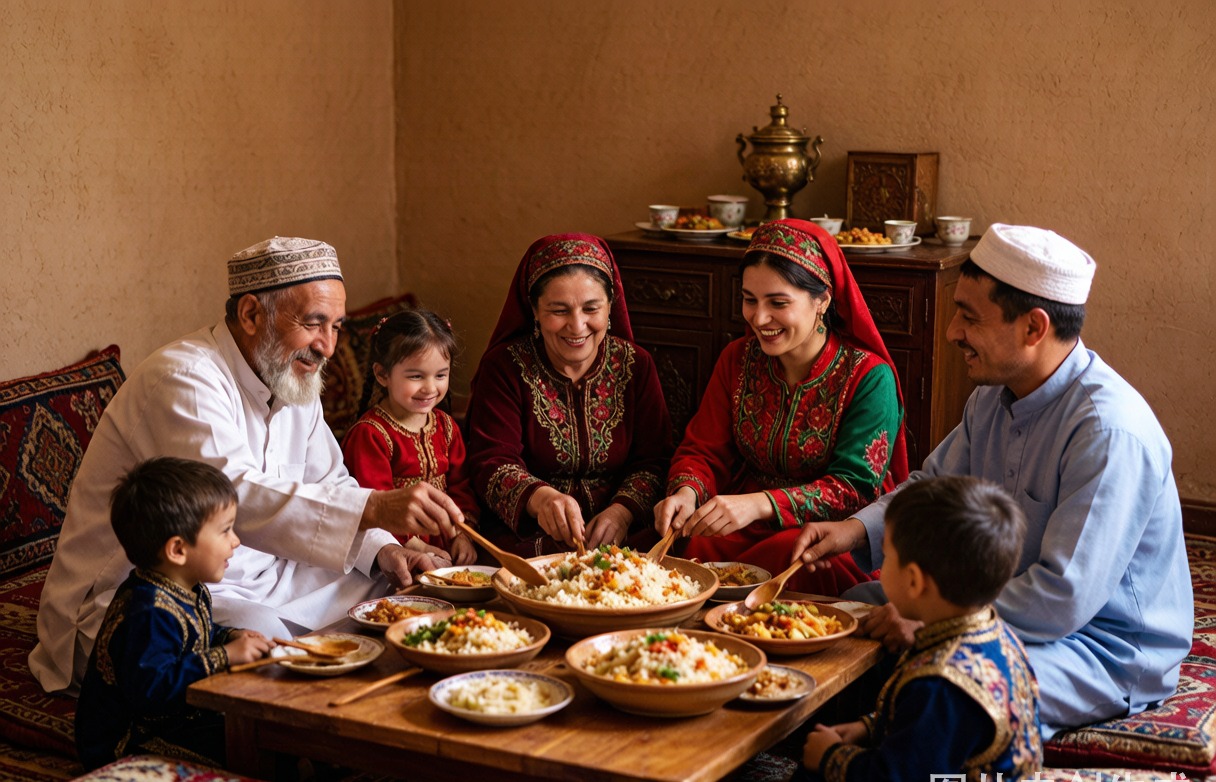
You’ll see stunning regional dress: Uyghur doppa caps, Kazakh embroidered vests, Kyrgyz felt hats, Tajik woolen caps. Wearing a bought local cap is a friendly nod, not appropriation, when done with a smile. Just don’t wear religious attire (like a full niqab styling) as a costume — that crosses a line.
For related manners, our Kashgar Old Town guide describes the living culture behind the clothing you’ll see on the streets.
Layering for Extreme Temperature Swings
Xinjiang‘s climate is brutal on wardrobes. A single day in Turpan can swing from cool dawn to 40°C afternoon; a Pamir morning can frost while the noon sun burns. The answer is layers you can add and shed, and conveniently, layers also solve the modesty question. A long-sleeve shirt under a t-shirt, a scarf in the bag, long trousers — this kit serves both the desert and the mosque. I pack a lightweight sun-shirt with sleeves that roll down for exactly this dual purpose.
Footwear: The Overlooked Essential
You’ll remove shoes constantly — at mosques, at homes, at yurts. Slip-on shoes or sandals with socks save enormous friction. Sturdy closed shoes matter for mountain and desert walks, but keep a pair of easy-off shoes for town days. I learned this the hard way fumbling laces outside a packed mosque during Friday prayers.
Color, Pattern, and Local Signal
Bright colors are not just allowed, they’re loved. Local dress — Uyghur doppa caps in vivid embroidery, Kazakh vests, Kyrgyz felt hats — is anything but drab. Wearing a purchased local cap is a friendly nod, and nobody mistakes it for costume when worn with a smile. What to avoid is clothing printed with large religious or political slogans; neutrality keeps the focus where it belongs: on the place, not your message.
| Item | Why pack it |
|---|---|
| Light long-sleeve shirt | Sun + modesty in one |
| Scarf (large) | Mosque cover, sun, dust |
| Slip-on shoes | Easy shoe removal |
| One warm layer | Altitude and night cold |
| Long trousers | Villages and shrines |
Swimwear and Hot Springs
Where swimming exists — hotel pools, the occasional hot spring — facilities are usually separate or private. Wear a full swimsuit and a cover-up to and from the water, and change discreetly. Public nudity or topless sunbathing, normal in some Western contexts, would be deeply out of place here and may cause real offense.
Dressing for Respect, Not Fear
The dress code in Xinjiang is not a burden to dread; it’s a small daily courtesy that unlocks warmth. The moment you’re appropriately covered at a village gate, you stop being a spectacle and start being a guest. That shift is worth more than any outfit you left at home.
Dress and the Question of Respect
I’ve come to see the dress code not as a constraint but as a courtesy that announces your intent before you speak. The moment you’re appropriately covered at a village gate or a shrine, you stop being a spectacle and start being a guest. Locals relax; invitations follow. The traveler who dresses carelessly isn’t punished — they’re simply kept at arm’s length, which is its own quiet cost. A scarf and long trousers are the cheapest social passport in the region.
Buying Local, Dressing Local
One of my favorite travel moves is buying a local item to wear — a doppa cap in Kashgar, a felt hat on the Pamir. Worn with a smile, these read as appreciation, not costume. Markets sell them cheaply, and donning one often earns a grin and a quick lesson in how it’s worn. Just don’t wear religious attire as a disguise or a joke; the line between homage and mockery is respect, and locals read it instantly. For what to pair it with, the Old Town guide shows the everyday street style.
A season by season read
Spring and early summer
Only inside mosques and shrines, and scarves are usually available there. On the street, modest dress is enough; a scarf is a handy backup.
Summer
In cities, yes for tourists. Everywhere else — villages, mosques, yurts — long trousers are expected. I’d keep shorts for the hotel.
Autumn
Separate or private facilities are the norm. Wear a full swimsuit and a cover-up to and from the water, and don’t change in open view.
Winter
In cities, fine. In villages and religious sites, cover your shoulders. A lightweight long-sleeve shirt solves both heat and etiquette.
4
Not at all. Locals wear vivid colors proudly. The concern is coverage and modesty, not hue.