What a Uyghur Wedding Taught Me About Xinjiang’s Hospitality
I did not plan to see a Uyghur wedding. I was invited, which is the only way it happens, and I went knowing almost nothing. What I saw reframed a month of travel in ten minutes, because the wedding is the culture with the volume up.
The shape of the day
A Uyghur wedding mixes the religious ceremony with days of family gathering, music, and a table that does not empty. It falls inside the wider calendar of Eid and Nowruz celebrations, and the hospitality during Ramadan shares the same generosity, just pointed at a different event. I was fed before I was spoken to, which turned out to be the whole philosophy.
Food as welcome
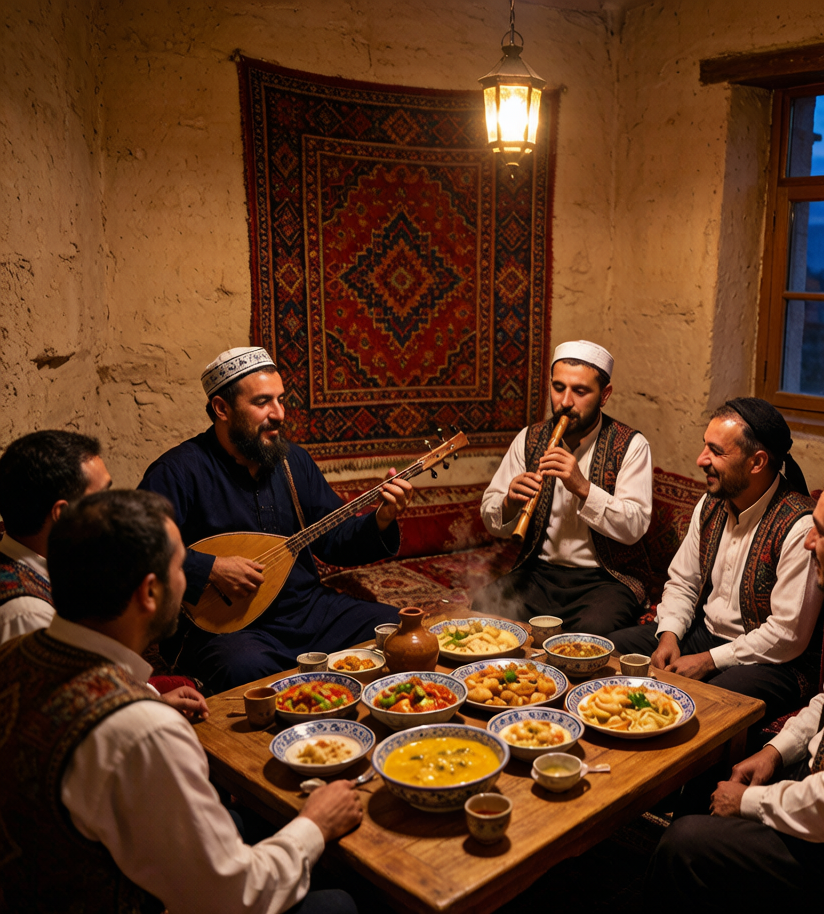
The table is the argument. The breakfast ritual I wrote about elsewhere is a quiet version of the same instinct, but at a wedding it runs unchecked: polo, kebabs, bread, fruit, and a sweetness that will not let you leave hungry. I stopped trying to keep up and just accepted the plate in front of me.
What it reveals
The old town, which I walk through in the living-museum piece, is not a museum when a wedding is happening. The lanes fill, the music starts, and the staged version of culture gets replaced by the real one. I have more respect for the quiet daily life now, because I saw what it becomes when everyone shows up.
How to be a good guest
If you are lucky enough to be invited, bring nothing but courtesy, dress modestly, and eat. Refusing food reads as refusal of the person. I learned this the hard way by hesitating at a second helping and watching the host’s face fall. The fix was simple: say Rahmet and open my hands.
You will probably not be invited. If you are, go. It is the most honest hour you will spend in the region.
A few minutes of background change the visit
Knowing what you are standing on turns a pleasant walk into something you actually remember. Locals in Xinjiang will give you the short version in about a minute if you ask, and it is usually better than the panel at the gate. The history here is layered in a way the official signage compresses into names and dates. Read that the morning before rather than at the entrance, where the boards stand too far from the object to help. The place only makes sense once you know its shape. Xinjiang Uyghur Wedding was cut rather than built, which is why the walls are solid and the streets are the empty space between them, and why centuries of dust ended up acting as a roof. If the timing is the question, our [[xinjiang-uyghur-phrasebook|Xinjiang Uyghur Phrasebook: Essential Words…]] goes through it properly.
A second look on day two
Almost nobody does Xinjiang Uyghur Wedding twice. If your itinerary has a spare morning, spend it here again rather than at the bigger name on the far side of town. I did, and the second visit was better, because the first had been spent working out where to stand. The second time you can skip the obligatory viewpoint and walk along the base of the ridge where the light comes in sideways, and that is the photograph you keep. I wrote the driving side up in our [[xinjiang-uyghur-phrases-language|A Few Uyghur Words That Make a Xinjiang…]] as well.
The music and the dance
The part that undid me was the music. A small ensemble played a line that bent into the [[the-dolan-people-xinjiangs-river-bank-culture-of-music-and-grit|Dolan]] modes I had only read about, and then everyone stood and the dance took the room. I do not dance, and I was pulled in anyway, and the refusal was not an option the way it is at home. That forced participation is the hospitality, not a performance of it. If you are ever near such a day, accept the pull, dress for it, and skip the camera at the intimate moments, because the people there are living, not exhibiting. The wedding is the region’s social life with the door open, and you are lucky to be near it.
If you are invited
The etiquette is mostly warmth. Bring nothing but yourself and a respectful manner; a gift of fruit or sweets is welcome if you insist, but presence is the offering. Dress modestly, cover shoulders and knees, and keep the camera down during the intimate moments, because the people there are living, not exhibiting. Eat what is put in front of you, because refusing food reads as refusing the person. I learned this by hesitating once and watching a face fall, and the fix was simply to open my hands and say thanks. The wedding is the region’s social life with the door open, and being there is the privilege. You will likely not be invited; if you are, go, and let the music pull you in.