Xinjiang Watermelon: Why the Summer Fruit Tastes Different Here
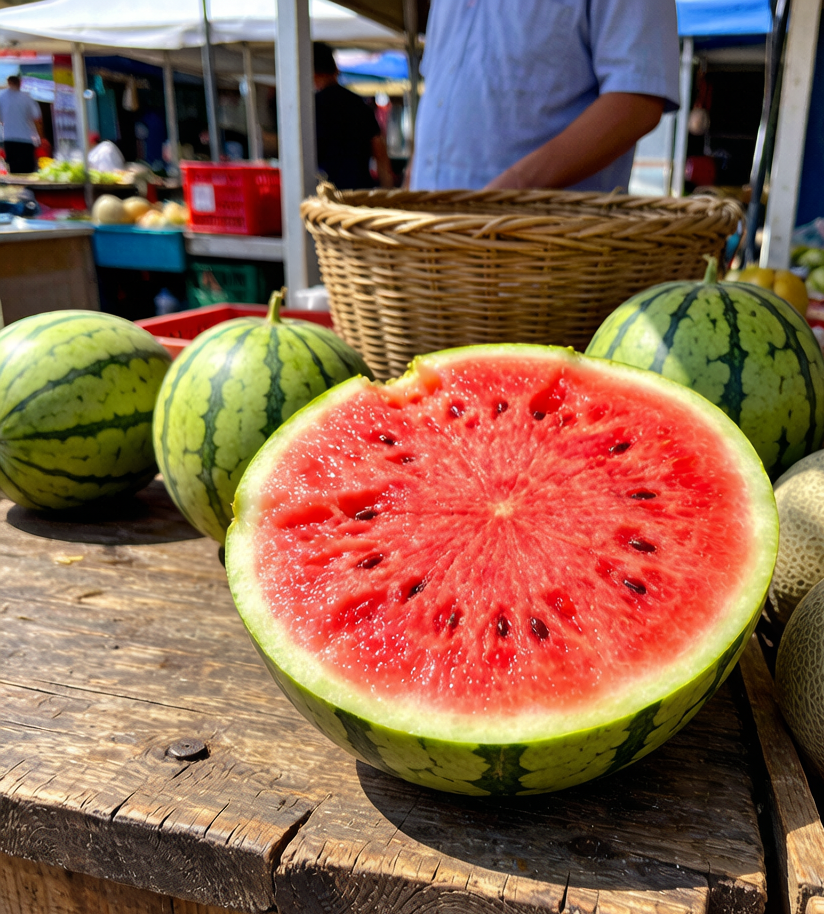
I did not expect a watermelon to become a trip memory, but in Xinjiang it did. The melons sold by the roadside, still warm from the sun, taste unlike anything from a supermarket back home, and they became a daily habit on my summer drives.
The reason is the climate, and it is the same logic behind the cold drinks that save you in the heat: huge day-night temperature swings concentrate the sugar. A Xinjiang watermelon grown under that swing is dense, red, and almost alarmingly sweet. I stopped buying melon anywhere else afterwards.
Buying one is its own small skill. At a roadside stall I learned to let the seller thump it and translate the sound, or to trust their pick rather than mine. It is the same social ritual as a Uyghur breakfast table, where the host knows best and you are wise to concede. A good stall owner is proud of the fruit and happy to show you.
The pairing is the joy. A wedge of cold watermelon after a hot morning behind the wheel is the simplest pleasure on the loop, and it sits nicely beside the brick tea habit I picked up, one cooling the body and the other warming the morning. Together they bracket a Xinjiang day.
Markets are the place to go deep. The bazaar buyers’ guide I wrote covers the dried side; the fresh melon is the wet side of the same market culture, and the two together explain why fruit is central here, not a side note.
My tip: buy small, buy often, and eat it the same day. A roadside watermelon does not improve in a hot car, and the point is the freshness. Do that, and you will understand why locals grin when they hand you the first slice of the season.
A small trick for the road: buy the smallest melon you can, because a Xinjiang watermelon is huge and a hot car ripens it fast. I once overestimated and ate melon for three meals, which is a nicer problem than most, but still a problem. The street vendors near bus stations are often the cheapest and the freshest, because they turn stock daily.
If you are near a field stand, stop. The melon picked that morning and cut by the farmer is a different fruit from the one in a city supermarket, and the difference is the whole point of travelling for food.
The season is short and I time trips around it. The best melons run roughly mid-summer into early autumn, and a week either side changes the price and the taste. I have stood at a roadside pile in August haggling in gestures and won a melon for pocket change, then eaten half of it leaning on the car while the vendor laughed. That is the experience no restaurant replicates. If you are self-catering, a wedge of watermelon and a wedge of the local bread is a road lunch that needs nothing else, and it keeps you cool when the highway shimmers. Buy it daily, eat it daily, and let the fruit set the pace of the hot months.
What travels home and what does not
Nuts, dried grapes, an uncut flatbread and vacuum-packed lamb all survive a long-haul flight. It is cheaper, the staff wrap it properly, and it spends a week in your bag as the best thing about the trip. What does not work is anything fried or saucy, which turns in transit, and anything you cannot repeat at home. Buy the dried fruit in the market rather than at the airport and ask for it packed at the stall. I wrote the driving side up in our [[xinjiang-summer-drinks|Xinjiang Summer Drinks: Mulberry Sherbet,…]] as well.
Three words that change the order
Point at what the next table has. What you need is the phrase for not spicy, the hand signal for a smaller portion, and the knowledge that one word covers what locals drink in winter, which is salt and butter, and what visitors get, which is sweet. In Xinjiang Watermelon Why The that single gesture has never once got me the wrong dish, and it saves you ordering a second plate you did not want. You do not need Uyghur. For the part people underestimate, see our [[xinjiang-kiwi-fruit-guide|Xinjiang Kiwi: A Silk Road Fruit You Did…]].
The stall, the teahouse and the restaurant
What you lose at the stall is a seat and some shade. Everything else is right there. Three kinds of place sell the same dish in Xinjiang Watermelon Why The, and they are not competing so much as serving different occasions. The street stall is fastest, cheapest and eaten standing up.
The teahouse is where you sit an hour and get refilled. The restaurant is where you take someone you want to impress. The food is the same and the price gap is not small. I eat at the first two most days and take people to the third when they ask for somewhere proper.
More on the other end of that day is in our [[xinjiang-summer-beating-heat-silk-road|Xinjiang in Summer: Beating the Heat on the…]].