
Xinjiang Festivals: Eid, Nowruz, and the Grape Festival Worth Timing
Xinjiang’s festivals are the fastest way to see the region’s cultures in full color — and they’re also the times to avoid if you hate crowds and peak prices. The calendar blends Islamic holidays observed by Uyghur, Hui, Kazakh, and Kyrgyz communities with the pre-Islamic Nowruz spring festival and a handful of regional harvest celebrations. Time your trip right and you’ll eat for free at a neighbor’s table; time it wrong and you’ll fight for a hotel room.
Here’s the practical calendar.
Eid al-Fitr (Roza Heyt)
Marks the end of Ramadan, usually shifting ~10 days earlier each year on the lunar calendar. Families visit, gifts change hands, and food tables groan. The bazaars are busiest in the days before; the mornings after are quiet and communal. Travel around Eid is heavy — book transport early.

Eid al-Adha (Kurban Heyt)
The bigger one, centered on sacrifice and charity. Expect sheep everywhere, communal feasts, and the most sanzi and polo you’ll ever see. It’s the most culturally rich time to visit a village, and the most logistically strained in cities. Foreign visitors are welcome at public celebrations but should be respectful around religious sites.

Nowruz (Nawruz)
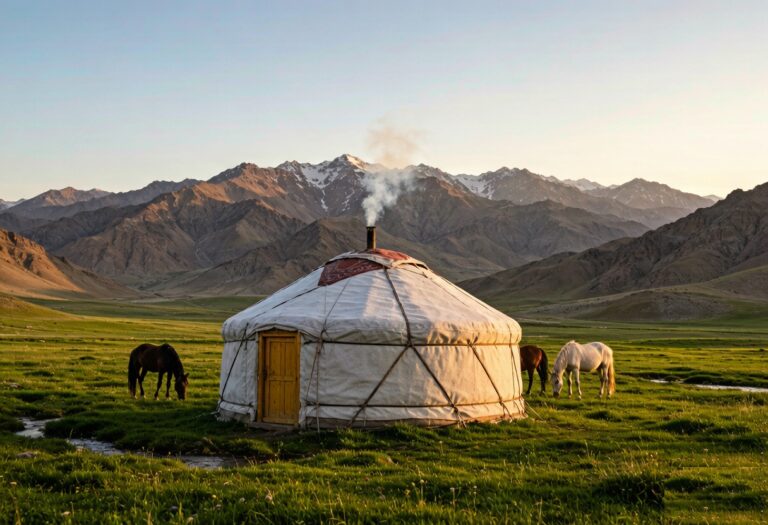
The March 21 spring festival, rooted in Zoroastrian and Turkic tradition, celebrated by Uyghur, Kazakh, Kyrgyz, and other groups. Think bonfires, horse games, and the wheat-pudding ‘sumalak.’ Best in the north (Yining, the grasslands) where the equinox still means something agricultural. A wonderful, photogenic time — and the apricot blossom often overlaps.
Three words that change the order
You do not need Uyghur. Point at what the next table has. What you need is the phrase for not spicy, the hand signal for a smaller portion, and the knowledge that one word covers what locals drink in winter, which is salt and butter, and what visitors get, which is sweet. In Xinjiang Festivals Eid Nowruz that single gesture has never once got me the wrong dish, and it saves you ordering a second plate you did not want. For the part people underestimate, see our [[xinjiang-nowruz-festival-guide|Nowruz in Xinjiang: The Silk Road Spring…]].
The stall, the teahouse and the restaurant
Everything else is right there. Three kinds of place sell the same dish in Xinjiang Festivals Eid Nowruz, and they are not competing so much as serving different occasions. The teahouse is where you sit an hour and get refilled. The street stall is fastest, cheapest and eaten standing up.
The restaurant is where you take someone you want to impress. The food is the same and the price gap is not small. I eat at the first two most days and take people to the third when they ask for somewhere proper. What you lose at the stall is a seat and some shade.
More on the other end of that day is in our [[xinjiang-grape-raisin|Xinjiang Raisins: Turpan’s Vineyards, the…]].
How it is actually eaten
Eating alone here is a quiet business and the kitchen knows it. Bread goes down first, tea arrives without being asked for, and the main dish comes when the people eating together are already sitting properly. If you are travelling solo and the thought of a room full of families bothers you, the counter seats at the small places are exactly the right answer. In Xinjiang Festivals Eid Nowruz the meal is a long one, not a fast one. More on the other end of that day is in our [[xinjiang-festivals-calendar|Xinjiang Festivals and Events Calendar…]].
The one thing I order every time
In Xinjiang Festivals Eid Nowruz that is the tea, and the reason is not the flavour. Ask for it plain the first time. It is the rhythm of it: someone puts a glass in your hand, another arrives, you sit for ten minutes, and suddenly the rest of the day is sorted. The sweet version is the one for the market, not for a morning. For the part people underestimate, see our [[nowruz-in-xinjiang-persian-new-year-silk-road-spring-festival|Nowruz in Xinjiang: The Persian New Year on…]].
The Turpan Grape Festival
Held in late summer (around August) in Turpan, it celebrates the harvest with music, dance, and all the grapes you can eat. Turpan is brutally hot then, but the festival is the region’s most tourist-friendly cultural event, with performances in the vineyards. Pair it with a morning at the grapes and an evening at Jiaohe ruins.
Planning Around Them
Want culture? Target Eid al-Adha or Nowruz, and reserve everything a month out. Want empty roads? Avoid the weeks around both Eids and the National Day holiday in early October. Either way, check the exact dates yearly — the Islamic holidays move, and the regional ones shift with the harvest.