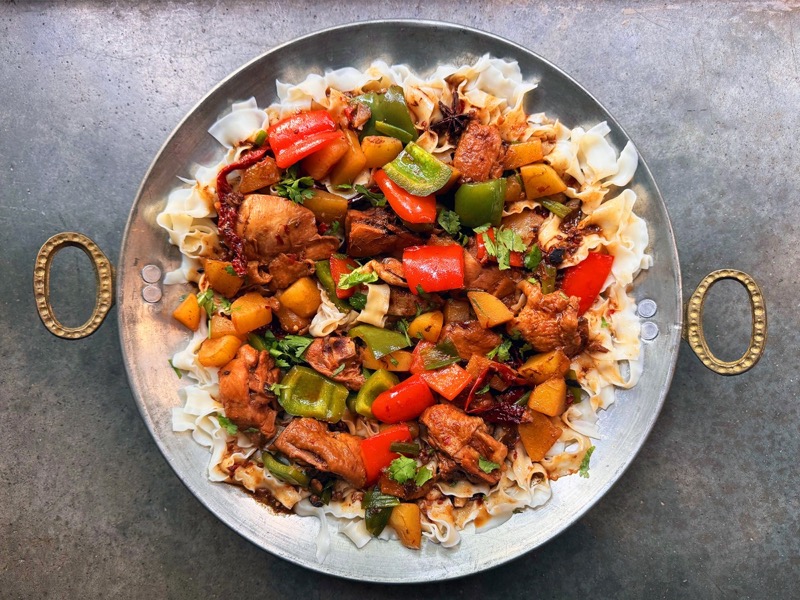
Dapanji (Big Plate Chicken): Xinjiang’s Most Famous One-Pot Wonder
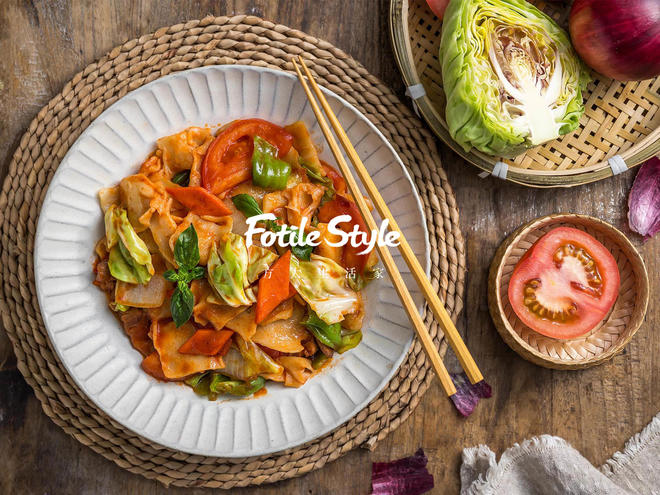
If there is one dish that defines modern Xinjiang cuisine — a dish so beloved it has spawned countless restaurants across China and beyond — it is Dapanji (大盘鸡, literally “Big Plate Chicken”). Walk into any Xinjiang restaurant from Urumqi to Beijing, and you will find this glorious one-pot wonder on the menu: a massive iron plate piled high with braised chicken, potatoes, green bell peppers, and wide hand-pulled noodles, all swimming in a rich, spicy, cumin-scented sauce.
Last updated: July 15, 2026 · Written by Karl Huang, a Xinjiang travel specialist who has spent time across the region. Practical details are cross-checked against official tourism, transport, and border-regulation sources.
Dapanji is not just a meal. It is a communal experience. The plate is so large it often covers the entire table. Diners gather around, tearing off pieces of chicken, scooping up chunks of potato that have absorbed the sauce, and using the wide noodles (belt noodles, or pi dai mian) to mop up every last drop of the fragrant gravy. It is hearty, unpretentious, and deeply satisfying — everything that Xinjiang cuisine represents.
This guide covers everything about Dapanji: its surprisingly recent origin story, the traditional cooking method, regional variations across Xinjiang, and where travelers can find the most authentic versions of this iconic dish.
What Is Dapanji?
Dapanji (大盘鸡) translates literally as “big plate chicken.” The name says it all: a big plate, piled with chicken. But reduce it to those four words and you miss the magic entirely.
The dish consists of:
- Chicken — cut into large, bone-in pieces (traditionally free-range, corn-fed chicken)
- Potatoes — cut into thick chunks that break down slightly, thickening the sauce
- Green bell peppers — added near the end for crunch and color
- Wide hand-pulled noodles (皮带面, pi dai mian) — served separately or on top, to absorb the sauce
- The sauce — a complex blend of doubanjiang (fermented chili bean paste), soy sauce, cumin, star anise, dried chilies, garlic, and ginger
The result is a dish that sits at the intersection of Chinese stir-fry technique and Central Asian spice sensibility. It is spicy but not overwhelming, rich but not heavy, and deeply comforting.
The Surprising Origin Story
Unlike many Xinjiang dishes that trace back centuries, Dapanji is surprisingly young. Most food historians agree it was invented in the 1980s in Shawan County (沙湾县), near Urumqi.
The story goes: a Sichuan chef working in Shawan modified his hometown’s chicken dish by adding Xinjiang’s signature cumin and local ingredients. He served it on a big plate (大盘) to accommodate truck drivers who needed a hearty, filling meal. The dish was an instant hit. By the 1990s, Dapanji restaurants were popping up across Xinjiang. By the 2000s, it had spread to every major city in China.
Today, Shawan claims to be the birthplace of Dapanji, and the town has numerous “original Dapanji” restaurants that attract food pilgrims from across the region.
How Dapanji Is Made
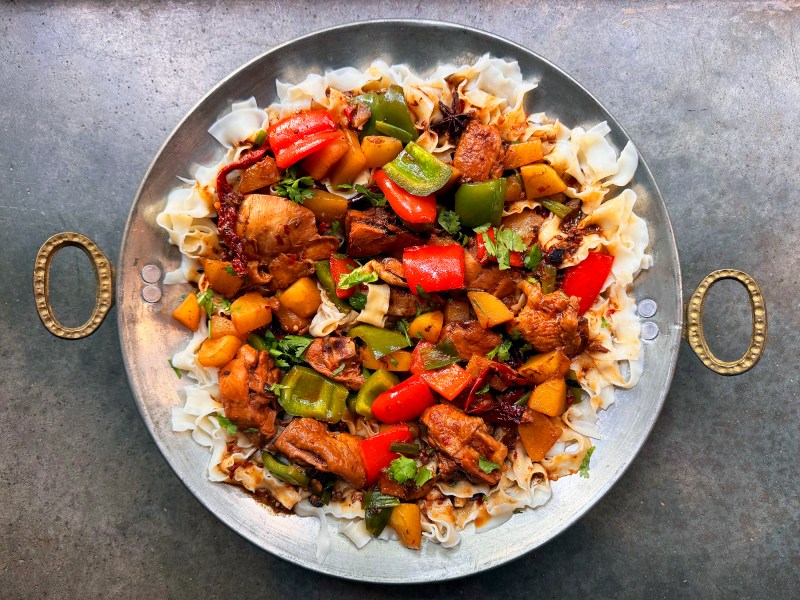
The traditional preparation of Dapanji follows a specific sequence:
1. Sear the Chicken
Chicken pieces are seared in hot oil with dried chilies and Sichuan peppercorns until the skin is golden and the fat has rendered.
2. Add the Aromatics
Garlic, ginger, star anise, and a generous amount of doubanjiang (fermented chili bean paste) are added. The chicken is stir-fried until coated in the red, fragrant paste.
3. Braise with Potatoes
Water or stock is added, along with thick chunks of potato. The dish is covered and simmered for 20-30 minutes. The potatoes break down slightly, releasing their starch and thickening the sauce.
4. Add Peppers and Noodles
Green bell peppers are added in the last 5 minutes for crunch. The wide hand-pulled noodles are either added on top to steam, or served on a separate plate for diners to add themselves.
5. Serve on a Big Plate
The entire contents are tipped onto a massive iron plate (or directly in the wok for casual eateries) and brought sizzling to the table.
Where to Eat the Best Dapanji in Xinjiang
Shawan County (沙湾县) — The Birthplace
If you want the “original” Dapanji, head to Shawan. Shawan Dapanji (沙湾大盘鸡) restaurants dot the town. Look for places that advertise “old recipe” (老配方) and use free-range chicken.
Urumqi — Easy Access
Urumqi has hundreds of Dapanji restaurants. Minzu Street (民族街) and the area around the Grand Bazaar have some of the best. Look for busy places filled with local families — that is always the best sign.
Kashgar
Kashgar’s version tends to be slightly spicier. The old city restaurants serve excellent Dapanji, often with a side of Xinjiang black beer.
Variations to Know
- Classic Dapanji — The original: chicken, potatoes, peppers, noodles
- Dapanji with Mushrooms — Some versions add Xinjiang’s wild mushrooms for extra umami
- Extra Spicy Dapanji — For those who like it hot, ask for “extra la” (超级辣)
- Vegetarian “Dapanji” — Some restaurants offer a version with tofu and mushrooms instead of chicken (rare, but worth asking)
How to Order Dapanji Like a Local
- Specify the size: “Xiao pan” (small plate, serves 1-2) or “Da pan” (big plate, serves 3-4)
- Ask for extra noodles: “Jia yi fen mian” (加一份面) — the noodles are the best part, and you will want more
- Spice level: “Wei la” (mildly spicy) or “Zhong la” (medium spicy) — the default is fairly spicy
- Pair with: Xinjiang black beer, Naan bread, or a simple cucumber salad to cut the richness
FAQ: Common Questions
Is Dapanji very spicy?
It has a kick, but it is not punishing. The spice builds gently. If you are sensitive to chili, ask for “bu la” (not spicy).
Can I get it without noodles?
Yes, but you would be missing the best part. The noodles absorb the sauce and become infused with flavor. If you must skip them, ask for “bu yao mian” (don’t want noodles).
Is it safe to eat?
Absolutely. The chicken is thoroughly cooked in the braise. Just be careful — the plate arrives sizzling hot.
How much does it cost?
A small plate (serves 1-2) costs ¥40-60. A large plate (serves 3-4) costs ¥80-120. It is excellent value for money.
What actually matters
Dapanji is more than just Xinjiang’s most famous dish — it is a window into the region’s culinary soul. Hearty, unpretentious, and deeply flavorful, it embodies the spirit of Xinjiang: a place where cultures meet, where hospitality is measured in the size of the plate, and where a simple dish of chicken and noodles can bring people together like nothing else.
When you visit Xinjiang, do not leave without trying Dapanji. And when you do, make sure you order extra noodles. You will thank yourself later.