
Altitude Sickness on the Pamir Plateau: What to Know Before You Go

The Pamir Plateau: Beautiful, Remote, and Very High

The first time I drove the Karakoram Highway from Kashgar toward Tashkurgan, I was mesmerized by the landscape. The road climbs gradually, winding through red rock canyons and past glacial rivers, with the snow-capped Pamir peaks looming ahead. At the time, I wasn’t thinking about altitude. I was too busy taking photos and marveling at the fact that I was driving on one of the highest paved roads in the world.

Then, about three hours in, I started to get a headache. Not a bad one — more like a dull pressure behind my eyes. I ignored it. By the time we reached Tashkurgan (塔什库尔干) at 3,100 meters (10,171 feet), I felt fine. I slept well that night, woke up refreshed, and spent two days exploring the area without any issues.

I thought I was immune to altitude sickness.

Two years later, I returned to the Pamir Plateau. This time, I barely made it past the first night in Tashkurgan. The headache was blinding, I couldn’t keep food down, and I barely slept for 48 hours. I ended up cutting my trip short and descending back to Kashgar, where the symptoms vanished within hours.

The point of this story? Altitude sickness doesn’t care who you are, how fit you are, or whether you’ve been high before. It can hit you on your first trip or your fifth. This guide is what I wish I had read before that second trip.

{IMG1}

Understanding the Altitude on the Pamir Plateau

Let’s start with the numbers, because they matter:

  • Kashgar: 1,280 meters (4,199 feet) — no altitude issues here
  • Upal Town (first major stop on the KKH): 2,050 meters (6,726 feet)
  • Gez Darya (checkpoint area): 2,650 meters (8,694 feet)
  • Tashkurgan Town: 3,100 meters (10,171 feet)
  • Karakul Lake: 3,600 meters (11,811 feet)
  • Khunjerab Pass (China-Pakistan border): 4,693 meters (15,397 feet)

For context: most people start feeling the effects of altitude at around 2,500 meters (8,200 feet). By 3,500 meters, about 75% of people will experience some symptoms. And at 4,500 meters and above, everyone is affected — it’s just a question of how badly.

The Pamir Plateau is often called the “Roof of the World” (along with the Tibetan Plateau). It’s a high-altitude desert, which means two things: the air is dry, and the temperature drops sharply at night. Both of these factors can make altitude sickness worse.

Symptoms: What Does Altitude Sickness Feel Like?

Altitude sickness (medically known as acute mountain sickness, or AMS) is caused by the reduced air pressure and lower oxygen levels at high elevation. Your body can adjust — that’s called acclimatization — but it takes time. If you climb too fast, your body can’t keep up.

Mild Symptoms (HAPE not yet present)

  • Headache: This is the most common symptom. It’s usually a dull, persistent ache, not a sharp pain. For me, it feels like a tight band around my forehead.
  • Nausea or loss of appetite: You might not feel like eating, or you might feel queasy after a meal. On my second trip, I couldn’t look at food for two days.
  • Fatigue: You feel unusually tired, even if you haven’t done much. Simple tasks — like walking up a flight of stairs — leave you breathless.
  • Dizziness: Not spinning-dizzy, but more like a lightheaded feeling. You might feel unsteady on your feet.
  • Insomnia: Many people find it hard to sleep at altitude. You might wake up frequently or feel like you’re not getting deep sleep. This is partly because your breathing pattern changes at night.
  • Shortness of breath: Even at rest, you might feel like you can’t get a full breath. This is normal to some extent, but if it’s severe, it could be a sign of something more serious (see below).

Severe Symptoms (Seek Medical Help Immediately)

  • High Altitude Pulmonary Edema (HAPE): Fluid accumulates in the lungs. Symptoms include extreme shortness of breath (even at rest), a wet cough (possibly with pink frothy sputum), chest tightness, and bluish skin color (cyanosis).
  • High Altitude Cerebral Edema (HACE): Fluid accumulates in the brain. Symptoms include severe headache that doesn’t respond to painkillers, confusion, difficulty walking (ataxia — you might feel drunk), and loss of consciousness.

Both HAPE and HACE are medical emergencies. If you or someone you’re traveling with shows these symptoms, descend immediately. Don’t wait. Every hour matters.

Prevention: How to Prepare for the Pamir Plateau

1. Don’t Ascend Too Quickly

The golden rule of altitude is: climb high, sleep low. Your body needs time to adjust to each new elevation. The general recommendation is not to increase your sleeping elevation by more than 500 meters (1,640 feet) per day once you’re above 3,000 meters.

For the Pamir Plateau, the ideal itinerary would be:

  • Day 1: Kashgar (1,280m) to Upal (2,050m) — sleep there or continue to Gez Darya (2,650m)
  • Day 2: Gez Darya to Tashkurgan (3,100m)
  • Day 3: Rest day in Tashkurgan to acclimatize before going higher

In reality, most people drive from Kashgar to Tashkurgan in one day (about 6-8 hours). That’s a direct climb of 1,820 meters in a single day, which is faster than recommended. It’s doable — I did it twice — but it increases your risk of altitude sickness.

2. Consider Acclimatizing in Urumqi First

Some travelers ask: “Should I spend a few days in Lhasa (Tibet) to acclimatize before coming to Xinjiang?” The answer is no — Lhasa is 3,656 meters, which is actually higher than Tashkurgan. Going to Lhasa first could actually make things worse.

A better strategy is to spend 1-2 days in Urumqi (800-900 meters in most parts) or even better, in a city at moderate altitude like Turpan (low, actually — it’s in a depression) or Yining (about 800 meters). The idea is to rest and hydrate before heading to the plateau.

If you have the time, spending a night in Upal or Gez Darya (at 2,000-2,600 meters) before continuing to Tashkurgan can make a big difference.

3. Medication: What to Take and What to Avoid

There’s no magic pill that prevents altitude sickness, but some medications can help with symptoms or reduce your risk.

  • Acetazolamide (Diamox): This is the most commonly prescribed medication for altitude sickness prevention. It works by increasing your breathing rate, which helps you take in more oxygen. You typically start taking it 1-2 days before ascent. Important: You need a prescription for this in most countries, including China. Talk to your doctor before your trip.
  • Ibuprofen or paracetamol: For headaches. These won’t prevent altitude sickness, but they can make the symptoms more manageable.
  • Anti-nausea medication: If you’re prone to nausea, bring something like dimenhydrinate (Dramamine) or ginger tablets.
  • Red ginseng or Rhodiola (红景天): This is a traditional Chinese herbal supplement that some people swear by. The scientific evidence is mixed, but it’s widely available in China and unlikely to cause harm. I took it on my first trip and had no altitude issues — but that could be coincidence.

What NOT to take: Sleeping pills. They suppress your breathing, which is the opposite of what you want at altitude. Also, avoid alcohol for the first 48 hours at altitude — it dehydrates you and worsens symptoms.

4. Hydrate, Hydrate, Hydrate

The air on the Pamir Plateau is extremely dry. You’ll lose moisture just by breathing. Drink at least 3-4 liters of water per day. A good rule of thumb: if your urine is dark yellow, you’re not drinking enough.

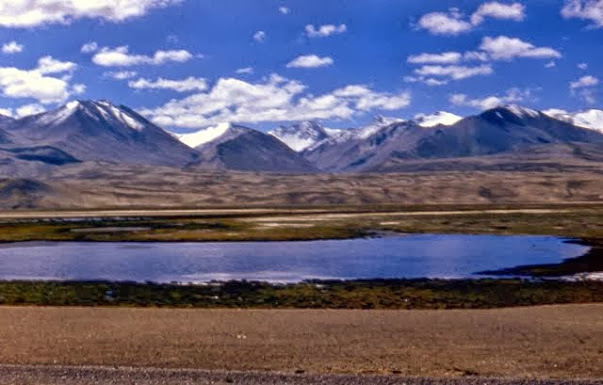
Karakul Lake on Pamir Plateau

What to Do If You Get Altitude Sickness

Mild Symptoms

If you have a headache, mild nausea, or fatigue:

  • Don’t go higher. If you’re in Tashkurgan and feeling unwell, don’t drive up to Khunjerab Pass. Stay at your current elevation or, better yet, descend.
  • Rest. Take it easy for a day. Don’t try to “push through.” I made that mistake on my second trip — I thought the headache would go away if I just kept moving. It didn’t.
  • Drink water. And then drink some more.
  • Take pain medication. Ibuprofen or paracetamol can help with the headache.
  • Sleep with your head elevated. If you’re in a hotel, prop up the pillows. Some people find that using two pillows helps them breathe more easily at night.

Severe Symptoms

If you or someone you’re with shows signs of HAPE or HACE:

  • Descend immediately. Even a descent of 500-1,000 meters can make a huge difference. In the case of HAPE/HACE, every minute counts.
  • Give supplemental oxygen if available. Some hotels in Tashkurgan have oxygen concentrators. Use them.
  • Seek medical help. Tashkurgan has a small hospital. It’s basic, but they can stabilize you and arrange evacuation if needed. In severe cases, you may need to be evacuated to Kashgar, which has better medical facilities.

Medical Facilities on the Pamir Plateau

Let’s be honest: medical care on the Pamir Plateau is limited. Here’s what’s available:

  • Tashkurgan County Hospital (塔什库尔干县人民医院): A small hospital with basic facilities. They can treat mild altitude sickness and stabilize severe cases, but they don’t have a hyperbaric chamber or advanced life support.
  • Kashgar Prefecture People’s Hospital (喀什地区第一人民医院): This is a proper hospital with an ICU, hyperbaric oxygen chamber, and experienced doctors. If you have severe altitude sickness, this is where you want to be. It’s about 6-8 hours from Tashkurgan by car.
  • Oxygen bars in Tashkurgan: Yes, these are a thing. For about 50-100 yuan, you can sit in a room with supplemental oxygen for an hour. It’s not a medical treatment, but it can provide temporary relief from mild symptoms.

If you have a serious medical condition (heart disease, lung disease, etc.), talk to your doctor before traveling to the Pamir Plateau. You may need a medical clearance.

My Personal Experience: Why the Second Trip Was Worse

I’ve been trying to figure out why I got altitude sickness on my second trip but not my first. I’m not a doctor, but here are a few theories:

  • I was dehydrated. On the second trip, I had spent two days in Kashgar eating salty food and not drinking enough water. By the time I reached Tashkurgan, I was already mildly dehydrated, which made altitude sickness worse.
  • I had a mild cold. I didn’t think much of it at the time, but I had a stuffy nose and a slight cough before leaving Kashgar. Respiratory infections can increase your risk of altitude sickness.
  • I didn’t sleep well the night before. I was up late packing and worrying about logistics. Sleep deprivation weakens your body’s ability to acclimatize.
  • Genetics? Some people are just more susceptible to altitude sickness, and it can vary from trip to trip. There’s research suggesting that your genetic makeup plays a role, but it’s not something you can predict or control.

The takeaway: don’t get overconfident. Just because you didn’t get altitude sickness last time doesn’t mean you won’t get it this time. Take precautions every time.

Packing List: Health and Altitude

Here’s what I now pack for every trip to the Pamir Plateau:

  • Ibuprofen or paracetamol (at least 10 tablets)
  • Anti-nausea medication (ginger tablets or dimenhydrinate)
  • Rhodiola supplement (started 3 days before travel)
  • Thermal layers (nights get cold at 3,100m)
  • Lip balm and moisturizer (the air is dry)
  • Rehydration salts (in case of vomiting/diarrhea)
  • Portable oxygen canister (available in Kashgar — not a substitute for medical care, but can provide temporary relief)

High altitude lake in Xinjiang

Related Articles

FAQ: Altitude Sickness on the Pamir Plateau

Can children travel to Tashkurgan?

Yes, but with caution. Children are more susceptible to altitude sickness because they may not be able to communicate their symptoms clearly. If you’re traveling with kids, ascend slowly, watch for signs of altitude sickness (irritability, loss of appetite, vomiting), and be prepared to descend if needed. The general consensus among pediatricians is that healthy children can travel to altitudes up to 3,500 meters without major issues, but every child is different.

Is it safe for elderly travelers?

It depends on the individual’s health. If the person is generally healthy, with no heart or lung conditions, traveling to Tashkurgan (3,100m) is usually fine. But I would not recommend going higher (to Khunjerab Pass or Karakul Lake) for anyone over 65 without consulting a doctor. Also, make sure you have travel insurance that covers medical evacuation.

Can I fly from Kashgar to Tashkurgan to reduce altitude risk?

There is no commercial airport in Tashkurgan (as of 2026). The only way to get there is by road. There’s a small airstrip that’s used for emergency and military flights, but it’s not open to civilians. So you’ll have to drive — which, ironically, is better for acclimatization because you ascend gradually rather than jumping straight to 3,100 meters.

How long does it take to acclimatize to 3,100 meters?

Most people need 1-3 days to acclimatize to an elevation of 3,000-3,500 meters. During that time, you should avoid strenuous activity, stay hydrated, and get plenty of rest. If after 3 days you still feel terrible, you may need to descend. Some people simply don’t acclimatize well, no matter how long they wait.

Are there any long-term effects of altitude sickness?

For most people, altitude sickness resolves completely once they descend to a lower elevation. There are no known long-term effects from a single episode of mild to moderate altitude sickness. However, severe altitude sickness (HAPE or HACE) can cause permanent damage if not treated promptly. This is why it’s so important to recognize the symptoms and descend immediately if they appear.

Can I exercise at altitude?

Light exercise is fine once you’re acclimatized, but avoid strenuous activity for the first 24-48 hours. I made the mistake of going for a run in Tashkurgan on my second trip — bad idea. I was breathless within minutes and felt awful for the rest of the day. Save the hiking and running for lower elevations, or wait until you’ve been at altitude for a few days.

类似文章

发表回复

您的邮箱地址不会被公开。 必填项已用 * 标注