Stargazing in Xinjiang: The Best Dark Sky Spots on the Silk Road
Last updated: July 15, 2026 · Written by Karl Huang, a Xinjiang travel specialist who has spent time across the region. Practical details are cross-checked against official tourism, transport, and border-regulation sources.
Why Xinjiang is a Stargazer’s Paradise
Imagine standing on the ancient Silk Road, looking up to see the Milky Way stretching across the sky in brilliant detail – a sight that has inspired travelers for thousands of years. Xinjiang, with its vast uninhabited areas and minimal light pollution, offers some of the best stargazing opportunities on Earth. Far from the fluorescent glow of modern cities, the night sky here reveals its true splendor, with millions of stars visible to the naked eye on clear nights.
The combination of high altitude, dry climate, and remote location makes Xinjiang a dream destination for astronomy enthusiasts and photographers alike. Whether you’re a seasoned astrophotographer or simply someone who appreciates the beauty of a star-filled sky, Xinjiang’s dark sky spots will leave you in awe. In this guide, we’ll explore the best places to stargaze in Xinjiang, share practical tips for your observation, and explain why the Silk Road region is truly a celestial wonderland.
What makes Xinjiang particularly special for stargazing is its incredible size – at 1.66 million square kilometers, it’s larger than many countries. This vast territory includes diverse landscapes: from the snow-capped Tian Shan mountains and the pristine alpine lakes to the endless Taklamakan Desert and the rugged Pamir Plateau. Each of these environments offers unique stargazing opportunities, with different celestial perspectives and photographic possibilities.

Top Dark Sky Spots in Xinjiang
1. Sayram Lake – The Alpine Star Mirror
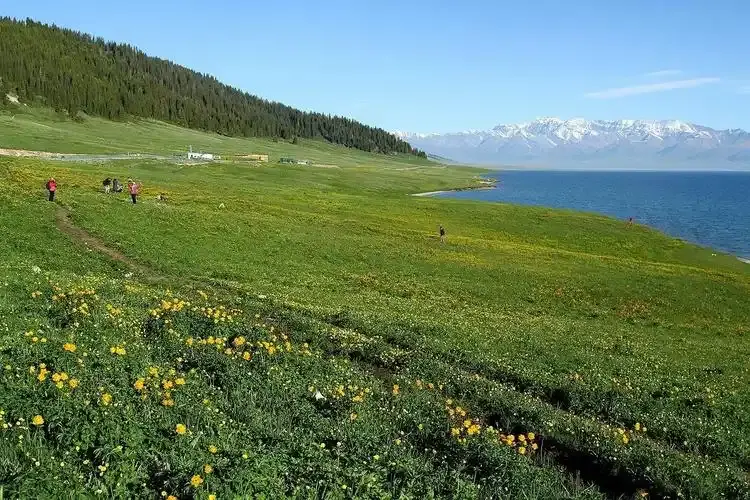
Sayram Lake, known as the “Last Tear of the Atlantic,” is not only stunning during the day but transforms into a magical stargazing spot at night. At an elevation of 2,071 meters, the lake’s pristine waters often create a perfect mirror reflection of the starry sky on calm nights. The surrounding mountains block light pollution from distant cities, creating an ideal dark sky environment.
The lake is situated in the Bortala Mongol Autonomous Prefecture, surrounded by snow-capped mountains that create a natural amphitheater for stargazing. On new moon nights, the Milky Way’s reflection on the lake creates a double galaxy effect – one in the sky and one in the water – that is absolutely breathtaking. Many photographers consider this the most beautiful stargazing scene in all of Xinjiang.
The best time to visit Sayram Lake for stargazing is during the new moon phase in summer (June to August) when the lake is accessible and the nights are comfortably cool. Check our detailed Sayram Lake travel guide for accommodation options near the lake, as staying overnight gives you the best chance to capture the Milky Way reflecting on the water’s surface.
Pro tip: The area around the lake has several designated camping spots. Arrive before sunset to secure a good location, and set up your camera equipment while there’s still twilight – this makes focusing much easier than in complete darkness.
2. Kanas Lake – Stars Above the Fairyland
Kanas Lake, often called “God’s Garden,” is a UNESCO World Heritage site that offers breathtaking night skies. The remote location in the Altai Mountains means virtually zero light pollution. On clear nights, the Milky Way arches directly over the emerald-green lake, creating a scene that looks almost supernatural.
The Kanas region is particularly special because of its unique geography. The lake sits in a deep valley surrounded by taiga forests (a type of boreal forest found in cold regions). These forests, combined with the lake’s still waters, create multiple reflection surfaces – you can see stars reflected in the lake, in small forest ponds, and even in the dew on leaves. It’s like stargazing in a crystal palace.
The Tuvan people, who have lived in this region for centuries, have their own star legends. According to local folklore, the Milky Way is the “Silver River” that connects the earth to the heavenly realm. Some Tuvan elders can still point out traditional navigation stars that their ancestors used for traveling through the forests at night.

Autumn (September to October) is the best season for stargazing at Kanas. The crisp air and low humidity provide exceptional visibility. The North Xinjiang loop itinerary often includes an overnight stay in Kanas village or Hemu village, giving you easy access to dark sky observation points just a short walk from your accommodation.
Hemu Village, in particular, is worth mentioning. This traditional Tuvan village has no street lights, making it one of the darkest inhabited places in Xinjiang. After 10 PM, when all the wooden houses go dark, the sky explodes with stars. It’s not uncommon to see shooting stars every few minutes on a good night.
3. The Pamir Plateau – Touching the Stars at 4,000 Meters
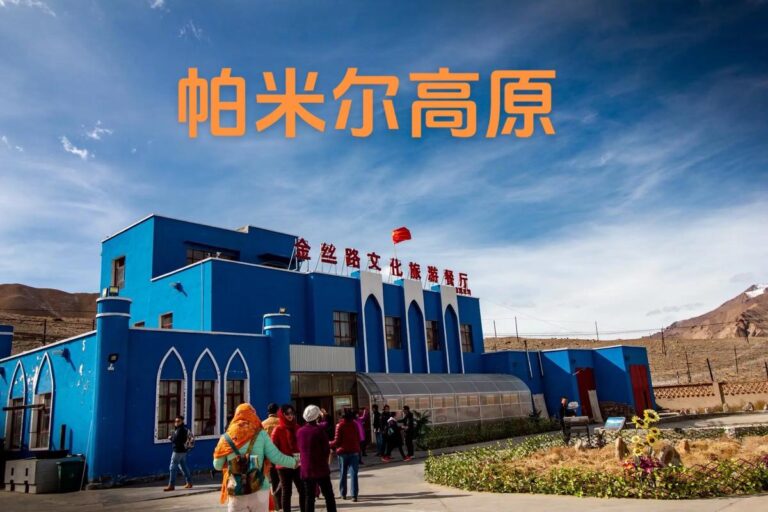
For the ultimate high-altitude stargazing experience, head to the Pamir Plateau. At elevations between 3,600 and 4,500 meters, you’ll feel like you’re literally touching the stars. The thin atmosphere at this altitude means less atmospheric distortion, resulting in incredibly sharp and bright stars.
Karakul Lake, situated at 3,600 meters on the Pamir Highway, is one of the most spectacular dark sky spots in Xinjiang. The lake’s reflection of the surrounding mountains (including Muztagh Ata, the “Father of Glaciers”) combined with a star-filled sky creates an otherworldly landscape that’s a photographer’s dream.

Note that stargazing at such high altitudes requires proper acclimatization. Spend at least a day at lower elevations before ascending to the Pamir Plateau to avoid altitude sickness. Also, bring extremely warm clothing as temperatures can drop below freezing even in summer nights.
Best Seasons and Timing for Stargazing
Timing is everything in stargazing. The same location can offer completely different experiences depending on the season, moon phase, and even the time of night. Here’s a detailed breakdown of what to expect throughout the year in Xinjiang.
Spring (April to May)
Spring offers clear skies and moderate temperatures, though occasional dust storms can affect visibility. The constellation Leo dominates the southern sky, and it’s a great time to spot planets like Jupiter and Saturn. Spring is also when the famous “Zodiacal Light” – a faint triangular glow extending up from the horizon – is most visible in the western sky after sunset.
One unique spring stargazing opportunity in Xinjiang is observing the Lyrid meteor shower (April 16-25, peaking around April 22). With up to 20 meteors per hour, this shower is best viewed from dark sky locations like the Gurbantünggüt Desert.
Summer (June to August)
Summer is the prime stargazing season in Xinjiang. The Milky Way’s bright core is visible in the southern sky after midnight. The warm nights make for comfortable observation sessions. However, this is also peak tourist season, so choose remote locations away from popular campsites.
Summer brings two major meteor showers: the Delta Aquariids (late July) and the Perseids (mid-August). The Perseids are particularly spectacular in Xinjiang’s dark skies, with up to 100 meteors per hour at peak. Imagine lying on a warm summer night in the Pamir Plateau, watching shooting stars streak across the Milky Way every few seconds – it’s an experience you’ll never forget.
Autumn (September to October)
Many consider autumn the best season for stargazing in Xinjiang. The air is exceptionally dry and clear after the summer rains. The constellations Andromeda and Cassiopeia are prominent, and it’s the best time to observe the Andromeda Galaxy (M31) with the naked eye. This is also when the Great Square of Pegasus dominates the eastern sky, serving as a gateway to deep-sky objects.
Autumn’s stable weather patterns mean fewer cloudy nights, giving you more opportunities for successful stargazing sessions. The harvest moon (the full moon closest to the autumn equinox) can be spectacularly large and orange when it rises over the Taklamakan Desert – a sight worth seeing even though the bright moon isn’t ideal for stargazing.
Winter (November to March)
While extremely cold, winter offers the clearest skies of the year. The constellation Orion dominates the night sky, and you can see more stars in a single night than during any other season. Just be prepared with serious winter gear – temperatures can drop to -30°C in some areas.
Winter stargazing has a special reward: the Geminid meteor shower in December. Despite the cold, this shower often produces bright, long-lasting meteors that are worth braving the elements for. Also, winter nights are longer, giving you more hours of darkness to observe the stars.
Practical Stargazing Tips
Equipment to Bring
- Red flashlight or headlamp: Red light preserves your night vision while allowing you to see your surroundings and equipment.
- Star chart or astronomy app: Apps like Star Walk or SkySafari help you identify constellations and planets in real-time.
- Binoculars: A pair of 7×50 or 10×50 binoculars reveals craters on the moon, Jupiter’s moons, and dozens of deep-sky objects.
- Warm clothing: Even in summer, desert and mountain nights get cold. Dress in layers and bring extra blankets.
- Thermos with hot drink: A warm beverage makes long observation sessions much more enjoyable.
Astrophotography Basics
If you want to capture the night sky, here are the basic camera settings:
- Manual mode: You need full control over exposure settings.
- Wide-angle lens: 14-24mm lenses capture more sky and allow longer exposures.
- Fast aperture: f/2.8 or wider lets in more light.
- High ISO: Start with ISO 3200 and adjust based on results.
- Long exposure: 15-30 seconds for stars, depending on focal length (use the 500 rule: 500 ÷ focal length = max exposure time).
- Manual focus: Set focus to infinity and fine-tune on a bright star.
- Sturdy tripod: Essential for sharp long-exposure images.
For those new to astrophotography, our photography guide provides detailed camera settings and composition tips for capturing Xinjiang’s night skies.
Dark Sky Preservation in Xinjiang
Unlike many popular tourist destinations worldwide, Xinjiang’s remote regions still enjoy relatively pristine night skies. However, with increasing tourism and development, this precious resource needs protection. As visitors, we can help preserve Xinjiang’s dark skies by:
- Using red lights instead of white lights at night
- Avoiding unnecessary outdoor lighting at campsites
- Supporting eco-friendly accommodations that use proper dark-sky lighting
- Educating fellow travelers about light pollution
Some areas in Xinjiang, like the Koktokay UNESCO Global Geopark, are already implementing dark sky-friendly policies. By choosing these responsible tourism options, you help ensure that future generations can also experience the magic of Xinjiang’s starry nights.
Combining Stargazing with Your Silk Road Adventure
The beauty of stargazing in Xinjiang is that it naturally fits into any Silk Road itinerary. After a day of exploring ancient cities, Buddhist caves, or Silk Road ruins, the night sky offers a different perspective on this historic region. Imagine standing near the ruins of Jiaohe Ancient City, looking up at the same stars that guided Silk Road traders a thousand years ago – it’s a profoundly moving experience that connects you to history in a unique way.
Our 14-Day Grand Xinjiang Tour is specifically designed to include overnight stays at prime stargazing locations, giving you the opportunity to experience both the cultural treasures and natural wonders of Xinjiang, including its spectacular night skies.
Conclusion: A Celestial Journey on the Silk Road
Stargazing in Xinjiang is more than just looking at stars – it’s about connecting with the universe in one of the few places left on Earth where the night sky remains truly wild and untamed. Whether you’re watching the Milky Way reflect on Sayram Lake, photographing the galaxy above Kanas’s fairy-tale landscape, or simply lying on the Pamir Plateau grass counting shooting stars, these moments will stay with you long after you’ve returned home.
As light pollution continues to spread across the globe, Xinjiang’s dark skies become increasingly precious. Plan your stargazing adventure now, and discover why the Silk Road region is truly one of the best places on Earth to explore the cosmos. Don’t forget to check our month-by-month weather guide to choose the optimal time for your celestial Silk Road journey.
Clear skies and happy stargazing!
- When is the best time to visit?
The best time to visit Xinjiang is from May to October, with July and August being the peak season.
- Do I need a permit to visit this area?
Most tourist areas in Xinjiang do not require special permits. Check specific destination requirements before traveling.
- How do I get to this destination?
You can reach most destinations by flight to major cities like Urumqi, then by car, bus, or train.
- What should I pack for my trip?
Pack layers for temperature changes, sun protection, comfortable shoes, and any personal medications.