Xinjiang Fruits: A Seasonal Guide to What’s Fresh When
If you have ever stood in a Xinjiang market in high summer, you already know: the fruit here is not just good — it is frankly ridiculous. The combination of long daily sunshine (up to 16 hours in summer), dramatic day-night temperature swings, and mineral-rich glacier-fed irrigation makes Xinjiang one of the most naturally gifted fruit-growing regions on Earth. The melons are sweeter, the grapes more perfumed, the apricots more intently flavored than almost anywhere else on the continent.
Last updated: July 15, 2026 · Written by Karl Huang, a Xinjiang travel specialist who has spent time across the region. Practical details are cross-checked against official tourism, transport, and border-regulation sources.
This guide covers the iconic fruits that put Xinjiang on the map: Hami melons, Turpan grapes, Korla pears, Xinjiang apricots, and more. You will learn why Xinjiang fruit is so sweet, the best months to visit for each fruit, where to buy the best produce, and how to transport it home as a souvenir.
Why Is Xinjiang Fruit So Good?
To understand Xinjiang fruit, you have to understand its growing conditions — which are, frankly, a fruit-grower’s dream scenario:
- Sunshine: Many parts of Xinjiang get 2,500–3,500 hours of sunshine per year. Fruit gets more time under direct sun than almost anywhere else in China.
- Day-night temperature swing: In summer, daytime temperatures can hit 35–40°C (95–104°F), but nights often drop to 15–20°C (59–68°F). This extreme swing lets fruit develop intense sugars during the hot day and preserve acidity and aroma at night.
- Glacier-fed irrigation: The Tianshan and Altai mountains feed vast networks of meltwater canals. This clean, mineral-rich water nourishes orchards without the need for heavy chemical intervention.
- Dry climate: Low humidity means fewer fungal diseases, which means less need for pesticides. It also means grapes and apricots can be dried naturally in the sun — the origin of Xinjiang’s world-famous raisins and dried apricots.
The result of all this is fruit with Brix levels (a measure of sugar content) that routinely exceed 18–20% — sweet enough to taste almost candied, yet still balanced by the natural acidity preserved by those cool nights.
Hami Melon (哈密瓜): The King of Xinjiang Fruit
If Xinjiang had to choose one fruit to represent it, the Hami melon (哈密瓜) would win by a landslide. It is so famous within China that the phrase “Hami gua” is practically synonymous with “the good stuff” on melons.
What It Tastes Like
Hami melons have crisp, pale green flesh (some varieties have orange flesh) that is intensely sweet, faintly floral, and deeply refreshing. The texture is crisp like an Asian pear but juicier. A perfectly ripe Hami melon has a thin, netted rind and flesh that shatters like a sweet, cold fruit ice when you bite into it.
Best Season
Hami melons are at their peak from July through September. The earliest melons hit the markets in southern Xinjiang (Hotan, Kashgar) in late June; the latest harvest stretches into early October in the Hami region itself (eastern Xinjiang).
Where to Eat the Best
The city of Hami (from which the melon gets its name) produces the most famous ones, but you do not have to travel there. Every fruit market in Urumqi, Kashgar, and Turpan sells excellent Hami melons from July onward. In Urumqi, the Chengguan (城北) wholesale fruit market is where locals go for the best selection and prices.
Turpan Grapes (吐鲁番葡萄): China’s Raisin Capital
The Turpan Depression (吐鲁番盆地) is one of the hottest, driest places in China — and exactly the right environment for growing grapes. Turpan produces more than half of all the grapes grown in Xinjiang, and its raisins are exported across China and beyond.
Varieties You Need to Know
- Wusuan (无核白): Seedless white grapes — the classic Turpan grape. Sweet, crisp, and the primary grape used for raisin production.
- Hongti (红提): Red globe grapes — large, crunchy, intensely sweet. Available from August onward.
- Munaq (木纳格): A local dark grape with thick skin and rich, wine-like flavor. Grown more in the Aksu region but widely available in Turpan markets.
- Black grapes (黑葡萄): Small, intense, almost like eating a grape-flavored caramel.
The Raisin Drying Houses
One of the most distinctive sights around Turpan is the grape-drying houses (荫房) — small mud-brick structures with slatted walls that allow hot, dry air to circulate around hanging clusters of grapes. Over 15 to 30 days, the grapes shrivel into raisins without ever rotting — a process made possible by Turpan’s arid climate. Visiting a working raisin house is a fantastic photo opportunity and a glimpse into an ancient food-preservation technique.
Best Season
Fresh grapes: August to October. Raisins are available year-round, but the fresh harvest is at its peak in late August and early September.
Korla Pears (库尔勒香梨): The Fragrant Pear of the Tarim Basin
The Korla pear (库尔勒香梨) is a variety you will not easily find outside Xinjiang, which is a tragedy because it might be the best pear grown in China. Small, golden-skinned, with intensely perfumed, melting flesh, it is nothing like the crunchy, watery pears common in supermarkets.
What Makes It Special
Korla pears are small — about the size of a large apricot — with thin, golden-yellow skin that sometimes flushes pink on the sunny side. The flesh is buttery and melting, almost like a perfectly ripe avocado in texture but sweet and perfumed like a pear. The “fragrance” (香) in the name refers to the intense floral aroma that fills the air when you bite in.
Best Season
Late August through September. The pears are harvested once they reach full sugar and aroma, and they are highly perishable — eat them within a few days of buying for the best experience.
Where to Get Them
Korla city is the undisputed capital of this pear. If you are passing through, buy them at the roadside stalls just outside the city. In Urumqi, they appear in high-end fruit shops from late August; expect to pay 15–30 RMB per kilo for premium grades.
Xinjiang Apricots (杏子): The Grandfather of Central Asian Fruit
Apricots originated in Central Asia, and Xinpiong — particularly the Tarim Basin and the southern foothills of the Tianshan — is one of the places where they have been grown longest. The local varieties are smaller than the large, pale apricots you see in Western supermarkets, but they are far more flavorful.
Key Varieties
- Kuqa apricot (库车杏): From Kuqa (库车) in southern Xinjiang. Small, golden-orange, intensely sweet with a slight tang. In season (June–July), they are sold by the bucket along highways.
- _parameter (白杏): A pale yellow variety that is mildery sweet and incredibly juicy. Best eaten fresh, standing over the sink.
- Dried apricot (杏干): Xinjiang’s dried apricots are legendary — dark orange, chewy, and sweet enough to pass for candy. They are sold everywhere as a trail snack.
Best Season
June to July for fresh apricots. Dried apricots are available year-round and make excellent souvenirs.
Other Xinjiang Fruits Worth Seeking Out
Xinjiang Dates (大枣)
Hetian (Hotan) dates are among the most famous in China. Large, dark, and intensely sweet, they are eaten as snacks, used in Xinjiang food, and brewed into teas. The Hotan region produces several varieties; the best are harvested in September to October.
Xinjiang Pomegranates (石榴)
Yecheng (叶城) pomegranates are famous across China for their deep red arils and intense, wine-like juice. They are in season from September to November. If you are near Yecheng or Hotan in autumn, do not miss them.
Xinjiang Apples (苹果)
Aksu “sugar-heart” apples (阿克苏糖心苹果) are a relatively recent phenomenon that has taken China by storm. The apples develop a translucent, sugar-filled core that gives them an almost honey-like sweetness. They are harvested in late October to November and are best eaten fresh.
Xinjiang Watermelon and Hami Melon (西瓜)
While Hami melons get the fame, Xinjiang watermelons are also exceptional — sweet, crisp, and huge. In summer, you will see melon and watermelon stalls every few hundred meters along Xinjiang’s highways. A wedge of ice-cold watermelon on a 40°C day in Turpan is one of life’s great simple pleasures.
A Xinjiang Fruit Calendar: What to Eat and When
| Month | Fruits in Season | Best Place to Enjoy |
|---|---|---|
| May–June | Strawberries, cherries | Urumqi markets |
| June–July | Apricots, cherries, early melons | Kuqa, Kashgar |
| July–September | Hami melon, watermelon | Hami, Urumqi, everywhere |
| August–October | Grapes (all varieties) | Turpan — visit the vineyards |
| August–September | Korla pears | Korla, Urumqi high-end shops |
| September–October | Dates, pomegranates, apples | Hotan, Yecheng, Aksu |
| November | Sugar-heart apples | Aksu orchards |
Where to Buy the Best Fruit in Xinjiang
Urumqi: The Fruit Capital
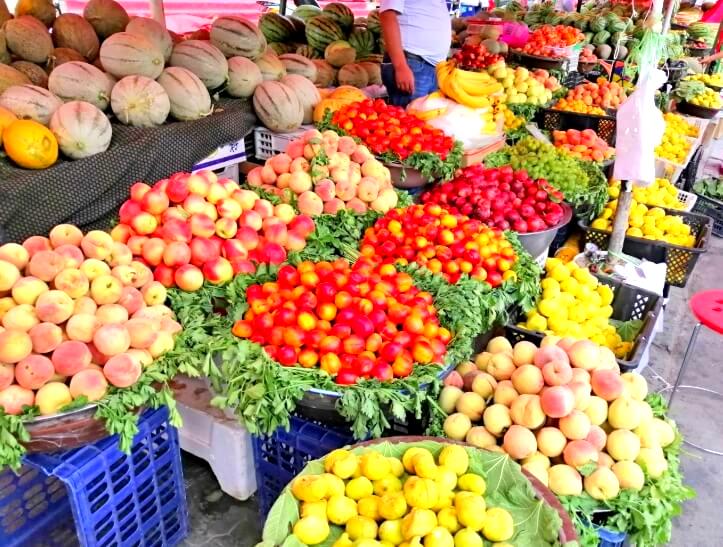
Chengguan Wholesale Fruit Market (城北果蔬批发市场) is the largest fruit market in Urumqi. Go in the morning (8–11 AM) for the best selection. You can taste before you buy — vendors expect it. Hongshan (红山) fruit market is smaller but more tourist-friendly, with better packaging for shipping.
Turpan: Grape Central
The Grape Valley (葡萄沟) area near Turpan is both a tourist site and a working grape-growing region. You can walk through the vineyards, taste grapes straight off the vine, and buy raisins directly from the producers. It is touristy but genuinely worth it if you time it during harvest (August–September).
Kashgar: Southern Flavor
Kashgar Old City morning market is where you will find the best apricots, melons, and peaches from southern Xinjiang. The atmosphere is lively and the prices are a fraction of what you would pay in Urumqi. Go before 9 AM for the best selection.
On the Highway: The Best Fruit Is Roadside
One of the great joys of traveling in Xinjiang is buying fruit from roadside stalls. Along the G30 highway (Lianyungang–Khorgos) and the desert highways in southern Xinjiang, local farmers set up impromptu stalls selling whatever is in season. The fruit is often harvested that morning, the prices are incredibly low (5–10 RMB for a huge bag of apricots), and the experience of eating fruit that was on the tree an hour ago is unmatched.
How to Transport Xinjiang Fruit Home
Xinjiang fruit is so good that you wil want to take it home. Here is how:
- Domestic China: Fruit can be shipped via SF Express (顺丰) within 24–48 hours to most Chinese cities. Cost is reasonable (about 20–40 RMB per 5kg box). Ask your hotel to arrange it.
- International: Most countries have restrictions on fresh fruit imports. Your best bet is to buy dried fruit (raisins, dried apricots, dried dates) which are usually allowed. Vacum-packed dried fruit is widely available in Urumqi supermarkets.
- Carry-on: Hard fruits (apples, pears) can be carried in checked luggage. Soft fruits (grapes, apricots) will not survive. Eat those while you can.
Practical Tips for Fruit Lovers
Wash before eating. Even if the vendor says it is clean, give it a rinse. Tap water in Xinjiang is safe for washing fruit in cities; in rural areas, use bottled water.
Negotiate politely. Fruit markets are friendly places. Vendors will often throw in an extra piece of fruit “for the road” if you are friendly. Weighing is almost always done on electronic scales — watch the number.
Season matters. Eating a Hami melon in May (cold-storage) is a pale shadow of eating one in August (fresh-harvested). If fruit is your priority, plan your trip for July to October.
Allergies. If you have pollen/fruit cross-allergies (oral allergy syndrome), be cautious with apricots and peaches, which have higher pollen-like proteins. Xinjiang’s intense sun also means higher natural pesticide residue — wash throroughly.
Why Xinjiang Fruit Deserves a Chapter in Your Travel Story
You might come to Xinjiang for the mountains, thehistory, the Silk Road. But ask anyone who has spent time here, and they will tell you: some of their most vivid memories are standing by the side of a desert highway eating a sun-warm apricot, or biting into a Hami melon that was harvested that morning, or sitting in a Turpan grape arbor with juice running down their chin.
Xinjiang fruit is not just a snack. It is a direct expression of the land itself — the fierce sun, the cold nights, the clean mountain water, the patience of generations of growers. When you eat a Korla pear or a Turpan grape, you are tasting the terroir of the Silk Road in a way that no museum or monument can quite convey.
So build fruit into your itinerary. Visit a morning market. Stop at a roadside stall. Walk into a Turpan vineyard. Let the sweetness of this land be part of what you remember when you get home. It might just be the most delicious souvenir you bring back.
Is Xinjiang safe to visit?
Yes, Xinjiang is considered very safe for tourists with strong security presence throughout the region.
Do I need a visa?
Foreigners need a valid Chinese visa. No separate Xinjiang permit needed for most tourist areas.
What currency should I bring?
Chinese Yuan (RMB). Credit cards accepted in hotels; carry cash for markets and rural areas.
Can I find English-speaking guides?
Available in major tourist areas through hotels or travel agencies. Book in advance for best results.