2026 Official Guidelines for Foreigners Self-Driving in Xinjiang
Xinjiang, a vast and magnificent land, is the ultimate dream destination for self-driving travelers. From the secluded fairyland of Kanas Lake and snow-capped peaks of the Pamir Plateau, to the quiet desert highways across the Taklamakan Desert and gorgeous blooming flower valleys in the Ili River Valley, every stretch of road is filled with breathtaking scenery and pleasant surprises.
Last updated: July 15, 2026 · Written by Karl Huang, a Xinjiang travel specialist who has spent time across the region. Practical details are cross-checked against official tourism, transport, and border-regulation sources.
To travel freely across this land that occupies one-sixth of China’s territory, international travelers must fully understand and strictly abide by all official regulations for foreign self-driving trips in Xinjiang. Serving as your authoritative travel reference, this guide elaborates in detail all mandatory legal rules, administrative procedures and route restrictions for 2026, and sorts out the most stunning self-driving routes. It ensures your wonderful road trip across Western China is fully compliant with laws and full of endless joy.
Part 1 Core Regulations: Full Interpretation of Rules for Foreign Self-Driving Visitors
Meeting all legal and administrative requirements is the first step to start a smooth self-driving tour in Xinjiang, which guarantees a safe and straightforward journey. Please confirm every requirement one by one before departure.
1. Legal Driving Qualifications: Licenses & Required Documents
This is the most fundamental and essential rule. In accordance with China’s Road Traffic Safety Law, foreigners driving motor vehicles within Chinese territory must hold all the following valid documents:
- Original valid domestic driving license from your home country; ensure your passport remains valid throughout your travel period.
- Officially certified Chinese translation of driving license: The most recognized and reliable way is to apply for a notarized Chinese translation certificate at a local notary public office in China. Note that International Driving Permits (IDP) or ordinary translated documents issued by some overseas car rental platforms may not be recognized by local car rental agencies or traffic checkpoints in Xinjiang, so notarized translation is highly recommended.
- Valid passport and official Chinese visa: Make sure your visa permits tourist activities (Tourist Visa Type L is widely applicable).
2. Vehicle Rental & Relevant Documents
The procedures for bringing privately owned foreign vehicles into Xinjiang are extremely complicated, involving temporary entry approval, customs declaration and quarantine inspection, which are not recommended for ordinary tourists. Renting locally registered vehicles in China is the only practical choice.
- Choose formal car rental companies: Select large chain brands such as Shenzhou Car Rental and Yiha Car Rental in core cities like Urumqi and Kashgar. They are more likely to provide English service contracts, complete vehicle insurance and well-maintained vehicles.
- Vehicle selection and inspection: Given Xinjiang’s complicated road conditions including desert highways, winding mountain roads and unpaved roads, renting a well-conditioned SUV or off-road vehicle is strongly advised. Inspect the vehicle carefully upon pickup, focusing on tires (including spare tires), braking systems, lights and air conditioners, and confirm all vehicle papers including vehicle license and insurance policies are complete.
3. Essential Permit: Border Area Entry Pass
It is one of the most crucial yet easily ignored certificates for in-depth self-driving tours, especially for visiting mainstream scenic spots such as Kanas and Baihaba in northern Xinjiang, and the Pamir Plateau as well as Tashkurgan in southern Xinjiang.
- Application necessity: Xinjiang borders multiple foreign countries, and numerous scenic areas fall under border control zones. All visitors including Chinese citizens are required to hold this pass for entry.
- Application rules for foreigners: Foreign travelers cannot apply for this permit in their home countries or submit applications online independently. You need to entrust qualified local travel agencies in Xinjiang to handle the formalities.General process: After arriving in Xinjiang (e.g. Urumqi), submit copies of your passport, visa page and detailed travel itinerary to local agencies, who will submit unified applications to public security authorities. Clearly list all border counties and cities you plan to visit, such as Burqin County in Altay Prefecture and Tashkurgan Tajik Autonomous County in Kashgar Prefecture.
4. Insurance & Safety Preparations
- Vehicle insurance: Confirm the rented vehicle is covered by mandatory Compulsory Traffic Insurance and sufficient commercial third-party liability insurance. It is suggested to purchase additional deductible waiver insurance to minimize personal risks.
- Personal travel insurance: You must buy travel insurance valid in mainland China, which clearly covers self-driving accidental injury and on-site medical rescue services.
Part 2 Route Restrictions & Traffic Regulations
Clarifying accessible roads and restricted zones is vital to avoid unexpected troubles during your journey.
1. Restricted & Prohibited Areas
- Military restricted zones: It is strictly forbidden to approach, photograph or fly drones over all military facilities and surrounding areas. Please strictly follow all on-site traffic signs.
- Unopened nature reserves & special regions: Core areas of national-level nature reserves including Lop Nur and Altun Mountains are generally closed to individual foreign tourists. Group visits are only available with prior official approval arranged by qualified professional adventure travel agencies.
- Remote border frontiers: Even with a valid border pass, do not drive into unmarked border paths or roads closed to tourists.
2. Seasonally Closed Scenic Highways
Many world-famous scenic roads in Xinjiang are only open for several months every year due to harsh weather conditions.
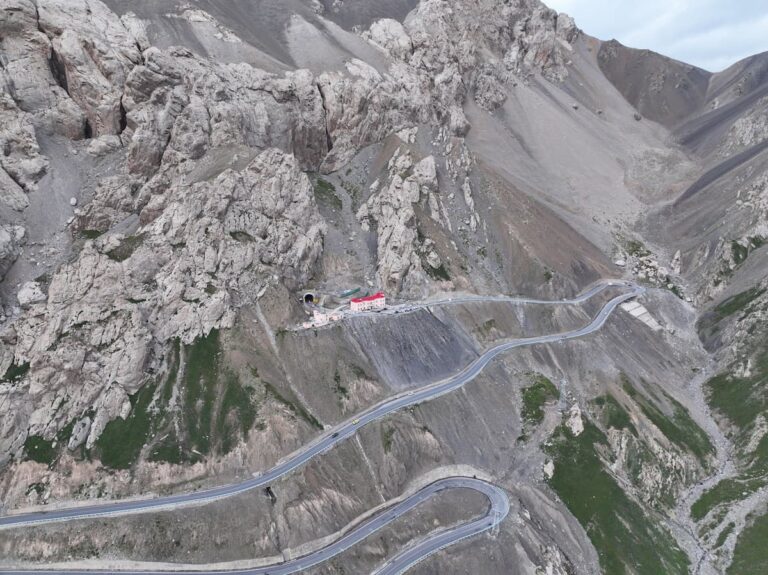
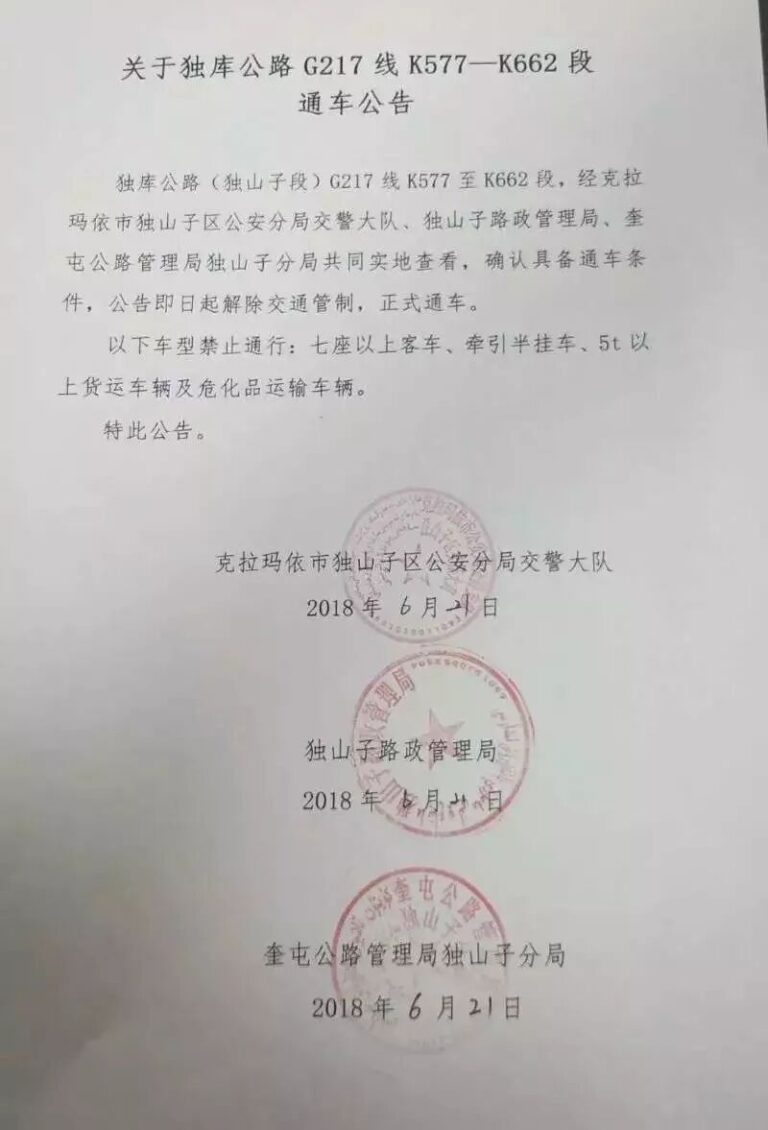
- Duku Highway: Known as China’s most beautiful highway, it connects Dushanzi in northern Xinjiang and Kuqa in southern Xinjiang across the Tianshan Mountains. It is generally open from June to late September or early October, subject to snow removal progress.
- Yizhao Highway: Another precipitous and stunning scenic route with the similar opening period as the Duku Highway.
- Hemu Mountain Road: The mountain road leading to Hemu Village in Kanas Scenic Area is often closed in winter due to heavy snow.
Check the latest road opening information via official local traffic departments or consult car rental agencies before departure.
Part 3 Must-Visit Classic Self-Driving Routes in 2026
After meeting all entry and driving regulations, you can freely explore the following well-designed itineraries integrating stunning natural scenery and profound ethnic culture.
Route 1 Northern Xinjiang Fairyland Grand Loop (10-12 Days Recommended)
This route gathers Xinjiang’s most classic lakes, primeval forests, vast grasslands and unique Yardang landforms.
Itinerary: Urumqi → Tianshan Tianchi Lake → Keketuohai → Burqin → Kanas Lake / Hemu Village → Urho Ghost City → Sayram Lake → Yining → Narat Grassland / Bayanbulak Grassland → Northern Section of Duku Highway → Urumqi
Highlights
- Kanas Lake: A magical lake changing its hues with seasons and sunlight, surrounded by layered colorful forests like oil paintings in autumn.
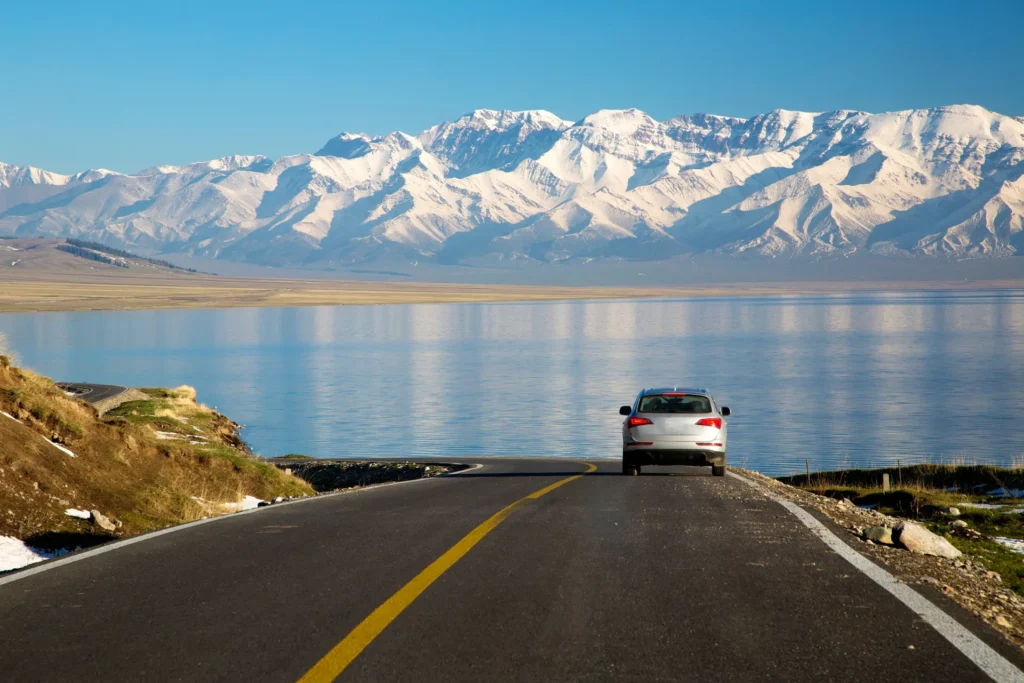
- Sayram Lake: Crystal blue lake water matches distant snow-capped peaks; lakeside self-driving tours are perfect for spiritual relaxation.
- Duku Highway: Experience four distinct seasons in one day, passing snow mountain passes, grand canyons and lush grasslands, bringing ultimate driving pleasure and visual enjoyment.
Route 2 Southern Xinjiang Ancient Silk Road Cultural Route (12-14 Days Recommended)
This route takes you from snow-capped peaks of the Pamir Plateau deep into the hinterland of the Taklamakan Desert, to feel the profound history of the ancient Silk Road.
Itinerary: Kashgar → Oytag Red Mountain → White Sand Lake → Karakul Lake (overlooking Muztagh Ata Peak) → Tashkurgan (Border Pass Required) → Panlong Ancient Road → Return to Kashgar → Yarkand → Hotan → Cross Taklamakan Desert Highway → Kuqa → Korla
Highlights
- Kashgar Ancient City: Wander through labyrinthine old alleys and experience the timeless local lifestyle and traditional handicrafts of Uyghur people.
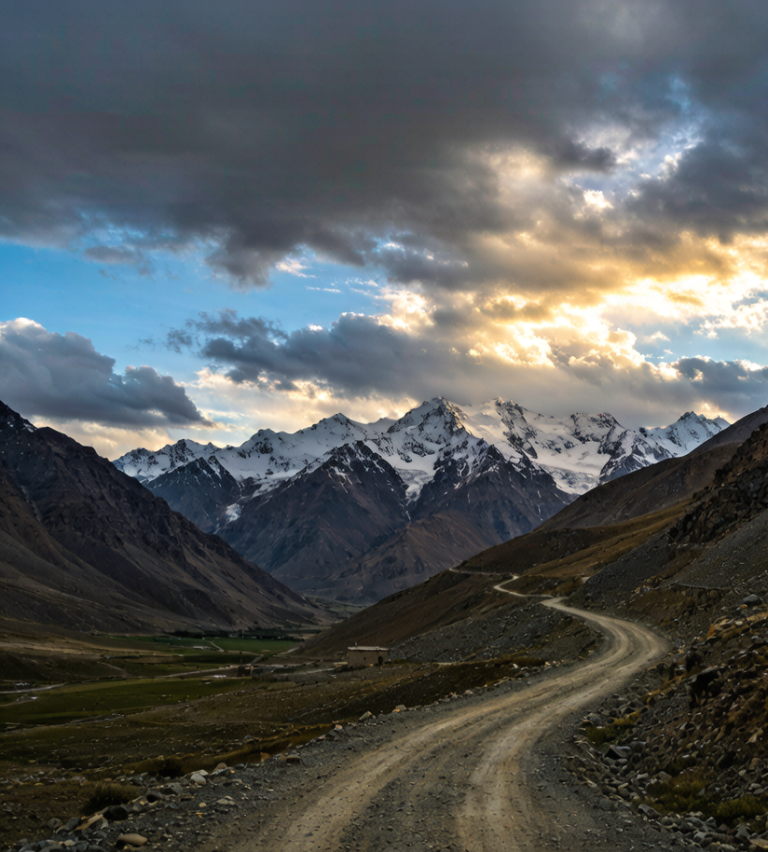
- Pamir Plateau: Drive along the China-Pakistan Friendship Highway to appreciate the magnificent landscape composed of snow mountains, alpine lakes and vast grasslands.
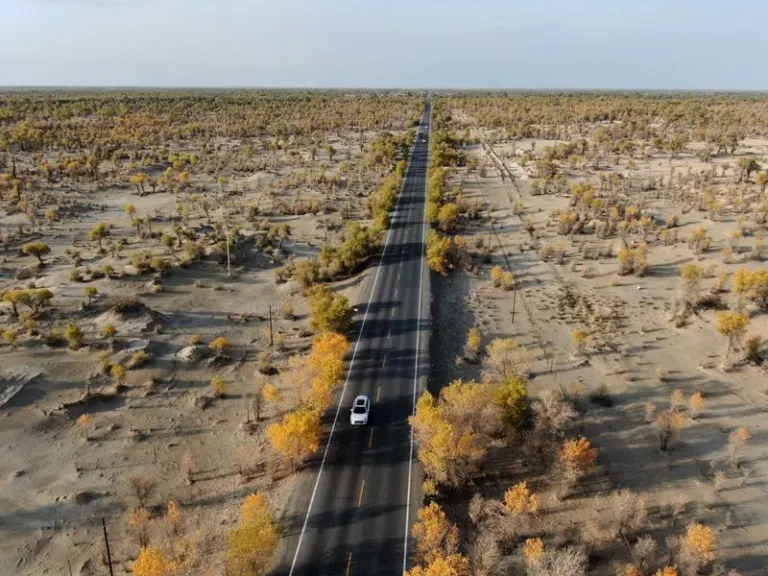
- Taklamakan Desert Highway: Conquer the world’s longest highway across shifting sand deserts, and feel the boundless vastness and tranquility of nature.
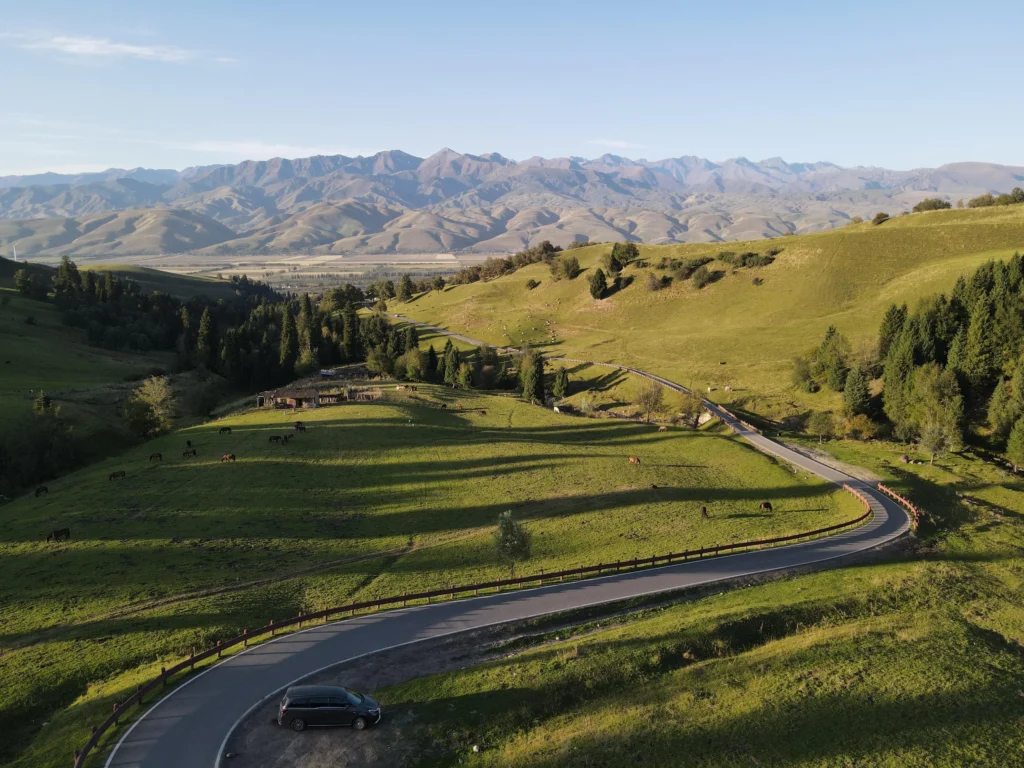
Route 3 Ili River Valley Romantic Flower Route (Summer Exclusive, 7-8 Days Recommended)
Every June to July, Ili transforms into a picturesque land known as “Jiangnan beyond the Great Wall”.
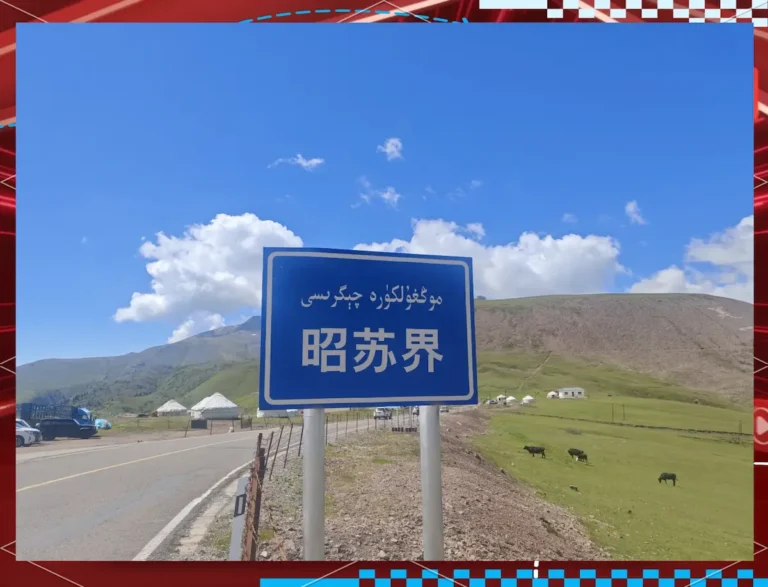
Itinerary: Yining → Huocheng Lavender Fields → Sayram Lake → Guozigou Bridge → Zhaosu (Rapeseed Flower Fields & Horse River Scenery) → Kalajun / Qiongkushtai Grassland → Narat Grassland → Yining
Highlights: Endless purple lavender seas, golden rapeseed flower fields and gentle rolling grasslands form stunning pastoral landscapes.
Part 4 Best Travel Seasons & Practical Driving Tips
Best Travel Period
May to October is the golden travel season for self-driving tours in Xinjiang. June to August is ideal for enjoying blooming grasslands and sea of flowers in Ili; September to October is the peak time for admiring autumn foliage in Kanas and golden poplar forests in southern Xinjiang, with huge temperature difference between day and night.
Driving & Safety Guidelines
- Long-distance travel arrangement: Scenic spots are far apart in Xinjiang, with driving distances of hundreds of kilometers per day. Arrange your schedule reasonably to avoid fatigue driving, and take a rest every two hours.
- Road condition adaptation: National and provincial highways are well maintained on the whole, while roads leading to remote scenic spots such as Qiongkushtai and Panlong Ancient Road include gravel roads and steep mountain bends. Drive slowly and cautiously.
- Weather reminder: Mountainous areas feature volatile weather with sudden temperature drops, rainstorms and even hailstorms. Check real-time weather forecasts and prepare emergency supplies in advance.
- Traffic checkpoints & speed limits: Numerous public security checkpoints are set along main roads; stop voluntarily and present passports of all passengers for inspection. Strictly abide by speed limits, as section speed monitoring is widely adopted.
- Navigation & daily supplies: Download complete offline map packages of Amap or Baidu Maps beforehand. Develop the habit of refueling in time, and store sufficient drinking water and dry food in the vehicle.
Conclusion Set off on Your Legendary Self-Driving Journey in Western China
A self-driving tour across Xinjiang is a great calling for freedom-loving travelers. Although you need to sort out all relevant regulations in advance, all preparations are worthwhile for the freedom to roam freely across this magnificent land.
When you drive through the four-season landscapes of the Duku Highway, admire the grandeur of Muztagh Ata Peak and indulge in the charming autumn scenery of Kanas, you will find all careful arrangements pay off. Start your travel plan right now, confirm all official requirements and finalize your itinerary. In 2026, let the magnificent mountains and rivers of Xinjiang write the most wonderful chapters of your travel journey.
Is Xinjiang safe to visit?
Yes, Xinjiang is considered very safe for tourists with strong security presence throughout the region.
Do I need a visa?
Foreigners need a valid Chinese visa. No separate Xinjiang permit needed for most tourist areas.
What currency should I bring?
Chinese Yuan (RMB). Credit cards accepted in hotels; carry cash for markets and rural areas.
Can I find English-speaking guides?
Available in major tourist areas through hotels or travel agencies. Book in advance for best results.