Jinan Travel Guide: Top Sights, Food and a 3-Day Itinerary
Jinan is the City of Springs. Karst water rising from the mountains to the south feeds dozens of springs across the city — Baotu, Black Tiger, Pearl — and for centuries households drew water and willows lined the lanes, which is how the city described itself. It is also the most convenient base in Shandong: Mount Tai is an hour away and Qufu, Confucius’s home, two.

Why Visit Jinan
Jinan (济南) earns its place among China’s essential stops because the ‘city of springs’ — baotu spring, daming lake, and thousand buddha hill.
Jinan is a big, workaday provincial capital that happens to have an extraordinary water system running through it. The springs are clean, cold and public; people fill bottles at them. Daming Lake, fed by the same water, has willows, lotus and pavilions, and on summer evenings the city walks around it.
The Story Behind Jinan
The area has been settled for more than four thousand years and is associated with the Longshan culture, whose black pottery was found at the Chengziya site nearby. Jinan was a centre of the Qi state and later a provincial capital, and its identity has always been bound up with the springs — the water table under the city pushes up through the limestone, and the springs have been recorded and named since at least the Song.
Top Things to Do in Jinan
Baotu Spring
The most famous of the springs and the one everyone comes to see: three vents pushing water up out of a clear pool, in a garden of halls and pavilions that has been a public pleasure ground for centuries. The water is startlingly clear.
Black Tiger Spring and the moat walk
On the old city moat, where water pours from tiger-head spouts into a pool — and where locals arrive with containers to fill. Free, and the most alive of the springs: this is the one people actually use.
Daming Lake
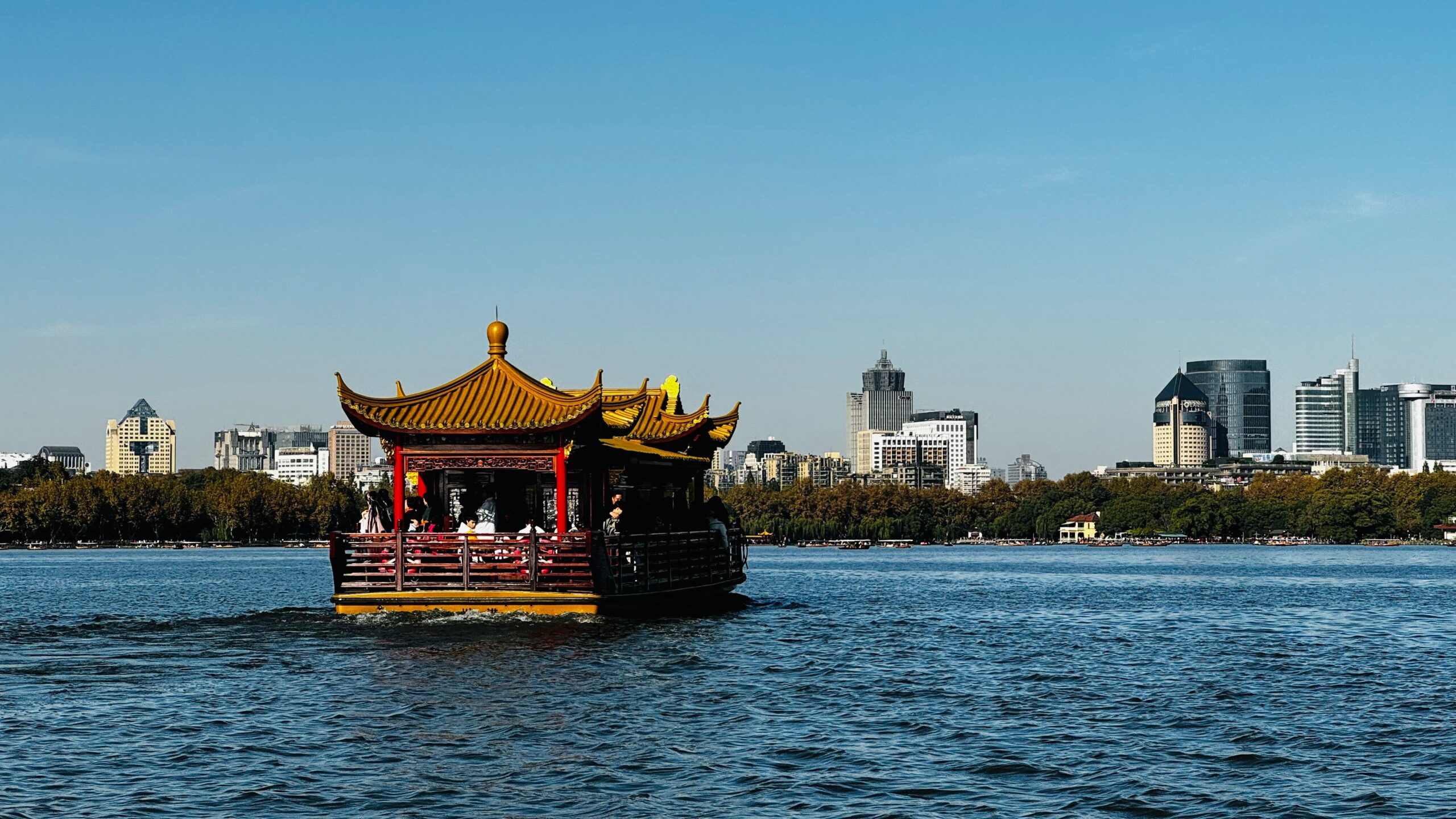
A large lake in the north of the old city, fed by the springs, with willows, lotus in summer and pavilions on the shore. Free to walk around, and the city’s main public space in the evening.
Thousand Buddha Mountain
A hill south of the city with a temple, Buddhist carvings on the cliffs and a view back over Jinan. An easy half-day and the best place to understand the karst hills that feed the springs.
The Shandong Museum
Free and genuinely strong: the Longshan black pottery, the Qi state material and the Confucian collection. Particularly useful before you go to Qufu.
The old lanes around Qushuiting
A small district of narrow lanes with water running alongside the houses and willows over it — the surviving fragment of the city the old description refers to.
Best Time to Visit Jinan
April to June and September to October. Summer is hot and the springs and the lake are at their best in the warm months; winter is cold and dry but the springs keep flowing, and the city is quiet.
At a Glance
| Detail | Information |
|---|---|
| Province | Shandong |
| From Beijing | ~1.5 hrs rail |
| Must-see | Baotu Spring, Daming Lake |
| Local note | drinkable spring water |
| Best season | Apr–Jun, Sep–Oct |
Getting to Jinan
Jinan (TNA) is ~1.5 hrs by rail from Beijing and ~2 hrs from Qingdao.
Getting Around Jinan
Jinan has a metro network and cheap buses; the old city is compact enough to walk between the main springs and the lake. High-speed rail puts Beijing about one and a half hours away, Qingdao about two and Tai’an — for Mount Tai — under half an hour.
What to Eat in Jinan
Ba zi rou
Braised pork belly, soy-dark and falling apart, served over rice with a ladle of the braising liquid — the city’s everyday lunch and the dish most Jinan people would name first.
Sweet foam
A savoury millet porridge with peanuts, dried tofu and pepper, eaten at breakfast. The name is misleading and the dish is warming rather than sweet.
Shandong cuisine
Lu cuisine is the oldest of China’s eight regional traditions: clean broths, seafood, onions, and techniques like quick-frying in high heat. Try the sweet-and-sour carp.
Where to Stay in Jinan
Near Baotu Spring and the old city
Walkable to the springs, the lake and the old lanes — the clear first choice.
Near Daming Lake
Quiet, with the lake on the doorstep and the centre a short walk.
Near the railway station
Practical for early trains to Tai’an and Qufu, but less pleasant.
A 3-Day Jinan Itinerary
This 3-day plan covers the core of Jinan without rushing; if you have less time, take the first day and add the parts of the second that matter most to you.
Day 1 — the springs and the lake
Baotu Spring in the morning, Black Tiger Spring and the moat walk at lunchtime, and Daming Lake in the evening with the rest of the city. Ba zi rou for lunch.
Day 2 — the hill and the museum
Thousand Buddha Mountain in the morning for the carvings and the view, the Shandong Museum in the afternoon. Then the train to Tai’an or Qufu.
Optional — Mount Tai
An early train to Tai’an, the cable car up and down by foot, or a night climb for the sunrise.
Day Trips from Jinan
Mount Tai
About twenty minutes by rail to Tai’an, then a bus or cable car. The most climbed of China’s sacred mountains; most people go up by cable car and walk down, or climb at night for the sunrise.
Qufu
Two hours by rail to the temple, mansion and cemetery of Confucius — a UNESCO World Heritage site and one of the most complete ritual complexes in China.
Lingyan Temple
About an hour southwest, with a famous hall of painted Song and Ming arhat sculptures. Quiet and worth the trip if the springs are done.
What a Trip to Jinan Costs
| Item | Indicative cost |
|---|---|
| Baotu Spring | ¥40 (approx.) |
| Daming Lake | Free |
| Thousand Buddha Mountain | ¥30–50 |
| Shandong Museum | Free |
| High-speed rail to Tai’an for Mount Tai | ¥30–50, about 20 minutes |
| Mid-range hotel | ¥200–500 per night |
Jinan is inexpensive, and several of its best things — the lake, the springs, the museum — are free. Prices quoted are indicative.
Practical Tips for Jinan
- Watch people fill bottles at Black Tiger Spring — it is the most telling thing in the city and it is free.
- Walk Daming Lake in the evening with everyone else; it is what the city does.
- Combine Jinan with Mount Tai and Qufu rather than treating it as a standalone stop.
- Come in September or October: warm days, lotus finished, comfortable walking.
- Eat ba zi rou for lunch and the sweet-foam porridge for breakfast, in that order.
- Visit the Shandong Museum before Qufu — the Confucian material makes the site make sense.
Mistakes to Avoid
- Treating Jinan only as a transport hub between Beijing and Qingdao.
- Missing the springs entirely by going straight to the lake.
- Climbing Mount Tai in the heat of the day instead of starting early or at night.
- Assuming Shandong food is heavy and bland — Lu cuisine has real technique and the broths are excellent.
Is Jinan Right for You?
One to two days in the city, and it is the best base in Shandong. Jinan suits travellers who like a city that is ordinary and proud of one specific thing, and who want Mount Tai and Qufu within easy reach.
Plan Your Trip
These official and reference sources help you verify opening hours and book ahead:
Frequently Asked Questions
Why is Jinan called the City of Springs?
Karst water from the hills south of the city rises under pressure through the limestone, feeding dozens of named springs across the city — Baotu, Black Tiger and Pearl among them — which historically ran past houses and under willows.
How many days do you need in Jinan?
One full day covers the springs and the lake. Two lets you add Thousand Buddha Mountain and the museum, and most people use it as a base for Mount Tai and Qufu.
Can you visit Mount Tai from Jinan?
Yes — about twenty minutes by high-speed rail to Tai’an, then a bus or cable car. It is the main reason many travellers stay in Jinan.
What is Shandong food like?
Lu cuisine, the oldest of China’s eight regional traditions: clean broths, seafood, quick-fried dishes and a lot of onion. Jinan’s own staples are braised pork belly and a savoury millet porridge at breakfast.