Xinjiang’s UNESCO World Heritage Sites: A Traveler’s Guide to the Region’s Inscribed Treasures
I used to treat “UNESCO” as a stamp on a postcard until I stood at Bayanbulak and realized the swan-filled river bends I was looking at are legally part of a protected whole that spans half the region. Xinjiang carries two genuine World Heritage inscriptions — one natural, one cultural — and together they cover many of the places you already came to see. Here is what is actually inscribed, where each piece sits on the map, and how to fold them into a normal trip. I’ve since planned three trips around them, and the pattern is always the same: the famous sites are easy, but the inscribed wilderness is the real reward.
The Big Picture: Two Inscriptions, Not One
Xinjiang is covered by two separate UNESCO World Heritage properties. The first is Xinjiang Tianshan, a natural inscription (2013) protecting a chain of alpine ecosystems. The second is the Silk Roads: the Chang’an–Tianshan Corridor, a cultural inscription (2014) protecting the trade-route monuments that cross the region. Several other sites — including Turpan’s Karez irrigation system — sit on China’s Tentative List and are locally promoted as heritage, but they are not yet inscribed. Knowing the difference stops you from over-claiming on your own blog and helps you plan real visits.
Xinjiang Tianshan (Natural, 2013)
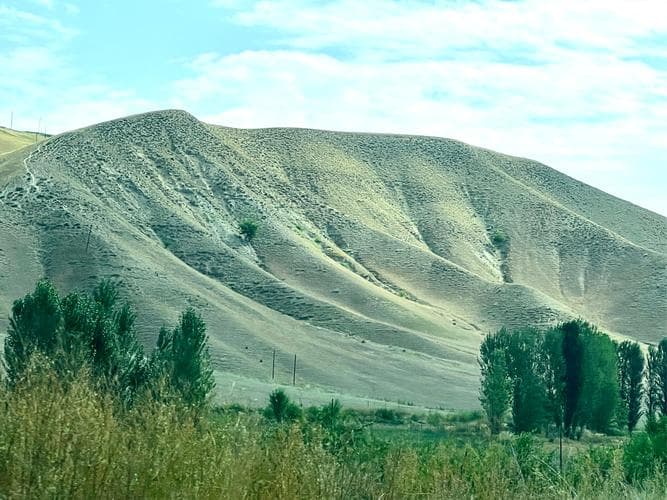
This inscription protects four component areas scattered along the Tianshan range, each a different flavor of mountain. What unites them is the vertical ecology — desert floor to glacier in a single view.
| Component | Where | Best base town | What you actually see |
|---|---|---|---|
| Bogda (incl. Heavenly Lake) | East of Urumqi | Urumqi | Alpine lake, cable car, glacier views |
| Tomur / Khan Tengri | West, Aksu border | Aksu / Onsu | 7,400m snow peaks, remote trekking |
| Kalajun–Kuerdening | Western Ili | Zhaosu / Tekes | UNESCO grassland, cedar forest |
| Bayanbulak | Bayin’gholin | Hejing / Yili loop | Swan lake, nine-bend river |
Which Component to Prioritize
Most travelers meet the Tianshan at Heavenly Lake (Tianchi) east of Urumqi — the easiest, most built-up component. For the grassland side, the Kalajun–Kuerdening pair in Ili is the quieter, more photographic choice and links naturally to a Yili Valley drive.
The Two You’ll Rarely See
Tomur (Khan Tengri) and Bayanbulak sit at the hard ends of the range. Tomur is a 7,400m wall on the Kyrgyz border, reachable only on a permit and a long drive from Aksu; Bayanbulak is the swampy heart where the Kaidu River loops nine times and swans nest in summer. Both are unforgettable, neither is a casual stop — budget a full day and a driver who knows the road.

Silk Roads: Chang’an–Tianshan Corridor (Cultural, 2014)
This serial inscription runs from central China to the edge of Central Asia, and Xinjiang holds some of its most atmospheric components — the ruined oasis kingdoms of the Tarim Basin. These are the sites that make the “Silk Road” feel real rather than rhetorical.
| Component in Xinjiang | Near | Why it matters |
|---|---|---|
| Jiaohe Ruins | Turpan | Largest earthen city ruins on earth |
| Gaochang Ruins | Turpan | Desert kingdom, Tang-era walls |
| Bezeklik Caves | Turpan | Buddhist mural caves at the Flaming Mountains |
| Subashi Ruins | Kuqa | Monastery city on the northern Tarim edge |
| Kizil Caves | Baicheng (Kuqa) | Oldest major Buddhist cave art in Xinjiang |
How to See Them Without Backtracking
Turpan’s components (Jiaohe, Gaochang, Bezeklik) are a tidy 1–2 day loop from the city. The Kuqa components (Subashi, Kizil) pair with a southern-loop drive. I covered Kizil Caves on a Kuqa day trip and it was the cultural highlight of my southern Xinjiang run — go early, the light on the murals is best before noon.

Practical Notes for Visitors
Inscription status doesn’t mean a ticket is free or a site is open — each component sells its own entry and some (Tomur, Bayanbulak) need permits or a 4×4. Check season: Turpan components are brutal mid-summer and glorious in spring; the Ili grassland components peak in June–July. None require a guide, but a local explainer at Jiaohe or Kizil turns rubble into a story.
How Inscription Actually Helps Your Trip
World Heritage status is not just a logo on a brochure. For you it means the site is funded and maintained — Jiaohe’s earthen walls get conservation work, Heavenly Lake’s boardwalks stay repaired, and signage is usually in English as well as Chinese. The trade-off is crowds at the easy components: Heavenly Lake and Jiaohe can be packed on a Golden Week. The remote components — Tomur, Bayanbulak, Kalajun’s deep grassland — stay quiet precisely because the inscription hasn’t turned them into coach-stop attractions yet.
One Myth to Drop
Being “UNESCO” does not make a site automatically open or free. Every component runs its own ticket desk, and the wild mountain ones (Tomur, Bayanbulak) need scenic-area permits or a proper 4×4 with a driver who knows the passes. Plan those like expeditions, not like a museum visit.
A 4-Day UNESCO Mini-Route
If heritage is your theme, this arc hits one component of each inscription without backtracking:
- Day 1 — Urumqi + Heavenly Lake: the Bogda component of Xinjiang Tianshan, the easiest alpine hit of the trip.
- Day 2 — Turpan: Jiaohe, Gaochang, and Bezeklik caves — three Silk Roads components in one hot, fascinating day.
- Day 3 — Kuqa: Kizil Caves and Subashi ruins, the southern Silk Roads highlights.
- Day 4 — Ili: Kalajun–Kuerdening grassland, the green heart of the Tianshan inscription.
You’ll need a flight or two to make the days land; the payoff is that you’ve touched both inscriptions and four ecosystems in under a week.
When to Go
Turpan’s components are glorious in April–May and brutal in July–August. The Ili grassland peaks in June–July when the wildflowers are out. Heavenly Lake is a crisp autumn visit (September–October) or a snowy winter one if you like empty trails. The cave sites (Kizil, Bezeklik) are best in the cooler halves of the year, when the walk from the car park isn’t a furnace.
Straight answers to what visitors ask
How many UNESCO sites are in Xinjiang?
Two inscriptions cover the region: Xinjiang Tianshan (natural, 2013) and the Silk Roads Chang’an–Tianshan Corridor (cultural, 2014). The latter includes several ruined-city and cave components across Turpan and Kuqa.
Is the Karez system UNESCO-listed?
Not yet. Turpan’s Karez irrigation is on China’s Tentative List and is locally described as heritage, but it is not part of the inscribed World Heritage properties. Worth visiting regardless.
Which component is easiest to reach?
Heavenly Lake (Bogda component) east of Urumqi, and the Jiaohe/Gaochang/Bezeklik cluster around Turpan. Both are day trips from major towns with normal transport.
Do I need a permit for any of them?
The grassland and peak components (Kalajun–Kuerdening, Bayanbulak, Tomur) may need scenic-area permits or a 4×4; the ruined-city components around Turpan and Kuqa need only standard entry tickets.
Can I see a Silk Roads site and a Tianshan site in one trip?
Yes. Urumqi → Heavenly Lake (Tianshan) → Turpan (Silk Roads) is a classic 3-day arc that hits one component of each inscription without long detours.
Are the caves worth it if I’m not into art history?
Kizil and Bezeklik are short visits with striking murals and a real sense of the lost Buddhist Silk Road. Even non-history buffs find the scale and setting memorable — go early for the light.