Shenzhen Travel Guide: What to See, Eat and Do in the City
Shenzhen went from fishing villages to a city of well over ten million in about forty years, which makes it the fastest-built large city in human history and the place to go if you want to see what China decided to become. It is also the main land crossing into Hong Kong. Come for the architecture, the design and arts districts, the coastline, and the fact that a city with no historic centre has had to invent its own culture.

Why Visit Shenzhen
Shenzhen (深圳) earns its place among China’s essential stops because the special economic zone that grew from fishing villages to 17 million in 40 years.
Shenzhen is young, rich, green and surprisingly pleasant: wide roads, a lot of planting, a long coastline and a population drawn from everywhere in China, which means you can eat any regional cuisine well. It has no old town to speak of, and that is either a dealbreaker or irrelevant depending on what you want.
The Story Behind Shenzhen
In 1980 Shenzhen was designated China’s first Special Economic Zone, a laboratory for market reforms on the Hong Kong border. It worked: investment, migrants and construction arrived together, and the city has been rebuilding itself ever since. What history there is older than that survives at the edges — the Ming Dapeng fortress on the peninsula, and the old Hakka and Cantonese villages now swallowed by districts.
Top Things to Do in Shenzhen
The skyline and Ping An tower
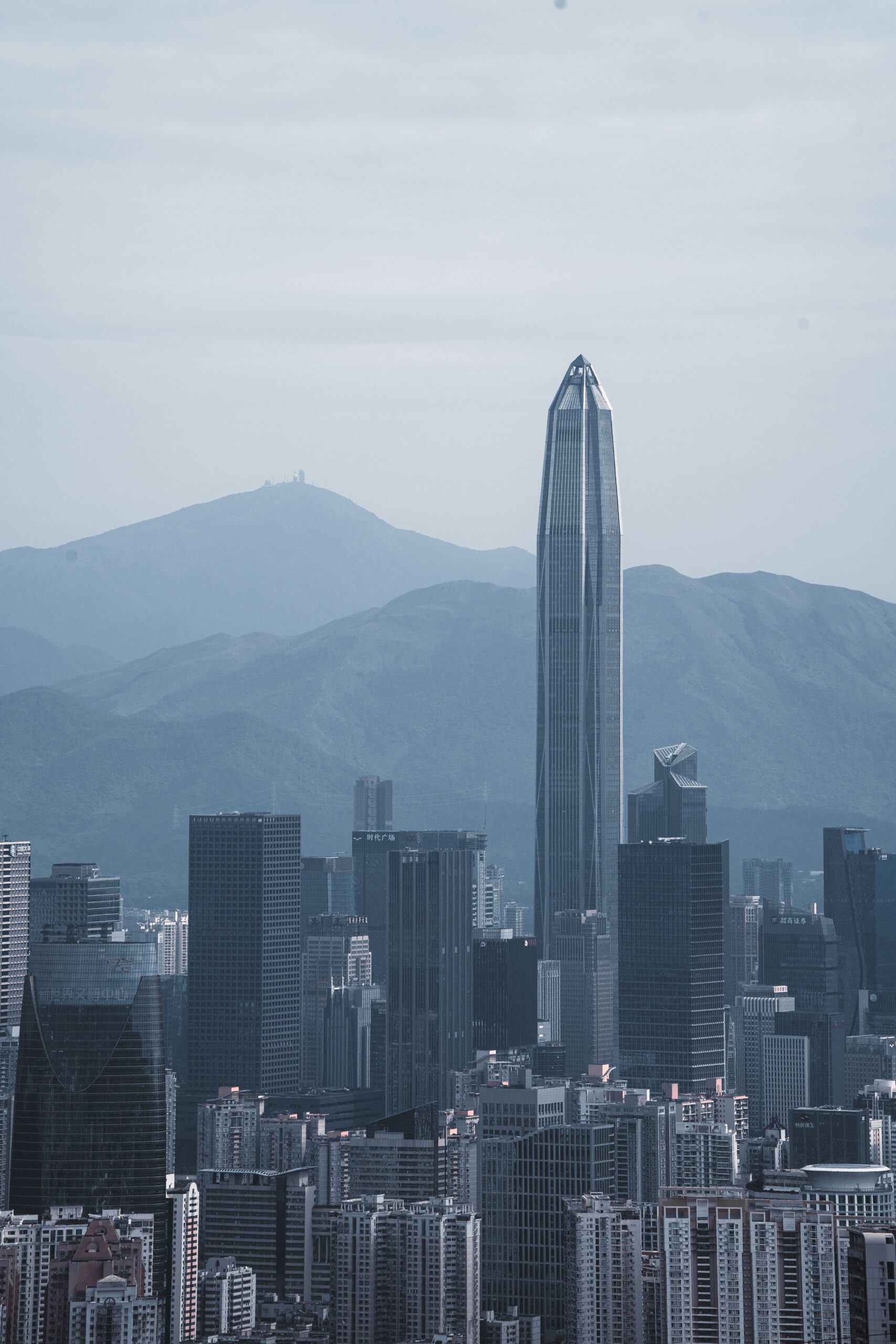
One of the great concentrations of tall buildings anywhere — the Ping An Finance Center, the KK100 and the Shun Hing Square within a few hundred metres of each other. The observation decks give you the whole delta on a clear day.
OCT Loft
A former factory district turned into galleries, design shops, bookshops and cafés: the best walking in Shenzhen and the clearest evidence that the city has a cultural life of its own.
Dafen Oil Painting Village
A village given over to painting — hundreds of studios producing copies and originals, with painters working in the open. Strange, fascinating and free to walk.
Dameisha and the eastern coast
The city’s beaches on the eastern edge, plus a coastal boardwalk. Crowded at weekends, perfectly pleasant midweek, and the easiest escape from the concrete.
Dapeng Fortress
A Ming military fortress on the peninsula about an hour away, with a walled old town inside — the closest thing Shenzhen has to a historic centre, and genuinely old.
Huaqiangbei
The electronics district: floors of components, gadgets and repair shops. Overwhelming, and either the most interesting or the most annoying hour in the city.
Best Time to Visit Shenzhen
October to April, when it is warm and dry. Summer is hot, humid and storm-prone. Shenzhen’s climate is subtropical, so there is no bad season — just a wet, sticky one.
At a Glance
| Detail | Information |
|---|---|
| Best season | Oct–Dec, Mar–Apr |
| Airport | Bao’an (SZX) |
| HSR to Guangzhou | ~30 min |
| Local food | Cantonese & seafood |
| Top area | Futian / OCT Loft |
| Border to HK | Luohu or Futian |
Getting to Shenzhen
Bao’an (SZX) is a major hub with a Metro Line 11 link to the centre in about 35 minutes. Shenzhen’s high-speed rail is the star: Guangzhou is 30 minutes, and Hong Kong’s West Kowloon station roughly 20 minutes from Futian. To cross into Hong Kong overland, ride the metro to Luohu or Futian and walk through the border hall — allow 30–45 minutes at peak times.
Getting Around Shenzhen
The metro is extensive, cheap and reaches the border crossings, the airport and the coast. Ferries run to Hong Kong, Macao and Zhuhai. To cross into Hong Kong by land, use the metro to the border and walk through — but avoid weekend mornings, when the queues are long.

What to Eat in Shenzhen
Cantonese seafood
The default: steamed fish, prawns, clams and crab, in the old Shekou area and along the coast. Quality is high and prices are below Hong Kong’s for the same thing.
Coconut chicken
A Hainan dish that Shenzhen has made its own — chicken hotpot in coconut water, light and sweet, and everywhere in the city.
Every regional cuisine in China
Because almost nobody here is from Shenzhen, the city has excellent Sichuan, Hunan, northeastern and Xinjiang restaurants. It is one of the easiest places in China to eat well across the board.
Where to Stay in Shenzhen
Futian
Central, on the metro, near the border crossing and full of good hotels — the practical choice.
Nanshan and Shekou
By the coast with the arts districts and seafood; quieter and more pleasant in the evening.
Luohu
Right at the Hong Kong border: convenient for crossing, chaotic otherwise.
A 3-Day Shenzhen Itinerary
This 3-day plan covers the core of Shenzhen without rushing; if you have less time, take the first day and add the parts of the second that matter most to you.
Day 1 — the modern city
The Ping An tower and the skyline in the morning, OCT Loft in the afternoon for galleries and cafés, and dinner in Shekou.
Day 2 — art and coast
Dafen Oil Painting Village in the morning, then the eastern coast at Dameisha or out to Dapeng Fortress for the afternoon.
Optional — Hong Kong
An early metro to the border and a day across; come back before the evening queues.
Day Trips from Shenzhen
Hong Kong
An hour door to door by metro and border crossing. Many people base themselves in Shenzhen and go in for the day.
Dapeng Peninsula
An hour east for the Ming fortress, old villages and a much slower coastline.
Huizhou or Dongguan
Neighbouring cities with their own old quarters and, in Huizhou’s case, considerably better beaches.
What a Trip to Shenzhen Costs
| Item | Indicative cost |
|---|---|
| Ping An observation deck | ¥200 (approx.) |
| Theme parks | ¥200+ each — the expensive part of Shenzhen |
| Beaches and OCT Loft | Free |
| Border crossing to Hong Kong | A few yuan by metro |
| Mid-range hotel | ¥300–700 per night |
Shenzhen is cheaper than Hong Kong for hotels and food, which is why many travellers sleep here and cross the border by day. The theme parks are the exception and are priced like theme parks anywhere.
Practical Tips for Shenzhen
- Cross to Hong Kong early on a weekday; weekend border queues are genuinely long.
- Spend time in OCT Loft and Dafen — they are the city’s answer to having no old town.
- Use the metro for everything, including the airport.
- Come between October and April to avoid the worst of the humidity.
- Eat regionally: the city’s migrant population means the Sichuan and northeastern food here is excellent.
- Combine Shenzhen with Hong Kong rather than treating it as a destination alone.
Mistakes to Avoid
- Assuming it is a factory town with nothing to see — the arts districts and the coast say otherwise.
- Crossing the Hong Kong border on a Sunday morning and losing two hours to the queue.
- Spending all day at a theme park when the city itself is more interesting.
- Visiting in the height of summer and being miserable in the humidity.
Is Shenzhen Right for You?
One to two days. Shenzhen suits travellers interested in how modern China actually works, in contemporary architecture and design, and in a cheaper base next to Hong Kong. It does not suit anyone looking for old China.
Plan Your Trip
These official and reference sources help you verify opening hours and book ahead:
Frequently Asked Questions
Is Shenzhen worth visiting?
Yes, with adjusted expectations. There is no old town, but the architecture, the converted factory arts districts, Dafen and the coast make a genuinely interesting day or two.
How many days do you need?
One to two. Most visitors combine it with Hong Kong, which is an hour away by metro and border crossing.
Can you visit Hong Kong as a day trip from Shenzhen?
Yes — cross by metro and border, or take the ferry. Go on a weekday and start early, because weekend queues at the land crossings are long.
When is the best time to visit?
October to April. Summer is hot, humid and prone to storms; the subtropical winter is mild and comfortable.