Xinjiang Teas Compared: Brick, Suutei, Green, Rose, and Yak-Butter — A Traveler’s Field Guide
I used to think of tea as a quiet background habit — something you order to be polite. Then I spent three weeks crossing Xinjiang, and tea became the loudest, most generous part of every day. In a Uyghur courtyard in Kashgar it arrived sweet and pale; on a Kazakh yurt floor in the Ili valleys it came out salty, milky, and steaming; up on the Pamir it was a slab of yak butter melted into a broth that tasted like survival. This is a region where the same word — chay — hides at least five completely different drinks. If you want to understand Xinjiang, start with the cup in front of you.
Why Tea Matters More Than Water in Xinjiang
Much of Xinjiang is dry, cold in winter, and historically far from anywhere. Boiling water for tea was the original public-health measure: it made water safe, it warmed you, and the ritual of pouring gave strangers a reason to sit. Across the Uyghur, Kazakh, Kyrgyz, Mongol, and Han communities that share this land, offering tea is the baseline of hospitality. Refuse it and you refuse the relationship. I learned quickly that the first question after “where are you from” is almost always “chay ichasiz?” — will you drink tea? The right answer is yes.
The Five Teas You Will Actually Meet
These are the brews you will be handed in real homes and roadside stops, not the tourist versions. Each one belongs to a place and a people.
Brick Tea (Fuzhuan / Hei Cha) — the backbone
Most Xinjiang tea starts as brick tea: aged, compressed dark tea pressed into bricks and broken off with a knife. It is cheap, keeps forever, and travels well, which is exactly why it conquered the Silk Road. On its own it is smoky, astringent, and faintly medicinal — an acquired taste that becomes comforting after a week. It is the base for almost every milky tea in the region, and you will see whole bricks stacked in bazaar stalls next to blocks of salt and sugar.
Suutei Tsai — the salty milk tea of the steppe
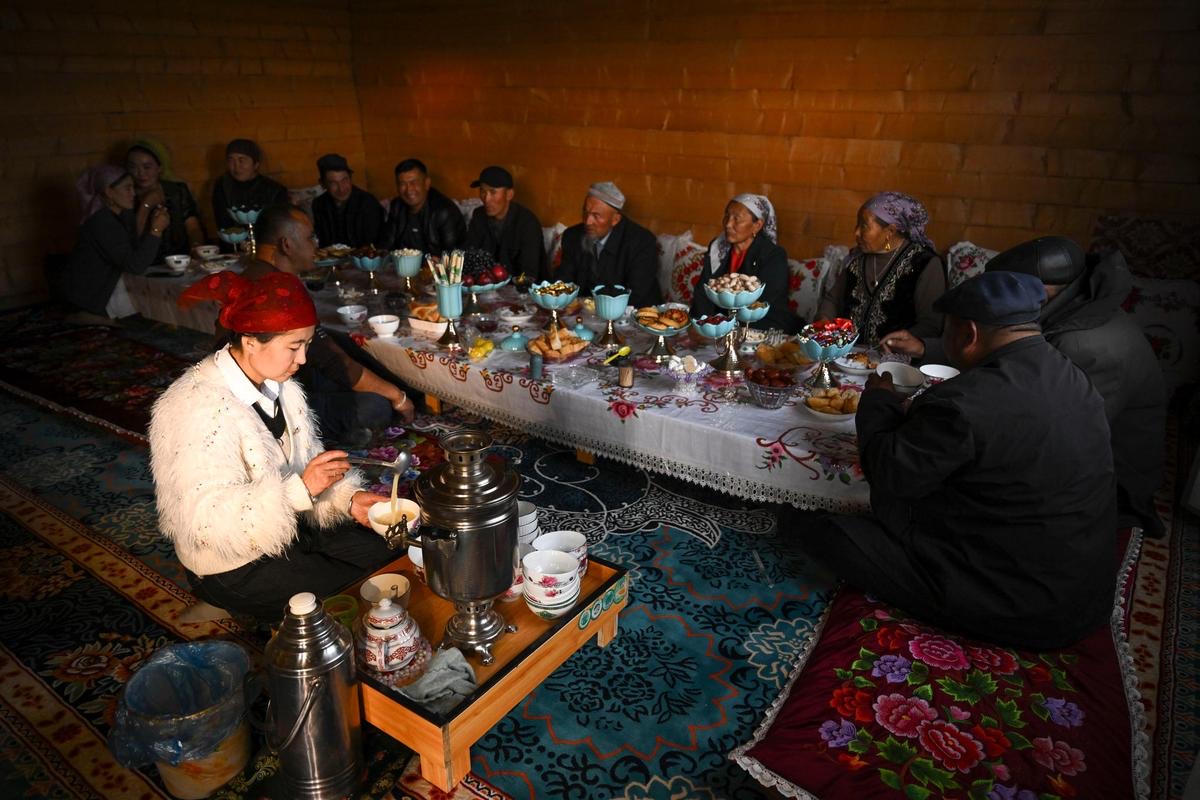
This is the Kazakh and Mongol milk tea, and it surprised me the most. Brew brick tea, add milk (or sheep’s milk), a pinch of salt, and sometimes a knob of butter, then simmer. There is no sugar. The first sip is startling; the third is addictive. On the grasslands it is served continuously from a samovar, and a guest who finishes a bowl gets it refilled without asking. I have spent whole afternoons in yurts where the only refreshment was suutei tsai and the conversation.
Uyghur Green Tea (Chay) — the everyday cup
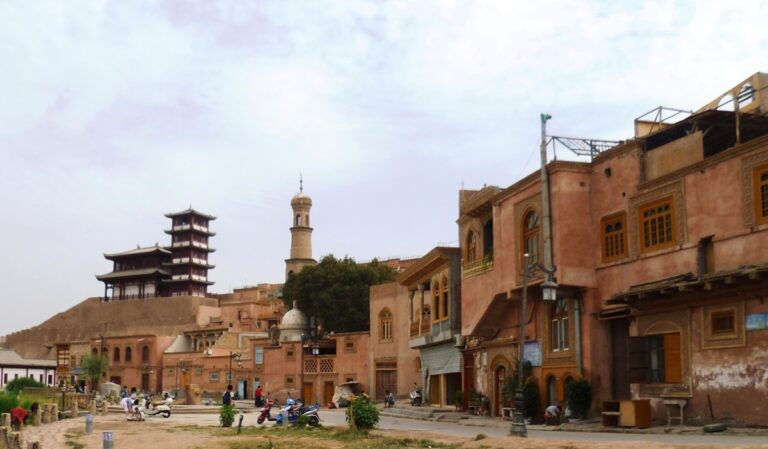
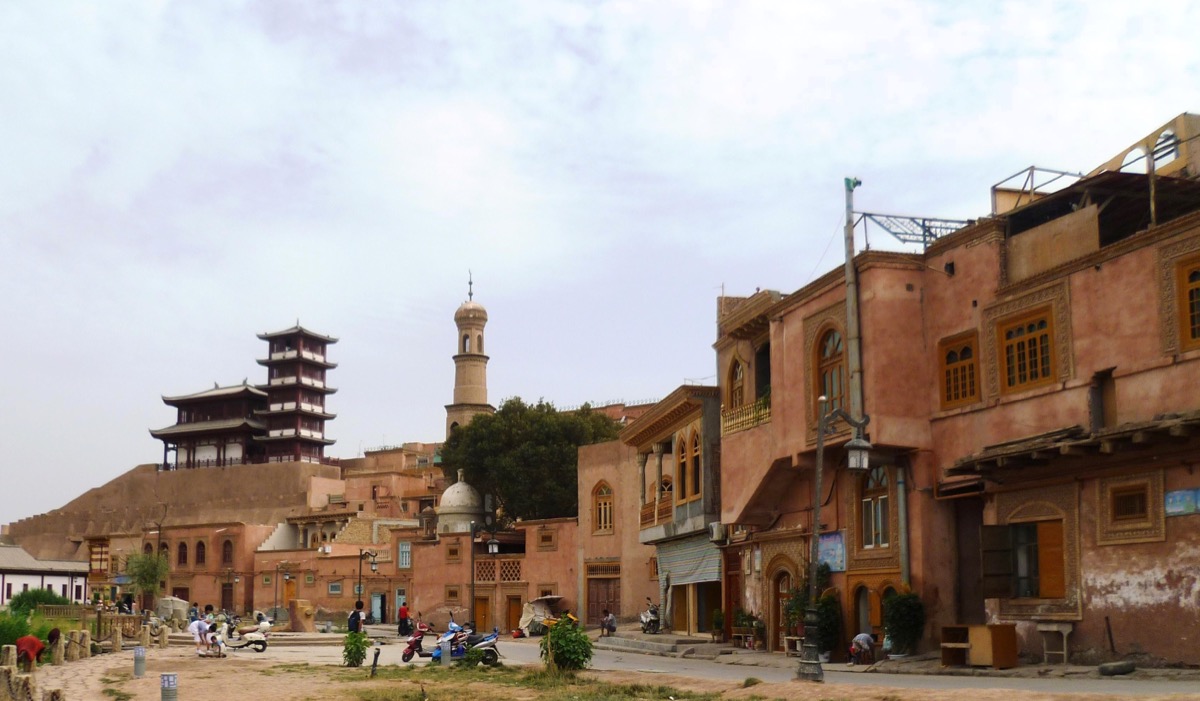
In the southern oasis towns — Kashgar, Hotan, Turpan — the default is a light, clear green or semi-green tea served in small handleless bowls, often with a cube of rock sugar on the side or a few raisins dropped in. It is never milky. It is the drink of the tea house (chaykhana), where old men play nard (backgammon) and the pot is always on. If you sit down anywhere in the old towns, this is what arrives.
Hotan Rose Tea (Gul Chay) — the perfumed welcome
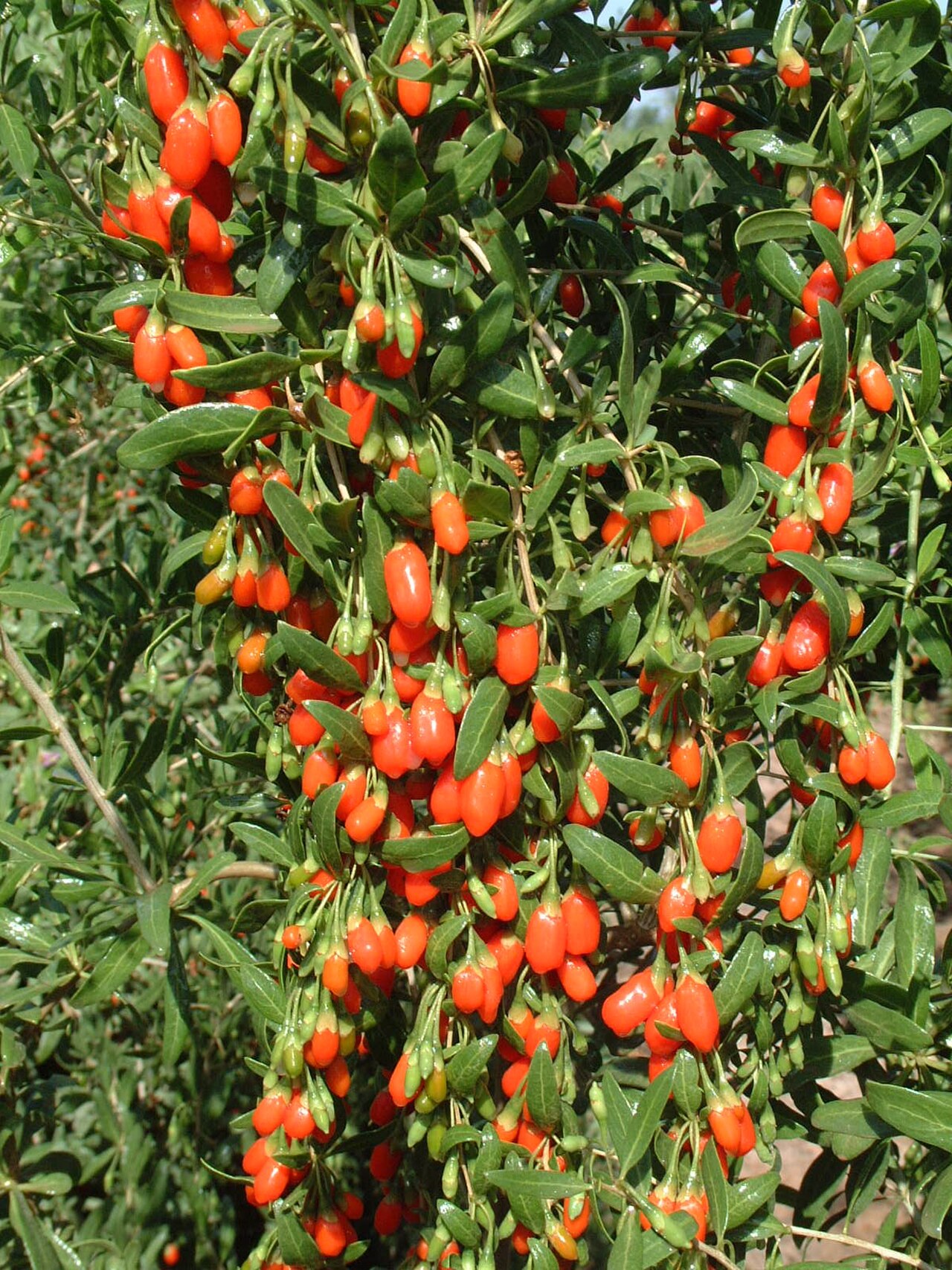
Around Hotan the tea gets a romantic twist: dried rosebuds (gul) steeped with green tea and sometimes dates or goji. It is fragrant, mildly sweet, and a signature of local hospitality — the cup you are given when someone wants to honor a guest. The rose is local; Hotan is famous for its rose jam and rose oil, and the tea carries that scent.
Yak-Butter Tea — high-altitude fuel
Climb toward the Pamir or the high pastures and the tea turns into food. Yak-butter tea is brick tea whipped with yak butter, salt, and sometimes roasted barley flour until it is more emulsion than beverage. It is oily, savory, and calorically dense — exactly what your body wants at 3,500 meters. Do not expect to like it on sip one. Expect to be glad it exists by sip five.
Xinjiang’s Five Signature Teas, Side by Side
| Tea | Main region / people | Flavor profile | When locals drink it | Where to try it |
|---|---|---|---|---|
| Brick tea (Fuzhuan) | Base across the region | Smoky, astringent, earthy | Daily, as the foundation | Bazaar stalls, homes |
| Suutei tsai (salty milk) | Kazakh & Mongol steppe | Salty, creamy, buttery | All day in yurts | Ili & Altai grasslands |
| Uyghur green tea (chay) | Southern oases | Light, clear, slightly grassy | After meals, at chaykhana | Kashgar, Hotan, Turpan |
| Hotan rose tea (gul chay) | Hotan area | Floral, mild, lightly sweet | Honoring guests | Hotan homes & cafes |
| Yak-butter tea | Pamir & high pastures | Oily, salty, filling | Cold mornings at altitude | Tashkurgan, summer camps |
How to Order and Drink Without Embarrassing Yourself
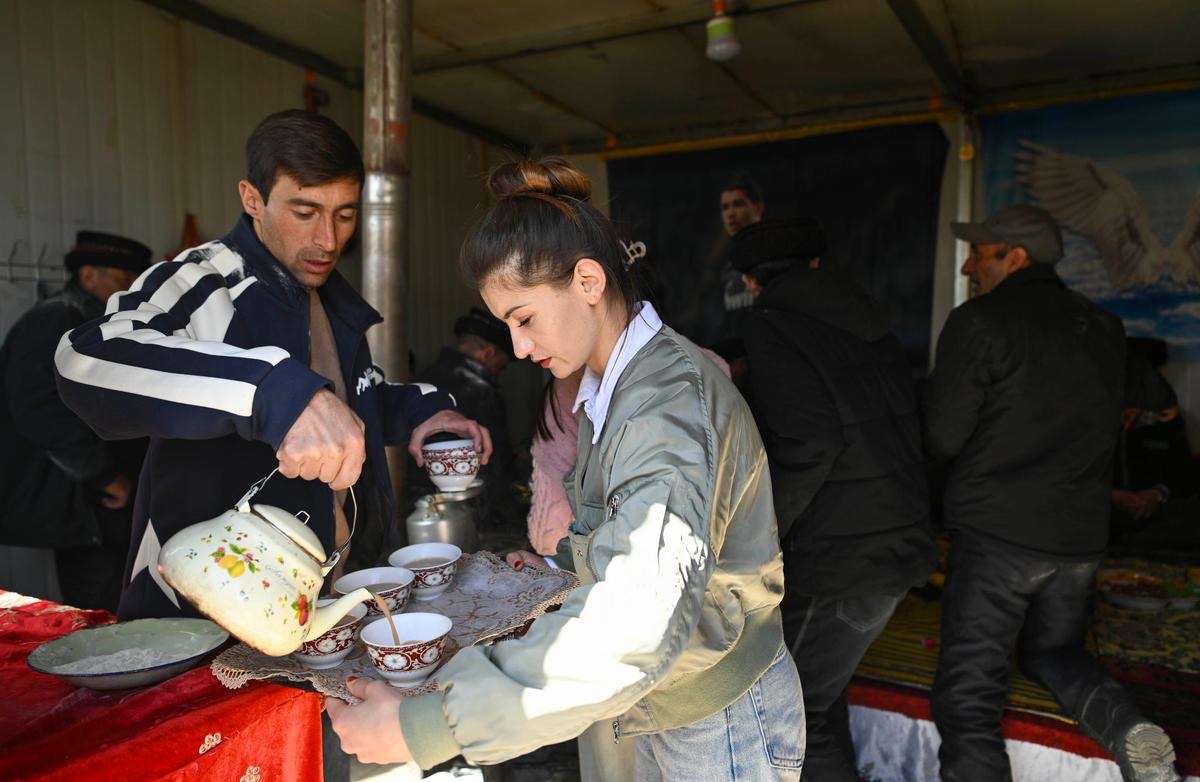
A few habits will mark you as a guest who gets it. In a chaykhana, let the tea house culture come to you: someone will bring a pot and bowls. Do not pour for yourself first — the host or eldest person pours. In Kazakh and Kyrgyz homes, never set your empty bowl upside down; that signals you are done and will not be refilled, which can read as refusal. Cradle the bowl with both hands when receiving it. And do not reach for sugar in a suutei tsai — salt is the point.
My Rule of Thumb After Three Weeks on the Road
Treat every offered cup as a small contract of trust. Say yes, hold the bowl with both hands, and ask what it is — “bu nema chay?” (what tea is this?) opened more conversations than any phrase book line. The brick tea tradition runs under all of it, but the local variations are where Xinjiang’s cultures show themselves. Tea is the cheapest, warmest anthropology lesson in Central Asia, and it is poured for you constantly if you let it.
Tea in Xinjiang is a social instrument before it is a drink, and the bowl tells you how the conversation is going: the hot, weak refills mean stay, the short pour means wrap up. Once I read the pot the way I would read a host in any country, tea stopped being a thing I ordered and became the fastest way to be let into a courtyard I had no business seeing.
Frequently Asked Questions
Is Xinjiang tea usually sweet or salty?
It depends entirely on where you are. Southern oasis towns serve clear sweet-ish green tea; the northern steppe serves salty milky suutei tsai; the high Pamir serves buttery salt tea. There is no single “Xinjiang tea” — the region is too mixed for that.
Can I buy these teas to take home?
Yes. Brick tea, rosebuds, and green tea are sold in every bazaar and are easy to pack. Yak butter does not travel, but you can buy brick tea and recreate a rough suutei tsai at home with milk, salt, and butter.
Is the water in the tea safe to drink?
The tea itself is safe — the water is boiled. What you should avoid is drinking untreated tap water elsewhere; the boiling that makes tea is also what makes it hygienic in a dry region.
Do I tip for tea in a chaykhana?
Usually not for a plain pot, but a small tip is appreciated in tourist-friendly spots. The etiquette around tea houses is casual; follow whoever you are with.
Will my lactose intolerance be a problem?
Only for the milky teas. Uyghur green tea and rose tea are dairy-free, and brick tea on its own is too. Ask for “sutsiz” (without milk) if you are unsure.
What is the polite way to refuse more tea?
In steppe homes, leave a little in the bowl and place it right-side up, or gently cover it with your hand when it is offered again. An empty upside-down bowl is the signal you are finished.