Xinjiang Handicrafts: Carpets, Knives, Embroidery, and Where to Buy Them
I came to Xinjiang for the landscapes and left with a rolled Hotan carpet strapped to my backpack. The crafts here are not souvenir-shop filler; they are living trades with thousand-year roots along the Silk Road, and knowing the difference between a hand-knotted rug and a factory copy will save you both money and regret. This is the buyer’s field guide I built after too many bazaar mistakes — what each craft is, how to judge it, and where the real makers sell.
The crafts map: what comes from where
Xinjiang’s crafts are regional, and the region tells you the quality. Here is the quick orientation:
| Craft | Home region | What to know |
|---|---|---|
| Hand-knotted carpets (地毯) | Hotan (和田) | Wool or silk, vegetable dyes, knot-count = value |
| Small knives (英吉沙小刀) | Yengisar / Shache | Decorative, blade laws apply for travel |
| Embroidery & skullcaps (朵帕) | Kashgar, Hotan | Uyghur floral patterns, varies by oasis |
| Silk (艾德莱斯绸) | Hotan, Khotan | Atlas silk, bold tie-dye stripes |
| Copper & tinware | Kashgar | Tea sets, trays, engraved work |
Hotan carpets (和田地毯)
Hotan has been knotting carpets for centuries, and a genuine one is dense, slightly irregular (a tell of hand work), and smells of wool, not plastic. Ask to see the back: hand-knotted rugs show clear individual knots; machine ones look printed. Real pieces are priced by size and knot density, not by a tourist tag. A small pure-wool rug I bought ran a few hundred RMB; a large silk-blend piece was several thousand. The silk versions shimmer in raking light and command the highest prices, while wool is the honest everyday choice. Bargain gently — these are often sold by families, not wholesalers, and a hostile haggle closes the sale. For the wider history of knotted carpets across Central Asia, the Metropolitan Museum’s carpet essay is a solid primer.
Yengisar knives (英吉沙小刀)
The Yengisar knife is the iconic Xinjiang blade: a slender, inlaid handle and a decorative sheath. They are beautiful and legal to own, but here is the catch I learned the hard way — you cannot carry them through airport security, domestic or international. Buy one as a gift to ship, or accept it will be posted home separately. Never pack it in carry-on; even checked baggage rules vary, so shipping is the safe path. The good ones have hand-engraved handles and a balanced feel; the stamped tourist versions are lighter and rattly.
Uyghur embroidery and skullcaps (朵帕)
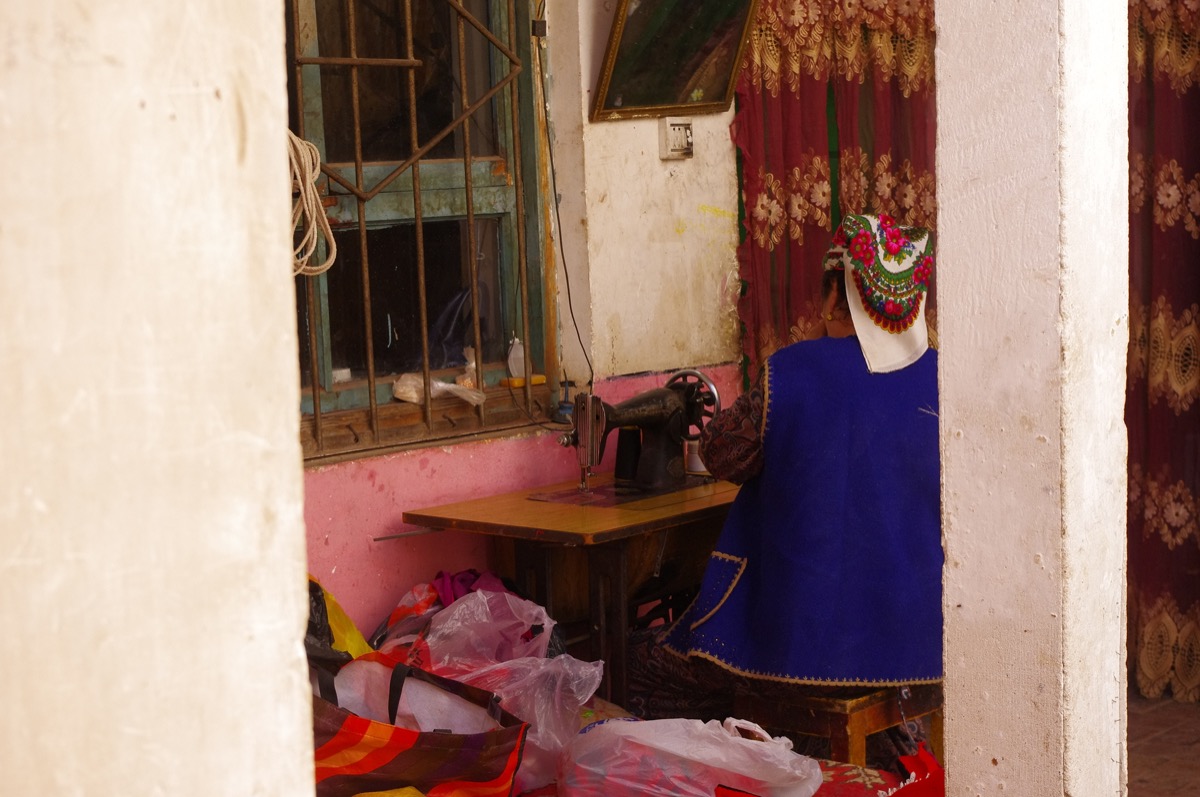
The embroidered skullcap, or doppa, is the easiest authentic keepsake: hand-stitched, lightweight, and cheap (tens of RMB). Regional patterns differ — Kashgar’s are denser and darker, Hotan’s brighter. Embroidered hangings and clothing trim make good wall pieces. Look for uneven, purposeful stitching; uniform machine embroidery is the tourist-grade version. I bought a half-dozen as gifts and they survived the flight home in a normal bag with zero drama.
Atlas silk (艾德莱斯绸)
This is the tie-dyed silk unique to Hotan and the southern oases — bold, irregular stripes born from a resist-dye technique, not a printed pattern. Real atlas has a slightly uneven, hand-finished edge and a soft drape; polyester imitations feel slick and uniform. A length of atlas makes a striking scarf or wall hanging and supports a weaving tradition that is quietly disappearing. Ask the seller to show the fringe and weave; the hand-loomed version tells on itself in the best way. The Met’s history of silk traces how this weaving moved between oasis towns along the Silk Road.
Copper and tinware
Kashgar’s coppersmiths still hammer tea sets, trays, and engraved pitchers by hand. The genuine article is heavy, shows hammer marks, and tarnishes naturally; lacquered or lightweight stamped pieces are the market’s cheap end. A small engraved cup or tray is an easy, shippable souvenir that ages well on a shelf back home.
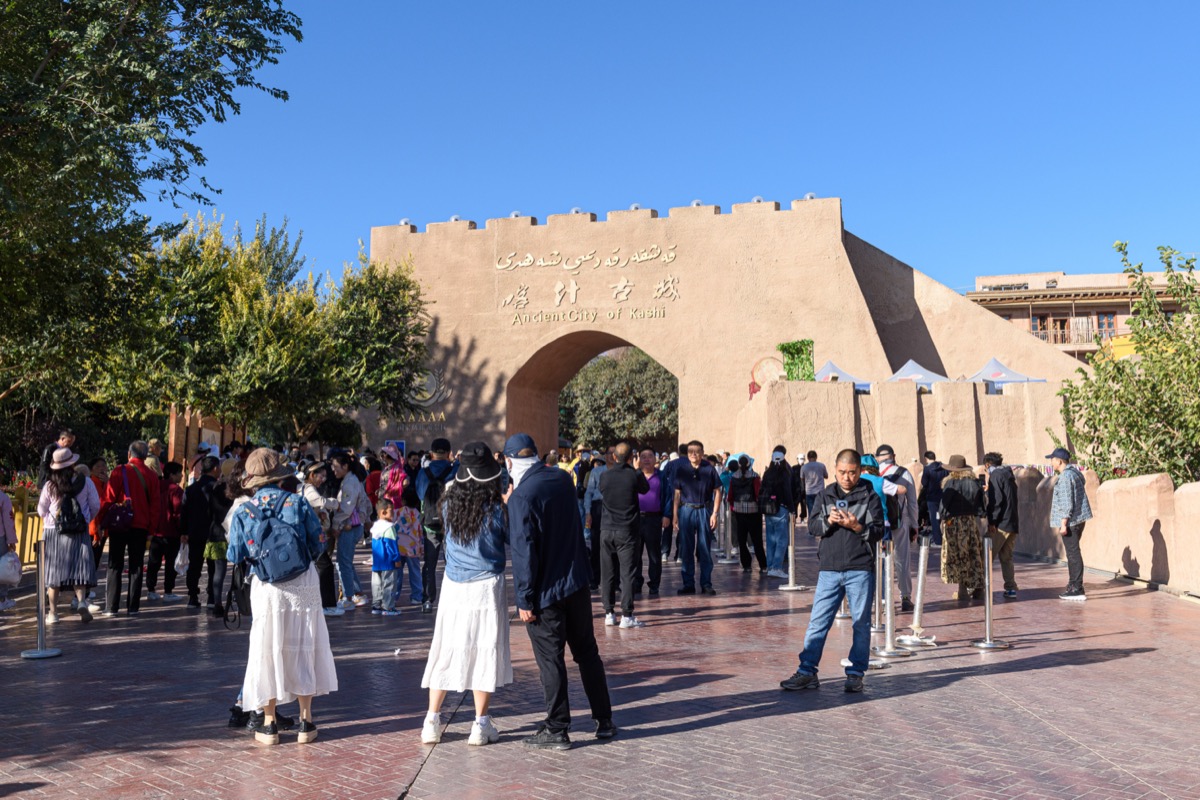
How to spot the real thing
Three rules I now follow. First, feel the material: real wool and silk have weight and warmth plastic lacks. Second, inspect the back and edges — handmade items are imperfect in a human way, with slight asymmetry that machines hate. Third, buy where makers sell, not at the airport. The bazaar is where price and authenticity meet; the departures hall is where both quietly inflate. If a “carpet” rolls up thinner than a yoga mat and costs less than a nice dinner, it is not the real trade.
Avoiding fakes: a quick table
| Item | Real tells | Fake tells |
|---|---|---|
| Carpet | Knotted back, wool/silk smell, dense | Printed back, plastic feel, too light |
| Knife | Hand engraving, balanced, solid | Rattly, stamped, loose sheath |
| Atlas silk | Uneven tie-dye, soft drape | Uniform print, slick polyester |
| Embroidery | Irregular hand stitches | Perfect machine uniformity |
Where to shop
The shopping and souvenirs in Xinjiang overview maps the major markets, but for crafts specifically, two places stand out. In the north, the Urumqi Grand Bazaar is the one-stop showroom — carpets, knives, and embroidery under one roof, at showroom prices. For the real atmosphere and better deals, the Kashgar Sunday Bazaar is unbeatable: that is where I found my Hotan carpet seller and watched him knot a corner to prove it. The dedicated Hotan carpet guide walks the carpet specifics if rugs are your focus.
The etiquette of bargaining
Haggling here is a social dance, not a fight. Open with a smile and a counter about 30% below ask; meet in the middle; and be ready to walk away, which often brings the seller after you. In craft stalls the opening price carries more slack on trinkets than on genuine hand-knotted carpets, where the maker knows the hours invested. I overpaid once by haggling a family weaver too hard and regretted it — the right price is the one where both of you are comfortable, not the lowest you can extract.
Shipping and export notes
Most crafts ship fine, but do it through a shop that wraps and declares properly — carpets roll; knives must go as freight, never with you. Keep receipts; some countries scrutinize animal-derived wool, though Xinjiang wool is usually trouble-free. I shipped my carpet via a bazaar agent for a modest fee and it arrived weeks later intact. For knives, accept that shipping is the only sane route and budget for it. Fragile copper and ceramics want bubble wrap and a “this side up” mark in characters your agent understands.
My rule is to touch everything and commit to nothing inside the first ten minutes of entering a shop. Price moves in Xinjiang, but it does not move the same way twice, and the seller who quotes you a steady number early is usually the one with the cheapest overhead. I have never regretted a kilim I carried for two days and bought on the third, and I have regretted nearly everything bought in minute one.
Frequently Asked Questions
Are Hotan carpets a good investment?
The fine silk-blend pieces hold value and age well; the cheap wool tourist rugs do not. Buy for use and beauty, not resale, unless you are choosing a high knot-count silk piece from a known workshop.
Can I bring a Yengisar knife home?
Not in your luggage through airport security — blades are prohibited. The standard solution is to have the shop ship it as freight to your address. Plan for that cost and lead time.
How much should I bargain?
In bazaars, the opening price often has 20–40% slack on souvenirs, less on genuine handmade carpets where margins are thinner. Smile, walk away once, and settle where both sides are comfortable. Haggling is expected and friendly, not confrontational.
Which craft is the best small gift?
The embroidered doppa skullcap. It is light, cheap, authentically handmade, and packs flat. Embroidered keychains and small pouches are good backups.
Is the Urumqi Grand Bazaar overpriced?
Compared with Kashgar’s bazaars, yes, somewhat — it is a curated showroom. But it is convenient, fixed-ish, and good for a one-stop first purchase. Go there to learn prices, then hunt the real bazaars for deals.
How do I tell atlas silk from a print?
Real atlas has uneven, hand-finished edges and a soft, slightly irregular drape from the resist-dye process. Polyester imitations feel slick, look uniformly printed, and lack the subtle stripe variation. Ask to see the fringe and weave.