The Meshrep: Inside Xinjiang’s Living Uyghur Gathering of Music, Dance, and Banter
The first time I really understood Xinjiang was not at a famous lake or a mountain pass. It was in a walled courtyard off a side alley in Kashgar Old Town, past ten o’clock at night, when a circle of about thirty people suddenly erupted into song. Nobody had announced a performance. A dutar player started a rolling phrase, a man in a doppa hat stood up and began to improvise rhymed teasing aimed at his neighbor, and within seconds the whole circle was clapping a rhythm and half of them were on their feet dancing. That, I learned, was a meshrep (مەشرەپ) — and it is one of the most genuine cultural experiences a traveler can stumble into in this region.
What Exactly Is a Meshrep?
A meshrep is, at its heart, a self-organized community gathering of Uyghur people built around music, poetry, comedy, and dance. The word itself carries the sense of “gathering,” “assembly,” or “banquet of the spirit.” It is not a stage show you buy a ticket for, and it is not quite a private party either. Historically it was the social glue of oasis towns: a rotating, informal institution where young men (and increasingly everyone) learned manners, heard the news, settled minor disputes through good-natured ribbing, and kept the region’s festival calendar feeling alive between the big religious and seasonal holidays.
UNESCO recognized the Meshrep as intangible cultural heritage, but on the ground it is far less formal than that label suggests. In villages around Kashgar, Hotan, and the Ili Valley you can still find unplanned meshreps breaking out wherever there is a courtyard, a few musicians, and enough people who know the songs.
The Ingredients: Muqam, Mockery, and Movement
Every meshrep has a loose recipe, even if no two are identical.
Muqam: The Soundtrack
The musical backbone is almost always drawn from Muqam — the large, modal classical repertoire of the Uyghur people. At a grassroots meshrep you will rarely hear a full twelve-muqam suite (those are for concert halls). Instead, musicians pull out recognizable chong naghme openings or faster mäshräp dance tunes that everyone knows. The core instruments are the dutar (long-necked two-string lute), the rawap (a waisted lute with sympathetic strings), the tambur, and the frame drum dapp (daf).
The “Lead Jester” and Satirical Skits
What separates a meshrep from a simple concert is the khaqipishat — a master of ceremonies, jester, or “lead wit” who steers the evening. He (traditionally a he, though that is changing) delivers qoshmaq: improvised, rhymed, often biting comic verses aimed at people in the circle. The target is expected to laugh, fire back, or good-naturedly take it. This is how the community polices etiquette without a courtroom — by making bad behavior hilarious.
Sama Dance and Audience Participation
Sooner or later the tempo lifts and people form a line or a circle for the sama dance — light, quick footwork, shoulders loose, hands weaving. You do not need to be good. At a real meshrep, the worst thing you can do is refuse to join. The best thing is to get the step wrong and become the next target of the jester’s rhymes.
A Typical Meshrep, Step by Step
| Stage | What happens | Who leads |
|---|---|---|
| Opening | Musicians tune up; elders take the seats of honor; tea is poured | The host family or neighborhood elder |
| Musical warm-up | Slow muqam phrases, everyone listens or hums along | Dutar / rawap players |
| The comic turn | The jester delivers satirical verses; the circle laughs and answers back | The khaqipishat (lead wit) |
| Dance circle | Sama and other folk dances; everyone is pulled in | Whoever starts the line |
| Closing | A final song, blessings, and the sharing of food | The whole circle |
Where You Might Actually See One
Do not expect a sign on a door reading “Meshrep Tonight.” You find them by being in the right place with the right openness.
In Kashgar’s Old City
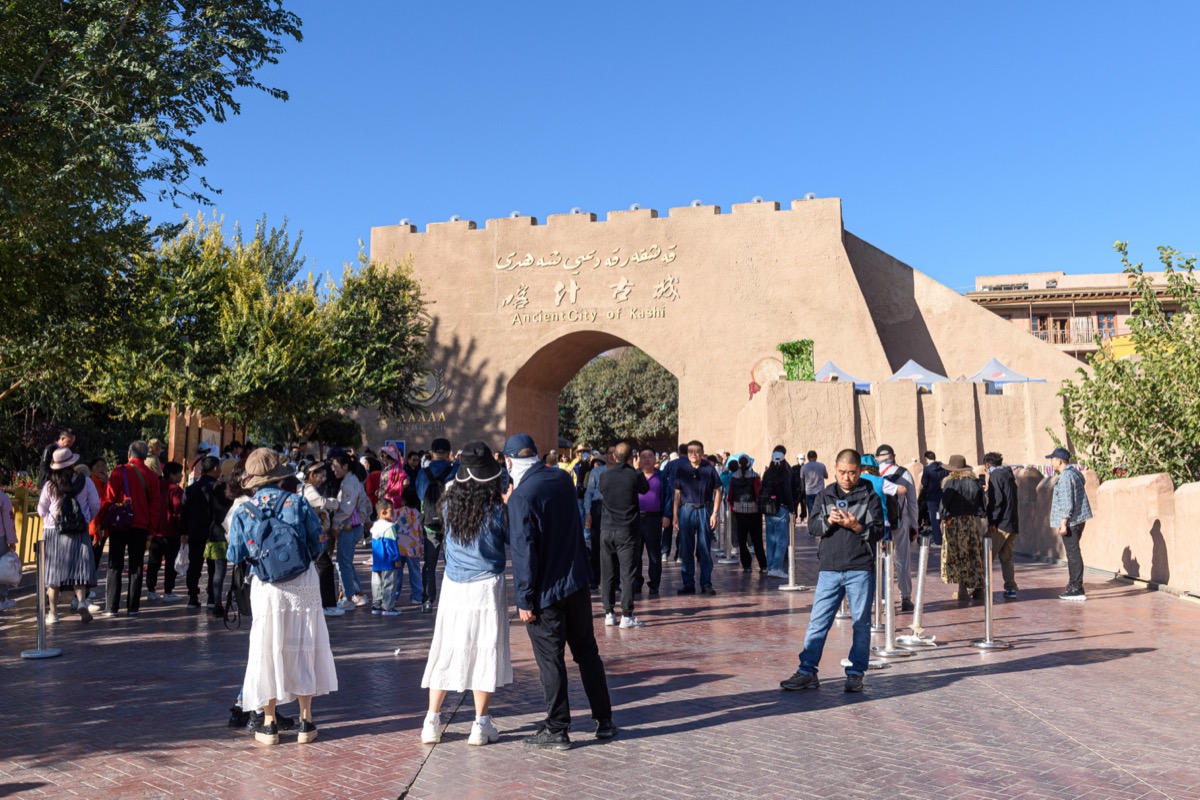
The Old Town is your best bet. Tea houses (chaykhana) and courtyard guesthouses sometimes host regular evening music that shades into a meshrep when the regulars show up. Walk the alleys after dinner; if you hear a dutar, follow it respectfully. Homestays run by Uyghur families occasionally arrange a small performance — ask, but do not demand.
During Festivals and Weddings
Eid al-Fitr, Eid al-Adha, and Nowruz are the peak times. Weddings almost always include a meshrep-style segment. If you are invited to a celebration (even loosely), this is where the most energetic versions happen.
Cultural Performance Halls
Urumqi and larger cities have staged “Muqam and meshrep” shows aimed at visitors. These are polished and worth seeing for the music, but be clear-eyed: they are choreographed excerpts, not the spontaneous, slightly chaotic real thing. Treat them as an introduction, not the whole story.
Etiquette: How to Be a Good Guest at a Meshrep
The rules are simple and mostly amount to don’t make it about you.
Don’t Perform Unless Invited
Foreigners who grab an instrument or try to lead a dance are usually met with kindness, but it can flatten the dynamic. Watch first. If someone hands you a tambourine or pulls you into the line, that is your invitation.
Photography and Consent
Ask before filming people’s faces, especially women and elders. A quick gesture — phone up, querying look — is usually enough. If someone waves you off, put it away. The Old Town’s residents are used to cameras, but consent still matters and builds trust fast.
Accept the Tea, Accept the Seat
Refusing hospitality reads as cold. Take the bowl of tea, take the offered seat of honor if pressed, and follow the lead of your neighbor on when to stand for the dance.
How a Meshrep Differs From a Concert or a Muqam Recital
A concert is something done to you. A meshrep is something a community does with each other, and you are either drawn in or you sit on the outside. The comic verses, the call-and-response, the way a stranger becomes the butt of a joke and then a friend five minutes later — none of that survives translation onto a stage. If your goal is to understand Uyghur social life rather than just consume “culture,” the meshrep is the single best window you have.
Can Tourists Join? Practical Tips
Yes — but as participants, not spectators with a wristband. Stay in a family-run guesthouse in Kashgar or Hotan, be visibly curious without being intrusive, learn two phrases of greetings, and let evenings unfold. The meshrep will find you if you are patient. Bring small patience and zero expectations of a schedule; the gathering begins when enough people have arrived, not when a clock says so.
When things do not go to plan
If this happens: Meshrep a religious event
Not strictly. It is a community and cultural gathering with deep roots in Uyghur Muslim society, but it is secular in tone — music, poetry, and dance rather than worship. You will not be expected to pray or to know doctrine.
When it goes sideways: Needing to speak uyghur to enjoy it
No. The comedy is funnier if you understand the language, but the music, rhythm, and body language carry most of the experience. A few greeting phrases go a long way toward being welcomed.
If you run into this: Safe for solo travelers
Yes. Meshreps are family-and-neighbor affairs. Stick to public tea houses and invited gatherings, be polite, and you will be fine. Avoid pushing into clearly private backyard events uninvited.
On the ground: Seeing one on a standard tour
Rarely the spontaneous kind. Most tours offer a staged Muqam show instead. If you want the real thing, build slack evenings into your Kashgar or Hotan stay and ask your guesthouse host.
If this happens: Women participate fully
Absolutely. Women sing, dance, and trade comic verses, especially in family and neighborhood meshreps. In some conservative areas the dance circles may separate by gender, but participation is expected of everyone.
When it goes sideways: Wearing
Modest, comfortable clothing is enough. There is no dress code beyond ordinary respect — shoulders covered, nothing flashy. A doppa hat bought in the bazaar is always a hit and signals goodwill.
If your image of Xinjiang is only snow mountains and lamb skewers, the meshrep is the correction. Sit in that circle for one evening and you will understand more about how this part of the world actually holds itself together than from any number of scenic overlooks. Go looking for the music after dark — and then let the music find you.