Xinjiang Festivals and Public Holidays: Plan Your Trip Around the Calendar
I planned my first Xinjiang trip for late September and accidentally landed in the middle of a holiday I had never heard of. The streets of Kashgar were strung with lights, families were out in new clothes, and every bakery had sold out of naan by noon. That happy accident taught me something: in Xinjiang, the calendar is part of the itinerary. Time your visit around a festival and you get a region that ordinary guidebooks never show. Arrive during one without knowing, and you may find trains full and hotels doubled in price. This guide is the cheat sheet I wish I had packed.
The Two Calendars That Rule Xinjiang
Unlike most of China, Xinjiang officially runs on its own time zone — “Xinjiang time” is two hours behind Beijing, and locals live by it. More importantly for travelers, the region’s major festivals follow the Islamic (Hijri) lunar calendar, so their dates shift roughly 10–11 days earlier each year on the Gregorian calendar. The national public holidays, by contrast, are fixed. You need both to plan well, because they pull in opposite directions: one moves, the other does not.
Major Islamic Festivals
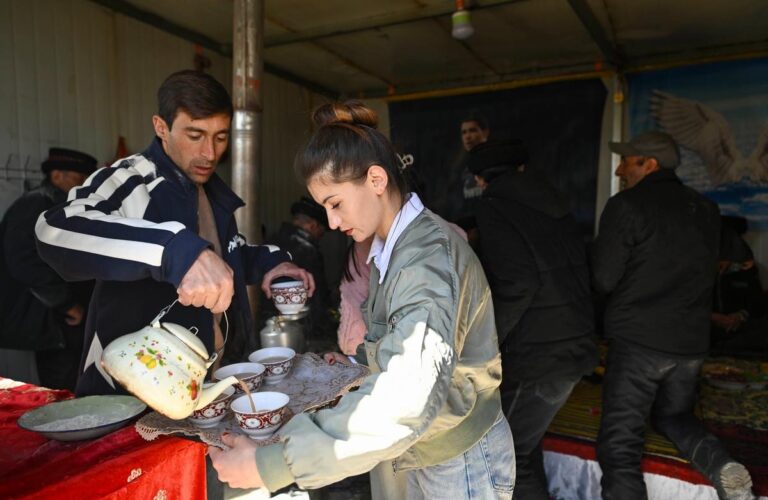
These are the big ones. They are religious at root, but they are also deeply social — expect open houses, feasting, and public celebration, especially in Kashgar, Hotan, and Yining in the south and west.
Eid al-Fitr (Rozi Heyt)
Marks the end of Ramadan, the month of daytime fasting. Families dress up, visit graves, and share huge meals. Bazaars stay busy but some shops close on the first day for morning prayers. It is a gentler, more private festival than the one that follows.
Eid al-Adha (Kurban Heyt / Corban)
The largest festival of the year. Sacrificial sheep and feasts, and a genuine warmth toward visitors who show respect. This is the single best time to witness living Uyghur culture in the streets — and the worst time to expect a quiet, empty photo spot. The atmosphere in Kashgar during Kurban Heyt is something I still think about years later.
Nowruz (Nawruz)
Celebrated around March 21 by Kazakhs, Kyrgyz, and Tajiks in the north and west. Think spring picnics, horse games, and the slow-cooked wheat-sprout dish sumalak. Unlike the Eids, this one is tied to the solar spring equinox, so its date is stable and easy to plan around.
National Public Holidays (Fixed Dates)
These apply across China and affect transport and prices everywhere in Xinjiang, not just in Muslim areas. Mark them on the same calendar as the festivals above.
| Holiday | Gregorian dates (approx.) | Typical length | What it means for travelers |
|---|---|---|---|
| Spring Festival (Chinese New Year) | late Jan – mid Feb | 7 days | Trains sell out weeks ahead; north Xinjiang very cold |
| Qingming | Apr 4–6 | 3 days | Mild crowds; good for spring trips |
| Labor Day (May Day) | May 1–5 | 5 days | Peak domestic tourism; book early |
| National Day (Golden Week) | Oct 1–7 | 7 days | Heaviest crowds and highest prices of the year |
| Eid al-Adha (variable) | shifts yearly | 3–5 days | Cultural peak; some services paused first day |
How Festivals Change Your Trip
During the big Islamic festivals, the atmosphere is unforgettable but practical life shifts. Government offices and banks close. Some long-distance buses run reduced schedules on the first day. Markets, however, get more lively, not less. If you want to photograph or join a celebration, the days around Eid al-Adha in Kashgar are electric — just dress modestly and ask before shooting people’s faces. The north, with its Nowruz horse games, offers a completely different flavor of celebration that most foreign visitors never see.
Festival Food You Should Try
Every festival has its signature dish. Eid tables groan with polo (rice with carrot and lamb), hand-pulled noodles, and trays of sweets. Nowruz brings sumalak, a dark, sweet paste made from sprouted wheat that takes a full night to cook. If a family invites you — and they often do — say yes. It is the fastest way to understand a culture that guidebooks flatten into “exotic.”
My Practical Rule of Thumb
- Book transport 3–4 weeks ahead for any fixed national holiday, especially around National Day.
- For Eid dates, check the current year’s lunar calendar before locking in hotels.
- Avoid the first day of a major festival for long drives — roads and checkpoints can be busier than usual.
- Use festival downtime (prayers, family meals) for your own rest days inside the city.
- Carry cash during festivals; some small stalls and taxis go card-light when the banks close.
Northern vs Southern Festival Feel
The same festival feels different depending on where you stand. In the south — Kashgar, Hotan, and the Tarim Basin towns — the Islamic festivals are huge, public, and deeply visual: streets decorated, drums in the squares, families pouring between mosques and grandparents’ houses. In the north, around Yining and the Kazakh plains, Nowruz dominates instead, and the celebration turns outward to nature — picnics on thawing grass, horse racing, and kokpar, the rough-and-tumble goat-grabbing sport that draws whole villages. If your dates are flexible, choose your region by the festival you most want to see rather than the other way around; the two halves of Xinjiang barely overlap in how they celebrate.
For the broader seasonal picture — weather, road openings, and when each region is at its best — our best time to visit Xinjiang guide lays it out month by month. And since festivals mean crowds and cold nights at altitude, glance at our what to pack for Xinjiang checklist before you go; a warm layer turns a freezing festival dawn into a great memory.
What other travelers wrote in to ask
Are shops and restaurants open during Eid?
On the very first day, many close for morning prayers and family gatherings. From the second day on, bazaars and restaurants are busier than usual. Bakeries and sweet shops do their biggest business of the year, so go early if you want a specific treat.
Will I be welcome at a festival as a foreign visitor?
Yes, with respect. Strangers are often invited to share food. Dress conservatively, keep alcohol out of sight, and don’t enter mosques during prayer unless explicitly welcome. A polite distance goes a long way.
Why do the Islamic festival dates change every year?
They follow the lunar Hijri calendar, which is about 10–11 days shorter than the solar year. So each Gregorian year the festival lands earlier, cycling through the seasons over roughly 33 years. This is why you cannot pin them to a fixed date on a wall calendar.
Is National Day a good time to visit Xinjiang?
Only if you love crowds and can book everything early. The early-October weather is excellent, but so is everyone else’s plan. Expect full trains, premium hotels, and popular sites at capacity. The scenery is worth it; the logistics are not for the spontaneous.
What about Spring Festival — is Xinjiang closed?
Big cities stay open, but many small restaurants and some transport reduce service, and the north is frozen solid. It is a quiet, photographic time if you don’t mind the cold and plan ahead for sparse options.
Can I photograph festival celebrations?
Generally yes in public spaces, but always ask before photographing people, especially during prayer or family moments. A thumbs-up from a local means far more than any lens you brought.