Sleeping in the Sand: Desert Camps on a Xinjiang Road Trip
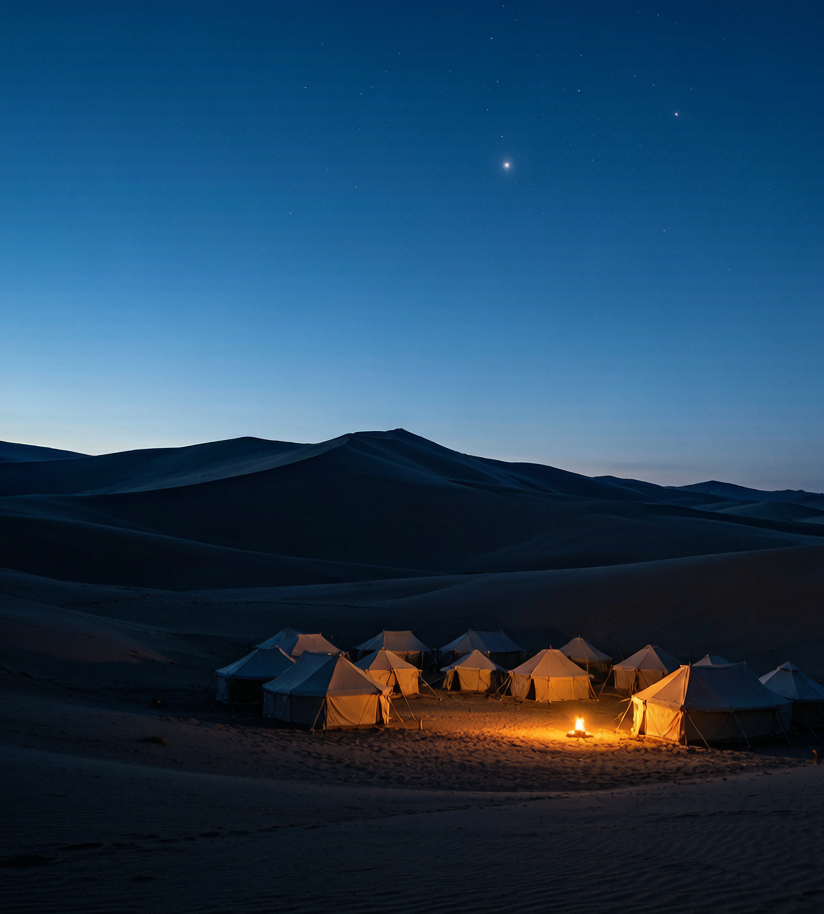
The first time I slept in a Xinjiang desert camp, I expected discomfort and got silence instead. The kind of silence that has no traffic, no hum, just wind and stars, is worth building a trip around, and desert camps are the easiest way to reach it.
The range is wide. At one end are simple tented camps near a scenic area, where you trade comfort for the experience of waking in the dunes. At the other are proper desert resorts with real beds and a restaurant, closer in feel to the yurt stays I have written about, but with sand instead of grassland. I have used both, and which you pick depends on how much you value sleep.
Logistics are the part to plan. A camp is only as good as the drive to it, so I treat it like any overnight stop in the where-to-stay decision: confirm access, confirm the road is open, and confirm someone will be there. Empty desert at night is beautiful and unforgiving, so I never arrive at a camp I have not booked.
Booking as a foreigner follows the same front-desk routine as a normal hotel, and I mention it because some smaller camps are fuzzy about registration. Ask when you reserve, and you avoid the awkward check-in. The good camps handle it without fuss.
Comfort tips I wish I had known: the desert is cold after dark even in summer, so a camp that lends a proper sleeping bag or has heated tents is worth paying for. I pair the stay with a village or oasis visit nearby when I can, so the night in the sand feels like part of a story rather than a detour.
My verdict is that a desert camp is the single best reset button on a long loop. One night under that sky and the next day’s driving feels lighter. Just respect the access road, book ahead, and let the quiet do the rest.
The gear that matters: a warm layer even in July, a headlamp, and more water than feels necessary, because the camp may sell little after dark. I learned to arrive before sunset so I could see the setup and pick a spot, rather than fumbling in the dark. The dawn is the prize: the dunes go pink before the sun clears the rim, and that ten minutes is the whole reason to be there.
If a camp feels disorganised or unnamed, I skip it. The good ones are proud of their location and clear about the road; the rest are a risk not worth the romance.
The star show is the real headline, and I mean it literally. With no town light for miles, the sky is crowded, and on a clear night the Milky Way is a band, not a smear. I put the phone away and just looked, which is rare for me, and the camp’s silence made it possible. Bring a red-light headlamp if you care about night vision, and skip the camera unless you know long exposures, because the attempt usually ruins the moment. The dunes also shift sound in odd ways, and the first night wind off the sand can fool you into thinking of a far-off engine; by the second night you know the desert’s voice, and sleep comes easy.
Fuel, and the gaps where there is nothing
Fill before you leave anything with a city name on the map, even if the next is only ninety minutes out. Every town on this route has a station and every station takes cards, which is the good news. I have been on a road in this region where the next fuel was two hours back, the reason being a closure, and the only thing that got me moving was a trucker with a spare can. The bad news is the distance between them through the middle sections, enough that a full tank is arithmetic rather than paranoia. That stretch of the trip is described in our [[xinjiang-sand-therapy-desert-spa|Xinjiang Sand Therapy: Burying Your Joints…]] too.
Where to sleep on the road and where to park
The county town on this route is where to overnight, not the scenic stop, because the scenic stops have no quiet parking and no kitchen open after eight. In Xinjiang the hotels cluster along the through road and the value one is usually the second block back, five minutes from the misnamed central place and half the price. Ask for a room away from the yard, since the yard is where the trucks sleep. The evening version of that plan is in our [[xinjiang-public-toilets-road-trip|Xinjiang Public Toilets on a Road Trip: The…]].