Sayram Lake, Xinjiang: First-Timer Visitor Guide
First time at Sayram Lake (赛里木湖)? The good news: it is one of the easiest “wow” stops in Xinjiang to fit in, because it sits right on the G30 corridor between Urumqi and the Ili Valley. The question is not “can I see it” but “how much time do I give it.” Here are three realistic plans.
The 30-second orientation
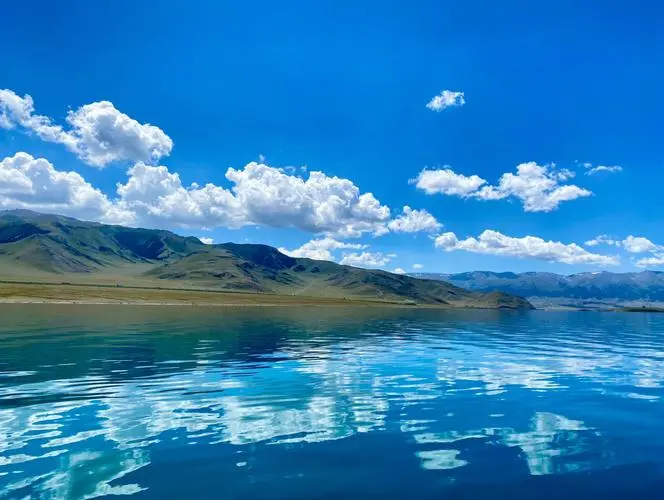
Sayram is a big alpine lake at 2,073 m, about 1.5–2 hours from Yining and 5–6 hours from Urumqi. You drive or shuttle the lakeside loop (70–90 km) and stop where the light is good. That is the whole visit. The main guide explains what you are looking at; this is about fitting it into a trip.
Plan A — Half-day from Yining (most common)
Best for: a one-night Ili stop, or a break on the Urumqi–Yining drive.
- Drive Yining → Sayram (~1.5–2h), enter mid-morning.
- Self-drive the east and south shore (2–3 hours with photo stops).
- Lunch back in Yining or at a roadside stop.
Total lake time: about 2–3 hours. Enough to feel the place without committing a night.
Plan B — Full day with Guozigou + Huocheng lavender
Best for: summer visitors who want more than a drive-by.
- Morning at Sayram (arrive for the calm light).
- Drive the Guozigou Bridge gorge on the way out.
- If it is June–July, add Huocheng’s lavender fields nearby.
- Return to Yining for the night.
The bridge and loop are detailed in the ring-road guide.
Plan C — As part of a north Xinjiang loop
Best for: first-timers doing the classic route.
- Sayram pairs naturally with Kanas and Hemu on a 7-day northern loop.
- Treat it as the southern bookend of the loop, not a standalone trip.
See the 7-day north Xinjiang itinerary for the sequencing.
The mistake I made the first time
If I could advise my earlier self, it would be to build in the unhurried hours, not the rushed ones. The payoff for coming this distance is a quiet hour, and you get it by being there when it opens or nearly closes. On my next visit I went at seven in the morning, and the site felt entirely new. The other mistake is about distance on the map. The gate is not the site.
Expect a shuttle, a walk, perhaps a second shuttle, and the section people always misjudge is from the second gate to the main sight. That is roughly the time the visit actually demands. So: work out how far it is from where the vehicle drops you to the feature, then double it. I had reckoned on two hours being more than enough. Technically I covered everything, but I did it at one hour alongside one crowd, and the whole way home I meant to go back and never did.
Timing your visit to Sayram Lake
Most newcomers budget two hours and end up stranded. Gates open at dawn, yet they stop admitting visitors a couple of hours before closing, so a sunset revisit may not work. Budget the full morning. That time includes the walk in, a proper look at the main sight, the quieter side paths, and returning to the car before the light flattens. A half-day visit is sufficient to take it in.
An hour and a half is enough to say you have been. A full day is what you want when the point of coming was Sayram Lake itself rather than a stop on the way. My first visit was hurried, and I spent the entire time staring up at the same rock from one place. On another visit I came in the morning and again late afternoon, and the two bore no resemblance, as the light crossed the surface and the crowds vanished. My own rule now: if I have to choose between this and an extra evening in Sayram, I keep the evening.
That stretch of the trip is described in our [[sayram-lake-travel-guide-xinjiang|Sayram Lake Practical Guide: Tickets, the…]] too.
Not everyone should build a trip around this
There is a lot of unshaded ground, the altitude is real if you came from a low-altitude city, and the swing between the car and the viewpoints is enough to give you a headache on an empty stomach. Who it does suit: someone wanting one strong memory, someone driving the Sayram loop anyway, someone willing to be out before breakfast. Not suited to someone after a restful trip, or to anyone who has already experienced this twice. When days are scarce, this is the entry to sacrifice, a tip you will not find in print. Sayram Lake is superb, but it is also an hour or more in each direction from everything else you planned, and the drives are what eat the schedule. It is a good fit for anyone who enjoys open scenery and is happy to cover a few kilometres slowly.
It does not suit a family with a small child who needs a shade stop every forty minutes, and it does not suit anyone in week two of a high-altitude trip still feeling it. Best suited to a traveller with wheels and a flexible start. I am not going to pretend this is gentle. The honest version: take half a day if that is all the arithmetic allows, and save the full day for the thing that is genuinely once in a lifetime. I wrote the driving side up in our [[kanas-lake-xinjiang-travel-guide-2|Kanas Lake in Autumn: When the Larch Turns…]] as well.
A second look on day two
Almost nobody does Sayram Lake twice. Use any spare morning on a second visit here, not on the bigger-name place out of town. I did return, and the second time was finer, since the first had gone on working out where to position myself. The second time you can skip the obligatory viewpoint and walk along the base of the ridge where the light comes in sideways, and that is the photograph you keep. The short version, with the numbers, is in our [[kanas-lake-xinjiang-travel-guide|Kanas Lake Practical Guide: Tickets, the…]].
When to go
- Jun–Jul: wildflowers and swans — busiest, prettiest.
- Sep–Oct: golden grass, fewer crowds, calm light. My pick.
- Winter: blue ice, near-empty. Covered separately in the off-season guide.
What to pack (even in summer)
A windproof layer, sunglasses, and water. The altitude and the constant wind make it cold faster than the calendar suggests. If you are travelling with children, the family plan has the altitude notes.
Questions Travellers Ask About Sayram Lake
Where is Sayram Lake?
Sayram Lake sits at about 2,070 m in the Tianshan mountains near the Guozigou bridge on the Urumqi–Yining route in northern Xinjiang.
Why is Sayram Lake called the Last Tear of the Atlantic?
Moist Atlantic air travels east across Eurasia and releases its last rain here, so the lake is poetically called the Atlantic’s last teardrop.