Kazakh and Kyrgyz Phrases for Northern Xinjiang Travelers
Most travelers to Xinjiang arm themselves with a few Mandarin phrases and maybe some Uyghur. Then they ride a bus north to the Ili valleys, the Altai mountains, or a Kazakh herding camp and realize the language on the ground has changed entirely. Northern Xinjiang is Kazakh and Kyrgyz country, and while plenty of people speak Mandarin, the warm, unguarded version of a place opens up the moment you try the local tongue. You do not need to be fluent. You need maybe fifteen words. I learned them on the road, and they turned suspicious glances into invitations to sit down. Here is the shortlist.
Why These Two Languages Matter Up North
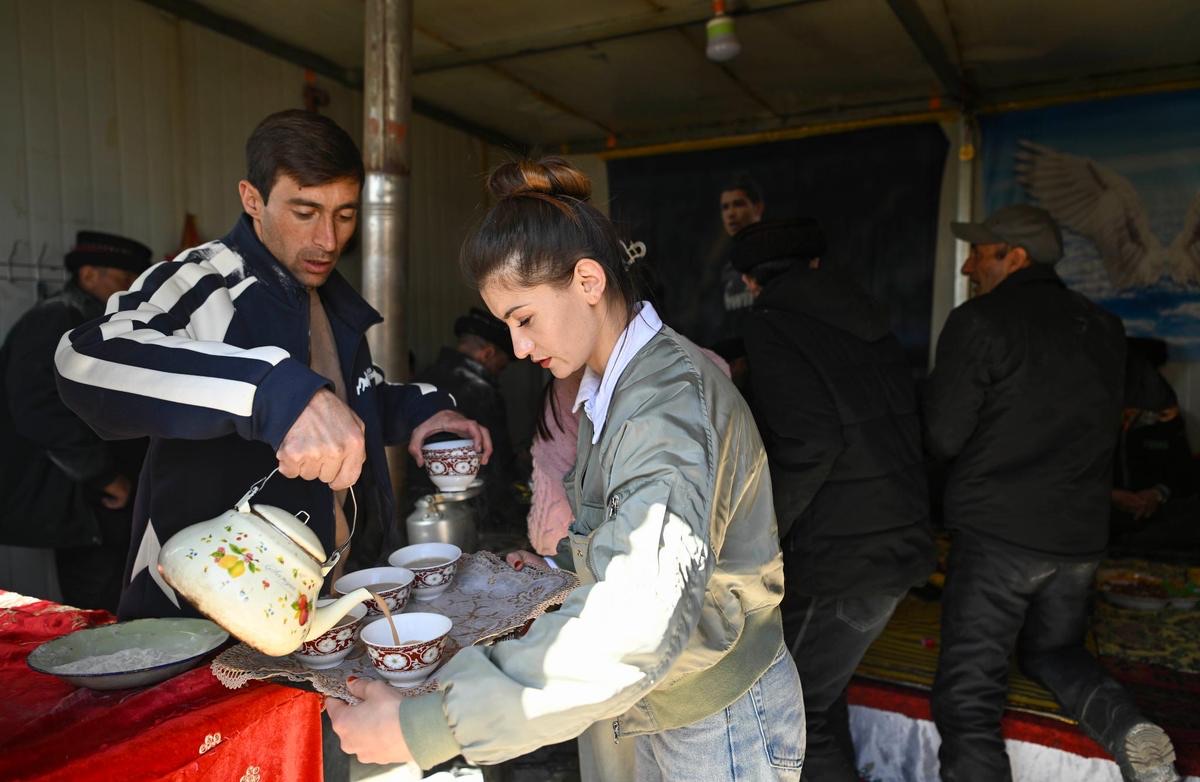
Kazakh is the everyday language across the Ili Kazakh Autonomous Prefecture, the Altai region, and most grassland communities. Kyrgyz is spoken by the herding families in the Pamir foothills and parts of the west. Both are Turkic languages, closely related, and mutually semi-understandable — which is a gift, because a phrase that works for one often works for the other. Mandarin will get you through tickets and hotels; Kazakh or Kyrgyz will get you invited in. After three days in a yurt camp near Nalati, the only sentences I needed repeatedly were hello, thank you, and “is this milk tea?”
The Traveler’s Phrase Shortlist
Pronunciation notes: “kh” is a guttural sound like the ending of “loch”; roll the “r” lightly; stress usually falls on the last syllable. Kazakhs and Kyrgyz will understand you even if your accent is rough — the effort is the message.
| English | Kazakh | Kyrgyz | When to use it |
|---|---|---|---|
| Hello | Salemetsiz be? | Salomatsyzby? | Entering a home, meeting anyone |
| Thank you | Rahmet | Rahmat | After food, a favor, directions |
| Yes / No | Iya / Zhok | Ooba / Jok | Constantly |
| How much? | Kansha? | Kancha? | Markets, taxis, stalls |
| Delicious | Damdi | Damu | Finishing a meal |
| Tea | Shay | Chay | Accepting hospitality |
| Goodbye | Sau bolinyz | Kosh bolso | Leaving a home or camp |
| Where is…? | …kayda? | …kayda? | Asking for a place |
A note on “rahmet”
If you remember nothing else, remember rahmet (Kazakh) / rahmat (Kyrgyz). It is the single most useful word north of the Tian Shan. I said it so often that a herder in the Altai started laughing and teaching me the rest. Gratitude, said in the local language, is the cheapest bridge in Central Asia.
Phrases That Actually Get You a Bed
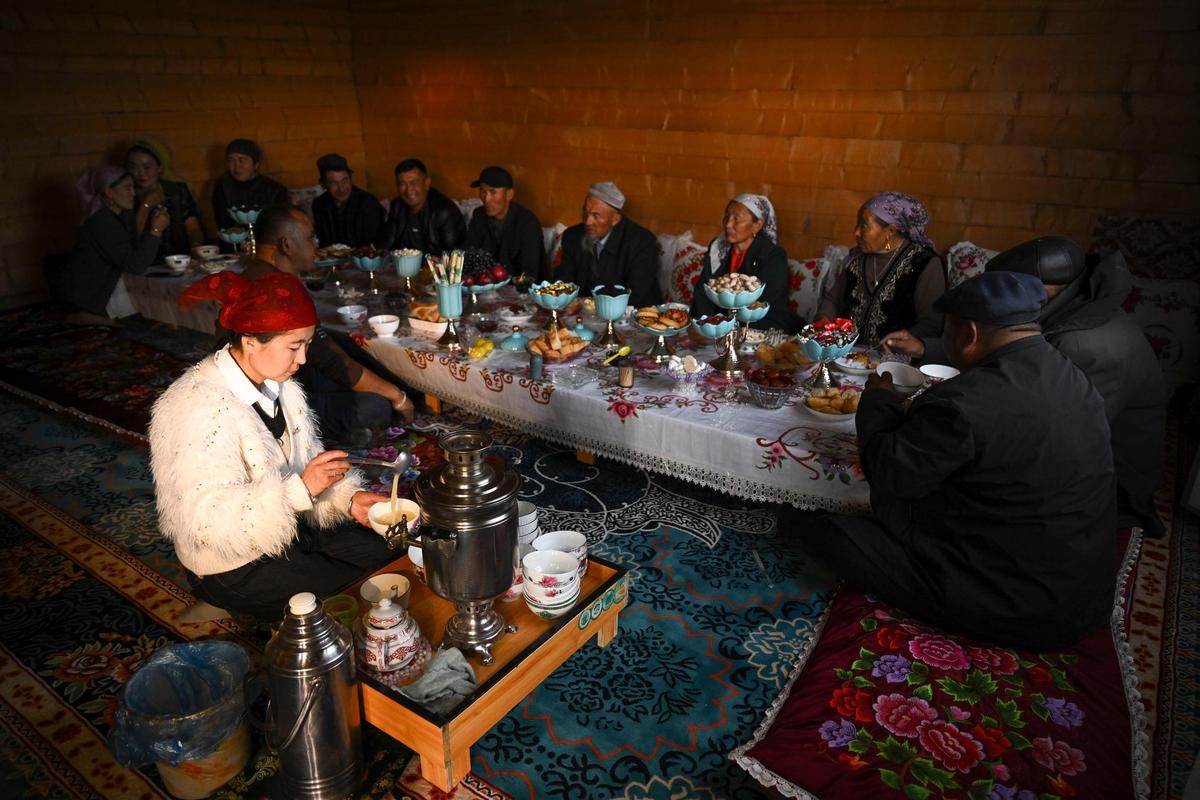
If you are exploring the grasslands and hope to stay with a family rather than a hotel, a few sentences change everything. “Uyde tura alamyn ba?” (Kazakh: can I stay in your home?) or simply pointing at a yurt and saying “munda tungay alamyn ba?” (can I spend the night here?) paired with your biggest smile works better than any app. Locals are proud to host; they mostly worry you will be uncomfortable. Tell them you are happy with simple conditions — “zhay gana” (just simple) — and the door opens.
Numbers help at markets
Learn one through ten in Kazakh: bir, eki, ush, tort, bes, alty, zheti, segiz, toghyz, on. In Kyrgyz the first few are bir, eki, uch, tort, bes. Combined with “kansha?” you can bargain for fruit, milk products, and horse rides without pulling out your phone — which, frankly, earns more respect than translating on a screen.
When NOT to Use Them
Do not assume Kyrgyz in a heavily Uyghur southern town, and do not open with Kazakh in a Mandarin-speaking city office. Read the room: if everyone around you is speaking Uyghur or Mandarin, switch. The Uyghur phrase guide is your friend in Kashgar and the south. The languages are regional, and using the wrong one is not offensive — just less useful.
A Mini Dialogue You Can Actually Use
Strings of vocabulary are useful, but a short script you can perform end-to-end is worth more than a list. Here is one I used constantly when arriving somewhere new in the north:
You: “Salemetsiz be? Rahmet.” (Hello? Thank you.)
Host: “Salem, kosh keldingiz!” (Hello, welcome!)
You: “Shay bar ma?” (Is there tea?)
Host: “Bar, kire beriniz.” (Yes, come in.)
That four-line exchange — greeting, thanks, asking for tea, being welcomed — is the entire social contract of a steppe visit compressed into ten seconds. Learn it as a unit and you will never stand awkwardly at a yurt door again. The tone matters more than the consonants; smile while you say it and the words will be forgiven.
Tips for learning on the fly
Carry a tiny notebook and write down any phrase a local corrects you on, phonetically, the moment it happens. Within a week I had a personal glossary of “useful because I actually needed it” expressions that no app would have prioritized — how to ask for the bathroom, how to say “slowly, please” when someone speaks too fast, how to compliment a child. Locals love being your teacher; turning a mistake into a lesson is itself a form of politeness. And if all else fails, the universal traveler’s toolkit of pointing, laughing at yourself, and saying “rahmet” will carry you further than perfect grammar ever could.
A Few Phrases for the Road: Transport and Directions
Beyond greetings, the sentences you will reach for most are about movement. “Avtobus kayda?” (where is the bus?), “mashina bar ma?” (is there a car / ride?), and “bizge deyin bara alasyn ba?” (can you take us there?) solve more problems than any dictionary. In rural northern Xinjiang, rideshare is often a matter of flagging down a passing pickup and negotiating in mixed Kazakh-Russian-Mandarin; a “kansha?” (how much?) and a “rahmet” go a long way. I once got a free lift to a hot spring outside Khorgas purely because I opened with “salemetsiz be” and let the driver practice his limited English in return. The language is a door; even a crack of it changes the whole trip.
Two verbs carry most of the conversation in the north: one meaning come here, one meaning sit down. Between a Kazakh herder, a Kyrgyz shepherd and a Uyghur market seller in the same afternoon, those two phrases plus a smile opened every door I knocked on. My Kazakh is rough and nobody cared, because the effort of the attempt is what people actually read.
Frequently Asked Questions
Are Kazakh and Kyrgyz mutually intelligible?
Mostly, at a basic level. They are sister Turkic languages with heavy shared vocabulary. A simple Kazakh greeting will usually be understood by a Kyrgyz speaker, though the scripts and some sounds differ. For travel needs, a shortlist works across both.
Will people be annoyed if I mangle the pronunciation?
Almost never. Locals in northern Xinjiang are genuinely pleased that a foreign visitor tried at all. A rough “rahmet” lands better than flawless Mandarin in a yurt. Smile, slow down, and let them correct you — that is part of the fun.
Do I need a different alphabet?
In China, Kazakh and Kyrgyz are written in Arabic-derived scripts, while the same languages use Cyrillic in Kazakhstan and Kyrgyzstan. As a traveler you do not need to read them; focus on spoken phrases. Signs may be in Chinese and sometimes Arabic-script Kazakh.
Is English useful in the north?
Seldom outside Urumqi and big hotels. On the grasslands and in small towns, English is rare, which is exactly why a few Kazakh or Kyrgyz words carry so much weight. The Kazakh hospitality customs are worth knowing before you arrive.
Can I rely on translation apps instead?
They help for complex questions, but they kill the moment. For greetings, thanks, prices, and “is this milk tea?”, speaking the word yourself is faster and warmer. Keep the app for when you are truly stuck.
What about Mongolian or other languages?
In the Altai and Bayinbuluke areas you may also hear Mongolian (Oirat). A simple “sain baina uu” (hello) works there. But Kazakh is the safest general-purpose choice across northern Xinjiang’s grasslands.