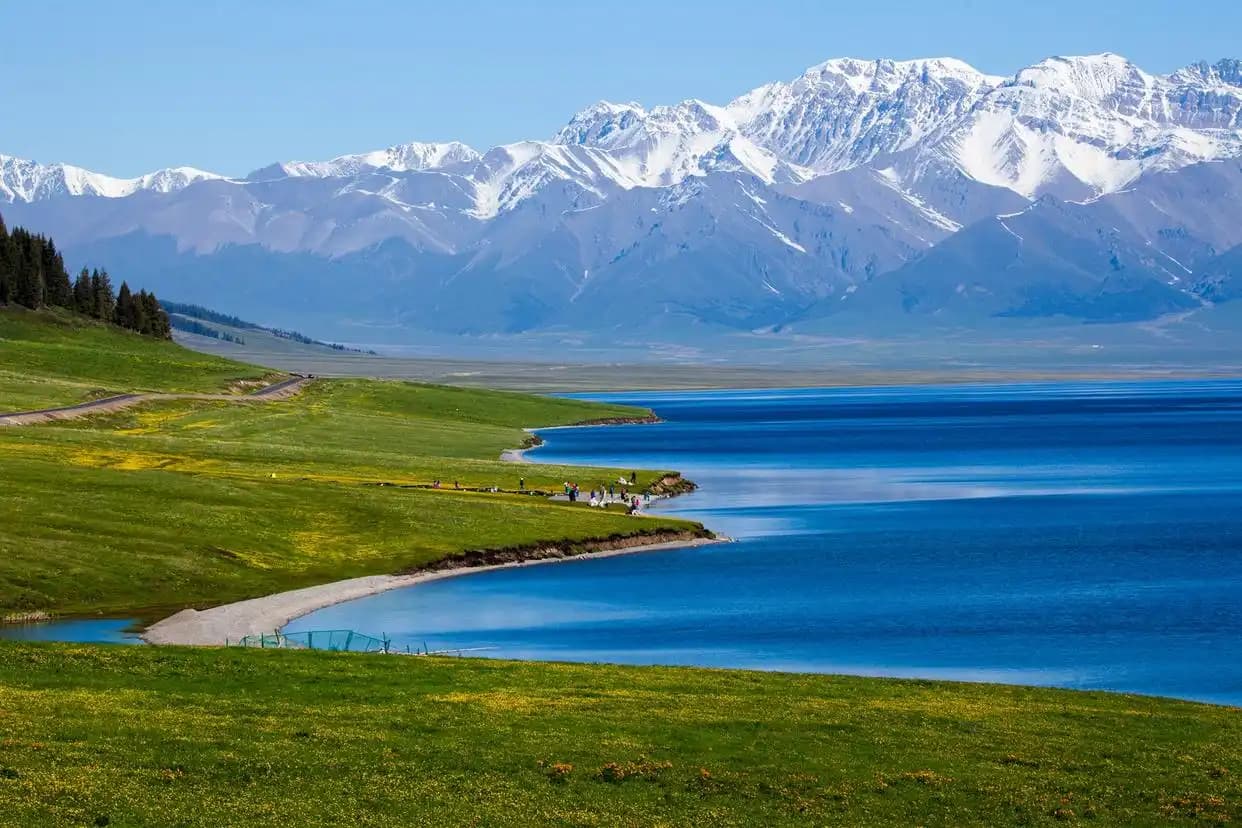
Tuyoq Village: A Living Silk Road Settlement Near Turpan
I almost skipped Tuyoq. It sits down a side road off the Turpan–Jiaohe corridor, and every itinerary lists it as a “if you have time” stop. That was a mistake on my part — the afternoon I spent there was one of the most grounding of the whole trip. Tuyoq is a living Uyghur village built into a red sandstone gorge, with a Buddhist cave complex cut into the cliff above it and vineyards running straight to people’s front doors. No ticket hawkers, no staged performances, just a village that happens to sit on two thousand years of history.
Where is Tuyoq?
Tuyoq is about 40 km east of Turpan city, in Shanshan County, tucked into a cleft of the Flaming Mountains. The village is split by a seasonal stream into an upper (old) village of mud-brick homes and a lower (new) village with the main road and guesthouses. Above the old village, cut into the ochre cliff, is the site locals call the “Valley of a Thousand Buddhas” — a series of caves dating to the 5th-9th centuries, when this was a Buddhist oasis before Islam arrived.
Why Tuyoq matters (the 1,000 Buddhas valley)
The caves are the headline for history buffs: faded Buddha murals, prayer niches, and a small still-active mosque built right among the ruins, which neatly captures Xinjiang’s layered faiths. But the stronger draw for me was the village itself — one of the best-preserved traditional Uyghur settlements in the region, still inhabited, still farming. You walk the same lanes Silk Road travelers used, past mud walls hung with drying grapes.
The upper and lower village
Give yourself a mental map before you go, because the two halves feel different.
| Feature | Upper (old) village | Lower (new) village |
|---|---|---|
| Character | Mud-brick lanes, cave entrance | Road, guesthouses, cafes |
| Best for | Photos, quiet, the cave walk | Food, rest, parking |
| Walk time | 20-30 min uphill from lower | Flat, easy |
Getting there from Turpan
Turpan is the hub. From there you have three realistic options, and the right one depends on your budget and appetite for hassle.
| Option | Time | Cost | Notes |
|---|---|---|---|
| Chartered taxi / Didi | 50-60 min | ¥120-180 round | Most flexible; negotiate wait time |
| Local bus to Shanshan + taxi | 1.5-2 hr | ¥20-40 | Cheap but slow, scarce off-peak |
| Tour day-trip | half day | ¥200-300 | Includes Jiaohe/Gaochang stops |
Highlights
Start in the lower village and walk up through the old lanes toward the cave entrance — the climb is short but unshaded, so go early. At the top, the cave path is a loop you can do in 30-40 minutes. Back down, wander without a plan: the grape-drying kowzag racks, the tiny neighborhood mosques, and the old men playing qoshuk on benches are the real exhibit. Buy a plate of grapes or a round of naan from a yard-side stall and you have paid your respects better than any entrance fee.
The cave complex up close
The murals are weathered and some caves are fenced, but enough survive to show the scale of the site. A local caretaker often accepts a small donation and will point out the best-preserved niche. This is not Dunhuang — manage expectations — but for a free, uncrowded look at Silk Road Buddhism it is hard to beat.
When to visit
Spring (April-May) and autumn (September-October) are ideal: the gorge is cool enough to walk and the vines are heavy. Summer in Turpan is brutally hot (often over 40°C), so if you come then, arrive at opening and leave by noon. Winter is empty and cold but photogenic against the red rock.
Etiquette and practical tips
Tuyoq is a working village, not a museum. Ask before photographing people, dress modestly (shoulders and knees covered), and keep your voice down near the mosque. Carry cash — card readers are unreliable. There is little shade and no real medical help, so bring water and sun protection. Pair it with a day in Turpan itself, and if you want the broader context of why oasis towns like this exist, our Silk Road history guide fills in the map.
What sets Tuyoq apart from the big ruins
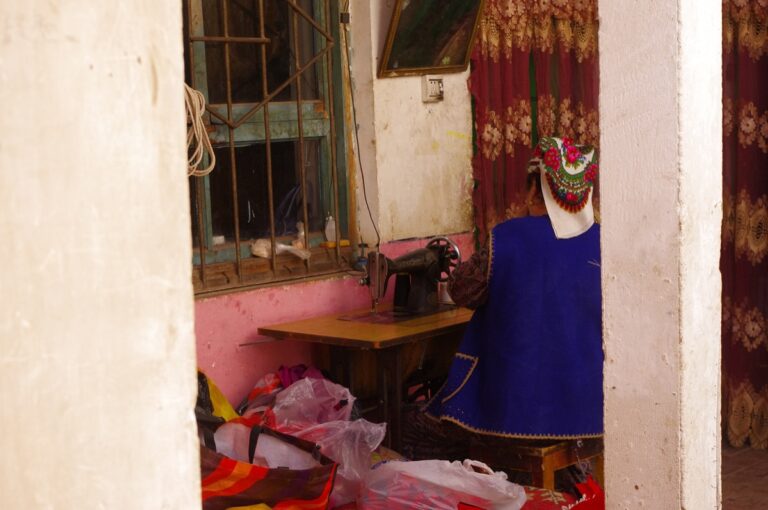
Jiaohe and Gaochang are spectacular, but they are ruins — empty, fenced, and museum-quiet. Tuyoq is the opposite: a village that never stopped being a village. You share its lanes with residents hanging laundry, feeding chickens, and pruning vines. That living context is why photographers and slow travelers rate it above the famous sites. The cliff caves give you the history; the lanes give you the present. Do both in one visit and the region finally clicks into place.
Food to try while you are there
The lower village has a couple of family-run spots serving the Turpan staples: hand-pulled laghman, grape-leaf dolma in summer, and endless rounds of naan pulled from the tone oven. In autumn you can buy sun-dried grapes by the bag, cheaper and sweeter than anything in the city. Order simply, eat slowly, and accept the second cup of tea — refusing it reads as rude. A plate of polo (rice with carrot and lamb) after the cave walk is the most satisfying meal I had in the Turpan area.
Best light for photography
The red sandstone glows in the first hour after sunrise and the last hour before sunset; midday washes it flat and hot. The cave entrances face the gorge, so they stay shaded longer in the morning. Bring a polarizer if you have one, and ask before framing people — most villagers are happy to pose for a small tip, but a camera shoved in faces spoils the mood fast.
A half-day plan that works
If you have a car for half a day: leave Turpan at 8 a.m., reach the lower village by 9, walk up to the caves by 9:30 (cool, good light), descend for food around 11, and roll back to Turpan before the noon heat. That cadence beats the afternoon rush of tour buses and keeps you off the cliffs at their hottest. Drivers in Turpan know the route; just agree the wait time and return price up front.
Budgets in figures
| Item | What it costs | Note |
|---|---|---|
| there an entrance fee | varies | The village itself is free to walk. The cave area may ask a small local donation; there is no formal national-ticket gate like at Jiaohe. Confirm on arrival, as local arrangements change. |
The numbers above are what I paid on my own trips; add roughly a fifth for a private car and driver if you are travelling with someone else. Anything marked roughly is a bazaar price in high season, and it moves with demand.