Xinjiang Street Snacks: What to Grab Between Meals on the Silk Road
You will not go hungry between meals in Xinjiang — largely because nobody expects you to wait for the next meal. The streets themselves feed you: a night-market culture of grills and sweets after dark, but also a daytime economy of bakeries, seed-roasters, and fruit carts that keep a traveler topped up for pennies. These are the grab-and-go bites I came to plan my walks around.
The bakery window (always open, always hot)
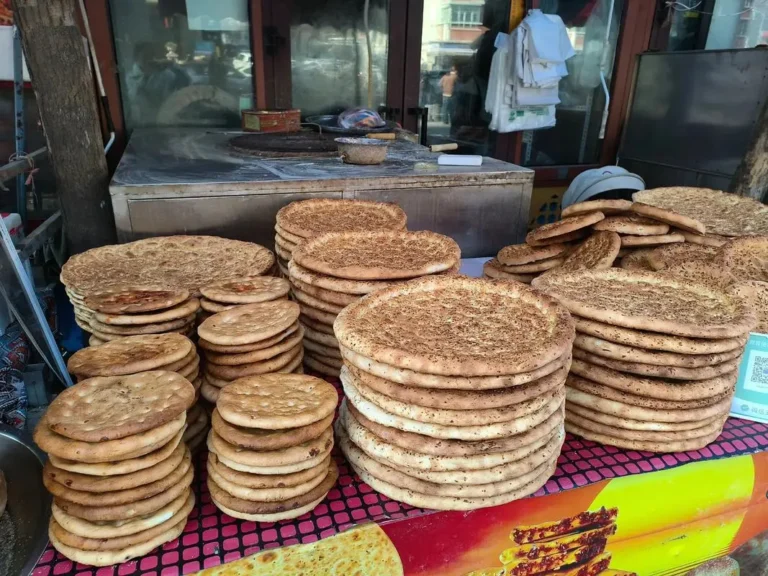
The single best snack in Xinjiang is the samsa — a small pastry of lamb and onion sealed in flaky dough and baked against the wall of a tandoor so the bottom crisps while the top stays soft. At ¥3–¥6 it is the region’s perfect food: portable, hot, and filling. Pull one out of the oven with the metal hook the baker uses, let it cool for thirty seconds, and eat it standing up. Every neighborhood has a samsichana (samsa shop); the ones with a queue of locals are the right ones.
Roasted seeds, nuts, and the art of killing time
Kawa — roasted sunflower seeds — is the default Xinjiang pastime snack. Buy a paper cone for ¥2, crack them with your teeth, and you will understand why conversations here move at the speed of a seed. Pistachios from the south, almonds from Hotan, and paper-skin walnuts from Ili are sold by weight at market stalls and make excellent trail food. A small digital scale and a smile get you a sample before you buy.
The best seeds are sand-roasted in a wok of hot gravel that toasts them evenly and salts the shell — you’ll spot the roasters by the smell a street before you see them. Buy a warm cone straight off the heat and the shells practically fall open. It is the cheapest, most sociable snack in the region, and the one I miss most between trips.
Fruit on a stick, and the fruit that needs none
In season, Xinjiang’s fruit is the snack. Seedless grapes (the wuxin bai variety), crisp pingguo pears, and fragrant kalale melons are sold whole at markets; in tourist strips you’ll find them cubed and skewered for ¥5. The Urumqi food map is built around these markets, and a morning spent buying fruit is a better introduction to the city than any museum.
Sweet fried things: sanzi, pawada, and baursak
| Snack | What it is | Where | Price |
|---|---|---|---|
| Sanzi | Twisted fried dough threads | Markets, buses | ¥4–¥10 |
| Pawada | Deep-fried dough disc | Bakeries | ¥2–¥4 |
| Baursak | Kazakh fried puffs | Grassland yurts | ¥5–¥15 |
| Tokach | Soft fried bread | Street corners | ¥3 |
These are sugar-free or lightly sweet and built for energy, not dessert. Sanzi in particular travels well — I once carried a bag across two days of the Duku Highway as a emergency ration that tasted like a reward.
Savory on the move: kebab skewers and roasted corn
Kawab (lamb skewers) are technically a meal but at ¥3–¥5 a stick they function as a walking snack. Look for mutton dusted with cumin and chili over real charcoal, not the pale tourist versions. In autumn, roadside stalls roast whole corn cobs and press them with chili — sweet, smoky, and two minutes from field to hand.
The savory roster does not stop at meat. Winter brings kao tudou — whole potatoes baked in the embers until the skin crisps and the inside goes creamy, split open and salted on the spot. Northern towns roast sweet potatoes the same way. And at station food courts you’ll find jian bing-style egg pancakes griddled to order, folded around a crisp cracker, that function as a handheld breakfast for a ¥6 note. None of these are fancy, and all of them are better than the airport sandwich you were about to buy.
Drinks you can grab on foot
Xinjiang’s street drinks deserve their own walking tour. In summer, carts sell su mai — a cold, slightly sour wheat-based beverage that tastes like a fizzy yogurt soda and is the single best thing to hold in your hand at 38°C. Fruit vendors press watermelon and melon juice to order for ¥5–¥8. And do not overlook takeaway milk tea: many night-market stalls and bakeries sell it in sealed cups, salty and milky, built for strolling. I have nursed a cup of milk tea across an entire evening bazaar and never once wanted water.
Yogurt, but not the sweet kind
The street yogurt (sütküyüz) is tart, unsweetened, and sold in little bowls topped with a spoon of white sugar you stir in yourself. It is a snack and a probiotic dose at once, and it pairs with the fried dough sweets better than any dessert should.
Snacking on the long bus and train rides
Xinjiang is a big province, and the in-between hours are exactly when street snacks earn their keep. At every highway rest stop and railway station you’ll find a tier of portable food: boiled eggs, vacuum-packed lamb, sunflower seeds, and the ever-present samsa kept warm in a insulated box. Buy extra at the last real town before a remote stretch — the G3012 and the route to Kashgar can go hours between services. A paper cone of seeds and a bottle of su mai turned a four-hour delay outside Korla into a non-event for me.
A city-by-city snack itinerary
If you want to snack with intent, the cities each have a signature grab-and-go bite worth planning around.
| City | Signature street snack | Best spot |
|---|---|---|
| Urumqi | Samsa & roasted seeds | Erdaoqiao bazaar |
| Kashgar | Polo cups & dried fruit | Old City side streets |
| Yining (Ili) | Baursak & dairy | Sunday bazaar |
| Turpan | Roasted corn & grapes | Night market |
Paying, pricing, and the tourist tax
Street snacks are cheap enough that the “tourist price” is usually only a yuan or two, but it exists. The fix is simple: watch what locals pay, have small bills ready, and use the same Alipay scan the person ahead of you used. For the smallest seed-sellers who are cash-only, round up generously — a ¥2 overpay buys good karma and often a second scoop. None of this should stress you; the entire point of street food is that it is low-stakes, high-reward eating.
What you will spend, and where
| Item | What it costs | Note |
|---|---|---|
| cost | ¥20 | ¥20–¥30 a day covers a samsa, seeds, fruit, and a sweet with change to spare. It is the cheapest eating in Xinjiang. |
The numbers above are what I paid on my own trips; add roughly a fifth for a private car and driver if you are travelling with someone else. Anything marked roughly is a bazaar price in high season, and it moves with demand.