What to Pack for Xinjiang: Desert Heat, Mountain Cold, Same Day
Xinjiang will hand you 40°C in the Turpan desert
A season-by-season packing note helps: spring (Apr–May) needs a windbreaker for the notorious 沙尘暴 dust storms and still-cold nights; summer (Jun–Aug) means sun protection above all, plus a fleece for any mountain day; autumn (Sep–Oct) is the sweet spot with layers for 15°C swings; winter (Nov–Mar) demands real down, insulated boots, and grip for ice. The mistake I see most is people packing for the season they imagine — “desert = hot” — and freezing at a 2,000 m pass. Pack for the highest and coldest place on your route, then peel off layers as the day warms. That single rule covers 90% of packing errors.
at noon and near-freezing on a glacier at dusk — sometimes on the same drive. The single biggest packing mistake is dressing for one climate. After three trips I pack layers first and outfits second. This is the checklist I wish I had on day one, refined by sunburn, a frozen night at a pass, and a sandstorm that ate a cheap scarf.
The Layering System
| Layer | What | Why |
|---|---|---|
| Base | Merino or wicking tee | Sweat control in heat |
| Mid | Fleece / light down | Evenings, altitude, AC buses |
| Shell | Wind/rain jacket | Pamir wind, sudden rain |
| Legs | Convertible pants | Desert heat to mountain cold |

Region-Specific Additions
Deserts (Turpan, Taklamakan edge): a scarf for sand and sun, high-SPF, and more water capacity than you think. Mountains (Tianshan, Pamir, Kanas): a warm hat, gloves, and real shoes — weather turns fast. Grasslands (Ili, Naratı): mosquito repellent and a groundsheet if you fancy a yurt stay. Our best-time guide shows which regions are harsh in which months, so you can weight your bag toward the harshest place on your route.
The Non-Negotiables
- A power bank — long drives, weak plugs in yurts.
- Passport copy + digital scan — needed for SIM, hotels, checkpoints.
- Lip balm and moisturizer — the air is brutally dry; my lips cracked on day two without it.
- Offline maps cached before remote legs, because signal dies mid-highway.
- Small cash — see our money guide; rural vendors are cash-only.
- A buff/scarf — doubles as sand mask, neck shade, and mosque head-cover.
What to Leave Behind
Skip the hair dryer (voltage and sockets vary, hotels have them), the heavy laptop (a phone does everything), and excessive clothes — you will do laundry in guesthouses. Don’t bring pork snacks; they are inappropriate and sometimes confiscated at the same checks that screen luggage. Also skip the fancy outfit you won’t wear — you’ll live in the same two layers for a week.
Photography Kit
A phone is enough for most, but if you bring a camera, pack an extra battery (cold kills them) and a UV filter against dust. Our golden-hour photo guide explains why dawn and dusk are the only shoots that matter here, so a small travel tripod earns its weight for those long, soft evenings.
What other travelers wrote in to ask
Do I really need a down jacket in summer?
In the mountains or on a glacier excursion, yes — even in July. In the deserts, no, but bring a fleece for nights, which drop sharply once the sun is gone.
Can I buy things I forget?
Urumqi and Kashgar have everything; remote towns have little. Buy sun, meds and electronics in the big cities, and treat the small towns as cash-and-carry only.
How much water?
Carry 1–2 liters per person on desert days. Dehydration sneaks up in dry heat because you don’t feel sweat — it evaporates instantly off your skin.
Is there a dress code for sites?
Modest dress for mosques and villages; otherwise normal travel clothes are fine. See our mosque etiquette guide for specifics on head coverings and shoe removal.
What about medications?
Bring your own; rural pharmacies have limited stock and language barriers. A small first-aid kit with blister plasters is wise for all the walking.
Will my plug adapter work?
China uses Type A/I (two flat or three prong) at 220V. Bring a universal adapter; hotels sometimes only have one accessible outlet near the desk.
Per-Region Packing Add-Ons
For the deserts (Turpan, Taklamakan edge), add a light scarf that doubles as a sand mask, a wide-brim hat, and electrolytes — the dry heat dehydrates you while you feel fine. For the mountains (Tianshan, Pamir, Kanas), add glove liners, a beanie, and real ankle-supporting shoes; the weather turns within an hour and the ground is rough. For the grasslands (Ili, Nalati), add mosquito repellent and a groundsheet if you’re yurt-camping, plus a light rain shell for afternoon storms. For cities, none of this is urgent, but the power bank and passport copy still earn their place. Tailor the bag to your actual route rather than packing for the whole region at once.
Toiletries and Health Kit
The dry air is the silent aggressor: lip balm, a good moisturizer, and nasal saline kept me comfortable where others suffered cracked skin and nosebleeds. Add sunscreen (SPF 50, reapplied — the UV at altitude is no joke), a basic first-aid kit with blister plasters, ibuprofen, and any personal meds in their original packaging (customs respect labeled prescription bottles). A small packet of tissues and hand sanitizer is non-negotiable given the prevalence of squat toilets outside hotels. None of this is exotic; it’s the unglamorous gear that separates a good trip from a miserable one.
Bag Strategy
A 30–40 L daypack plus a small roller works better than one huge case, because you’ll be in and out of vehicles daily and lugging a giant suitcase across old-city cobbles is misery. Keep a “day bag” with passport, cash, power bank, water, and a layer always ready by the hotel-room door. I learned to repack this every night so a 6 a.m. departure never became a scavenger hunt. The goal is to touch your big bag as rarely as possible — the lighter your daily carry, the more you’ll actually enjoy the place.
The Layering Examples, Concretely
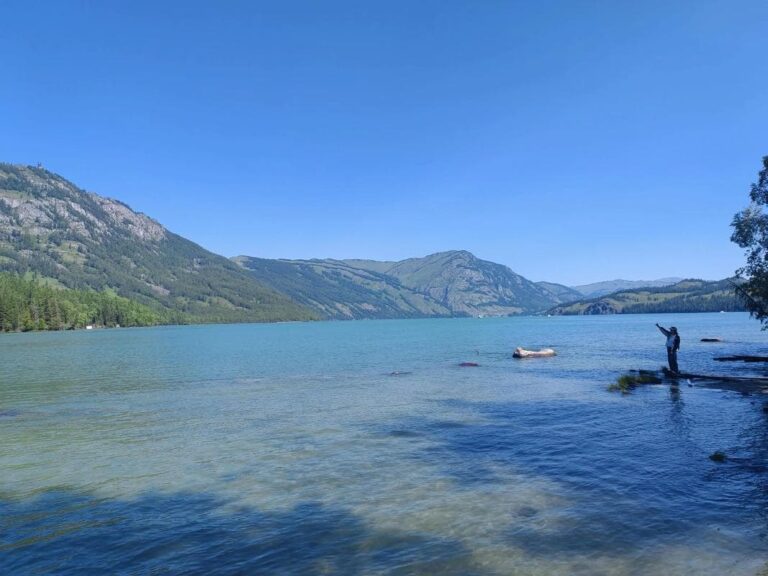
A July day in Turpan: base tee, shorts, sun hat, and a light scarf for the afternoon wind — plus a fleece stashed in the daypack because the same evening at a higher pass drops twenty degrees. A September day at Kanas: base, mid-fleece, and a shell from the moment you step out, with the down reserved for the dawn boardwalk when it’s near freezing. The pattern is identical everywhere: dress for the warm part, carry the cold part, and never trust a single forecast. I’ve stood in shorts at noon and in full down at the same lakeside by 6 p.m. — the layering system is the only thing that makes both comfortable, and it weighs less than the sweater you’d pack instead.
Don’t Overpack the “Just in Case”
The temptation is a third of everything “just in case.” Resist it. Xinjiang’s cities are well supplied; anything you genuinely forgot, you can buy in Urumqi or Kashgar for less than the checked-bag fee it would have cost. Pack for the harshest environment on your route and trust the rest to local shops. The travellers who suffer aren’t the ones who forgot a thing — they’re the ones who packed so much they can’t move, and who left the one item that mattered (power bank, passport copy, lip balm) buried at the bottom. Travel light, travel ready, and the region is far easier than its reputation suggests.